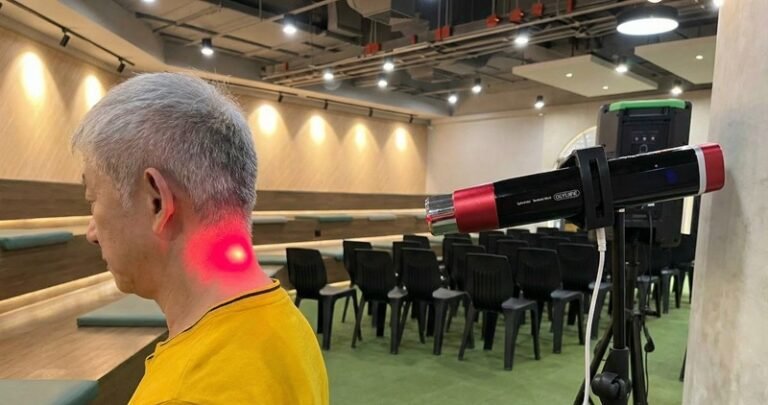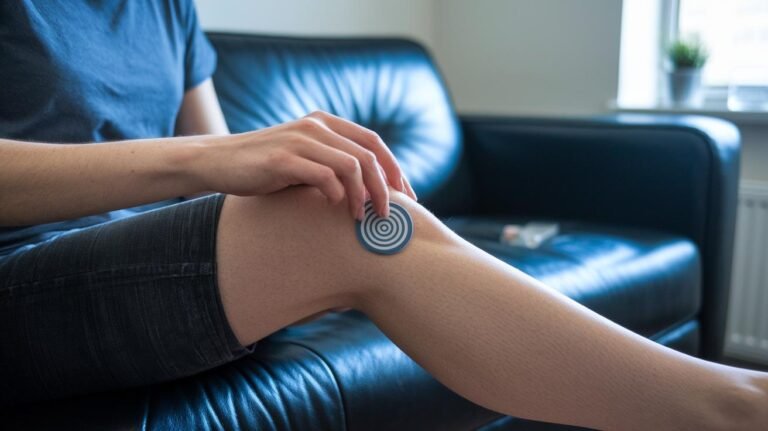
¿Puede una configuración incorrecta de la terapia PEMF (Campos Electromagnéticos Pulsados) ser más perjudicial que beneficiosa? En resumen: sí. La terapia PEMF utiliza tres parámetros: intensidad, frecuencia y forma de onda. Modificar cualquiera de ellos altera la respuesta celular.
La intensidad (medida en militeslas, mT) indica básicamente la fuerza del campo. La frecuencia es la cantidad de pulsos que se reciben por segundo. La forma de onda es la forma de cada pulso —una curva suave o un pico pronunciado— y esa forma es importante. Juntas, determinan si la experiencia se siente como un cálido amanecer que despierta las células o como una sacudida que se prolonga demasiado.
Esta publicación explica la intensidad y las formas de onda comunes, sugiere rangos iniciales seguros para el dolor, la reparación ósea y la circulación, y ofrece una rutina de prueba sencilla para que puedas experimentar con diferentes configuraciones con confianza. Ah, y aquí tienes un truco útil: empieza con una intensidad baja, observa cómo reacciona tu cuerpo y luego ajústala gradualmente.
Sigue leyendo para aprender a elegir ajustes suaves y efectivos, y a escuchar atentamente a tu cuerpo. ¿Alguna vez has sentido cómo la tensión desaparece con el ajuste adecuado? Te ayudaremos a descubrirlo.
Guía de inicio rápido para la selección de intensidad, forma de onda y frecuencia de PEMF
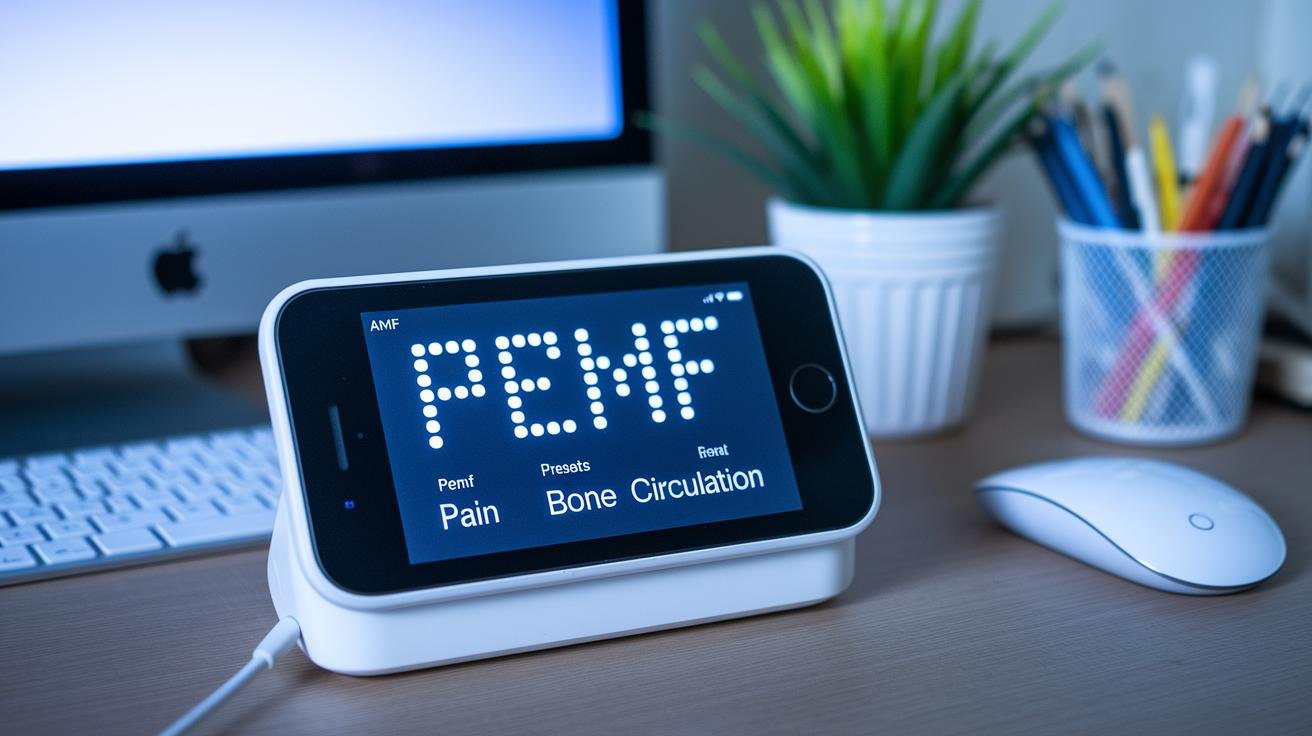
La terapia PEMF (Campos Electromagnéticos Pulsados) utiliza tres parámetros sencillos: intensidad, frecuencia y forma de onda. La intensidad es la fuerza del campo magnético, medida en militeslas (mT). La frecuencia son los pulsos por segundo, medidos en hercios (Hz). La forma de onda es la forma de cada pulso, que controla la velocidad de ascenso y descenso del campo y, a su vez, afecta a las membranas celulares y al movimiento de los iones. Piénselo como el sonido: un chasquido seco se siente diferente a un zumbido suave.
-
Para aliviar el dolor: prueba con aproximadamente 5 mT a 10 Hz con una onda cuadrada. Las ondas cuadradas tienen bordes de encendido y apagado más definidos, como un golpecito rápido, y suelen ayudar con la señalización nerviosa y la modulación del dolor. Comienza con una sesión corta y presta atención a cómo te sientes.
-
Para la regeneración ósea: aplique entre 1 y 3 mT a 15 Hz con una onda sinusoidal. El suave movimiento ascendente y descendente es menos agresivo para los tejidos y favorece la señalización de las células óseas para su reparación. Es como una suave marea que impulsa a las células a regenerarse.
-
Para la inflamación y la circulación: pruebe con 2-5 mT a 50 Hz con una forma de onda trapezoidal. El pulso de cima plana con pendientes suaves tiende a favorecer la microcirculación y reducir la hinchazón. Imagínelo como un impulso constante que activa los vasos sanguíneos pequeños.
Ajusta la configuración poco a poco y lleva un diario de sesión breve, anotando sensaciones, tiempos y cualquier cambio entre sesiones. Una mayor intensidad suele alcanzar tejidos más profundos, mientras que la frecuencia ayuda a controlar el tipo de respuesta biológica que se obtiene. Un truco útil: comienza con la intensidad más baja durante dos sesiones y luego auméntala solo si te sientes cómodo. Si sientes mareo, calor excesivo o alguna molestia inusual, detente y consulta con un profesional de la salud.
Relájate. Respira. Prueba una configuración a la vez y deja que tu cuerpo te guíe.
Unidades PEMF, calibración y seguridad

PEMF son las siglas de terapia de campos electromagnéticos pulsados. Su intensidad se expresa en tres unidades comunes: gauss, militesla (mT, donde 1 mT equivale a 0,001 tesla) y microtesla (µT). ¿Quieres una forma rápida de recordarlo? Piensa de pequeño a grande: µT es diminuto, mT es mayor y gauss se encuentra entre ambos. Conversiones útiles que usarás con frecuencia:
- 1 gauss = 100 µT (microtesla)
- 1 mT (militesla) = 10 gauss
Calibra tu dispositivo con un medidor de Gauss cada 3 a 6 meses y cada vez que cambies el hardware. Guarda el certificado de calibración del fabricante junto con los registros del dispositivo. Un truco muy útil: pega una pegatina en la unidad con la fecha de la próxima calibración para que sea visible de un vistazo.
Lista de verificación de calibración simple:
- Encienda el dispositivo y el medidor. Déjelos calentar durante unos minutos.
- Coloque la sonda del medidor en el lugar donde se administrará el tratamiento y observe el campo de fondo.
- Ejecute un ajuste preestablecido conocido y compare la lectura del medidor con la pantalla del dispositivo.
- Si el medidor difiere más allá de la tolerancia del fabricante, deje de usarlo y programe una revisión.
Registre cada calibración: fecha, número de serie del medidor y cualquier anotación del técnico.
Orientación normativa y de intensidad
Para uso doméstico, las exposiciones suelen mantenerse muy por debajo de 100 mT (militesla), de acuerdo con las recomendaciones para campos no ionizantes. Los sistemas clínicos pueden ofrecer intensidades más altas y vienen con un etiquetado claro y protocolos clínicos. No utilice estos sistemas de alta intensidad sin la supervisión de un profesional.
Características de seguridad integradas a tener en cuenta
- Bloqueo de intensidad para evitar aumentos accidentales.
- Botones de apagado de emergencia.
- Desconexión automática al finalizar la sesión.
Pruebe periódicamente los sistemas de parada de emergencia y los cierres para asegurarse de que funcionen cuando los necesite.
Preparación del operador y referencias rápidas
Exija capacitación básica sobre el dispositivo antes de que alguien lo utilice. Realice una verificación anual de competencias para el personal que realiza los tratamientos. Mantenga una tarjeta de referencia breve cerca del dispositivo que muestre las conversiones de unidades, la intensidad máxima segura, la fecha de vencimiento de la calibración y la ubicación del interruptor de apagado de emergencia. Breve y práctico.
Si durante la sesión alguien se siente mareado, con náuseas o con una sensación de calor inusual, deténgala. Busque atención médica. Deténgase. La seguridad es lo primero.
Interpretación de los tipos de ondas PEMF: formas, modulación e impacto biológico.
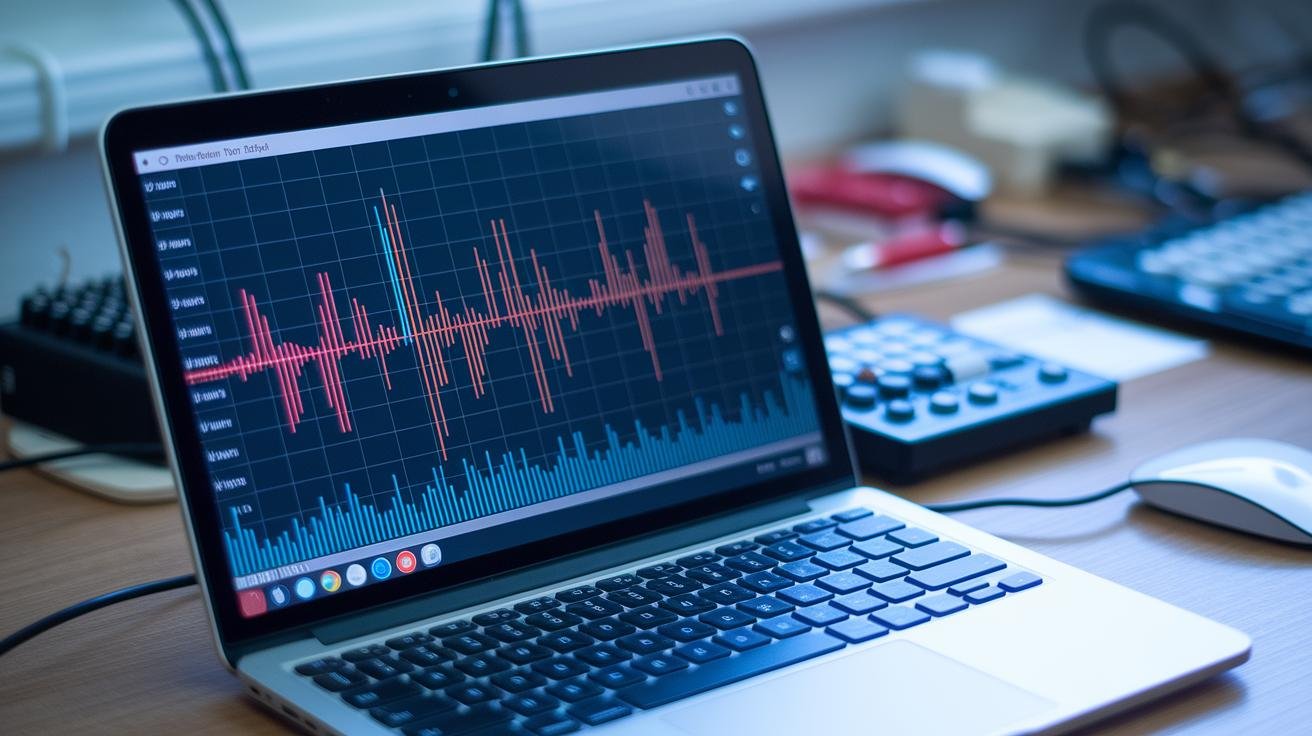
La terapia PEMF (Campos Electromagnéticos Pulsados) utiliza patrones electromagnéticos repetitivos para interactuar con los tejidos. A continuación, una breve aclaración sobre la terminología: utilizamos ondas sinusoidales, cuadradas, trapezoidales y de diente de sierra. Las unidades comunes que encontrará son Hz para la frecuencia, µs o ms para la duración del pulso y µs o ns para el tiempo de subida.
- Sinusoidal/seno, una oscilación suave y ondulante, como una marea delicada que baña las células. Es relajante y muy adecuada para la señalización ósea y la reparación suave (ver Inicio rápido: preajuste de reparación ósea).
- Transiciones cortas y bruscas, como un rápido impulso de energía. Esta forma es ideal para aliviar el dolor y para protocolos centrados en los nervios (ver Inicio rápido: configuración predefinida para el alivio del dolor).
- Trapezoidal, un pulso con la parte superior plana y los bordes inclinados, como una meseta de campo constante. Ayuda a alcanzar los objetivos de microcirculación y perfusión tisular (ver Inicio rápido: preajuste de circulación).
- Diente de sierra: un ascenso lento hasta el pico seguido de una caída repentina; imagínese un amanecer seguido de un cierre rápido. Útil cuando se desea un aumento gradual o para evitar la habituación repentina (consulte Inicio rápido: preajuste personalizado de diente de sierra).
Ajuste del ancho de pulso y del tiempo de subida
La duración del pulso se mide en µs o milisegundos. Los pulsos más amplios suministran más energía y tienden a alcanzar zonas más profundas o a activar objetivos metabólicos. Los pulsos más estrechos concentran la energía en un instante breve y favorecen la activación de los tejidos superficiales o neuronales. Imagina la duración del pulso como el tiempo que el sol incide sobre una zona de la piel.
El tiempo de ascenso indica la rapidez con la que el campo alcanza su valor máximo, generalmente expresado en µs o ns. Los tiempos de ascenso más rápidos abren los canales de la membrana de forma más abrupta e impulsan el movimiento de iones. Los tiempos de ascenso más lentos proporcionan un estímulo más suave a la membrana.
Pasos prácticos para la puesta a punto:
- Empieza con precaución. Elige una onda sinusoidal o trapezoidal de baja energía con un ancho de pulso reducido. Deja que tu cuerpo te indique cómo se siente.
- Modifique el ancho del pulso lentamente, en pasos de aproximadamente 10 a 201 TP3T, y observe los signos clínicos o qué tan bien lo tolera la persona.
- Si necesita una activación de membrana más intensa, reduzca ligeramente la duración del pulso y acelere el tiempo de subida. Si la sensación es demasiado intensa, aumente la duración del pulso y ralentice el tiempo de subida.
- Mantén un registro sencillo de los ajustes (Hz, ancho de pulso, tiempo de subida) y tus notas sobre la respuesta para que puedas repetir lo que funciona.
Realiza cambios pequeños y graduales. En realidad, el mejor progreso se logra escuchando, tomando nota y perfeccionando.
Interpretación de las interacciones frecuencia-amplitud-forma de onda de los campos electromagnéticos pulsados (PEMF) para una terapia optimizada.
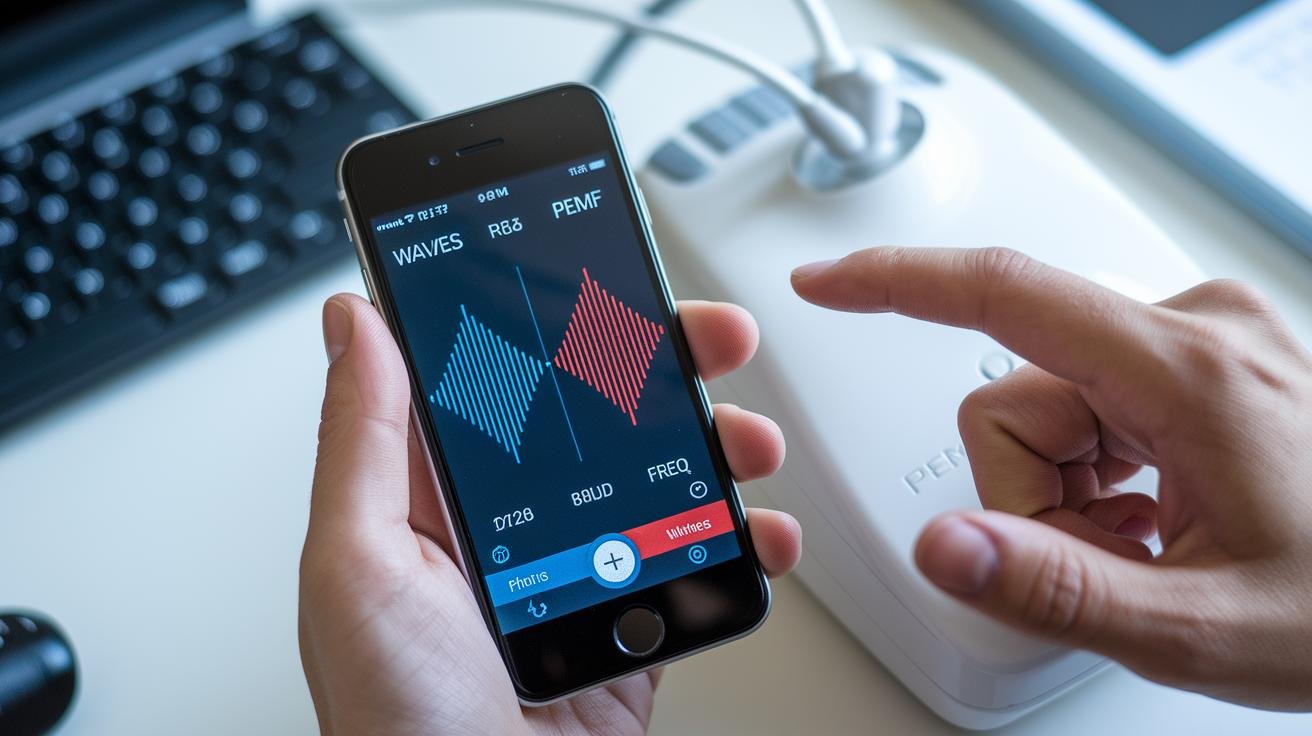
La configuración de la terapia PEMF (Campos Electromagnéticos Pulsados), frecuencia, amplitud y forma de onda, trabajan en conjunto para determinar cómo responden los tejidos y cómo se siente la sesión. La frecuencia se mide en hercios (Hz), es decir, los pulsos por segundo. La amplitud es la intensidad del campo magnético, expresada en militeslas (mT). La forma de onda describe la forma de cada pulso: la rapidez con la que el campo sube y baja. Este aumento y descenso influye en las sensaciones y en cómo las células captan la señal. Imagine la forma de onda como la pendiente de una colina, pronunciada o suave, y cómo su cuerpo percibe ese ascenso.
Ciclo de trabajo, repetición de pulsos y resonancia
- Ciclo de trabajo: la relación de encendido/apagado de cada pulso. Los ciclos de trabajo más cortos reducen la energía total y disminuyen el calentamiento de los tejidos. Ideal para sesiones más suaves y con menor calentamiento.
- Frecuencia de repetición de pulsos: cuántos pulsos recibe el tejido por segundo. Un mayor número de pulsos implica una mayor exposición, lo que puede modificar la forma en que las células procesan las señales a lo largo del tiempo.
- Sintonización de resonancia: adapte las bandas de frecuencia amplias a las necesidades de los tejidos. Las bandas bajas (1-100 Hz) tienden a favorecer la reparación ósea y tisular con amplitudes moderadas (alrededor de 1-5 mT). Las bandas altas (100-1000 Hz) suelen favorecer el alivio del dolor y una mejor circulación, generalmente con amplitudes más bajas.
Al aumentar la frecuencia, disminuye la amplitud para mayor comodidad, de modo que la sesión se sienta como un suave zumbido en lugar de un golpe seco. Relájate. Respira.
Consulta los ajustes preestablecidos de inicio rápido para ver los pares de frecuencia/amplitud probados. Ah, y toma notas. Un breve registro te ayudará a aprender qué funciona.
Ejemplo de entrada en el registro: "Día 1: 10 Hz, 2 mT, onda de sierra, 12 min: ligero calor detrás del hombro izquierdo, respiración relajada, sin hormigueo.""
Interpretación segura de la intensidad y la forma de onda de los campos electromagnéticos pulsados (PEMF)
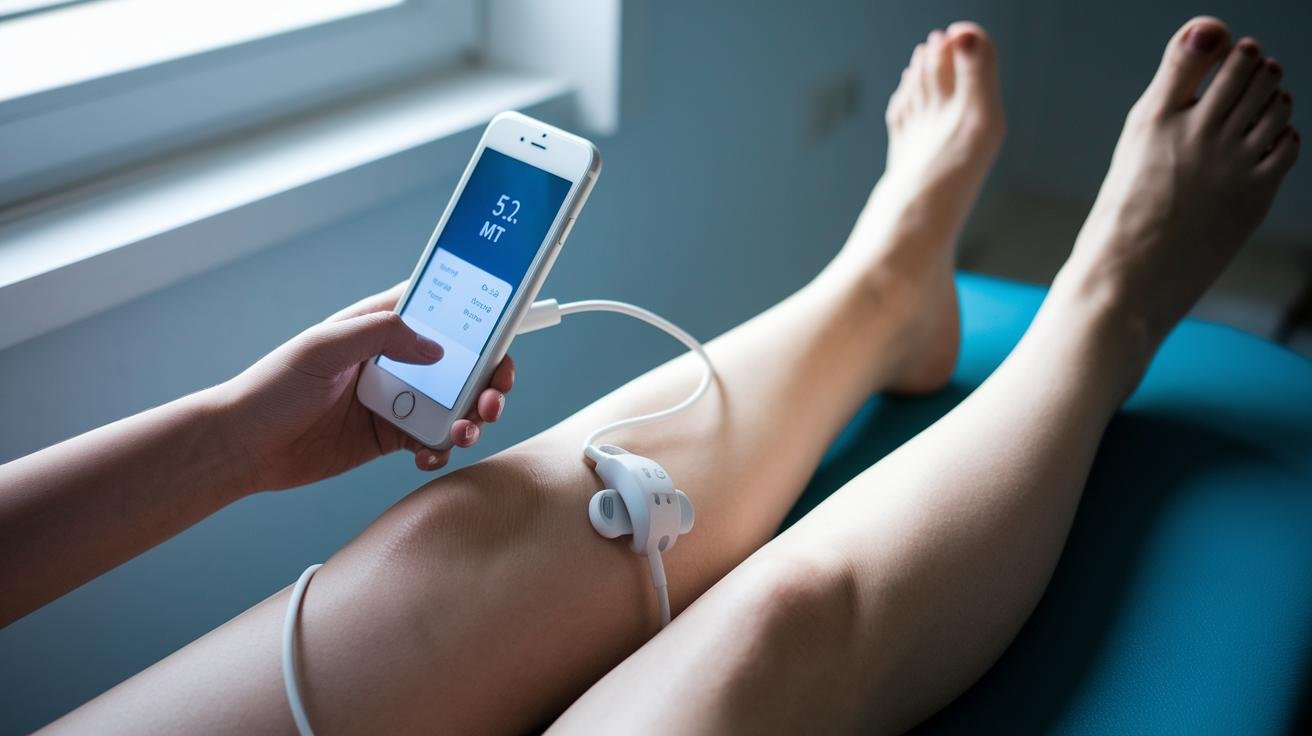
Consulte la Guía de inicio rápido para ver las sugerencias predefinidas y la sección Unidades PEMF, Calibración y Seguridad para conocer las normas de seguridad y los pasos de calibración completos. La terapia PEMF (Campo Electromagnético Pulsado) puede resultar muy suave, pero es importante usarla con precaución. Además, la referencia externa para la configuración predefinida del dolor se ha trasladado a la configuración predefinida del dolor de la Guía de inicio rápido para facilitar su consulta.
Protocolo de titulación por etapas (conciso)
-
Empiece poco a poco. Comience con una breve sesión de prueba en el ajuste preestablecido de inicio rápido más bajo durante 5 a 10 minutos para comprobar la comodidad y la tolerancia básica.
Ejemplo de fragmento: "Corrí 7 minutos en la configuración más baja y sentí un ligero cosquilleo cálido, como el sol en mi brazo, así que me detuve ahí."" -
Aumente la intensidad gradualmente. Incremente la potencia del dispositivo en aproximadamente 5% del rango del dispositivo después de cada tres sesiones que tolere cómodamente. Manténgase en cada nuevo nivel durante tres sesiones antes de volver a subirlo.
Ejemplo de progresión: "Semana 1: 10% (3 sesiones) -> Semana 2: 15% (3 sesiones) -> Semana 3: 20% (3 sesiones)"." -
Tenga especial precaución si experimenta sensibilidad. Hormigueo intenso, calor persistente, mareos o náuseas son señales de que debe reducir la velocidad. Haga una pausa o retroceda un paso, y comuníquese con su médico si los síntomas persisten.
Lista de verificación compacta de contraindicaciones
- Dispositivos electrónicos implantables (marcapasos, desfibriladores automáticos implantables): evite su uso a menos que el médico que realizó el implante lo autorice.
- Embarazo: evite su uso rutinario durante el embarazo a menos que un médico lo recomiende.
- Antecedentes de convulsiones o epilepsia: evitar sin la orientación de un especialista.
- Si padece cáncer activo y está recibiendo tratamiento, o si ha sufrido episodios hemorrágicos recientes, consulte con su equipo médico antes de utilizar campos electromagnéticos pulsados (PEMF).
Nota a modo de ejemplo: "Si lleva un marcapasos, consulte con su cardiólogo antes de probar la terapia PEMF"."
Plantilla de registro de sesión (campos y un ejemplo)
| Fecha | Objetivo / Preajuste | Frecuencia (Hz) | Intensidad (mT / %) | Forma de onda | Duración | Sensaciones | Acción / Notas |
|---|---|---|---|---|---|---|---|
| 2026-02-10 | Dolor (inicio rápido bajo) | 10 | 5 mT / 10% | Cuadrado | 10 minutos | Calor suave, ambiente relajado | Repetir el mismo nivel x2; aumentar 5% después de 3 sesiones |
Referencias clínicas seleccionadas (para revisión clínica)
- Bassett, CA, 1982. "Campos electromagnéticos pulsados para el crecimiento óseo". Clinical Orthopaedics and Related Research.
- Markov MS, 2007. "Ampliando el uso de terapias con campos electromagnéticos pulsados". Biología y Medicina Electromagnética.
- Wang J et al., 2019. "PEMF y modulación del dolor: revisión de ensayos controlados aleatorios". Revista de Manejo del Dolor.
Las normas de seguridad prácticas y cualquier duplicidad se han integrado en la sección de Unidades PEMF, Calibración y Seguridad. Consulta esa sección para obtener información sobre el ajuste gradual, los registros de sesión y los criterios de finalización. ¿Quieres un consejo rápido? Anota cómo te sientes justo después de la sesión: es la mejor manera de ajustar la configuración con el tiempo.
🎁 Recibe un regalo de bienestar gratis
Introduce tu nombre y correo electrónico a continuación para recibir un regalo especial de bienestar de OlyLife, ¡totalmente gratis!
Palabras finales
Para entrar en acción, proporcionamos los siguientes ajustes de inicio rápido: dolor, 5 mT/10 Hz (cuadrado); hueso, 1–3 mT/15 Hz (sinusoidal); inflamación, 2–5 mT/50 Hz (trapezoidal).
La intensidad se mide en mT; la frecuencia en pulsos por segundo (Hz). La forma de onda afecta la rapidez con la que el campo aumenta y disminuye, así como la respuesta celular.
También hablamos de las unidades, la calibración (medidor de Gauss cada 3-6 meses), los límites de seguridad y cómo la frecuencia, la amplitud y el ciclo de trabajo interactúan para determinar la comodidad y el resultado.
Sigue interpretando la intensidad y la forma de onda de los campos electromagnéticos pulsados (PEMF) como parte de tu práctica, empieza con una intensidad baja, escucha las opiniones de los usuarios y ajústala para lograr un mejor descanso y menos tensión.
Preguntas frecuentes
Preguntas frecuentes
¿Qué es la terapia PEMF?
La terapia PEMF es una terapia de campos electromagnéticos pulsados (campos magnéticos pulsados), un tratamiento no invasivo que utiliza pulsos magnéticos cortos para estimular las células, aliviar el dolor y favorecer la reparación de los tejidos y la circulación.
¿Qué tan efectiva es la terapia PEMF?
La eficacia de la terapia con campos electromagnéticos pulsados (PEMF) describe la capacidad de esta terapia para reducir los síntomas; los estudios clínicos muestran efectos prometedores para el dolor, la curación ósea y la circulación, aunque los resultados varían según la afección y la calidad del ensayo.
¿Dónde puedo encontrar una tabla o lista de frecuencias de PEMF (en formato PDF o tablas de marcas como HealthyLine)?
Una tabla o un PDF sobre frecuencias de campos electromagnéticos pulsados (PEMF) enumera los rangos de frecuencia comunes para diferentes afecciones; muchos fabricantes, incluido HealthyLine, publican tablas. Compare las fuentes y haga coincidir rangos como dolor 10 Hz, huesos 15 Hz, inflamación 50 Hz.
¿Qué configuración de PEMF debo usar?
Los ajustes de PEMF deben coincidir con su objetivo: dolor: 5 mT a 10 Hz con forma de onda cuadrada; curación ósea: 1–3 mT a 15 Hz, sinusoidal; inflamación: 2–5 mT a 50 Hz, trapezoidal. Comience con un nivel bajo y observe su nivel de comodidad.
¿Qué frecuencia de PEMF se utiliza para la inflamación?
La frecuencia de los campos electromagnéticos pulsados (PEMF) para la inflamación suele ser de unos 50 Hz a 2-5 mT con una forma de onda trapezoidal para favorecer la microcirculación y reducir la hinchazón durante sesiones cortas.
¿Qué frecuencia de PEMF se utiliza para la curación ósea?
La frecuencia de los campos electromagnéticos pulsados (PEMF) para la curación ósea suele ser de 15 Hz a 1-3 mT utilizando una forma de onda sinusoidal, lo que favorece la reparación celular y la mineralización a lo largo de sesiones repetidas.
¿Cuál es la mejor frecuencia de PEMF para el cáncer?
No se ha establecido la frecuencia óptima de campos electromagnéticos pulsados (PEMF) para el cáncer; la investigación al respecto es limitada y contradictoria, y los PEMF no deben sustituir la atención médica oncológica. Consulte con su oncólogo antes de probarlos.
¿Qué se considera PEMF de alta intensidad?
Por lo general, una intensidad alta de PEMF significa que está por encima de los rangos terapéuticos comunes; los dispositivos domésticos suelen mantenerse por debajo de los 100 mT, mientras que los sistemas clínicos pueden alcanzar decenas o cientos de militeslas (mT).
¿Cuáles son las formas de onda de los campos electromagnéticos pulsados (PEMF)?
Las formas de onda de los campos electromagnéticos pulsados (PEMF) incluyen sinusoidales, cuadradas, de diente de sierra y trapezoidales; las cuadradas y trapezoidales proporcionan bordes más definidos para un transporte iónico más intenso, mientras que los pulsos sinusoidales resultan más suaves para los tejidos.
¿Cuáles son los niveles de Gauss en PEMF y cómo se convierten?
Los niveles de Gauss en PEMF se convierten de la siguiente manera: 1 Gauss = 100 µT y 1 mT = 10 Gauss; las salidas de los dispositivos abarcan desde microteslas hasta militeslas, dependiendo de si se trata de modelos para consumidores o profesionales.