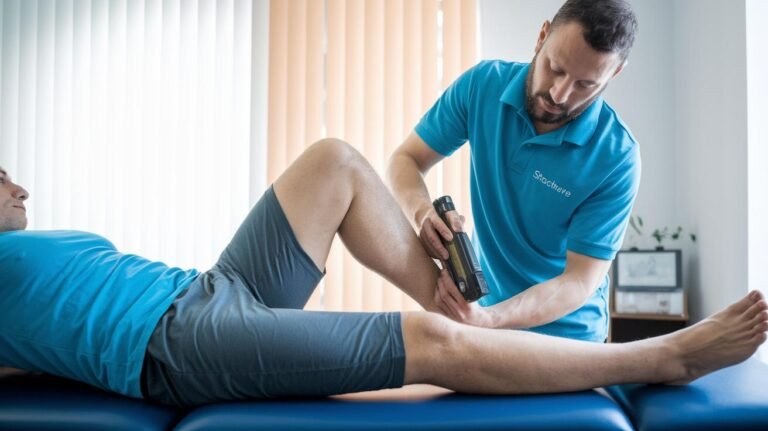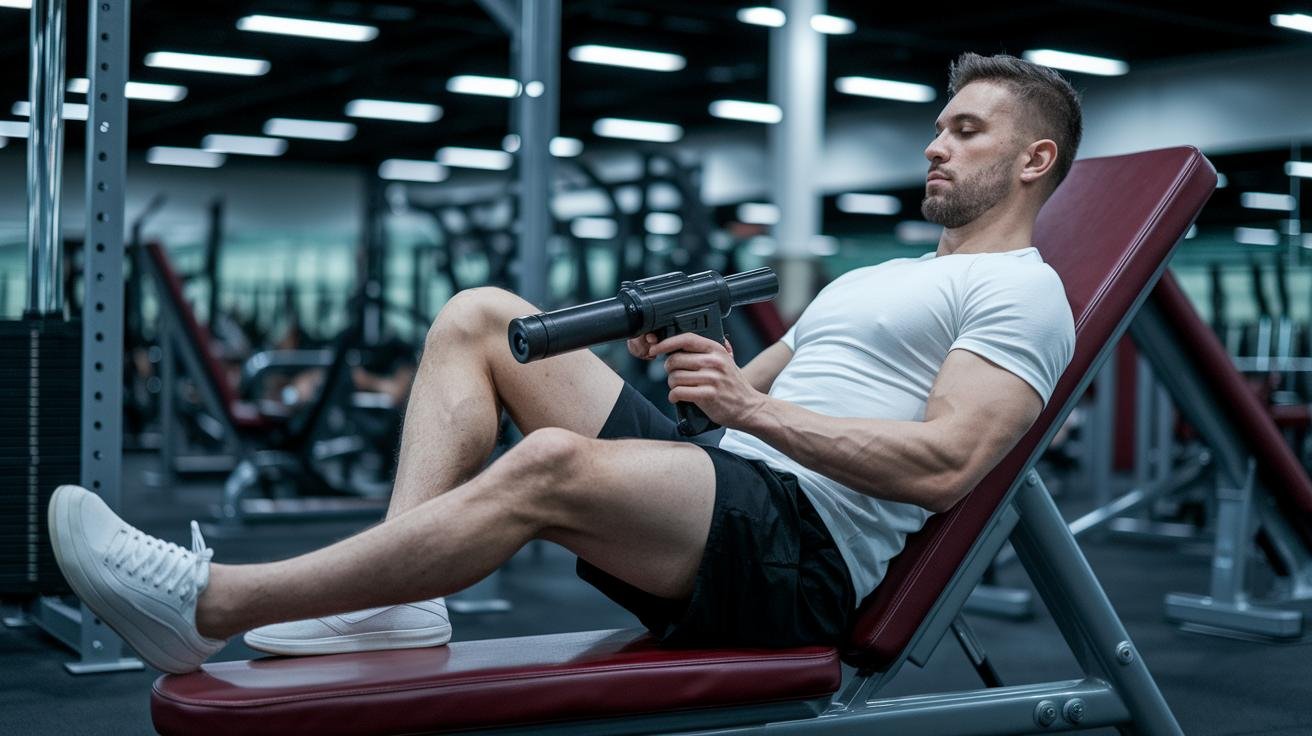
Think you need an hour-long massage to fix sore muscles? Think again. You can get fast relief at home with a percussive therapy device (massage gun), a handheld tool that gives quick, repeated taps.
These taps wake up tight tissue, loosen knots, and push fresh blood into tired spots. Imagine a steady thumb that reaches deeper than your hands, gentle, rhythmic pulses that speed recovery and melt away desk- or gym-related stiffness. Relax. Breathe.
Want targeted relief without an appointment? They’re worth trying. Below we’ll explain how they work, which specs to watch for, things like speed, depth, and attachment heads, and simple safety tips for using one the right way.
What Is a Percussive Therapy Device?
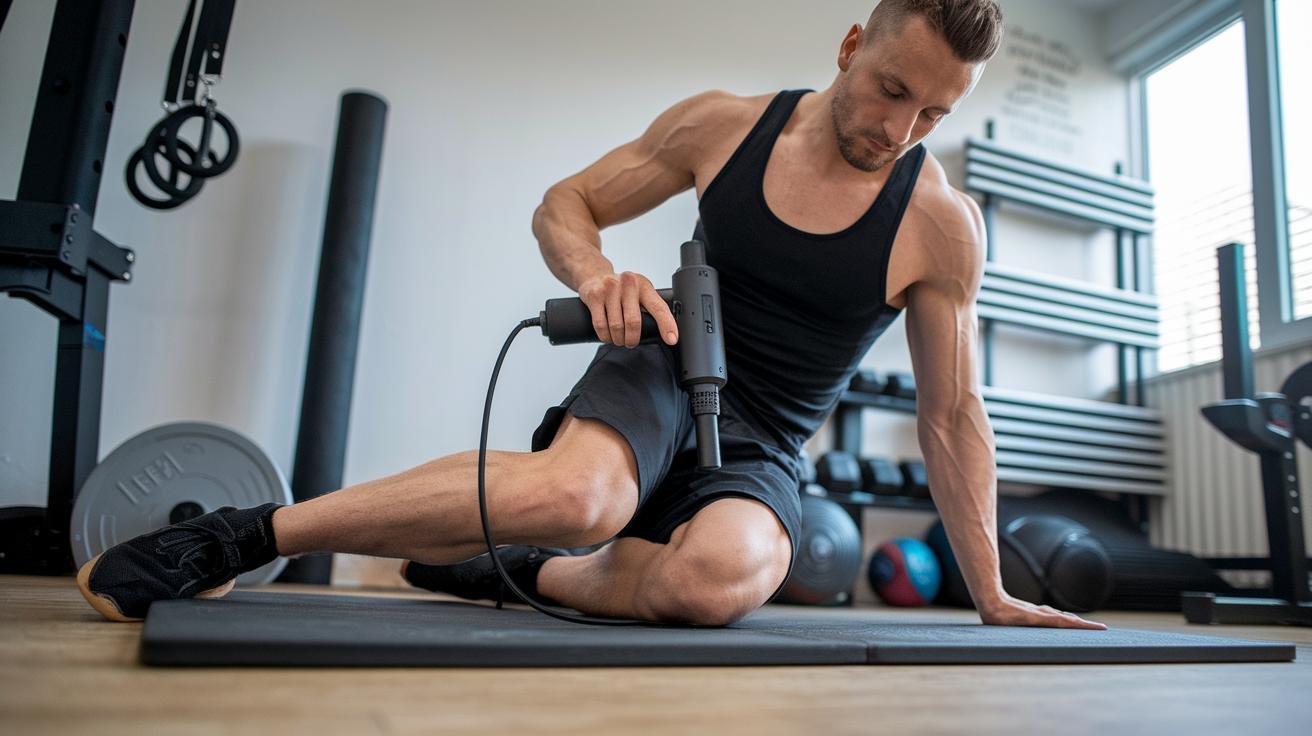
Percussive therapy devices, often called massage guns, give fast, repeated taps to your muscles. Think of it like the tapotement (a short, rhythmic tapping used in Swedish massage) that wakes tissue, loosens knots, and gently warms the area. Have you ever felt tension melt a bit after a few taps? That’s the idea.
Whether it’s a full-size massage gun or a small handheld massager, that tapotement-style pressure eases tight bands, lowers soreness, and nudges fresh blood into tired spots. It’s quick, targeted relief you can use after a workout or during a long day at your desk.
Most of these devices are motor-driven: a motor pushes a head back and forth. Two specs matter most up front , amplitude (how deep the head travels) and percussions-per-minute (speed, or how many taps happen each minute). Together they make controlled pulses that reach deeper tissue than you can with your hands, and many models use brushless motors so they run quieter.
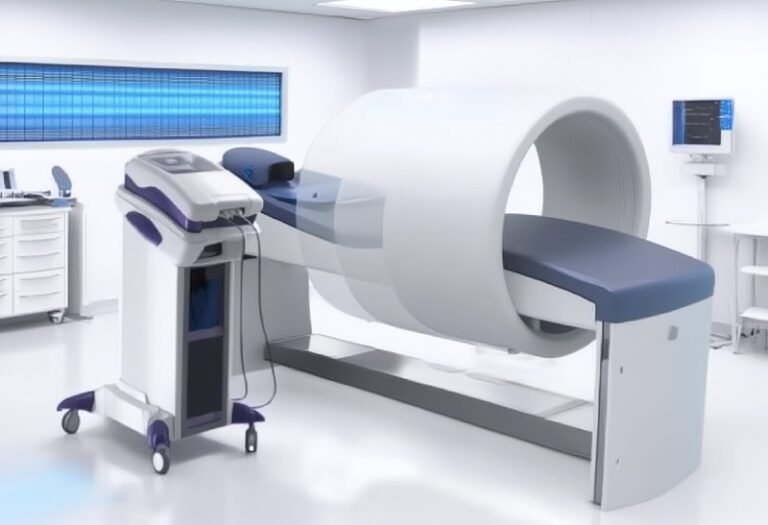
Later sections will walk you through the specs you’ll actually care about , amplitude, stall force (how much push the motor can handle before it stops), battery life, and attachments , plus safe-use tips. We’ll also compare percussive therapy to PEMF (Pulsed Electromagnetic Field therapy) and Terahertz waves (very high-frequency electromagnetic waves) for whole-body recovery, so you can pick the right tool for your routine. Oh, and here’s a neat trick: start low and short, then build up if it feels good.
Key Specifications of Percussive Massage Guns

Start with the three specs that change how a device feels on your skin: amplitude, stall force, and percussions per minute. These set the depth, the push, and the tempo. So they decide whether a session soothes surface tension or reaches deeper knots.
-
Amplitude (stroke depth): how far the head moves in and out. Typical range is about 8 mm to 16 mm. Around 12 mm is a good baseline for therapy – deep enough to find tight muscle without feeling crunchy. Think of it like the length of each massage stroke.
-
Stall force (pressure capacity): shown in pounds. Lower ratings, about 20 to 35 lb, suit light use and smaller muscles. Mid-range, 40 to 60 lb, handles denser tissue. Higher values push into very dense muscle groups and let you press harder without the motor bogging down. It’s basically how much you can lean into the gun.
-
Speed settings (PPM, percussions per minute): usually 3 to 5 levels, roughly 1,200 to 3,200 PPM (that’s how many hits per minute). Start gentle, then move to firmer work. Fast, buzzy feels have their place too.
Battery life and portability matter if you use the gun on the go. Cordless units often run from about 2 hours up to 8 hours per charge. That tells you if it will last a week of short sessions or need nightly charging. Most newer models use USB-C charging for convenience.
Noise affects comfort and discretion. Brushless motors tend to sit in a quieter band, around 35 to 55 dB. If you’ll use the device in shared spaces or late at night, aim for the lower end. Quiet = less awkwardness. Relax.
Attachments change what the head can treat. Common tips: round balls and flat heads for big muscles, bullet tips for trigger points, fork heads for working around the spine, and soft-damped heads for sensitive areas. Premium models may add heated or cold heads for targeted care. Oh, and here’s a neat trick: switch tips the way you change tools in a kitchen drawer – each one has a job.
Handle design and weight influence reach and how long you can use the gun without tiring. Straight grips are simple and familiar. Triangular or multi-grip handles make the upper back and shoulders easier to hit. Lighter units are easier to hold for long sessions; heavier units might feel sturdier when you need more pressure. Match the grip and weight to your size, strength, and how you’ll actually use it.
Quick checklist to pick the right gun for you:
- Want deep work? Look for amplitude near 12 mm or more and higher stall force.
- Using it at night or in shared spaces? Aim for brushless motors around 35 to 45 dB.
- Traveling often? Prioritize battery life, USB-C charging, and a compact form.
Have you ever found a setting that just felt like it melted the tension? Keep that in mind when you compare specs. Breathe. Try. Adjust.
Percussive Therapy Benefits for Muscle Recovery and Pain Relief
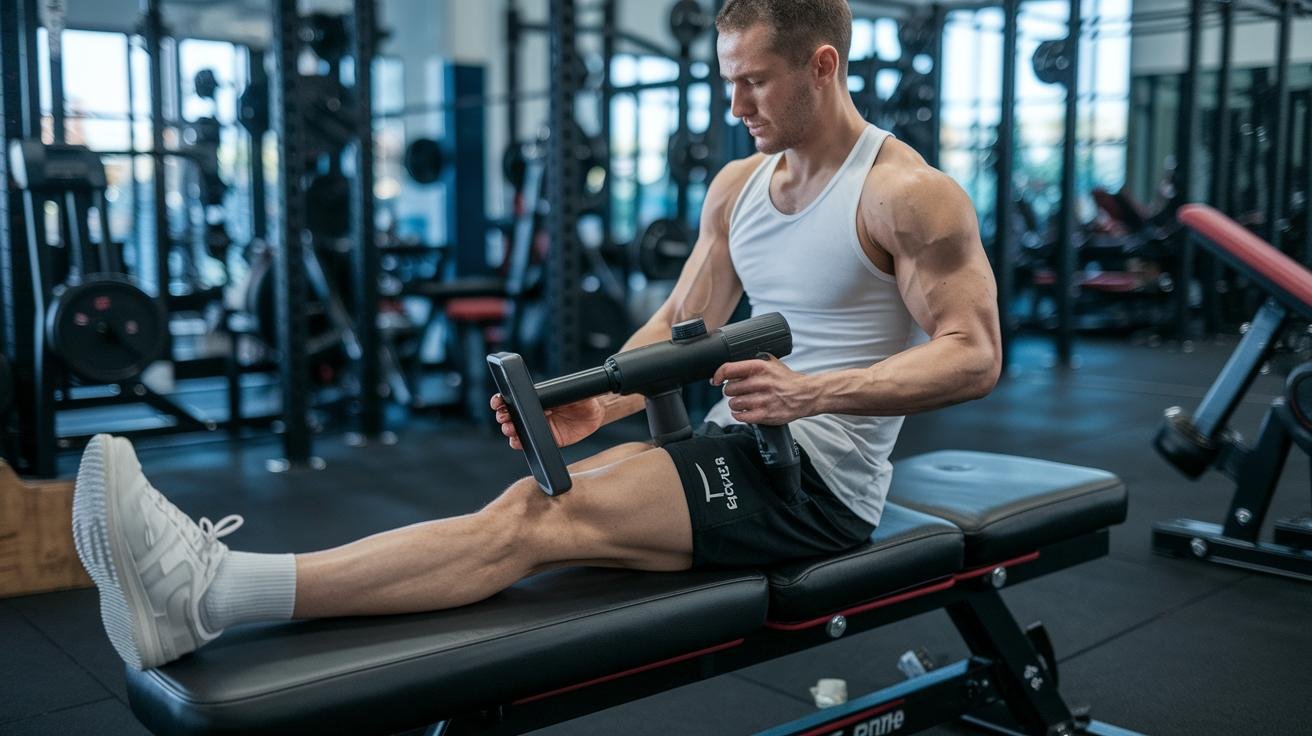
Percussive therapy (short, rapid pulses of pressure) works fast. Targeted taps loosen tight tissue, ease soreness, and help blood flow back into tired muscles so they feel fresher sooner. Have you ever felt tension melt away after a few seconds of attention? It can feel like a warm, focused thrum under the skin.
Before a workout, a quick 30-second pass over a muscle can wake nerves and boost readiness without wearing you out. Think of it like a brisk, warm-up tap that primes movement. Short and simple.
After training, spend about 60 to 90 seconds on each area to cut down nagging soreness and speed repair. That kind of post-workout recovery often means less limping the next day. Relax. Recover.
Percussion tools sit nicely between a foam roller and hands-on massage – portable, quick, and easy to slot into your routine. They’re handy when you want something faster than rolling and more direct than self-massage. Oh, and here’s a neat trick: start on low speed and increase until you feel relief.
Both athletes and desk workers see real wins. Runners report faster calf and hamstring relief after long runs. Folks who sit all day get neck and shoulder relief that helps posture and focus. A massage gun can ease stubborn knots around the shoulder blades, especially when you pair it with light stretching.
Many modern devices come with guided routines or simple speed settings, so you don’t need to be an expert to get effective results. Keep it in your gym bag or on your desk for quick access. In truth, a little percussive care goes a long way.
Percussive Therapy Devices Deliver Rapid Muscle Relief
Think of this chart as a quick way to match a massage gun to your routine , whether you need a heavy-duty tool for daily training or a budget option for once-in-a-while soreness. Pick by the specs that matter to you: amplitude (how deep the head travels, in mm), stall force (how much pressure it can take, in lbs), battery life for trips, and warranty for peace of mind. Have you ever felt a tight knot just melt away? That’s the goal.
| Model | Amplitude (mm) | Stall Force (lbs) | Speeds & PPM | Battery Life | Price Range | Key Pros/Cons |
|---|---|---|---|---|---|---|
| Ekrin B37 | 12 | 56 | 5 speeds (1,400-3,200) | 8 hrs | $$ | 7 attachments, lifetime warranty, quiet at low speeds |
| Mebak 3 | 12 | n/a | 5 speeds (640-3,200) | 2-3 hrs | $ | Touchscreen, unique heads, earlier lubricant issue fixed |
| Theragun Prime 6th Gen | 16 | n/a | 5 speeds | 2 hrs | $$$ | Bluetooth, multi-grip, louder, only 2 attachments |
| Hypervolt 2 | 12 | 40 | 3 speeds | ~2-3 hrs | $$$ | Quiet brushless motor, 5 attachments |
| Bob & Brad Q2 Pro | 7 | 35 | 5 speeds (1,800-3,000) | 2-3 hrs | $ | Hot/cold head, budget-friendly, lightweight |
Ekrin B37 shines if long battery life and a strong warranty matter to you. Eight hours is a long run time, and that lifetime warranty gives real peace of mind , like a steady sunrise you can count on.
Hypervolt 2 is where you go when quiet and a silky feel are top priorities. It’s calm, steady, and built to be comfortable during longer use.
Bob & Brad Q2 Pro is a smart pick on a budget, with extras like a hot/cold head that feel surprisingly luxe for the price.
Weight affects reach and arm fatigue. Lighter units are great for quick touch-ups and travel; they feel like a feather in your bag. Heavier guns can be steadier when you want to push deeper into a knot. Try holding one for a minute to feel the difference. Relax. Breathe.
Quick tip: if you’re weighing percussion against tech-forward recovery options, read about massage therapy for muscle recovery vs PEMF therapy (PEMF is Pulsed Electromagnetic Field therapy) to see how they compare. Oh, and here’s a neat trick , start at a low speed and let the device glide, then build up pressure slowly.
Safe and Effective Use of Percussive Massage Devices
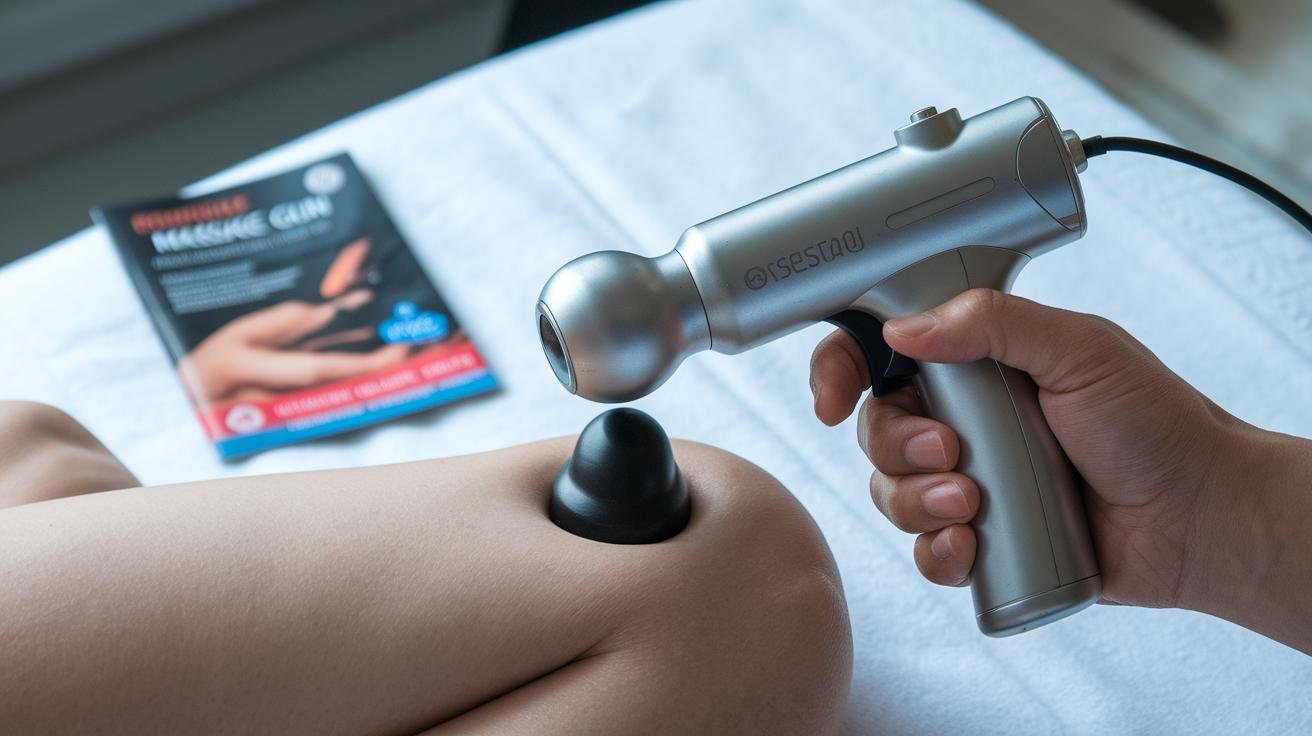
Want to feel better without making things worse? Percussive therapy (short, rapid pressure pulses from a handheld massage gun) can help loosen tight muscles when used gently. Start on low power, keep passes short, and notice how your body responds.
Some people should pause and talk with their doctor before trying percussive therapy. If you’ve had recent surgery, bleeding problems, active skin issues, a nervous system condition, cancer, or a high-risk pregnancy, don’t use the device until a clinician clears you.
- Hold the head at about a 45 degree angle and let it float over the muscle. Don’t press hard, let the motor do the work.
- Avoid bones, joints, tendons, open wounds, and areas with acute swelling or inflammation.
- Limit use to 2–3 sessions a day: about 15 seconds for a quick wake-up, 30 seconds before a run, and roughly 2 minutes per muscle for recovery.
- Stop if a spot goes numb, feels pins-and-needles, or bruises. Pain is your signal to back off.
- Unsure about a sore spot? Try low speed and short bursts first.
- Do basic care: wipe attachments after each use, check battery contacts, and store the device in a dry case.
- Read the manual for model-specific warnings and follow the manufacturer’s cleaning and battery care instructions.
Oh, and here’s a neat trick: warm the muscle with a short walk or a warm pack first. It makes the massage gun feel gentler and more effective.
A little care goes a long way. Pay attention, take it slow, and check with a clinician when health concerns come up.
🎁 Get a Free Wellness Gift
Enter your name and email below to receive a special wellness gift from OlyLife — absolutely free!
Percussive Therapy Devices Buying Guide
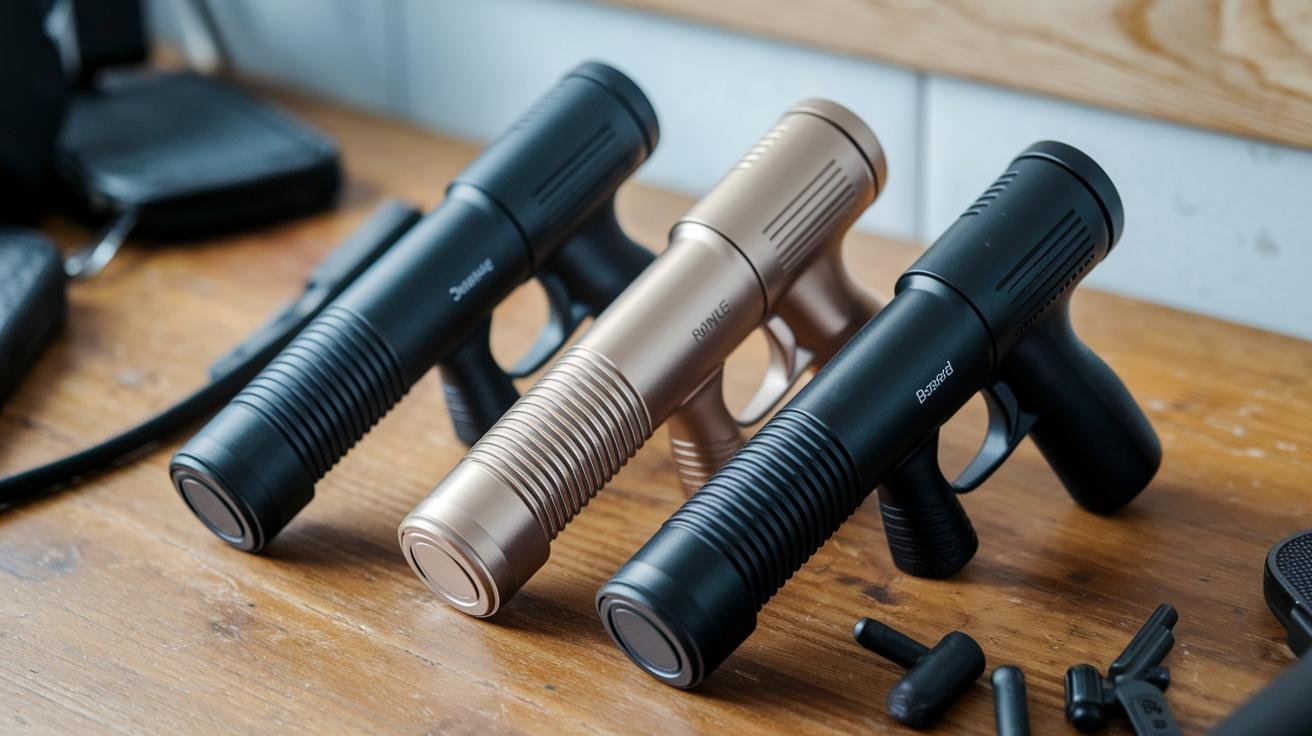
Buyer checklist:
- Device weight (about 1.1-3 lb): lighter units are easy to toss in a gym bag or suitcase; heavier ones give steadier pressure and feel more like a firm hand. Choose what fits your routine.
- Handle ergonomics: look for straight handles or triangular, multi-grip designs that help you reach shoulders, hips and lower back without straining your wrist. Comfort matters.
- Amplitude and stall force: amplitude is how far the massage head travels (deeper reach), and stall force is how much pressure the motor can handle before it slows. If you have dense, tight muscles, you’ll want higher amplitude and stronger stall force.
- Attachment variety: basics are ball, flat, bullet and fork heads. Some models add heated or dampened tips for gentler, warmer work. Think of attachments like different massage tools for different aches.
- Speed settings and control layout: aim for 3-6 speeds and buttons you can feel without looking. Simple controls keep the session smooth.
- Battery life (hours per charge): check how long it runs between charges, especially if you’ll use it for back-to-back sessions or travel. Longer battery life means less planning.
- Warranty length and return policies: read the fine print on coverage and returns. Many brands offer about a 30-day return window, but terms vary.
- Storage and cases: a padded case keeps the device and tips protected and organized. A neat case means no stray heads in your gym bag.
Where to buy and warranty tips:
Buy from the brand’s official site or big retailers so you get the full warranty and clear return rules. Check the warranty details and the return window before you click buy , many companies do roughly 30 days, but some differ. Oh, and here’s a neat trick: look for bundles that include a case or tip organizer if you travel with the unit a lot.
Maintenance and Care for Percussive Massage Guns
A little upkeep keeps your percussive massage gun (handheld device that gives quick, pulsing taps to muscles) humming and feeling fresh. Think of it like wiping sweat off after a run , quick, simple, and it makes the next session nicer. Have you ever pulled out a tool and it smelled funky or felt sticky? Yeah, avoid that.
After each use, wipe the attachment heads with isopropyl alcohol and a soft cloth, then let them air-dry. Remove the battery before any deeper cleaning so you don’t risk a short. Oh, and a cotton swab works great for getting into small crevices.
Store the unit in a padded case in a dry spot. Moisture is the enemy. If you’ll tuck the gun away for weeks, charge it fully first so the battery stays healthy. Relax. A little prep goes a long way.
Check attachments and ports about once a month. Clear any lint or grit from the openings and inspect battery contacts and cords for corrosion or fraying. If the motor starts making odd noises or performance slips, follow the trouble-shooting steps in your manual.
Follow the maker’s instructions for lubrication and more model-specific care. They know the parts best. In truth, a few simple habits now will keep your device working well and your recovery smooth.
- Sanitize and dry attachments (use isopropyl alcohol and a soft cloth).
- Remove battery before deeper cleaning; check contacts and cables for corrosion or fraying.
- Store in a padded, moisture-free case and fully charge before long-term storage.
- Consult the user manual for odd noises, poor performance, or attachment fit issues.
結語
You've got a clear run-through of what percussive massage tools do, the tapotement-style strikes and motor-driven percussions that help loosen tight muscles and boost circulation.
We broke down key specs, amplitude, stall force, speeds, battery life, and compared leading models, price tiers, and handy attachments.
We also covered safe use, short activation bursts, and simple care steps to keep a device humming.
With a thoughtful routine and the right pick, percussive therapy devices can ease tension, speed recovery, support better sleep and lift everyday energy. Feel good about trying it.
常問問題
Does percussion therapy actually work?
Percussion therapy does work for many people, easing muscle tightness, improving local blood flow, and reducing common post-workout soreness when used briefly before and after exercise.
What is the best massage gun device?
The best massage gun depends on your goals—Ekrin B37 for balanced value, Theragun Prime for a deep 16mm stroke, Hypervolt for quiet use, and Bob & Brad Q2 Pro for budget performance.
Where can I find percussive therapy devices reviews or buy them on Amazon?
You can find reviews and buy percussive therapy devices on Amazon, brand websites, and major retailers. When choosing, check amplitude, stall force, battery life, noise, attachments, and warranty.
Can a percussion device be used for lungs or respiratory care?
Percussion for lungs refers to clinical chest physiotherapy tools. Handheld massage guns are not suitable for lung treatment—consult a respiratory therapist or clinician for safe airway percussion techniques.
How do models like Hypervolt, Theragun Pro/Prime, and HoMedics compare?
They differ by stroke depth, motor force, noise, and features—Hypervolt runs quietly, Theragun offers a deeper 16mm stroke, and HoMedics provides a basic budget option.
When should you not use a percussion massager?
Avoid using a percussion massager over open wounds, recent surgery, bleeding disorders, active infection, cancer sites, around the neck or spine, during high-risk pregnancy, or on acute injuries without clinician approval.
Do chiropractors recommend massage guns?
Many chiropractors recommend massage guns as a complementary tool for muscle warm-up, mobility, and recovery; they usually advise correct technique, proper timing, and ruling out underlying injury first.