Have you ever wondered if your PEMF (Pulsed Electromagnetic Field therapy) device is quietly sharing your therapy data without you knowing?
These devices collect a steady stream of signals: session timing, intensity, heart rate, breathing, and skin temperature. They usually send that data over BLE (Bluetooth Low Energy) or Wi-Fi via your phone to cloud services (remote servers). So a single weak link can expose or even alter sensitive health readings. Think of it like a chain , one weak link and everything can fall apart.
This post explains why privacy needs to protect every link, from the device in your hand to the cloud, and it offers clear, practical steps based on tech best practices and laws like HIPAA (US health privacy law) and GDPR (EU data protection law) to keep your data private and trustworthy.
Data Privacy For Connected PEMF Devices Secured

PEMF (Pulsed Electromagnetic Field therapy) devices gather a steady stream of health signals. They pick up session timing and intensity, heart rate, breathing patterns, skin temperature and other usage details. Think of it as a quiet pulse of data about how someone’s body responds during therapy. Relax.
Those readings move off the device over wireless links like BLE (Bluetooth Low Energy) or Wi-Fi to companion apps, cloud services, hospital systems and device makers. Some devices send live telemetry (real-time data), while others upload session logs in batches. That means the path has many stops: the device itself, the patient’s smartphone, the cloud backend and any analytics or clinical partners.
So what can go wrong? First, private therapy or health data can be exposed without permission. Second, attackers could delete or corrupt data and interrupt care. Third, if readings are altered, clinicians might make wrong decisions based on bad information. Have you ever worried about a simple glitch turning into a care problem? I know I have.
Those risks get bigger when third parties, old software components or unsecured home networks touch the data. Think of the whole system like a chain of hands passing a note; one loose grip and the message changes or disappears. That’s why security must cover the full chain, not just the device.
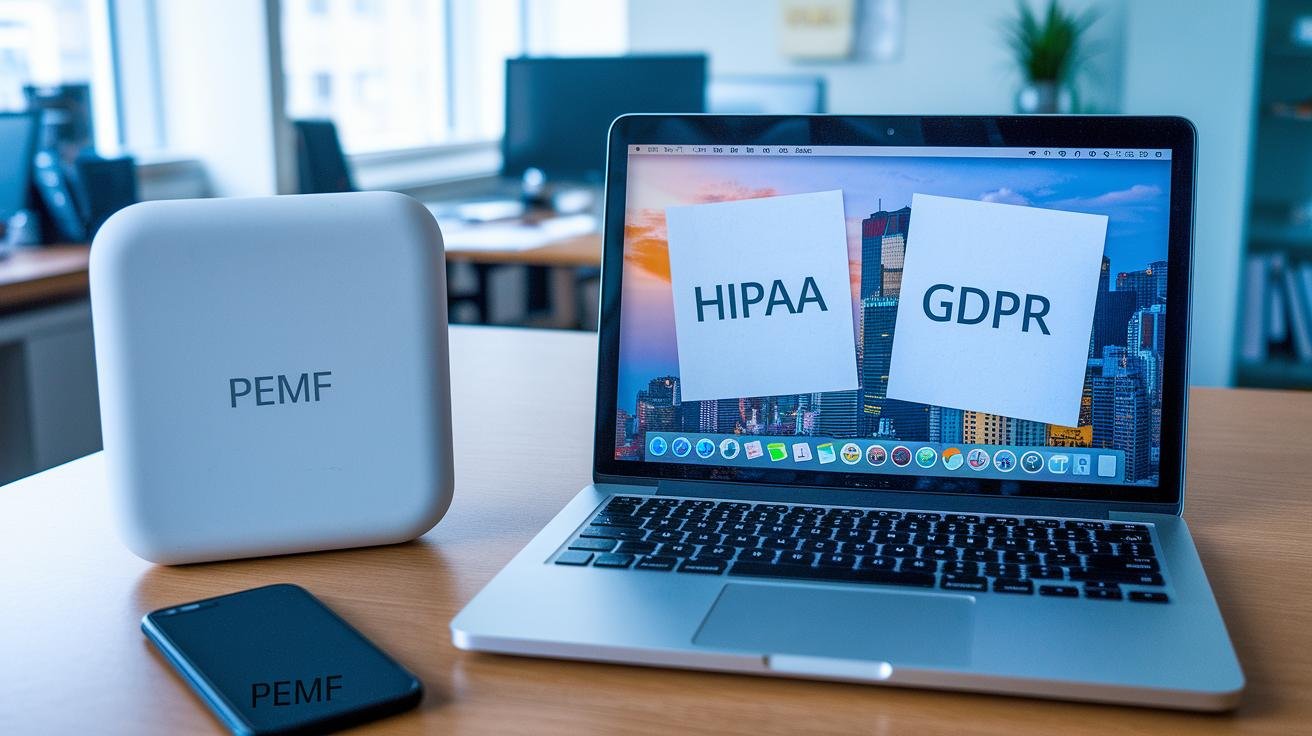
Regulatory rules help guide what to do. HIPAA (Health Insurance Portability and Accountability Act) asks covered entities to protect PHI (protected health information) with administrative, physical and technical safeguards. GDPR (General Data Protection Regulation) Article 32 asks data controllers and processors to keep personal data confidential, intact and available, and to use measures like pseudonymization and encryption where appropriate. Data controllers should map data flows, run regular risk assessments and complete Data Protection Impact Assessments (DPIAs) that list risks and how they’re being reduced.
In truth, following these practices and rules helps keep patient health data safe across the device lifecycle. Oh, and here’s a neat trick: start by documenting every touchpoint where data moves. Then prioritize fixes where the chain is weakest. Small steps add up.
Encryption and Authentication Strategies for Secure PEMF Connectivity

Strong encryption is your first line of defense for data privacy in PEMF (Pulsed Electromagnetic Field therapy) devices. GDPR Article 32 (a European data protection rule) asks for pseudonymization and encryption of personal data at rest and in transit, so think of every session log like a sealed envelope moving between hands.
-
Encrypted BLE (Bluetooth Low Energy) channels with privacy modes and pairing protections. Use a secure BLE stack for device-to-phone links and keep companion app flows tight. Oh, and read about PEMF device smartphone integration benefits while you design those channels.
-
TLS 1.2+ for Wi-Fi data transfer. TLS (Transport Layer Security) is the standard for secure internet connections. Reject weak ciphers and use modern TLS settings when the mat talks to home routers or cloud endpoints.
-
End-to-end encryption between device and cloud. Encrypt device telemetry (status and usage data) on the device so intermediate systems only ever see ciphertext. That keeps session data private and reduces the chance of tampering.
-
Secure key storage in HSMs (hardware security modules) or secure elements. Don’t store long-term keys in plain firmware. Hardware-backed storage makes key extraction much harder.
-
Regular cryptographic key rotation. Rotate device and session keys on a predictable schedule and revoke any compromised keys quickly to limit exposure. Think of it like changing locks when you lose a key.
Add multi-factor authentication at device admin points and in companion apps to stop unauthorized changes. Use a second factor such as a time-based token, push approval, or a device-bound biometric alongside a password to protect sensitive settings and logs. Have you ever felt better after locking the door? Same idea here.
Next, consider routine audits and firmware update checks as part of your security rhythm. Small steps, like tight pairing rules and timely key rotations, keep the gentle hum of your device feeling safe and private.
Implementing Secure Firmware and IoT Best Practices in PEMF Devices

Start with firmware and network controls. They close the biggest gaps attackers use. Make firmware updates signed and delivered over a protected channel so fixes reach devices before someone can exploit a hole. Add multi-factor authentication (MFA) at device admin points so a lost password alone can’t let someone change settings or load new code. Have you ever felt uneasy about a device you couldn't fully control? This helps.
Secure Boot and Firmware Integrity
Secure boot is like a guard checking badges before letting code run. It uses cryptographic signatures to make sure only trusted firmware starts. Code signing means the vendor signs firmware with a private key and the device checks that signature with a stored public key. Think of it as a locked envelope and a matching seal. Ship updates as atomic packages – that means they apply all at once or not at all – and include rollback protection plus simple version checks. That prevents a bad update from bricking a device and stops older, vulnerable images from being reintroduced. Oh, and keep a recovery mode handy for safe restores.
Network Segmentation and Intrusion Detection
Put PEMF devices (PEMF means Pulsed Electromagnetic Field therapy) on their own subnet or VLAN and limit what services they expose with tight firewall rules. It’s like putting devices in a separate room so living-room traffic can’t wander in. Run intrusion detection systems (IDS) that watch for odd patterns – repeated login failures, sudden bursts of telemetry, or unexpected ports showing traffic – and send real-time alerts. Have automatic quarantine and forensic logging ready so you can cut off a flagged device, inspect it, and bring it back online safely. Quarantine is simple: isolate first, investigate next, then return to service when clean.
Relax. These steps aren’t magic, but they form a practical, layered defense that keeps firmware honest and networks tidy. Small habits, like signing every update and segmenting devices, add up to much stronger security over time.
Privacy by Design: Data Storage and Consent Management for PEMF Devices

GDPR’s privacy-by-design rule (Article 25) asks that the strongest privacy settings be on by default. For PEMF (Pulsed Electromagnetic Field therapy) devices, that means building privacy and security into the hardware, firmware, and apps from day one. Think of it like keeping the lights low and the front door locked until someone chooses otherwise. The goal is simple: keep data small, safe, and used only for a clear purpose.
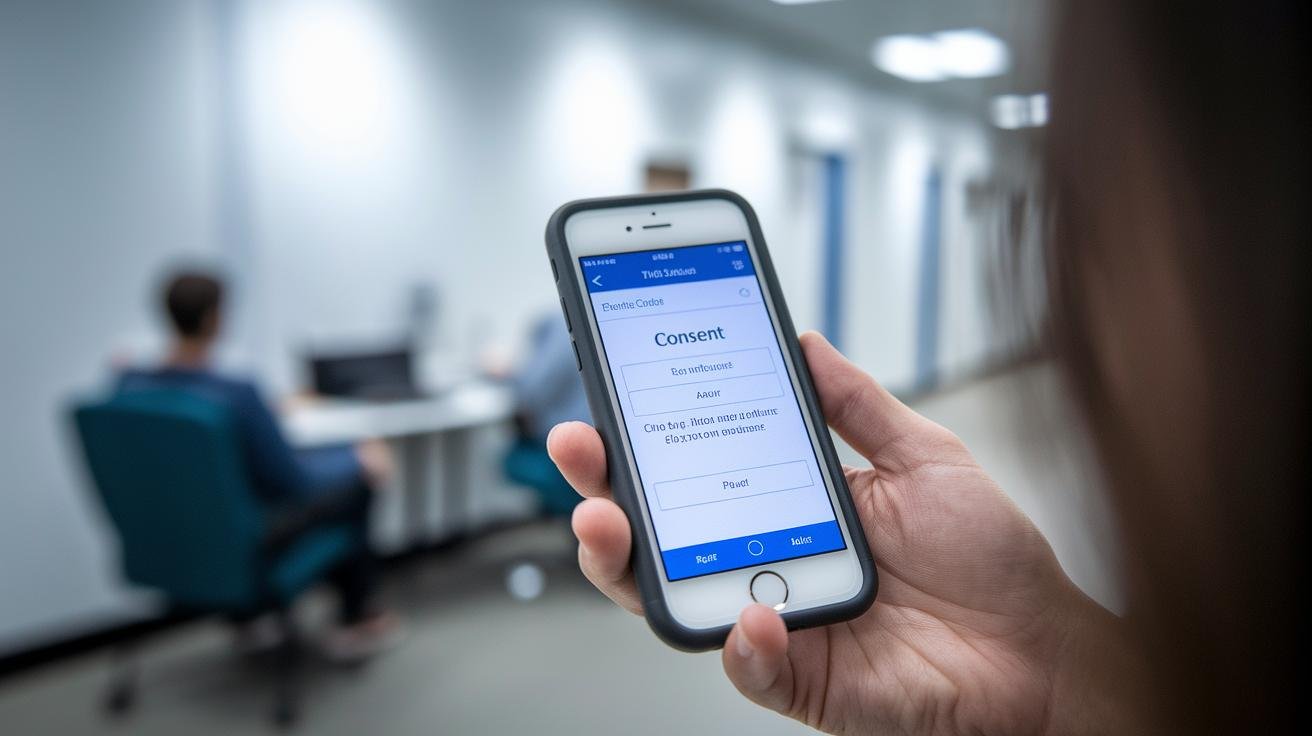
- Implement opt-in consent screens.
- Ask people to opt in, in plain language, and get separate consent for device use and for each type of data processing.
- Make choices obvious, time-stamped, and easy to change inside the companion app so users can revoke consent anytime.
- Segregate analytics and therapeutic data, and follow data minimization.
- Keep session logs needed for care in a tightly controlled store, and move nonessential telemetry to a separate analytics pool.
- Collect only the fields you actually need for the stated purpose (data minimization = collecting as little personal data as possible).
- Pseudonymize data before storage.
- Remove direct identifiers at the edge and replace them with coded IDs (pseudonymization = swapping names for codes).
- Keep the re-identification map under strict, audited access. When you can, share anonymized datasets for research so re-identification risk drops.
- Publish clear, layered privacy notices.
- Offer a short summary up front and a detailed policy behind a single tap.
- Clearly explain the legal bases, any third-party sharing, retention periods, and how you handle minors’ rights.
- Enforce predefined retention policies.
- Use short default retention windows tied to the clinical need, then archive or delete automatically when the purpose ends.
- Log each retention action so you can show compliance during reviews.
- Automate secure erasure on request.
- Build a workflow that deletes primary records, triggers backup purges, and reports completion back to the user.
- Keep audit trails that prove the erasure and record the identity checks performed.
Consent isn’t a one-time checkbox. Refresh consent when features or partners change, surface clear privacy settings in the app, and update DPIAs (Data Protection Impact Assessments) so users stay informed and in control. Want to sleep easier? Treat privacy like a gentle lock on your wellness data, visible, simple to change, and reassuring.
Regulatory Compliance Landscape for Connected PEMF Devices in the US and EU

Connected PEMF (Pulsed Electromagnetic Field therapy) devices are treated like medical products that also carry data duties. In plain terms: regulators care about both device safety and how you handle people’s data. Think of it as two jobs in one, safety and privacy working together.
In the United States the FDA regulates PEMF systems as medical devices. One system was cleared in 2004 for cervical fusion, and recent draft guidance suggests many PEMF products could move from Class III toward Class II because they pose lower risk. When a device collects protected health information (PHI), HIPAA applies, so makers and clinical partners must follow administrative, physical, and technical safeguards. And if you handle data from Californians, the California Consumer Privacy Act (CCPA) adds consumer-rights obligations you’ll need to honor.
In the European Union the Medical Device Regulation (MDR) is the big rulebook. Getting a CE mark means doing a conformity assessment, running a quality management system like ISO 13485, and treating device software carefully (software can be a medical device too). The GDPR covers personal and health data, and it sets strict rules for cross-border transfers. Some member states may also add local hosting or data-localization requirements. For background on device classification and product framing, see PEMF technology overview.
| Jurisdiction | Key Regulation | Data Privacy Focus | 筆記 |
|---|---|---|---|
| USA | FDA (Class II/III) | HIPAA, secure design | 2004 clearance; draft guidances |
| EU | MDR + CE Mark | GDPR, QMS per ISO 13485 | Software as medical device |
| CA | CCPA | Consumer data rights | Applies to resident data |
There are extra rules at national and state levels, too. Cloud hosting choices matter a lot for telemetry and session logs. If you move data across borders, you’ll need GDPR transfer safeguards or local hosting where required. In the US, state boards and sector laws can change how PEMF is used in veterinary or wellness settings.
What should device teams actually do? Start by mapping data flows. Records of Processing Activities (RoPA) are your map of where data goes. Run Data Protection Impact Assessments (DPIA) when risks are high. Appoint a Data Protection Officer (DPO) if it fits your risk profile. Align your quality system to ISO 13485 and adopt information-security standards so audits feel less scary. Oh, and keep a tidy audit folder. Relax. You don’t need to fix everything at once, but these steps will get you on solid ground.
Conducting Risk Assessments and Breach Response for PEMF Device Privacy

Begin with a clear risk-assessment framework that traces your PEMF (Pulsed Electromagnetic Field therapy) device data from the mat, to the app, to the cloud. Map every handoff and storage point so you can see where data sits and who touches it. Use a DPIA (Data Protection Impact Assessment) to list likely threats, the exact data elements at risk, and concrete mitigations you can actually test.
Think of monitoring like listening for odd beats in a heart. Use continuous monitoring and anomaly detection (software that flags unusual patterns) to spot telemetry spikes or strange access behavior. Pair those systems with strong user identity verification, like multi-factor authentication, so only the right people get in.
- Detection – Centralize your logs and enable real-time alerting so suspicious reads, bulk exports, or weird session activity get noticed fast. Keep baseline profiles of normal device telemetry so alerts mean something and are not just noise. Tune alerts regularly.
- Containment – When you see a problem, isolate the affected devices or network segments and revoke any compromised credentials. Pause cloud integrations if you must, lock transfer channels, and stop further data flow while you take control.
- Investigation – Preserve immutable forensic logs and keep your audit trail intact. Correlate events across device, app, and backend, then do a root-cause analysis that updates your threat model and fixes blind spots. Collecting clean evidence matters.
- Notification – Follow timelines under GDPR (EU data protection rules) and HIPAA (US health privacy rules) when notifying regulators, downstream controllers, and affected users. Be clear about what happened, the scope, and next steps. Have prewritten templates ready to speed up communication.
- Remediation – Ship patches or firmware updates, rotate keys, and tighten access controls. Then revise your DPIA and risk-assessment framework so the same issue is less likely to repeat.
Keep meticulous, time-stamped, tamper-evident audit logs to support compliance audits and regulator questions. Run periodic incident-response drills and RoPA (Record of Processing Activities) reviews so your team moves with calm speed when a real event happens. Practice makes response feel natural. Relax. Breathe. Then act.
Manufacturer Guidelines and Implementation Checklist for Data Privacy in PEMF Devices

This is a compact checklist for PEMF (Pulsed Electromagnetic Field) devices. It avoids repeating earlier material. See Regulatory Compliance, Firmware, Privacy-by-Design, Risk & Breach Response, and Encryption for full guidance. Those sections hold the templates, DPIA workflows and RoPA (Record of Processing Activities) practices so you don’t have to read the same advice twice.
-
Run DPIAs early and keep RoPA current. Think of a DPIA like a map of your device’s data journey , simple, clear and done before people test the device. Have you run one before first human testing?
"Run a DPIA before first human testing: map data flows, list risks, pick mitigations." -
Put vendor and supply-chain controls in place. Require signed data-sharing agreements and provenance attestations so every third party is accountable. A provenance attestation is just a signed proof of where a build or component came from.
-
Secure firmware and sign build attestations. Use hardware-backed keys to sign releases and keep a log that ties each build to its attestation. It’s like sealing a package with a locked stamp and saving that stamp in your archive.
"Sign every firmware image with a protected key and archive the build attestation alongside the release notes." -
Harden authentication and onboarding. Use token-based provisioning (short-lived cryptographic tokens used to onboard devices) and set per-device API rate limits to cut down on misuse and brute-force attempts. Small tokens, tight limits.
-
Maintain lifecycle audits and post-market telemetry. Keep traceable audit trails from prototype through updates , design reviews, test results and remediation steps should all be logged. That way you can always show a clear patch timeline if something goes wrong.
"Log design reviews, test results and remediation actions so a patch timeline is always available."
Optional: move a full manufacturer implementation checklist to an appendix or a downloadable checklist so the main article stays focused and non-repetitive. Oh, and one neat tip: keep your checklist versioned like your firmware, so you can match policy to build in an instant.
Keep it simple, log everything, and make privacy part of every step.
結語
We walked through how PEMF systems capture session logs and real-time physiological readings, the main privacy risks, and the HIPAA/GDPR duties device makers and service teams face. You saw encryption, authentication, firmware integrity, privacy-by-design, risk assessments, and a practical implementation checklist.
Use encrypted BLE and TLS channels, signed firmware updates, clear opt-in consent screens, and audit-ready logs to cut breach risk. Regular DPIAs and incident plans keep response fast and traceable.
Follow these steps and you’ll build safer tools that support deep relaxation, faster recovery, and better sleep. Protecting data privacy for connected PEMF devices is achievable, and it helps people feel genuinely cared for.
常問問題
常見問題解答
Is PEMF considered a medical device?
PEMF is considered a medical device when marketed for diagnosis or therapy; regulators like the FDA treat therapeutic PEMF systems as medical devices and have cleared devices under medical-device pathways.
What are the top 3 big data privacy risks?
The top three big data privacy risks are unauthorized disclosure of therapy or health records, data loss from cyberattacks, and integrity compromise that could lead to misleading treatment outcomes.
What are the risks of a PEMF machine?
The risks of a PEMF machine include interference with implanted devices (like pacemakers), skin irritation or burns from misuse, incorrect dosing that harms effectiveness, and software or firmware flaws affecting safety.
Can you use a phone on PEMF mat?
Using a phone on a PEMF mat is not recommended; magnetic pulses can disrupt phone function and wireless links, and close proximity may interfere with therapy—keep phones off the mat or at the device’s advised distance.