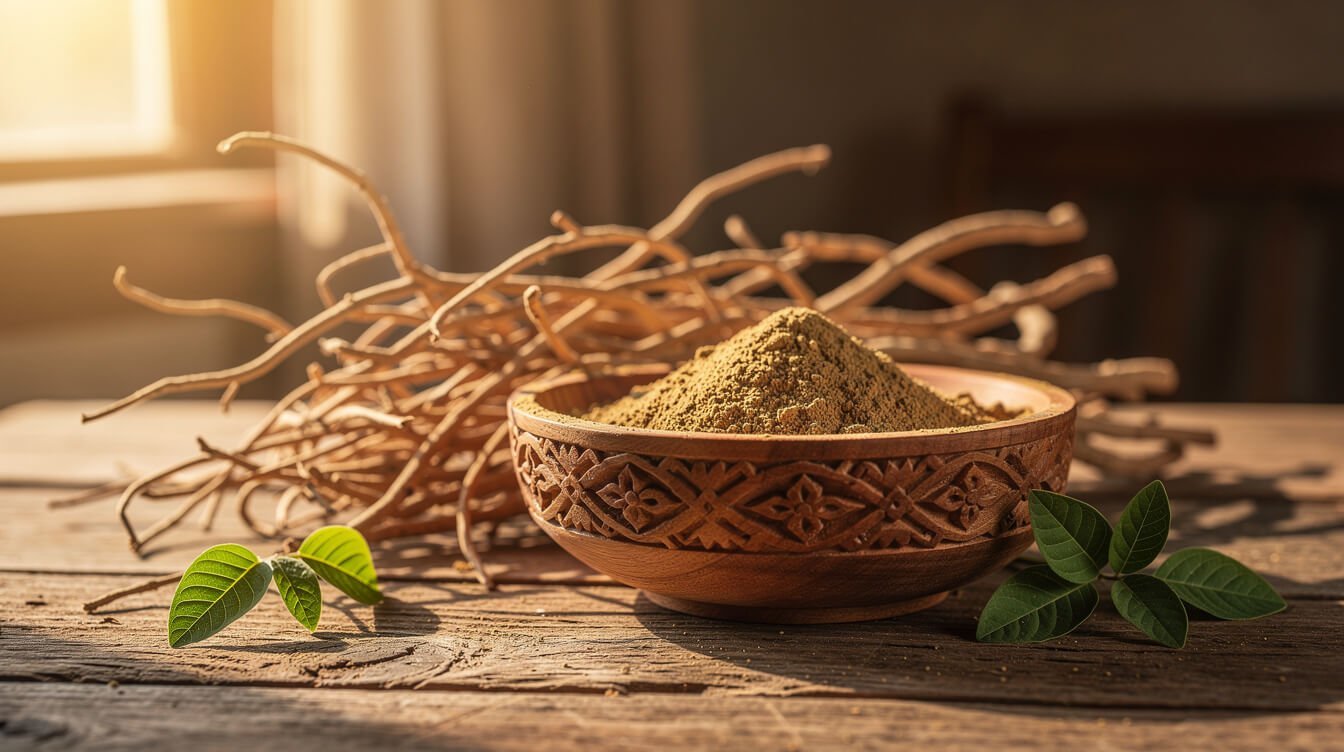
Ashwagandha Benefits: Your Complete Guide to This Ancient Adaptogen
If you’ve been exploring natural wellness, chances are you’ve come across ashwagandha — and for good reason. This remarkable herb has been a cornerstone of Ayurvedic medicine for over 3,000 years, and modern research is now catching up to what traditional healers have long understood about its potential ashwagandha benefits for stress relief, sleep quality, and overall vitality.
But with so much information floating around, it can be hard to separate evidence-based insights from hype. In this comprehensive guide, we’ll walk you through everything you need to know about ashwagandha — from its ancient roots to the latest scientific research, practical dosage guidance, and simple ways to make it part of your daily wellness routine.
What Is Ashwagandha? Understanding This Ancient Adaptogen

Ashwagandha (Withania somnifera) is a small evergreen shrub native to India, the Middle East, and parts of Africa. Its name comes from the Sanskrit words ashva (horse) and gandha (smell) — a reference to both the herb’s distinctive earthy aroma and the traditional belief that it could impart the strength and vitality of a horse.
In Ayurvedic tradition, ashwagandha holds a special place as a Rasayana — a rejuvenating tonic believed to promote longevity, vitality, and overall wellbeing. For millennia, practitioners have used the root to support the body’s natural resilience to physical and emotional stress, a concept that modern science now calls adaptogenic activity.
As an adaptogen, ashwagandha works by helping your body maintain balance when facing stressors — whether physical, mental, or environmental. Unlike stimulants that push your body harder, adaptogens support your natural stress-response system, helping you find equilibrium rather than simply masking symptoms.
Key Active Compounds
The primary bioactive compounds in ashwagandha are withanolides — a group of naturally occurring steroidal lactones. Research has identified over 40 different withanolides in ashwagandha, with withaferin A and withanolide D being among the most studied. These compounds are believed to be responsible for many of ashwagandha’s therapeutic properties, including its effects on the stress-response system and its ability to support healthy inflammatory pathways.
The root also contains beneficial alkaloids, saponins, and iron — making it a nutritionally complex botanical that offers more than any single isolated compound could provide.
8 Evidence-Based Ashwagandha Benefits

While traditional use spans thousands of years, modern clinical research has begun to validate many of ashwagandha’s reported benefits. Here’s what the science suggests so far.
1. May Help Reduce Stress and Lower Cortisol
This is perhaps the most well-documented ashwagandha benefit. Multiple clinical trials have shown that ashwagandha root extract may significantly reduce perceived stress and measurably lower cortisol levels — the body’s primary stress hormone.
A notable study published in the Indian Journal of Psychological Medicine found that participants taking 300 mg of ashwagandha root extract twice daily for 60 days experienced a 44% reduction in perceived stress scores, compared to just 5.5% in the placebo group. Serum cortisol levels dropped by an average of 27.9% in the ashwagandha group.
Another randomized controlled trial found that adults taking 240 mg of standardized ashwagandha extract daily reported significantly lower anxiety levels and reduced morning cortisol compared to the placebo group (Medicine, 2019). If you’re looking for natural ways to manage everyday stress, ashwagandha may be worth exploring alongside practices like meditation and breathwork.
2. May Support Better Sleep Quality
Struggling with restless nights? Ashwagandha has shown promising results as a natural sleep support. A comprehensive meta-analysis of five randomized controlled trials, published in PLOS One (2021), concluded that ashwagandha supplementation had a small but significant positive effect on overall sleep quality.
The benefits appeared most pronounced in individuals with insomnia, and the effect was stronger at doses of 600 mg or more taken for at least eight weeks. One study found that participants taking ashwagandha root extract fell asleep faster, spent more time asleep, and reported better sleep quality upon waking compared to the placebo group.
The sleep-promoting effects may be partly due to ashwagandha’s influence on GABAergic pathways — the same neurotransmitter system targeted by many conventional sleep medications, but through a gentler, more balanced mechanism.
3. May Enhance Cognitive Function and Memory
Emerging research suggests ashwagandha may support brain health and cognitive performance. A 2024 systematic review published in Frontiers in Nutrition (Guo & Rezaei) analyzed multiple studies and found evidence that ashwagandha supplementation may improve attention, information processing speed, and executive function.
An earlier study in the Journal of Dietary Supplements (2017) demonstrated that 300 mg of ashwagandha root extract taken twice daily for eight weeks led to significant improvements in both immediate and general memory, as well as improvements in attention and information processing speed.
These cognitive benefits may be linked to ashwagandha’s antioxidant properties, which could help protect nerve cells from oxidative damage — a key factor in age-related cognitive decline.
4. May Support Physical Performance and Recovery
Athletes and fitness enthusiasts are increasingly interested in ashwagandha’s potential to enhance physical performance. Research suggests it may improve VO2 max (a measure of cardiovascular fitness), increase muscle strength, and support post-exercise recovery.
A study published in the Journal of the International Society of Sports Nutrition found that participants taking 600 mg of ashwagandha root extract daily for 12 weeks showed significantly greater increases in muscle strength and size compared to a placebo group, along with greater reductions in exercise-induced muscle damage and body fat percentage.
Another study found that ashwagandha supplementation improved cardiorespiratory endurance in healthy athletic adults, with notable increases in VO2 max after eight weeks of supplementation.
5. May Help Balance Hormones
Ashwagandha may support hormonal health in both men and women. In men, several studies have shown that ashwagandha supplementation may support healthy testosterone levels and reproductive health. A systematic review in the American Journal of Men’s Health (2019) concluded that ashwagandha may modestly increase testosterone and support healthy sperm parameters.
For women, preliminary research suggests ashwagandha may help balance thyroid hormones — particularly in cases of subclinical hypothyroidism. A small study published in the Journal of Alternative and Complementary Medicine found that ashwagandha root extract normalized serum thyroid indices in participants with elevated TSH levels.
6. May Support a Healthy Inflammatory Response
Chronic low-grade inflammation is increasingly recognized as a factor in many modern health concerns. Ashwagandha’s withanolides — particularly withaferin A — have demonstrated notable anti-inflammatory properties in laboratory and clinical studies.
Research suggests ashwagandha may help modulate the NF-κB inflammatory pathway and reduce levels of C-reactive protein (CRP), a key marker of systemic inflammation. If you’re interested in natural approaches to supporting a healthy inflammatory response, combining ashwagandha with anti-inflammatory foods and other botanicals like turmeric may offer complementary support.
7. May Boost Immune Function
Ashwagandha has traditionally been used as an immune-supporting herb, and modern research is beginning to understand why. Studies suggest it may enhance both innate and adaptive immune responses — the two arms of your immune system that work together to protect your body.
A clinical study found that ashwagandha root extract increased the activity of natural killer (NK) cells — specialized immune cells that play a critical role in your body’s first line of defense. Other research has shown that ashwagandha may enhance immunoglobulin production, potentially supporting your body’s ability to respond to immune challenges.
8. May Support Mood and Emotional Wellbeing
Beyond its stress-relieving properties, ashwagandha may also support overall mood and emotional balance. A randomized, double-blind study published in Cureus (2019) found that participants taking ashwagandha reported significant improvements in quality of life scores, including better social functioning and overall vitality.
These mood-supporting effects may be related to ashwagandha’s influence on serotonin pathways and its ability to help regulate the hypothalamic-pituitary-adrenal (HPA) axis — the central command system for your body’s stress response.
Ashwagandha Dosage Guide: Finding Your Ideal Amount
One of the most common questions about ashwagandha is how much to take. While there’s no universally standardized dose, clinical research provides helpful guidance based on your wellness goals.
Dosage by Purpose
- General stress support: 300–600 mg of root extract daily, typically divided into two doses (morning and evening)
- Sleep support: 600 mg or more of root extract, taken 1–2 hours before bedtime
- Cognitive support: 300 mg twice daily (600 mg total)
- Physical performance: 300–600 mg of root extract daily, taken consistently for at least 8 weeks
- Hormonal support: 300–600 mg daily, based on available clinical evidence
Important Dosage Considerations
The dosage also depends on the type of extract you’re using. Standardized extracts like KSM-66 and Sensoril are more concentrated than generic root powder, so lower doses may be equally effective. Most clinical studies showing positive results used standardized extracts at 300–600 mg daily for 8–12 weeks.
Start with a lower dose and gradually increase to assess your body’s response. Ashwagandha’s benefits tend to build over time — most studies show meaningful results after 4–8 weeks of consistent use, so patience is key.
🎁 Get a Free Wellness Gift
Enter your name and email below to receive a special wellness gift from OlyLife — absolutely free!
Types and Forms of Ashwagandha: Which One Is Right for You?
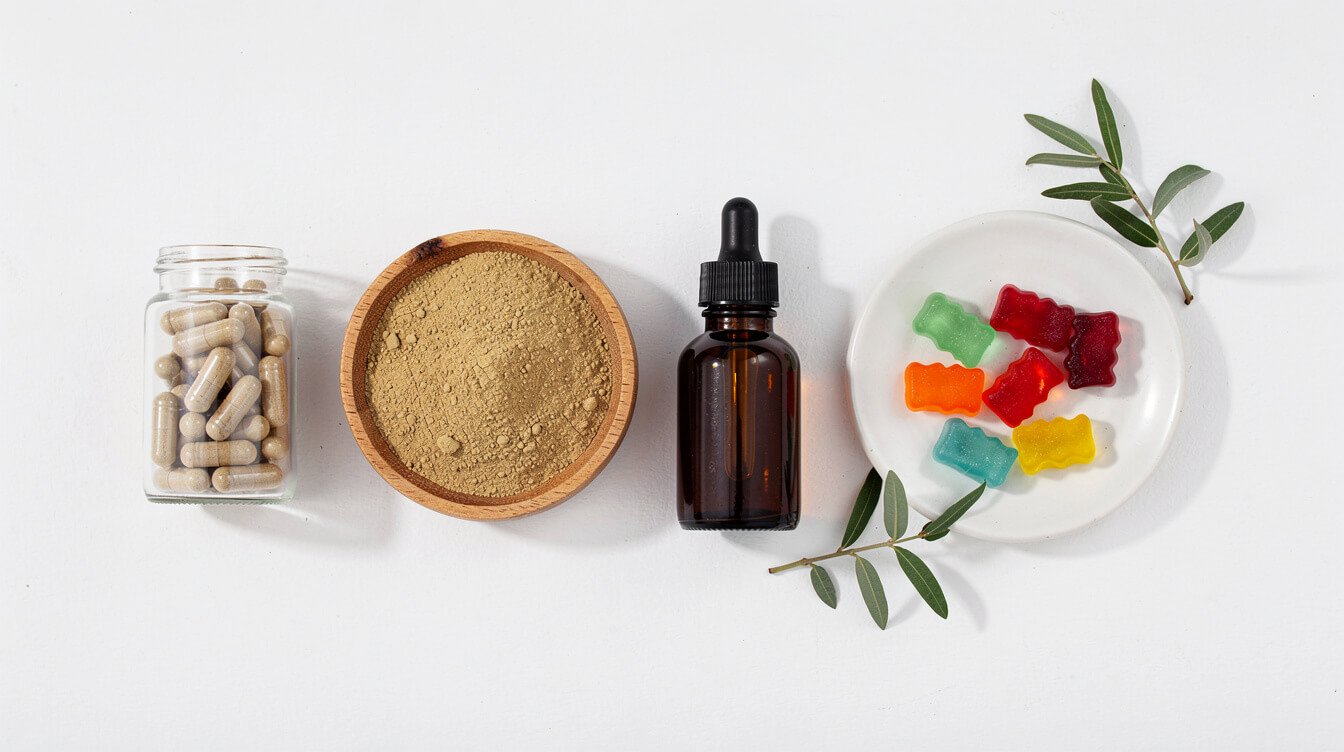
Not all ashwagandha supplements are created equal. Understanding the differences between extract types and delivery forms can help you choose the most effective option for your needs.
Standardized Extracts
KSM-66: This is a full-spectrum root extract standardized to contain at least 5% withanolides. It’s the most clinically studied ashwagandha extract, with over 24 published clinical trials supporting its efficacy. KSM-66 uses a unique extraction process that preserves the natural balance of the root’s active compounds.
Sensoril: Made from both the root and leaf of the ashwagandha plant, Sensoril is standardized to at least 10% withanolides — a higher concentration than KSM-66. This means effective doses may be lower (typically 125–250 mg). It tends to be more calming, making it a popular choice for stress and sleep support.
Generic root powder: Whole root powder is the most traditional form, but it contains a lower and more variable concentration of withanolides (typically 1–2%). You’ll generally need higher doses (1,000–2,000 mg) to achieve similar effects to standardized extracts.
Delivery Forms
- Capsules/tablets: Most convenient and precise for dosing. Ideal for daily supplementation.
- Powder: Versatile — can be mixed into warm milk, smoothies, or recipes. Offers a more traditional experience but may have a bitter, earthy taste.
- Liquid extracts/tinctures: Fast absorption. Good for those who prefer not to swallow capsules.
- Gummies: Convenient and pleasant-tasting, though they may contain added sugars and offer lower doses per serving.
What to Look For
When choosing an ashwagandha supplement, look for products that clearly state the withanolide percentage, use a named standardized extract (KSM-66 or Sensoril), provide third-party testing certificates, and specify whether the extract is from root only or root-and-leaf.
How to Incorporate Ashwagandha Into Your Daily Routine
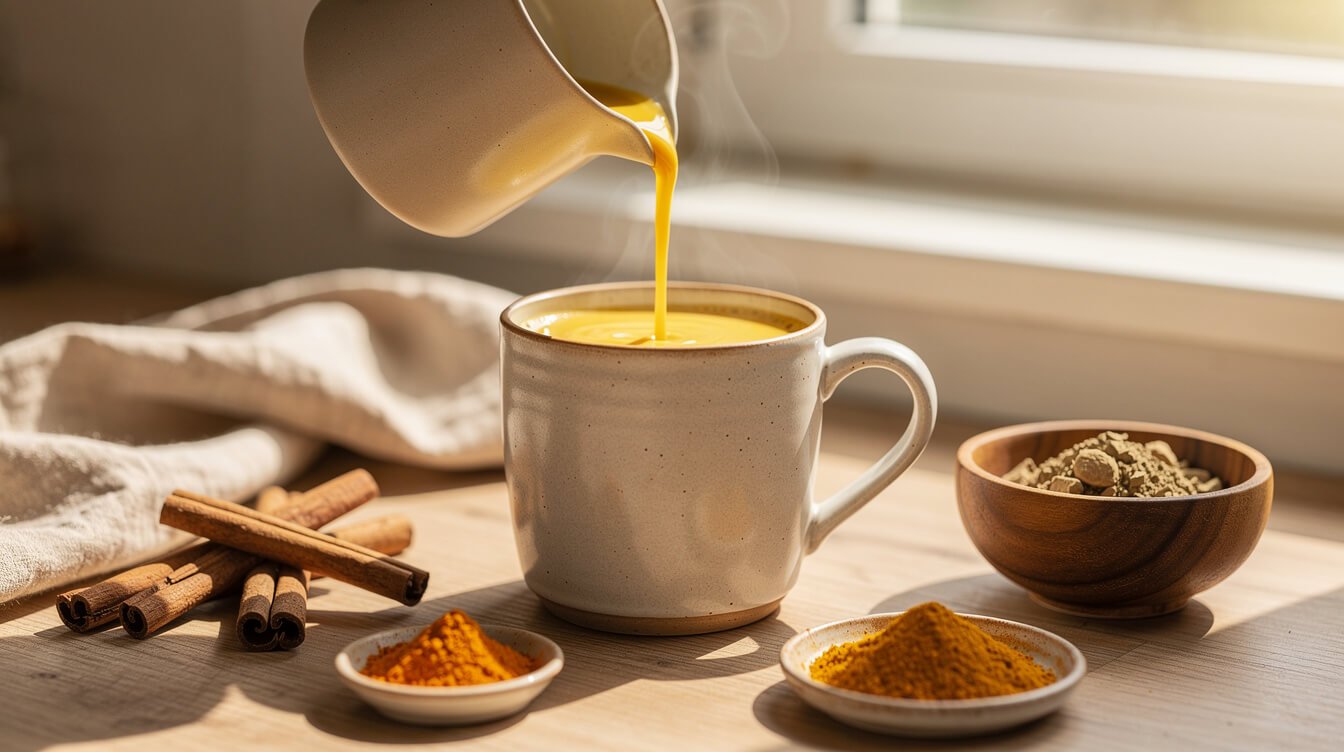
Making ashwagandha a consistent part of your wellness routine doesn’t have to be complicated. Here are some practical, enjoyable ways to take this adaptogen daily.
Ashwagandha Moon Milk
This traditional Ayurvedic beverage is one of the most soothing ways to enjoy ashwagandha — especially before bed. Warm one cup of milk (dairy or plant-based), then whisk in 1/2 teaspoon of ashwagandha powder, 1/4 teaspoon of cinnamon, a pinch of nutmeg, and a drizzle of honey. The warm milk and gentle spices create a calming ritual that pairs beautifully with ashwagandha’s natural sleep-supporting properties.
Morning Wellness Smoothie
Blend one scoop of ashwagandha powder into your morning smoothie with banana, almond butter, a handful of spinach, and your preferred milk. The other flavors help mask ashwagandha’s naturally bitter taste while providing a nourishing start to your day.
Synergistic Pairings
Ashwagandha works beautifully alongside other natural wellness allies:
- Magnesium — supports relaxation and sleep when paired with ashwagandha’s calming effects
- Rhodiola rosea — another adaptogen that may complement ashwagandha’s stress-management properties, offering more energizing support during the day
- Black pepper extract (piperine) — may enhance the bioavailability of ashwagandha’s withanolides, similar to how it boosts turmeric absorption
- L-theanine — an amino acid found in green tea that may enhance ashwagandha’s calming effects without causing drowsiness
Timing Tips
For stress management, splitting your dose between morning and evening tends to provide the most balanced support throughout the day. For sleep, taking your full dose about an hour before bedtime may be most effective. Ashwagandha can be taken with or without food, though taking it with a meal may reduce the chance of mild stomach discomfort.
Ashwagandha Safety, Side Effects, and Precautions

Ashwagandha is generally well-tolerated in clinical studies, with most participants reporting no significant adverse effects at standard doses (300–600 mg daily) over 8–12 weeks. However, it’s important to be aware of potential considerations.
Possible Side Effects
Some people may experience mild digestive discomfort — particularly when taking ashwagandha on an empty stomach or at higher doses. Other occasionally reported side effects include drowsiness (especially at higher doses), headache, and in rare cases, changes in thyroid function.
Who Should Avoid Ashwagandha
- Pregnant or breastfeeding women — ashwagandha is traditionally contraindicated during pregnancy
- People with autoimmune conditions — because ashwagandha may stimulate immune activity, those with lupus, rheumatoid arthritis, or multiple sclerosis should consult their healthcare provider first
- Those taking thyroid medications — ashwagandha may influence thyroid hormone levels and could interact with thyroid medication
- People on immunosuppressant drugs — ashwagandha’s immune-enhancing effects may interfere with these medications
- Those scheduled for surgery — discontinue use at least two weeks before scheduled procedures, as ashwagandha may affect anesthesia and blood sugar levels
Cycling Ashwagandha
While there’s no universal consensus on cycling ashwagandha, many wellness practitioners recommend taking it for 8–12 weeks followed by a 2–4 week break. This approach may help prevent tolerance buildup and allows you to reassess how you feel without supplementation. Some people use ashwagandha seasonally — during periods of higher stress — rather than year-round.
Important: Always consult a qualified healthcare professional before starting any new supplement, especially if you have existing health conditions or take medications. This guide is for educational purposes and does not constitute medical advice.
Frequently Asked Questions About Ashwagandha Benefits

How long does it take for ashwagandha to work?
Most clinical studies show noticeable benefits after 4–8 weeks of consistent daily use. Some people report subtle changes in stress response within the first two weeks, but the full range of ashwagandha benefits tends to develop gradually. Patience and consistency are key.
Can I take ashwagandha every day?
Yes, most clinical research involves daily supplementation over periods of 8–12 weeks. Many people take ashwagandha daily as part of their wellness routine, though some practitioners recommend periodic breaks (see the cycling section above).
Is ashwagandha better in the morning or at night?
It depends on your goals. For general stress support, splitting your dose between morning and evening is common. For sleep support, taking it in the evening works best. Ashwagandha is not a stimulant, so it generally won’t disrupt sleep if taken in the morning.
Can ashwagandha be taken with other supplements?
Ashwagandha generally pairs well with other wellness supplements like magnesium, vitamin D, and omega-3 fatty acids. However, always consult your healthcare provider about potential interactions, especially if you take prescription medications.
Does ashwagandha cause weight gain?
Ashwagandha itself is not associated with weight gain. In fact, some research suggests it may help reduce stress-related food cravings and support healthy cortisol levels — both of which may indirectly support weight management goals.
Final Thoughts: Embracing Ashwagandha as Part of Your Wellness Journey
Ashwagandha represents a beautiful convergence of ancient wisdom and modern science. For over three millennia, this remarkable adaptogen has been treasured in Ayurvedic tradition, and today’s research is providing growing evidence for many of the ashwagandha benefits that traditional practitioners have long observed.
Whether you’re looking to manage everyday stress more gracefully, support deeper sleep, enhance your mental clarity, or simply build greater resilience in a demanding world, ashwagandha offers a gentle, evidence-informed path forward. Combined with other holistic practices like regular meditation, nourishing anti-inflammatory foods, and mindful movement, it can be a powerful ally in your wellness toolkit.
As with any wellness journey, the most important step is the first one. Start with a quality supplement, give it time to work, listen to your body, and enjoy the process of discovering what works best for you. Your path to greater vitality and balance may be just a small scoop of this ancient golden root away. 🌿