Wednesday Wisdom: The Slow Meal — Why Lingering at the Thanksgiving Table May Be Good for You
Tomorrow, many of us will spend hours shopping, chopping and basting, and then the meal itself will be over in about twenty minutes. Plates get cleared, someone turns on the game, and the table empties. This Thanksgiving, try a different idea: the slow meal. Eat a little more slowly, put the phones somewhere else and stay at the table a bit longer. Research suggests it may help you feel more comfortably satisfied and more connected to the people you’re sharing it with. 🌿
Eating Slowly Gives Your Body Time to Catch Up
Feeling full isn’t instant. Signals from your stomach and gut take a while to register, so a fast eater can finish a plate before “I’ve had enough” has a chance to arrive. In a small 2008 study in the Journal of the American Dietetic Association, Ana Andrade and colleagues asked 30 healthy women to eat the same lunch twice, once quickly and once slowly, with smaller bites and pauses to put the spoon down. When they ate slowly, they ate about 67 fewer calories on average, yet reported feeling 更多的 satisfied at the end of the meal. They also tended to rate the slow meal as a bit more pleasant.
It was a small study, and the slow meal also meant drinking more water, so it isn’t the final word. But the practical message is gentle and useful. Eating slowly is not about eating less of the foods you love. It’s about actually tasting them and leaving the table feeling good rather than overstuffed. (If you’re curious what else drives that post-feast slump, our Thanksgiving “food coma” myths post has the details.)
Why the Table Itself Matters
Shared meals are one of the oldest human rituals, and research hints at why they matter. In a 2017 paper, Oxford psychologist Robin Dunbar analyzed a UK national survey and found that people who ate with others more often tended to feel happier, were more satisfied with life and had more friends they could count on. Evening meals that left people feeling closer to their companions tended to include more people, more laughter and more reminiscing.
That’s survey data, so it shows a link rather than proof. Still, it fits what many of us already feel: the conversation is often the best part of the meal.
The Phone Problem
Here’s where a small change may make a real difference. In a 2018 field experiment, Ryan Dwyer, Kostadin Kushlev and Elizabeth Dunn asked more than 300 people to share a restaurant meal with friends or family. Half were asked to keep their phones on the table, and half were asked to put them away. With phones present, people felt more distracted and enjoyed their time together less. A follow-up study of everyday conversations found the same pattern.
A phone doesn’t have to ring to pull at your attention. Just having it in view seems to be enough.
🎁 領取免費健康禮品
在下方輸入您的姓名和電子郵件地址,即可免費獲得 OlyLife 提供的特別健康禮物!
How to Host (or Join) a Slow Meal
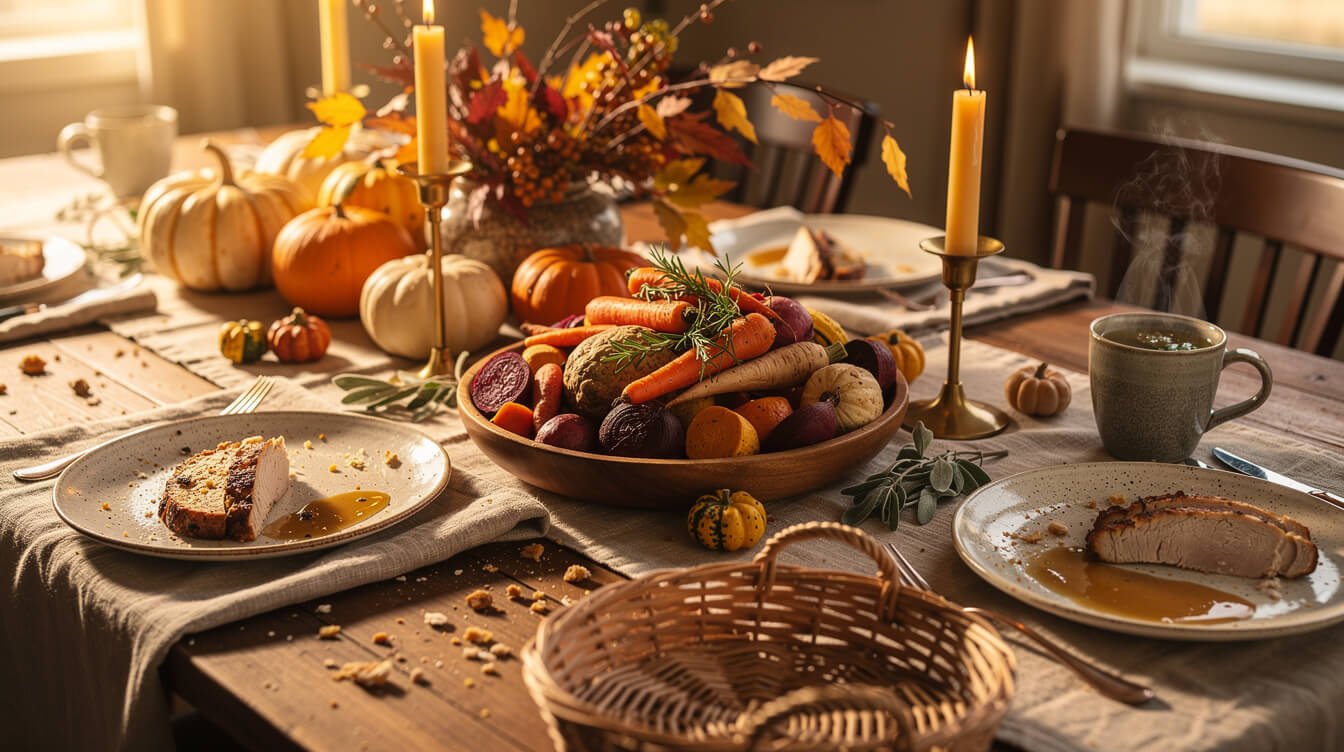
- Make a phone basket. Put a basket or bowl by the door or on a side table. Out of sight works much better than face-down next to your plate. Take a photo of the table first, then put the phones away.
- Start with a pause. Before anyone digs in, take one breath together, or let each person share one thing they’re grateful for. If you wrote a thank-you note this week, this is a lovely place to mention it.
- 每吃一口就放下叉子。. It’s the easiest way to slow down without thinking about it. Notice the textures, the herbs and the first taste of each dish.
- Ask a better question. Swap “How’s work?” for something that invites a story: “What’s a favorite Thanksgiving memory?” or “What’s something good that happened to you this year?”
- Linger 15 minutes longer. Don’t rush to clear the plates. Let dessert wait and let the conversation run. When everyone’s ready, an easy walk together makes a nice next step.
Slowing down also gives you room to savor the moment while it’s happening, and it fits neatly into our 15分鐘感恩節週健康計劃.
今日智慧 ✨
A holiday meal takes hours to make. It deserves more than a few hurried minutes to enjoy. This year, slow down the meal, put the phones in a basket and stay at the table a little longer. The food will taste better, and the people around you may feel closer. Happy Thanksgiving from all of us at OlyLife. 🌿
資料來源: Andrade AM, Greene GW, Melanson KJ. Eating slowly led to decreases in energy intake within meals in healthy women. J Am Diet Assoc. 2008;108(7):1186–1191. doi:10.1016/j.jada.2008.04.026 · Dunbar RIM. Breaking bread: the functions of social eating. Adaptive Human Behavior and Physiology. 2017;3:198–211. doi:10.1007/s40750-017-0061-4 · Dwyer RJ, Kushlev K, Dunn EW. Smartphone use undermines enjoyment of face-to-face social interactions. J Exp Soc Psychol. 2018;78:233–239. doi:10.1016/j.jesp.2017.10.007
This post is for general wellness education and isn’t medical advice. Holiday meals can be hard if you’re grieving, managing a health condition or have a complicated relationship with food. Please be gentle with yourself, and if eating or mood feels like a struggle, talk to a qualified healthcare professional.