Welcome back to our Saturday Spotlight — where each week we shine a light on a single plant worth knowing. As the days grow shorter and autumn asks a little more of us, this week’s herb is the perfect companion for staying grounded: ashwagandha. 🌿
Meet Ashwagandha
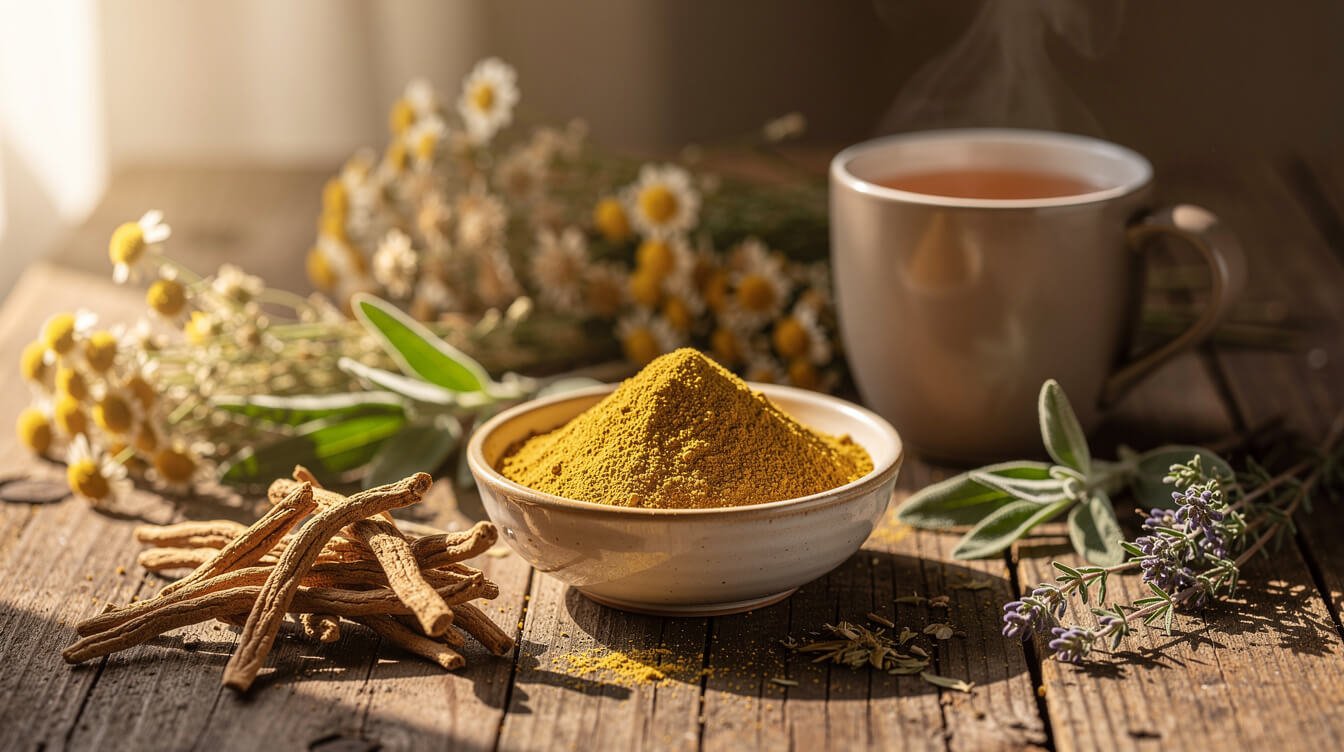
Ashwagandha (Withania somnifera) is a small shrub whose roots have been used in Ayurvedic traditions for thousands of years. Its name roughly translates to “smell of the horse” — a nod to both its earthy aroma and the old idea that it may lend the steady strength of a stallion. Today it’s best known as an adaptogen: a plant traditionally used to help the body adapt to everyday stress.
What It’s Traditionally Used For
Ashwagandha has long been reached for during seasons of change and demand. Here’s how it’s traditionally used — and what modern curiosity is exploring:
- Everyday stress and calm. Research suggests ashwagandha may support the body’s stress response and a feeling of steadiness. It’s the herb people often turn to when life feels a little full.
- Restful evenings. That species name — somnifera — literally means “sleep-bringing.” It’s traditionally used to help ease the mind toward rest at the end of a busy day.
- Steady energy and resilience. Unlike a quick caffeine lift, adaptogens are traditionally used to support a more even, sustainable sense of vitality.
A gentle reminder: ashwagandha isn’t a cure for anything, and these are traditional uses rather than medical promises. Think of it as one supportive thread in a bigger wellness routine.
🎁 Get a Free Wellness Gift
Enter your name and email below to receive a special wellness gift from OlyLife — absolutely free!
A Simple Way to Enjoy It
The cozy autumn favorite is a warm “moon milk”: stir about half a teaspoon of ashwagandha powder into a mug of warm milk (dairy or plant-based) with a pinch of cinnamon and a little honey. Sip it in the hour before bed as a calming wind-down ritual. Ashwagandha also comes as capsules or tinctures if powder isn’t your thing.
A Few Gentle Cautions
Ashwagandha is well loved, but it isn’t for everyone. It’s best avoided during pregnancy, and anyone with a thyroid condition, an autoimmune condition, or who takes regular medication should check with a qualified healthcare provider before starting. When in doubt, ask first — that’s always the wise, warm thing to do.
The Takeaway
Ashwagandha is a beautifully fitting herb for autumn: grounding, calming, and traditionally used to help us meet a busy season with a little more ease. If it speaks to you, start small, stay consistent, and notice how you feel.
Want to go deeper? Explore our full guide to adaptogen supplements for stress, our roundup of natural remedies for calm, and our library of herbal remedies. And if you missed it, last week’s spotlight on the warming root ginger pairs beautifully with this season, too.
See you next Saturday for another plant worth knowing. Until then, be well. ✨