Few kitchen staples earn the title of “spice cabinet superstar” quite like ginger. This knobby, golden root has warmed cups of tea and settled uneasy stomachs for thousands of years — and modern research is beginning to explore why it may have earned such a lasting place in wellness traditions. 🌿
A Root With Deep Roots
Native to Southeast Asia, ginger (Zingiber officinale) has been treasured in Ayurvedic and traditional Chinese wellness practices for centuries. It’s traditionally used to support digestion, ease occasional queasiness, and bring a comforting warmth to the body — which makes it feel especially fitting as the mornings turn crisp and autumn settles in.
Why Ginger Shines
Ginger’s signature kick comes largely from natural compounds called gingerols and shogaols. Here’s what tradition — and a growing body of research — suggests ginger may offer:
- Digestive comfort: Ginger is traditionally used to encourage healthy digestion and soothe an occasionally unsettled stomach.
- Ease with queasiness: Research suggests ginger may help support comfort during travel or morning queasiness.
- A warming, cozy feeling: That gentle internal warmth makes ginger a natural companion for cooler days.
- Antioxidant support: Its plant compounds may help support the body’s natural defenses against everyday oxidative stress.
🎁 Get a Free Wellness Gift
Enter your name and email below to receive a special wellness gift from OlyLife — absolutely free!
Simple Ways to Enjoy It Today
You don’t need anything fancy to bring ginger into your routine:
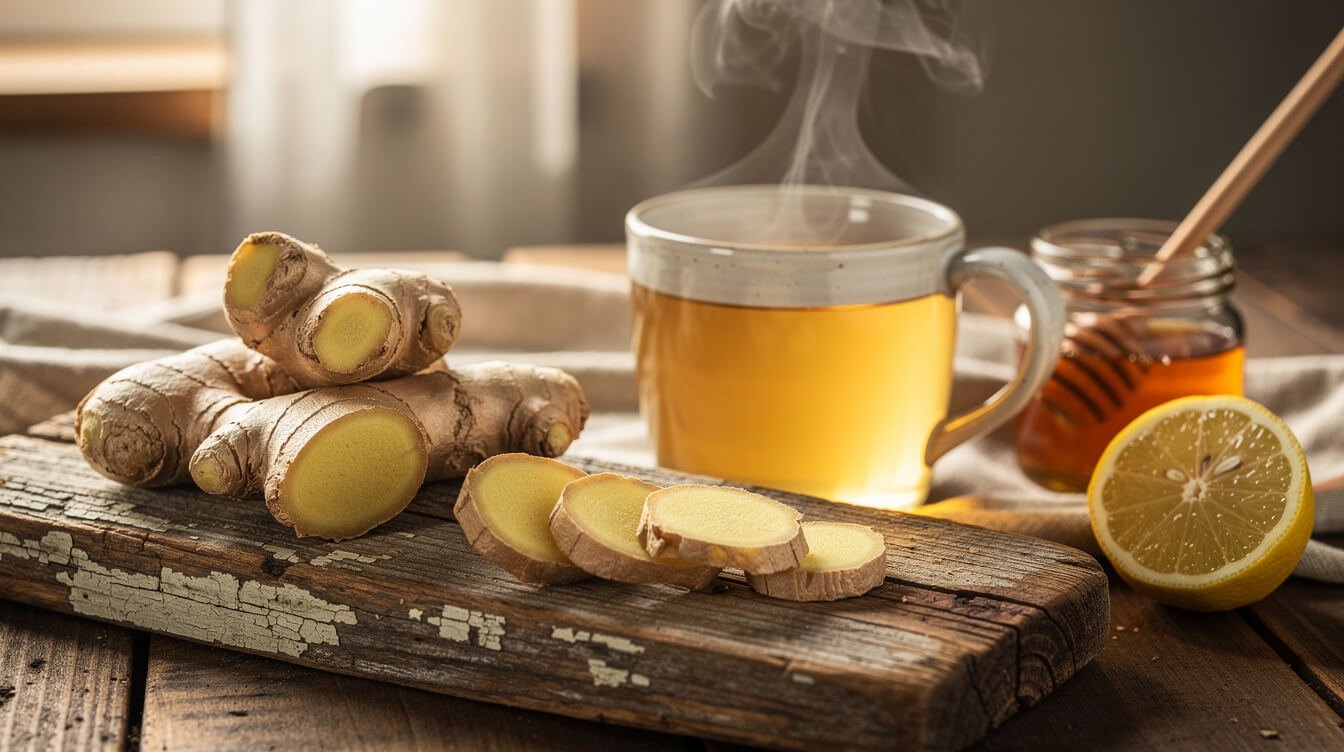
- Fresh ginger tea: Steep a few thin slices of fresh root in hot water for 5–10 minutes. Add a squeeze of lemon and a touch of honey.
- Grated into meals: Stir it into soups, stir-fries, or a warming bowl of oats.
- A morning tonic: Blend a small piece into your smoothie for a gentle, zippy start.
A Gentle Note
Ginger is generally well tolerated as a food and beverage. If you’re pregnant, taking blood-thinning medication, or managing a health condition, it’s always wise to check with your healthcare provider before using ginger in larger or concentrated amounts. This spotlight is for general wellness education and isn’t medical advice.
Curious about more natural ways to feel your best? Explore our gentle remedies for stomach discomfort, browse our complete guide to healing herbs, or revisit last week’s elderberry spotlight for another autumn ally. ✨
Today’s takeaway: A warm cup of ginger tea is one of the simplest, cosiest wellness rituals there is — a small daily moment to support your digestion and welcome the season with a little warmth.