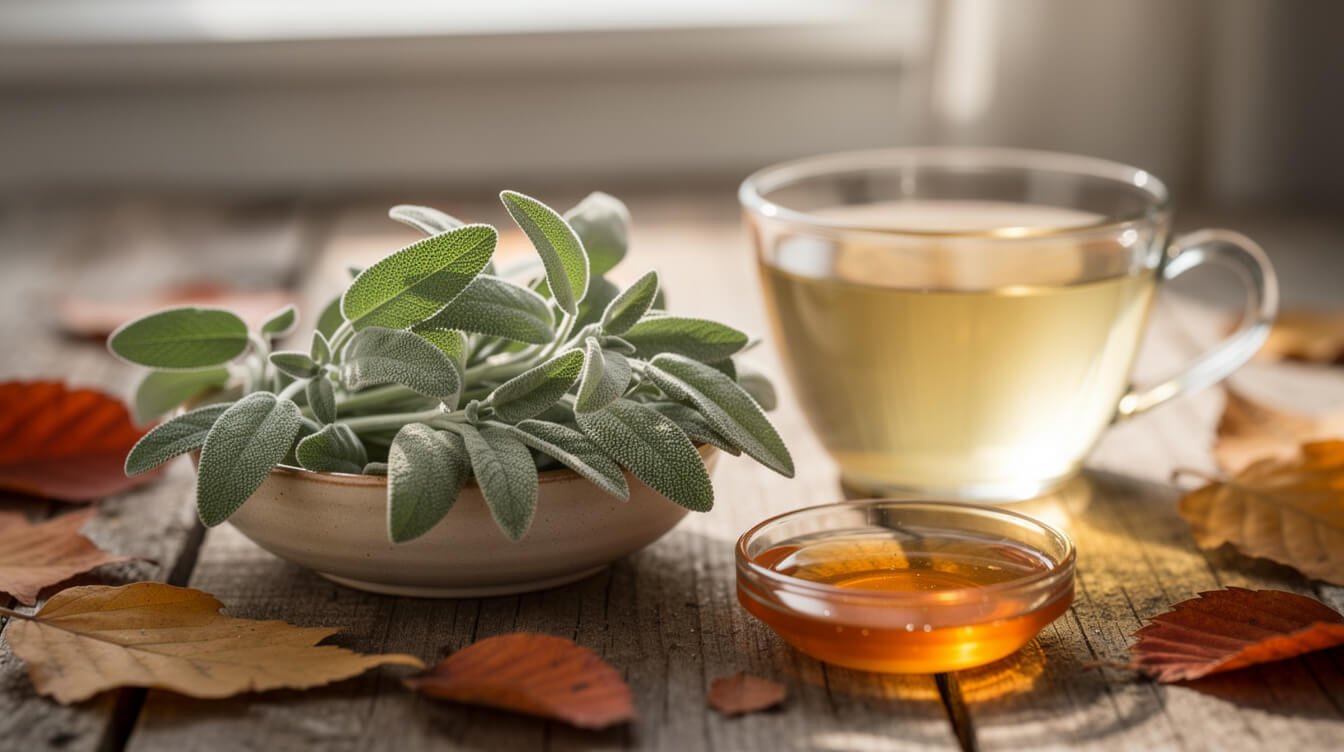
Thursday Herbal Spotlight: Sage — The Silvery Garden Herb Traditionally Used for Throat Comfort and Memory
Sage is the herb most of us only reach for once a year, when the holiday stuffing comes out. But this soft, silvery-leaved plant has one of the richest stories in traditional wellness, and late autumn is the perfect time to get to know it. 🌿
A Little History
Garden sage (Salvia officinalis) belongs to the mint family and grows wild around the Mediterranean. Its name comes from the Latin salvere, meaning “to be well” or “to be saved.” Healers at the famous medieval medical school in Salerno, Italy, asked, “Why should a man die while sage grows in his garden?” It was a little poetic, but it shows how highly sage was prized. For centuries it was brewed into teas and gargles for the mouth and throat, and it was also used as a “memory herb.” Fun fact: botanists now place rosemary in the same genus, Salvia, so sage and rosemary really are cousins.
What Research Suggests
Sage has its strongest traditional standing as a mouth-and-throat herb. Germany’s Commission E recognized sage leaf for throat and mouth discomfort and for excessive sweating. The European Medicines Agency lists it as a traditional herbal remedy for mild throat and mouth irritation, occasional mild indigestion, and excessive sweating.
The memory story is newer and more tentative. A handful of small, short studies in healthy adults found that a single dose of sage extract or sage oil may have supported memory and attention for a few hours afterward. One small study of women in menopause also reported fewer hot flashes while they took a fresh sage preparation, but it had no placebo group. All of this is promising, but it’s early. Most of these studies tested concentrated extracts, not a cup of tea.
🎁 Get a Free Wellness Gift
Enter your name and email below to receive a special wellness gift from OlyLife — absolutely free!
3 Simple Ways to Enjoy Sage This Week
- A soothing sage tea: Steep 4–5 fresh leaves (or about 1 teaspoon dried) in hot water for 5–10 minutes, covered. It’s earthy and a little bitter, so a spoonful of honey and a slice of lemon help.
- A warm sage gargle: Let a cup of sage tea cool until it’s comfortably warm, then use it as a gentle gargle. This is one of sage’s oldest traditional uses.
- Brown-butter sage: Crisp a few leaves in a little butter or olive oil and spoon them over roasted squash, sweet potatoes, or beans. It’s a cozy way to add more plants to your plate, and it fits right into our 21-day anti-inflammatory eating plan.
Sage makes a natural trio with our recent spotlights on its cousin rosemary and on thyme. You can explore more gentle plant allies in our complete guide to herbal remedies.
A Gentle Note
Sage in food and the occasional cup of tea is generally considered safe for most people. Sage contains a natural compound called thujone, which can be harmful in large amounts. That’s why concentrated extracts and essential oils call for more care, and why it’s best not to drink large amounts of strong sage tea every day for long periods. Never swallow sage essential oil. Talk with your healthcare provider before using sage beyond cooking amounts if you’re pregnant or nursing (sage is traditionally used to reduce milk supply), have a seizure disorder, or take medications, including those for blood sugar. If a sore throat lasts more than a week, or comes with a high fever or trouble swallowing, please see your doctor.
This post is for educational purposes only and is not medical advice. Sage is not a treatment or cure for any condition.
Here’s to a little garden wisdom in your autumn kitchen. ✨