Light Therapy Lamp for Seasonal Affective Disorder: How to Choose and Use One
As the days shorten and the clocks fall back, many of us notice a familiar shift: heavier mornings, low energy, cravings for carbs, and a mood that seems to dim along with the daylight. If that sounds like you, you’ve probably come across the idea of a light therapy lamp for seasonal affective disorder, often called a SAD lamp or light box. These bright, broad lights are one of the most studied non-drug approaches to winter mood changes, but the market is full of lamps that are too dim, too small or simply mislabeled.
This guide walks you through what a SAD lamp actually is, what the research suggests, how it differs from the red and infrared light devices you may have seen, and exactly what to look for before you buy. You’ll also find a simple morning routine, an honest look at side effects, and the situations where a conversation with your doctor should come first. 🌿
A gentle note before we begin: seasonal affective disorder is a form of depression. This article is educational and is not a substitute for professional care. If your mood is seriously affecting your life, please reach out to a healthcare provider.
What Is a Light Therapy Lamp for Seasonal Affective Disorder?
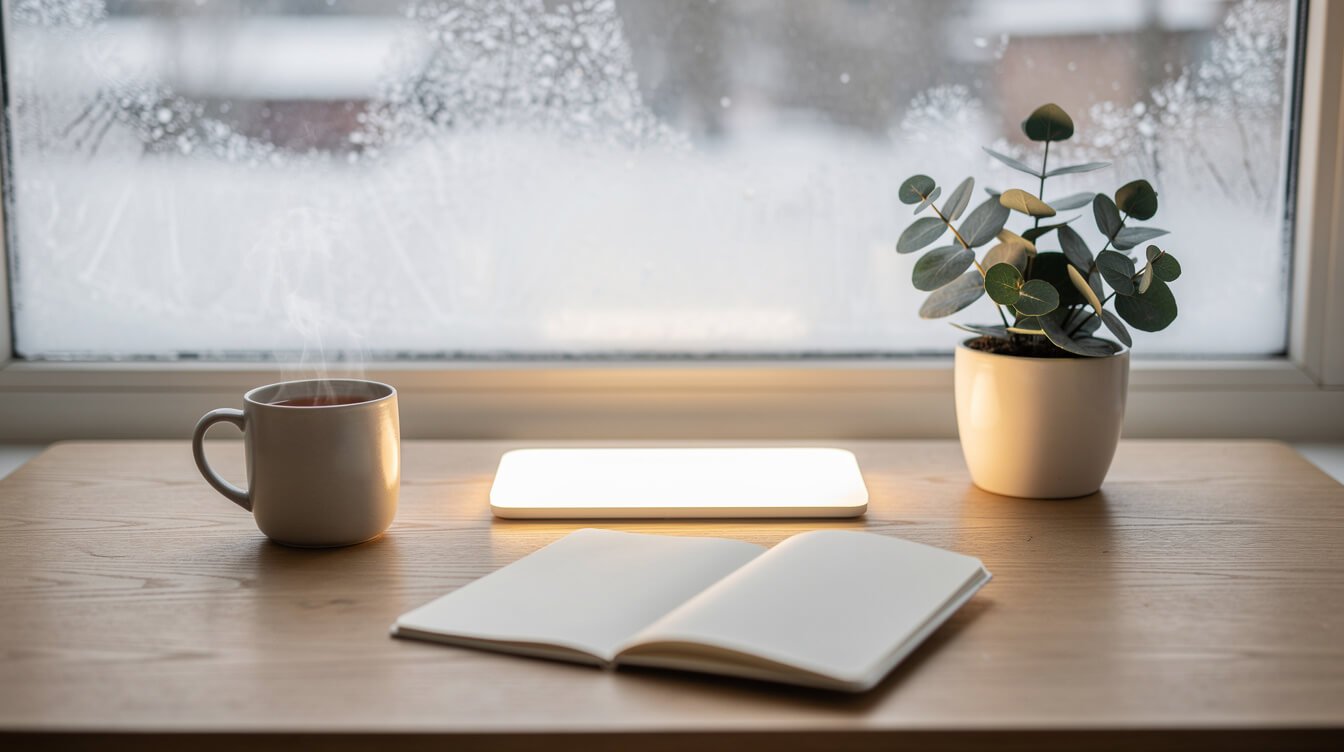
A light therapy lamp for seasonal affective disorder is a device that delivers bright, white, diffuse light, much brighter than ordinary indoor lighting, to your eyes for a set time each morning. The goal is to give your body a strong “daytime” signal during months when natural daylight is scarce.
Winter blues vs. seasonal affective disorder
Plenty of people feel a little flatter in winter. Seasonal affective disorder (SAD) is different. Clinicians now describe it as major depression “with a seasonal pattern”: episodes that start and lift around the same time each year, for at least two years in a row. Winter-pattern SAD often brings oversleeping, low energy, carb cravings, weight gain and social withdrawal. A milder version, sometimes called “subsyndromal SAD” or the winter blues, shares the pattern but with less intensity.
Only a healthcare provider can tell the two apart. Many people use bright light for both, but it’s worth getting an assessment if your symptoms are more than a passing slump.
Why light seems to matter
Your body clock, a small cluster of cells in the brain called the suprachiasmatic nucleus, takes its main timing cue from light entering your eyes. Special light-sensitive cells in the retina pass that signal straight to the clock. Researchers have two leading explanations for why bright light may help in winter:
- The phase-shift idea: as mornings get darker, the internal clock can drift later than your actual schedule. A burst of bright light soon after waking appears to nudge the clock earlier again, bringing your sleep and your inner rhythm back into step.
- The serotonin idea: brain imaging has found seasonal changes in serotonin transporter activity, and light therapy may influence this system too.
One detail stands out: the benefit appears to depend on light reaching the eyes. In a controlled study, shining bright light on the back of the knee did nothing for winter depression. That’s why where you sit and how far away you are matters so much, as you’ll see below.
What Research Suggests About Bright Light Therapy

Bright light therapy is one of the better-researched wellness tools out there. Since Rosenthal and colleagues first described SAD in the 1980s, dozens of trials have tested light against dim-light or placebo conditions. A review by Campbell and colleagues in the Einstein Journal of Biology and Medicine (available on PubMed Central) describes bright light therapy as a first-line approach for SAD.
Key findings at a glance
- Placebo-controlled trials: in Eastman and colleagues’ 1998 trial in Archives of General Psychiatry, most people using bright morning light reached remission over four weeks, compared with 32% of those using a placebo device.
- Meta-analysis: a 2005 review and meta-analysis by Golden and colleagues in the American Journal of Psychiatry found significant benefits of bright light therapy for seasonal depression, one of the findings that helped bring light therapy into mainstream depression guidelines.
- Typical response: an Ohio State psychiatrist writing in 2026 notes that roughly 60% of people using light therapy for seasonal depression see a significant improvement, usually within about two weeks of daily use.
- Beyond winter: a 2016 randomized trial by Lam and colleagues in JAMA Psychiatry found bright light, alone or combined with an antidepressant, helped people with non-seasonal depression too. That’s a medical use that should be guided by a clinician.
The honest caveats
The research is encouraging, but it isn’t perfect. It’s hard to create a convincing “fake” light for a placebo, many studies are small, and results vary from person to person. Light therapy also works best when it’s used consistently, every morning, for the whole season. And it isn’t a replacement for professional care: some people do best with light alongside talk therapy or medication, decided together with their doctor.
In short, research suggests a well-chosen, well-used light therapy lamp for seasonal affective disorder may meaningfully support winter mood and energy for many people. The catch is that “well-chosen” and “well-used” carry a lot of weight.
SAD Lamp vs. Red Light Therapy: Not the Same Device

Here’s a mix-up we see often. “Light therapy” is used for very different devices, and buying the wrong one is an easy (and expensive) mistake. We’ve written a lot about red and infrared light therapy, which uses specific red (around 630–660 nm) and near-infrared (around 810–850 nm) wavelengths aimed at the skin. That’s a different tool for a different purpose. A SAD lamp uses bright white visible light aimed toward the eyes.
| Device | Light type | Aimed at | Typical use | For winter mood? |
|---|---|---|---|---|
| SAD lamp / light box | Bright white, UV-filtered, ~10,000 lux at your seat | Eyes (indirectly) | 20–30 min each morning | Yes, the format used in most research |
| Red / near-infrared panel | Narrow red and NIR wavelengths | Skin and tissue | Skin, muscle and recovery routines | No, not designed for this |
| Dawn simulator | Bedside light that gradually brightens | Eyes while you wake | Gentler wake-ups | Some research support, typically used with or instead of a light box |
| Blue-light device | Narrow blue wavelengths | Eyes | Circadian research | Yale’s program doesn’t currently recommend it (retinal safety questions) |
| Regular bright lamp | Household LED, ~300–500 lux at your seat | Room | Everyday lighting | Too dim to match research doses |
Two other cautions. First, some lamps sold for skin conditions emit mainly ultraviolet light and could harm your eyes if used like a SAD lamp, as Mayo Clinic warns. Second, red light panels have their own safety rules, especially for the eyes; our guide to red light therapy dangers covers them in detail. If your goal is winter mood, you want a dedicated bright white light box.
How to Choose a Light Therapy Lamp for Seasonal Affective Disorder: 8-Point Checklist
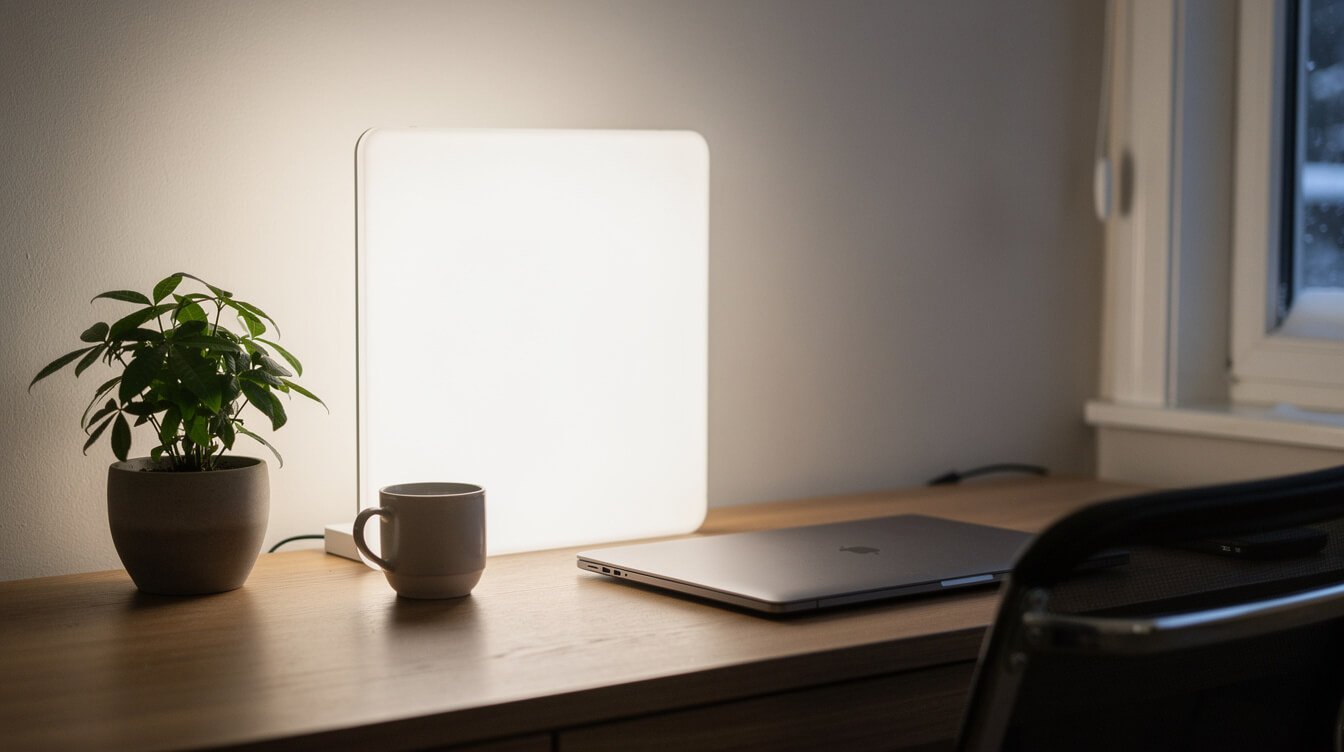
Light boxes aren’t regulated by the FDA as treatments for SAD, so the labels on the box don’t always mean much. Researchers at Yale’s winter depression program tested 24 commercially available devices in 2019 and found only three matched the full-size light boxes used in research (a few smaller ones met their minimum criteria). Use this checklist to sort the useful from the decorative.
- 10,000 lux, at a stated, realistic distance. This is the big one. Many lamps claim “10,000 lux” without saying where. Yale found one major brand reached 10,000 lux only at 6 inches from the face, which isn’t practical for a 30-minute session. Look for 10,000 lux at around 12–24 inches.
- A large light-emitting surface. Bigger panels (research-style boxes are roughly 12 by 20 inches or more) let you shift your head, read or eat breakfast and still get the full dose. Small lamps demand that you sit very still in a narrow sweet spot.
- UV-filtered. A SAD lamp should block most or all ultraviolet light. If the manufacturer can’t confirm this, move on.
- White light, not blue. Choose broad white light. Yale’s clinicians currently advise against blue-light devices because blue wavelengths raise more retinal safety questions.
- Diffuse and glare-free. A good panel spreads light evenly without harsh “hot spots” that make you squint.
- Positioned above eye level. Light coming from slightly above, angled down toward you (the way daylight reaches you outdoors), tends to be more comfortable and reduces glare. Adjustable stands or legs help a lot.
- A built-in timer and simple controls. Small things that make a daily habit easier to keep.
- A generous trial or return window. Yale recommends looking for at least a two-month trial, since about four weeks of consistent use is enough to judge whether light therapy is helping you.
The 60-second phone test
Here’s a tip almost no product page mentions. Free lux-meter apps for iPhone and Android use your phone’s front camera to estimate brightness, and Yale’s testers found them reasonably accurate. Sit where you’d normally sit, hold your phone at face height pointing toward the lamp, and read the number. Yale suggests aiming for at least 7,000 lux, and ideally 10,000. If you only hit that figure with your nose almost touching the panel, the lamp is too weak for comfortable daily use.
Red flags
- “10,000 lux” with no distance given
- Marketing photos of people sitting across the room or facing away from the lamp
- Claims that the lamp “cures” depression or replaces medical care
- No mention of UV filtering
- No return policy
On cost: a solid, clinically comparable light box generally costs somewhere around $100–$200 online. Insurance rarely covers one, though some plans do with a diagnosis, so it can be worth asking.
How to Use a SAD Lamp: A Simple Morning Routine

Even the best lamp only helps if you use it well and regularly. These are the typical guidelines from Mayo Clinic, Ohio State and the research literature. Always follow your device’s instructions and any advice from your healthcare provider.
The basics
- When: within the first hour of waking. Morning light appears to work better than evening light for most people.
- How long: about 20–30 minutes at 10,000 lux. Dimmer light needs longer: researchers often treat 30 minutes at 10,000 lux as roughly equal to 60 minutes at 5,000 lux or two hours at 2,500 lux.
- How far: typically 16–24 inches from your face, or whatever distance gives 10,000 lux for your lamp.
- How to sit: eyes open, lamp slightly off to the side, not staring directly into it. Eat breakfast, read, sip your tea or answer messages.
- How often: every day, weekends included. Consistency matters more than intensity.
When to start
If your mood dips around the same time every year, you don’t need to wait for it to arrive. Ohio State suggests starting about two to four weeks before your symptoms usually begin, and late September is a reasonable default if you’re unsure. In the US, clocks fall back on November 1 this year, which is a helpful reminder to get your routine going now if you haven’t already. Most people continue until spring, when longer days take over.
A sample 25-minute ritual
- Wake at a consistent time (a steady wake time anchors your body clock).
- Drink a glass of water and switch on your lamp at the breakfast table.
- Spend 20–30 minutes in the light while you eat, journal or plan your day.
- Afterward, step outside for even 10 minutes of real daylight if you can. Our morning sunlight tip explains why it’s worth it, even on cloudy days.
Many people notice changes in energy and mood within one to two weeks. If you’ve used your lamp properly for four weeks and feel no different, talk with your healthcare provider about adjusting the timing or trying other approaches.
🎁 Get a Free Wellness Gift
Enter your name and email below to receive a special wellness gift from OlyLife — absolutely free!
Safety: Side Effects and Who Should Check With a Doctor First
For most people, bright light therapy is well tolerated when used as directed. Still, “natural” doesn’t mean risk-free, and this part matters.
Common, usually mild side effects
- Headache or eye strain: reported by up to about 15% of users. Sitting a little farther back, shortening sessions at first or angling the lamp more to the side often helps.
- Nausea or feeling “wired”: usually eases as your body adjusts.
- Trouble sleeping: often a sign the light is being used too late in the day or for too long.
Talk to a healthcare provider before starting if you:
- Have bipolar disorder or a history of mania or hypomania. Bright light can trigger manic symptoms, so timing and dose need professional guidance.
- Have an eye condition such as glaucoma, cataracts, macular degeneration or diabetic retinopathy. An eye specialist should weigh in.
- Take photosensitizing medications or supplements (some antibiotics, acne treatments, certain heart medications and St. John’s wort, among others), or have a light-sensitive skin condition.
- Are pregnant, or are considering light therapy for a child or teen. Research exists in both groups, but this should be guided by a clinician.
- Already take an antidepressant or are under care for depression. Light therapy can complement treatment, but your provider should know.
When to seek help right away
A lamp is a supportive tool, not a safety net. If you feel hopeless, can’t manage daily life, or have any thoughts of harming yourself, please contact a healthcare provider today. In the US you can call or text 988 (Suicide & Crisis Lifeline) at any time; elsewhere, contact your local emergency number or crisis service. Reaching out is a sign of strength. 💛
Beyond the Lamp: Building a Brighter Winter Routine

A light therapy lamp for seasonal affective disorder works best as one part of a whole-season plan. These everyday habits support the same body-clock and mood systems, and they’re good for you whether or not you use a lamp.
- Get outside daily. Even an overcast winter day is usually far brighter outdoors than in a typical living room. A midday walk combines daylight with movement.
- Move your body. Regular physical activity is linked with better mood and sleep. A brisk 20-minute walk counts.
- Keep a steady sleep schedule. Waking at the same time every day, weekends included, gives your body clock a reliable anchor. Our guide on how to improve sleep quality naturally has more ideas.
- Dim the evenings. Bright light in the morning, softer and warmer light at night. Lowering screens and overhead lights an hour or two before bed helps your body prepare for sleep.
- Ask about vitamin D. Winter sunlight is weak at higher latitudes. Research on vitamin D for mood is mixed, but it’s worth asking your doctor whether testing makes sense. See our vitamin D FAQ.
- Stay connected. Winter pulls us inward. Scheduling regular time with friends, even a short walk or video call, can make a real difference. Here’s why connection matters so much.
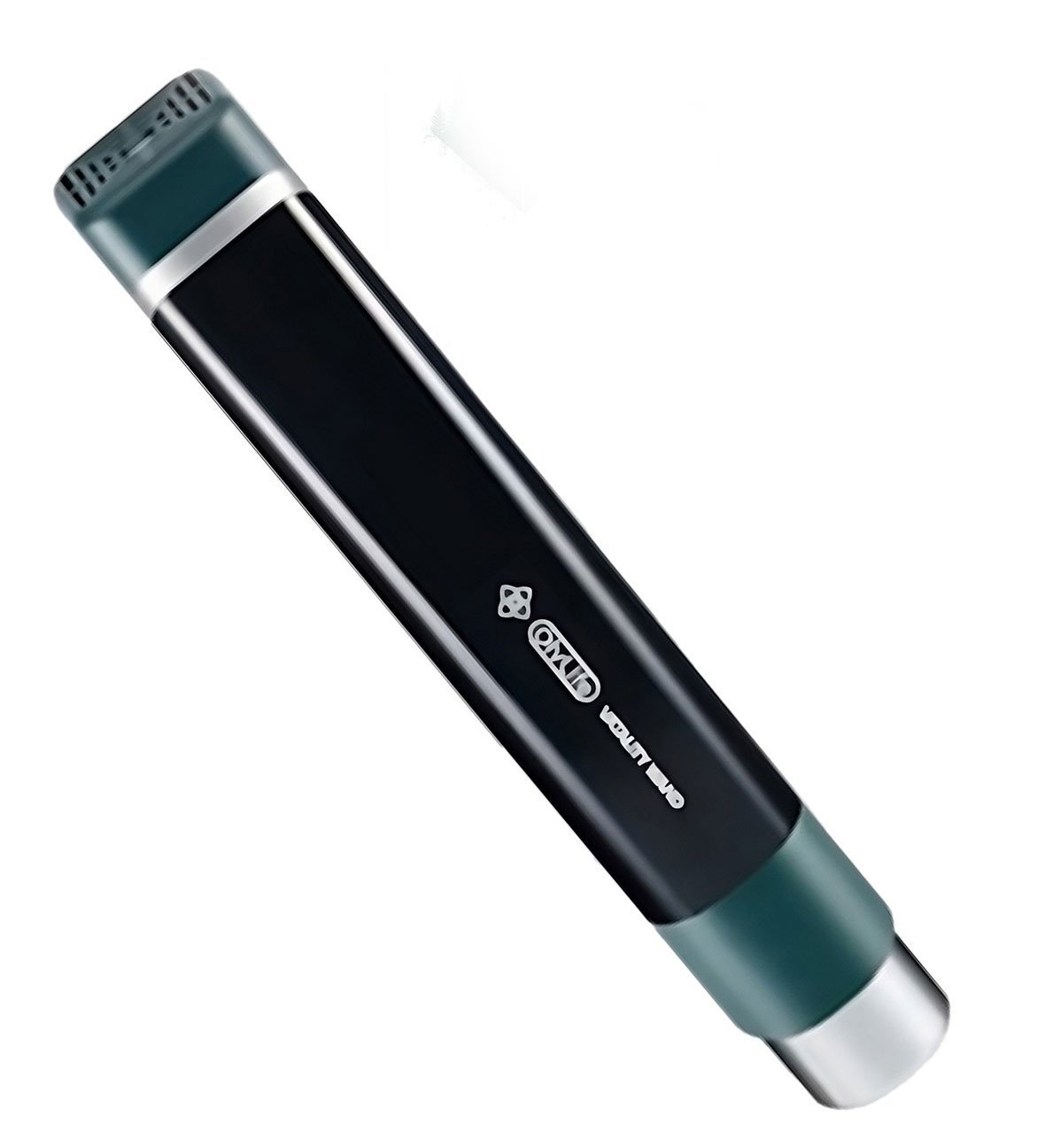
- Build a cozy evening wind-down. Warmth, slow breathing and a calming ritual can help signal the end of the day. A warm evening bath is one lovely option. Some of our community also enjoy a few quiet minutes with the warm-air setting of the OlyLife Vitality Wand as part of their evening self-care. It’s not a light therapy device and not a treatment for SAD, just a comforting ritual for the end of the day.
A Cozy Addition to Your Winter Evening Ritual 🌿
Bright light belongs to your mornings, and slow, warm moments belong to your evenings. The OlyLife Vitality Wand is a lightweight handheld device with warm and cool air modes that’s easy to fold into a calming wind-down routine. It’s a self-care companion, not a light therapy lamp or a treatment for SAD.
Frequently Asked Questions
Does a light therapy lamp for seasonal affective disorder really work?
Research suggests it helps many people. Controlled trials and meta-analyses support bright morning light for winter-pattern depression, and about 60% of users see a significant improvement. It doesn’t work for everyone, and results depend heavily on using a bright enough lamp at the right distance every morning.
How many lux do I need?
Aim for 10,000 lux at your actual seated distance. If you can only get lower brightness, sessions need to be longer. Yale suggests at least 7,000 lux for an efficient routine. A phone lux-meter app is an easy way to check.
Can I use my SAD lamp in the evening?
Most people do best with morning light. Evening sessions can make it harder to fall asleep. A small number of people with very early sleep patterns are advised to use light in the evening, but that’s a decision to make with a healthcare provider.
Is a SAD lamp the same as a red light therapy device?
No. A SAD lamp emits bright, UV-filtered white light for your eyes. Red and near-infrared devices use narrow wavelengths aimed at the skin for very different purposes. A red light panel won’t substitute for a SAD lamp.
Can I look directly at the lamp?
No. Keep your eyes open but don’t stare into the light. Position it slightly above eye level and off to one side, and go about your morning activities.
How long until I notice a difference?
Many people notice changes within one to two weeks of daily use. Give it about four consistent weeks before deciding, and talk to your provider if nothing has changed.
Is a dawn simulator a good alternative?
Dawn simulators gradually brighten your bedroom before you wake. They have some research support and make mornings gentler, but they’re much dimmer than a light box. Many people use one alongside a SAD lamp rather than instead of it.
Do I need a prescription?
No. SAD lamps are sold without a prescription. Experts still recommend involving a healthcare provider, especially to confirm what’s behind your symptoms and to rule out conditions where light therapy needs extra care.
Final Thoughts: Bringing More Light Into Your Winter
Shorter days don’t have to mean months of feeling dim. A well-chosen light therapy lamp for seasonal affective disorder, used each morning at the right brightness and distance, is one of the most researched ways to support your mood and energy through the darker months. The keys are simple: choose 10,000 lux at a realistic distance and a generous panel size, make sure it’s UV-filtered, check it with your phone, and use it every morning, starting before your usual dip.
Pair your lamp with daylight, movement, steady sleep and warm connection, and give yourself grace on the harder days. And if winter weighs on you more than a little, please don’t go it alone. A conversation with your healthcare provider can open up even more ways to feel like yourself again. For more ideas on caring for your whole self through every season, explore our complete guide to holistic wellness. ✨
This article is for educational purposes only and isn’t medical advice. It is not intended to diagnose, treat, cure or prevent any disease. Please consult a qualified healthcare provider before starting light therapy, especially if you have bipolar disorder, an eye condition, take photosensitizing medication, or are being treated for depression.