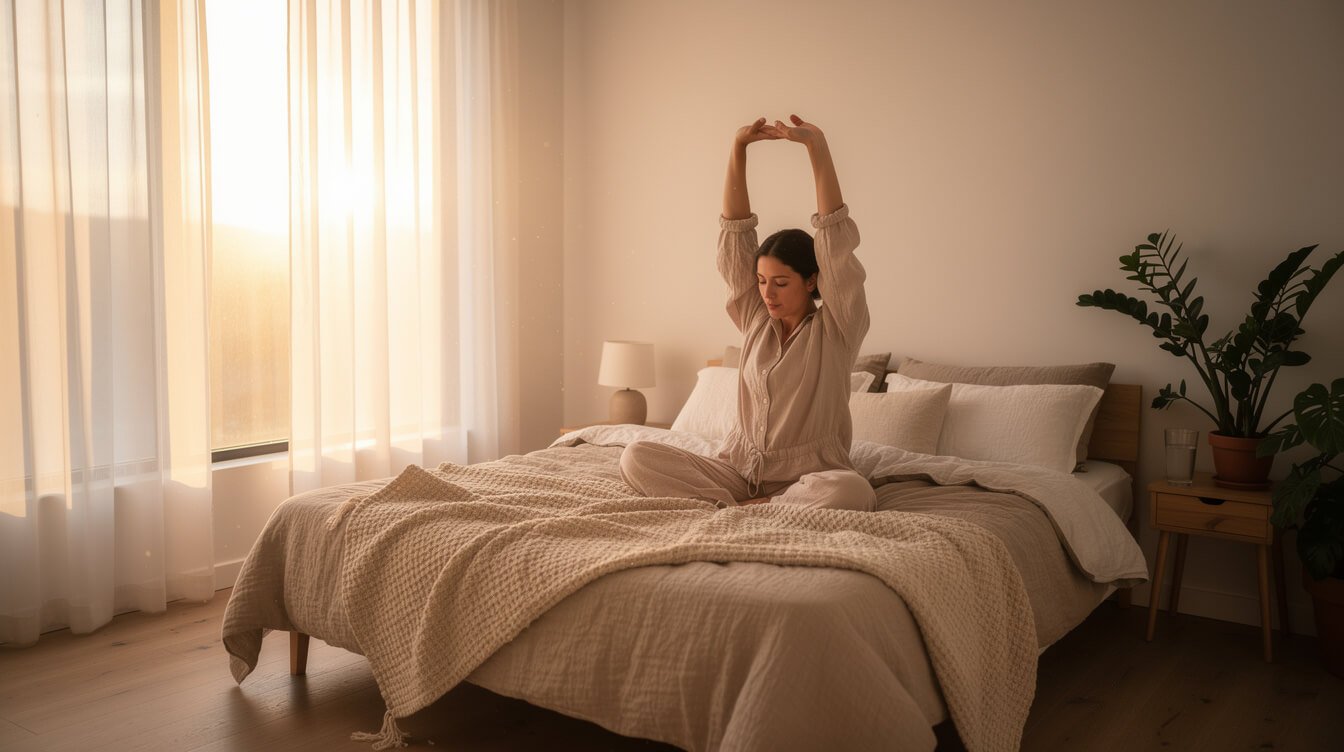
How to Improve Sleep Quality Naturally: A Complete Evidence-Informed Guide
If you regularly clock seven or eight hours in bed and still wake up groggy, you already know an uncomfortable truth: how long you sleep and how well you sleep are not the same thing. Learning how to improve sleep quality naturally is less about chasing a magic number of hours and more about giving your body the conditions it needs to move smoothly through its natural sleep cycles — without relying on medication.
The good news is that sleep quality responds remarkably well to small, consistent changes. In this evidence-informed guide, we’ll explain what sleep quality actually is, why it slips, and the natural, research-backed habits that help you fall asleep faster, wake less often, and feel genuinely restored. None of this is a substitute for medical care, but for most people, these gentle shifts add up to noticeably deeper, more refreshing nights.
What “Sleep Quality” Really Means — Beyond the Hours

We tend to judge our sleep by the clock, but researchers look at something richer: sleep architecture. Over a typical night, you cycle through four to six sleep cycles, each lasting roughly 60 to 120 minutes. Every cycle moves through lighter non-REM stages (N1 and N2), into deep slow-wave sleep (N3), and finally into REM sleep, where most dreaming happens.
These stages aren’t interchangeable. Deep slow-wave sleep — concentrated in the first half of the night — is the most physically restorative phase, when heart rate and blood pressure drop and the body shifts toward repair. REM sleep, which grows longer toward morning, supports memory and emotional processing. Good sleep quality means cycling through all of these stages with minimal interruption.
Sleep scientists describe quality using a handful of measurable ideas worth knowing:
- Sleep latency — how long it takes you to fall asleep (ideally under about 20 minutes).
- Sleep efficiency — the percentage of time in bed actually spent asleep; 85% or higher is generally considered healthy.
- Fragmentation — how often you wake or partially rouse. Fragmented sleep can leave you feeling as tired as if you’d simply slept too little.
- Consistency — how stable your sleep and wake times are from day to day.
This is why two people who both spend eight hours in bed can feel completely different in the morning. It also explains why the strategies below focus on protecting your natural sleep cycles rather than just extending time under the covers. Both quantity and quality matter: most adults need at least seven hours, but those hours only pay off when they’re continuous and well-structured.
Why Your Sleep Quality Slips: The Everyday Culprits
Before adding new habits, it helps to understand what quietly erodes sleep quality in the first place. Most disruptions fall into a few familiar categories, and often several are working together.
- An irregular schedule. Going to bed and waking at different times — especially sleeping in on weekends — confuses your internal clock and makes deep sleep harder to reach.
- Light at the wrong times. Too little bright light during the day and too much artificial light at night both blunt your natural melatonin rhythm.
- Caffeine and alcohol. Caffeine can linger for many hours, and while alcohol may make you drowsy at first, it tends to fragment the second half of the night and suppress restorative sleep.
- Stress and an overactive mind. A nervous system stuck in “fight or flight” resists the wind-down that sleep requires.
- An uncomfortable environment. A room that’s too warm, too bright, or too noisy nudges you out of deep stages all night long.
- Late, heavy meals and inconsistent movement. Both can interfere with how easily you settle and stay asleep.
Notice how none of these require a prescription to address. Each one is a lever you can adjust — and that’s exactly what the rest of this guide is about. If anxiety is a frequent culprit for you, our guide to natural remedies for anxiety pairs well with the steps below.
How to Improve Sleep Quality Naturally, Starting With Light

If you change only one thing, make it your relationship with light. Your circadian rhythm — the roughly 24-hour internal clock that governs when you feel sleepy and alert — is powerfully set by light exposure. Getting this rhythm aligned is the foundation of learning how to improve sleep quality naturally.
Anchor your morning with bright light
Within an hour of waking, get outside or sit by a bright window for 10 to 30 minutes. Morning light tells your brain the day has begun, which helps time the evening release of melatonin about 14 to 16 hours later. Research suggests that even a single 30-minute dose of bright light after waking can help nudge your clock earlier — a gift if you struggle to fall asleep at a reasonable hour.
Keep a consistent wake-up time
Choose a wake time you can honor seven days a week and work backward to set your bedtime. Consistency is more powerful than any single late night of “catch-up” sleep. Your body thrives on rhythm, and a steady wake time is the anchor that keeps the whole system predictable.
Dim the evening
As the sun sets, start lowering the light in your home. Bright overhead lights and glowing screens — which are rich in blue wavelengths — suppress melatonin and signal “daytime” to your brain. Switch to warm, low lamps in the evening and consider a “digital curfew” that powers down screens 60 to 90 minutes before bed. If you love a soothing evening routine, some people find gentle red light therapy at home a calming, low-blue-light ritual to wind down with.
Design a Bedroom That Invites Deep Sleep
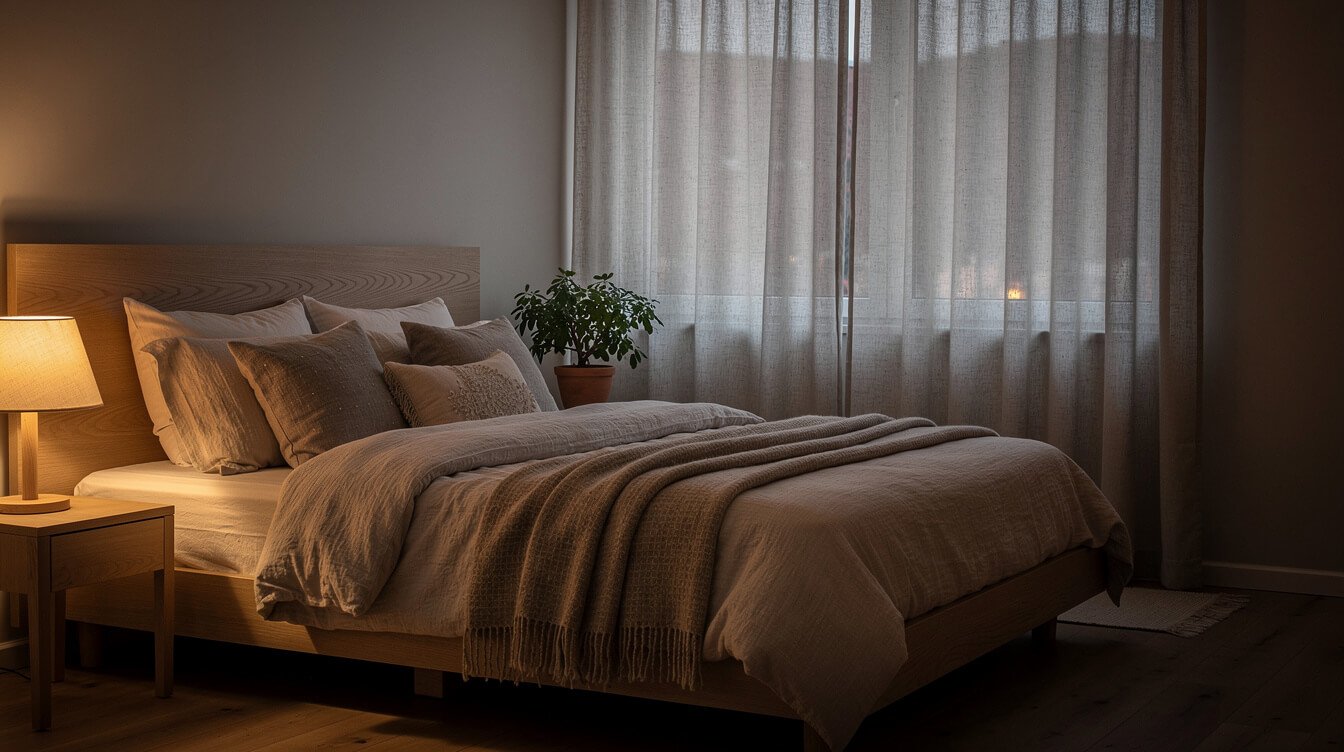
Your sleep environment either protects your deep sleep or quietly steals it. A few adjustments turn an ordinary bedroom into a place your body associates with rest.
Cool it down
Your core temperature naturally dips as you fall asleep, and a cooler room supports that drop. Most people sleep best somewhere around 65 to 68°F (about 18 to 20°C), though the ideal varies from person to person. If you tend to run warm, breathable bedding and a fan can make a meaningful difference.
Make it genuinely dark
Even small amounts of light can interfere with sleep depth. Blackout curtains, a well-placed sleep mask, and covering stray LEDs from electronics all help keep your room dark enough for melatonin to do its job.
Quiet the noise
Sudden sounds cause micro-arousals you may not even remember, yet they still fragment your night. Earplugs or a steady source of white or pink noise can smooth over disruptions, especially in noisy neighborhoods.
Reserve the bed for sleep
Working, scrolling, and worrying in bed teach your brain that the bed is a place for wakefulness. Keeping the bed for sleep (and intimacy) strengthens the mental association that helps you drift off faster. Some sleepers also explore grounding-inspired bedding — our guide to earthing sheets explores that ritual, and our overview of the benefits of grounding explains the broader idea.
Daytime and Evening Habits That Deepen Sleep

What you do between waking and bedtime shapes how easily you sleep. These habits work with your biology rather than against it.
Time your caffeine
Caffeine is a stimulant that can stay active in your system for many hours. Research suggests that caffeine late in the day can noticeably reduce total sleep time and efficiency, even when you don’t feel “wired.” A practical rule many people find helpful is to enjoy your last cup before around noon, or at least six to eight hours before bed.
Be honest about alcohol
A nightcap may help you nod off, but alcohol tends to lighten and fragment sleep later in the night, cutting into restorative stages. Keeping it moderate and finishing a few hours before bed helps protect your sleep quality.
Move your body — at the right time
Regular physical activity is one of the most reliable ways to deepen sleep. Aim for around 30 minutes of moderate movement most days. Intense workouts too close to bedtime can be stimulating for some people, so if evening exercise leaves you buzzing, shift vigorous sessions earlier and save gentle stretching or vagus nerve exercises for the evening.
Eat with sleep in mind
Large, heavy meals late at night can make it harder to settle. A lighter evening meal — and a mostly whole-food, Mediterranean-style pattern rich in vegetables, whole grains, and healthy fats — is associated with better sleep. Certain foods traditionally used to support rest, such as almonds, oats, kiwi, and tart cherries, provide nutrients like magnesium and tryptophan. Speaking of which, magnesium is worth its own deep dive; see our complete guide to magnesium for sleep. For herbal options, our roundup of natural sleep remedies covers gentle, well-loved choices.
Nap wisely
A short nap of about 20 minutes in the early afternoon can be refreshing, but long or late naps can borrow from your nighttime sleep pressure and make it harder to fall asleep.
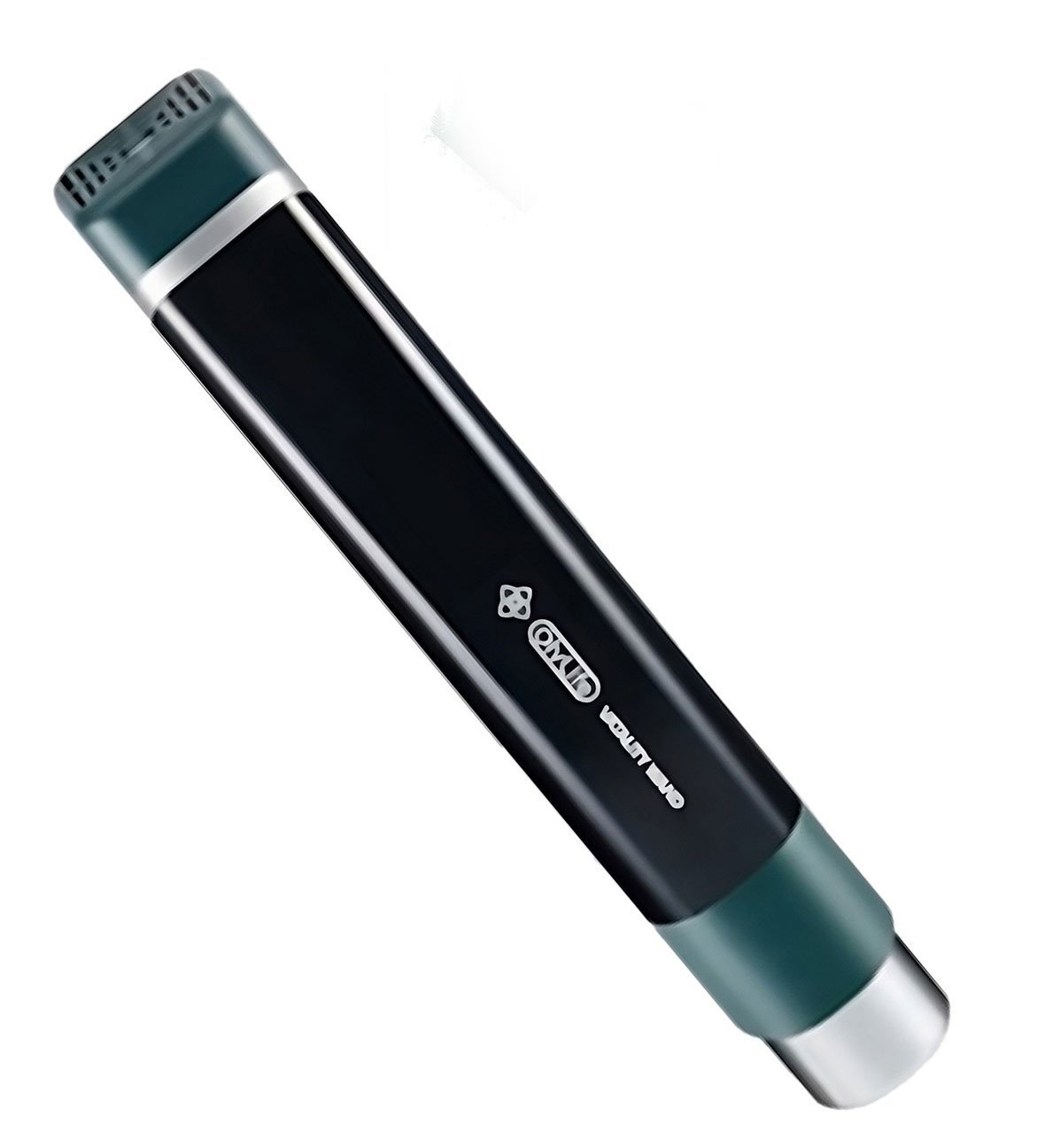
Many people also enjoy building a calming evening ritual around a wellness device. The OlyLife Vitality Wand, a smart terahertz and PEMF device, is one such tool some readers weave into their wind-down routine as a soothing, screen-free way to relax before bed — a complement to healthy sleep habits, never a replacement for them.
🎁 Get a Free Wellness Gift
Enter your name and email below to receive a special wellness gift from OlyLife — absolutely free!
Calm the Mind: Natural Ways to Improve Sleep Quality Naturally at Night

For many people, the biggest obstacle isn’t the bedroom or the schedule — it’s a racing mind. Sleep requires a shift from the sympathetic (“fight or flight”) nervous system to the parasympathetic (“rest and digest”) state. These calming practices are some of the gentlest, most effective natural ways to improve sleep quality naturally when stress is the culprit.
Build a wind-down routine
Give your body a predictable 30 to 60 minutes of low-key activity before bed — reading a paper book, light stretching, a warm shower, or quiet music. A consistent routine becomes a cue that tells your brain sleep is coming.
Try slow, deliberate breathing
Slow breathing — for example, extending your exhale longer than your inhale — activates the vagus nerve and helps switch on the parasympathetic response. Our guides to calming your nervous system and stress-relief and relaxation techniques offer simple, science-informed practices you can do in bed.
Empty your mind onto paper
If worries or tomorrow’s to-do list keep you up, research suggests that writing them down before bed can help you fall asleep faster. A brief “brain dump” or a short gratitude list gives anxious thoughts somewhere to go.
Meditate or relax progressively
Mindfulness and progressive muscle relaxation both help quiet mental chatter and ease physical tension. If you’re new to it, our overview of the benefits of meditation is a friendly starting point, and adaptogens for stress are another gentle, natural option some people explore for daytime stress resilience.
Make Wind-Down a Ritual
The OlyLife Vitality Wand brings smart terahertz and PEMF technology into your evening routine — a calm, screen-free way to relax before bed. A gentle complement to the natural sleep habits in this guide.
How to Tell If It’s Working: Tracking and Realistic Timelines

Because sleep quality is about more than hours, it helps to track how you actually feel and function. You don’t need a lab — simple, honest self-observation goes a long way.
- Keep a brief sleep diary. Note your bedtime, rough wake time, how long it took to fall asleep, how often you woke, and how rested you felt on a 1–10 scale.
- Watch your daytime energy. Steadier focus, fewer afternoon crashes, and easier mornings are all signs your sleep quality is improving.
- Use wearables lightly. Sleep trackers can reveal helpful trends in efficiency and consistency, but treat the exact stage numbers as rough estimates, not medical facts — and don’t let “perfect score” anxiety keep you up.
Set expectations kindly. Most people notice improvements within one to two weeks of consistent changes, while deeper shifts in your sleep patterns often take three to four weeks to settle in. Change one or two habits at a time, give them a fair trial, and let the results compound.
When Natural Steps Aren’t Enough: Signs to See a Professional
Natural habits resolve a great deal of everyday poor sleep, but some sleep problems need professional attention. Please reach out to a qualified healthcare provider if you notice any of the following:
- Loud snoring, gasping, or pauses in breathing during sleep (possible signs of sleep apnea).
- Trouble falling or staying asleep at least three nights a week for three months or more (a pattern consistent with chronic insomnia).
- Overwhelming daytime sleepiness despite adequate time in bed.
- Uncomfortable leg sensations at night, or acting out dreams.
- Sleep problems tied to persistent low mood, anxiety, or a medical condition.
There’s no prize for struggling alone. A clinician can rule out underlying conditions and, when appropriate, recommend approaches like cognitive behavioral therapy for insomnia (CBT-I), which is considered a first-line, non-drug treatment. If pain or tension is part of what keeps you up, you may also find our guide to PEMF therapy benefits and our overview of sleep hygiene tips useful companions to professional care.
Frequently Asked Questions
How can I improve my sleep quality naturally without medication?
Focus on the fundamentals: a consistent wake-up time, bright light in the morning and dim light at night, a cool and dark bedroom, sensible caffeine and alcohol timing, regular daytime movement, and a calming wind-down routine. These natural habits address the most common causes of poor sleep and, for many people, work as well as they do precisely because they support the body’s own rhythms.
How long does it take to see better sleep?
Many people feel a difference within one to two weeks of consistent changes, though it can take three to four weeks for deeper patterns to settle. Consistency matters more than intensity — small daily habits beat occasional big efforts.
Is it better to sleep more hours or sleep more deeply?
Both matter. Most adults need at least seven hours, but those hours are far more restorative when they’re continuous and move cleanly through all sleep stages. Fragmented sleep can leave you feeling as tired as too little sleep, which is why quality deserves as much attention as quantity.
What is the best temperature for sleep?
Most people sleep best in a cool room, often around 65 to 68°F (18 to 20°C), because a slight drop in body temperature helps trigger and maintain sleep. The ideal varies, so experiment within that range to find your comfort zone.
Do sleep trackers actually help?
They can be useful for spotting trends in your consistency and efficiency over time. Just take the precise stage breakdowns with a grain of salt — consumer devices estimate rather than measure — and avoid letting a “bad score” create anxiety that makes sleep harder.
Can natural remedies replace treatment for insomnia?
Gentle natural habits are a wonderful foundation and often enough for everyday sleep troubles. But persistent insomnia, or symptoms like snoring with breathing pauses, deserve professional evaluation. Natural steps and medical care work best together, not as either-or.
Final Thoughts
Better sleep rarely comes from one dramatic change. It comes from a handful of small, consistent choices — morning light, a steady schedule, a cool dark room, mindful caffeine, and a calm mind — that together let your body do what it already knows how to do. That’s the heart of how to improve sleep quality naturally: not forcing sleep, but removing the obstacles in its way.
Pick one or two ideas from this guide that feel easy, give them a couple of weeks, and build from there. Restful, restorative nights are within reach — one gentle habit at a time. 🌱
This article is for general educational purposes only and is not medical advice. It is not intended to diagnose, treat, cure, or prevent any condition. Please consult a qualified healthcare provider about your individual sleep and health needs.