Infrared vs Red Light Therapy: Key Differences and How to Choose
Scroll through any wellness shop and you’ll see “red light” and “infrared” used almost interchangeably, sometimes on the same box. So it’s no surprise that infrared vs red light therapy is one of the most common questions people ask before buying a device. Are they the same thing? Is one stronger? And which one actually fits what you want: brighter skin, happier joints, or simply a calming evening ritual?
Here’s the honest answer up front: red light and near-infrared light are close cousins that work through the same basic pathway in your cells. The real differences are how deep they travel, what they’re best studied for, and whether the “infrared” on the label is even light therapy at all. Most articles on this topic are written by companies selling panels. We don’t sell light panels, so in this guide we’ll give you a clear comparison, a simple goal-by-goal way to choose, and the safety basics nobody should skip. 🌿
Infrared vs Red Light Therapy: The Short Answer

Both red light therapy and near-infrared (NIR) light therapy fall under the umbrella of photobiomodulation (PBM): using low-level light at specific wavelengths to gently influence how cells behave. Neither one is a tanning lamp or a UV treatment, and neither should burn or noticeably heat your skin.
The key difference is wavelength, measured in nanometers (nm):
- Red light sits at roughly 620–700 nm. It’s visible (you see a red glow), and most home devices use wavelengths around 630 or 660 nm. It’s absorbed mostly in the outer layers of the skin.
- Near-infrared light sits just beyond what your eyes can see, at roughly 700–1,100 nm in most wellness devices (810, 830, 850 and sometimes 1,064 nm are common). It’s invisible and travels deeper into tissue.
Here’s a side-by-side snapshot:
| Red light therapy | Near-infrared light therapy | |
|---|---|---|
| Typical wavelengths | 630–660 nm | 810–850 nm (sometimes 1,064 nm) |
| Can you see it? | Yes, a bright red glow | No, or only a faint dull red from the LED itself |
| Feels like | Little or no warmth | Little or no warmth (it is not heat therapy) |
| Relative depth | Shallower: skin surface and upper layers | Deeper: can reach toward muscle and connective tissue |
| Most studied for | Skin tone, fine lines, scalp and hair, surface recovery | Muscle recovery, joint comfort, deeper tissue support |
| Common devices | Face masks, handheld wands, panels | Panels, wraps, pads, and most combo devices |
In practice, the “vs” is often a false choice. Most quality home panels combine both, usually 660 nm red plus 850 nm near-infrared, because the two complement each other. The more useful question is which wavelength you want to emphasize for your goal, and that’s what we’ll walk through below.
Why “Infrared” Can Mean Three Very Different Things
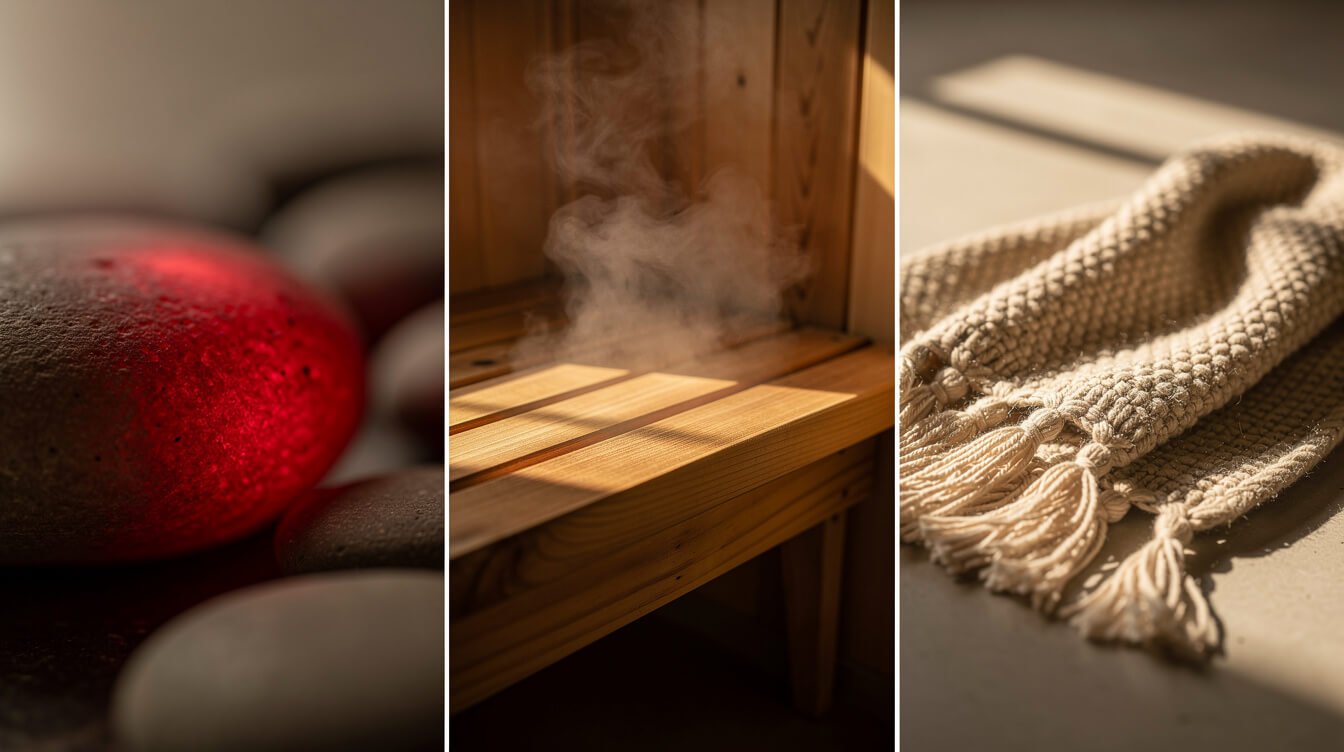
This is the part most comparison articles skip, and it’s the source of a lot of confusion (and some disappointing purchases). When a product says “infrared,” it may be describing one of three completely different experiences:
1. Near-infrared LED light therapy
This is the “infrared” in infrared vs red light therapy. LEDs emit a narrow band of near-infrared light, typically 810–850 nm, at a measured intensity. The goal is a gentle signal to your cells, not heat. A session feels neutral to slightly warm. If you’d like a deeper dive into this category on its own, our guide to near-infrared light therapy covers it in detail.
2. Far-infrared heat
Infrared saunas, heating pads, and many “infrared mats” use far infrared, which sits at much longer wavelengths (several thousand nanometers and beyond). Far infrared works mainly through warmth: it heats your tissues directly, raises your core temperature, and gets you sweating. That’s a lovely, relaxing experience with its own body of research, but it’s a different mechanism from photobiomodulation. Learn more in our article on far infrared and the benefits of infrared sauna.
3. “Infrared” textiles and minerals
Some clothing, bedding, and wraps are infused with minerals said to reflect your own body heat back as far-infrared energy. These are passive (no power source) and the effects, if any, are subtle. They’re comfortable, but they aren’t comparable to an LED device delivering a measured dose.
Quick test: if a product feels hot, it’s almost certainly far-infrared heat. If it glows red and feels barely warm, it’s red or near-infrared LED light. If it has no power source, it’s a passive textile.
Knowing which “infrared” you’re looking at saves money. Someone hoping for the skin research behind red light won’t get it from a sauna blanket, and someone craving deep, sweaty relaxation won’t get it from a 10-minute LED session. If you’re curious how heat and light can work together, we explored that in infrared sauna red light therapy.
How Red and Near-Infrared Light Work in the Body

Despite the different depths, red and near-infrared light share the same leading explanation for how they work, which is why researchers group them together.
The mitochondria connection
Inside your cells, the mitochondria produce ATP, the energy currency your body runs on. One enzyme in that process, cytochrome c oxidase, absorbs light in both the red and near-infrared ranges. Research suggests that when it does, a few things may happen:
- Cells may produce ATP more efficiently.
- Nitric oxide may be released, which can support local blood flow.
- Brief, mild signaling stress may prompt cells to strengthen their own repair and antioxidant defenses.
Think of it less like “charging a battery” and more like a gentle nudge that helps already-working cells run a little more smoothly. For a fuller look at the science, see our red light therapy benefits guide.
Why depth matters
Skin, blood, and water absorb and scatter light. Red light is absorbed quickly, so most of its energy stays in the outer few millimeters, which is exactly where skin cells, collagen-producing fibroblasts, and hair follicles live. Near-infrared light is absorbed less by blood and water, so more of it can travel deeper toward muscle, tendons, and joints. Estimates vary widely depending on wavelength, power, and the person’s tissue, so be wary of any device that promises a precise “inches deep” figure.
More isn’t better
Light therapy follows what scientists call a biphasic dose response: too little does nothing, a moderate dose may help, and too much can cancel out the benefit. That’s why longer sessions or holding a device right against your skin aren’t automatically better. Consistent, moderate doses are the goal for both red and near-infrared light.
What the Research Suggests for Each

Photobiomodulation has hundreds of published studies, but they vary a lot in quality, wavelength, and dose. Here’s an honest, evidence-informed way to think about where each wavelength shines.
Where red light has the strongest support
- Skin tone and texture: Several controlled studies suggest red light (often combined with near-infrared) may support collagen, softer-looking fine lines, and more even tone over 8–12 weeks of regular use.
- Scalp and hair: Some red light devices are FDA-cleared for certain types of hair thinning, and research suggests regular use may support fuller-looking hair over several months.
- Surface recovery: Red light has long been studied for supporting the skin’s natural healing processes.
Where near-infrared light has the strongest support
- Muscle recovery and performance: A growing number of sports-science studies suggest near-infrared light used before or after exercise may support recovery and reduce soreness, though results are mixed.
- Joint comfort: Reviews of low-level light therapy for knee and neck discomfort suggest possible short-term benefits, and some devices are FDA-cleared for temporary relief of minor muscle and joint aches.
- Brain and mood (early research): Near-infrared light, including 1,064 nm, is being explored for cognition and mood. These findings are intriguing but early, so treat them as “watch this space,” not a reason to buy.
Myths worth leaving behind
- “Infrared is just a stronger red light.” It isn’t stronger, only longer in wavelength. The infrared vs red light therapy choice is about depth and goal, not power.
- “If I can’t see it, it isn’t working.” Near-infrared is invisible by nature. A device with working 850 nm LEDs may look dimmer than a red-only device while delivering plenty of near-infrared light.
- “Hotter means more effective.” Heat is a separate experience. Effective LED sessions should feel neutral to mildly warm.
- “More LEDs always means better results.” LED count says little on its own. Wavelength accuracy and irradiance at your actual distance matter far more.
Where the evidence is thin or overstated
Be cautious with claims that either light “detoxes” the body, melts fat, cures disease, or replaces medical care. Studies on weight loss, thyroid, and many chronic conditions are small, inconsistent, or funded by manufacturers. Light therapy is best viewed as a supportive wellness tool, one thoughtful piece of a routine that still includes sleep, movement, and nourishing food.
Infrared vs Red Light Therapy: Which Should You Choose?

Rather than asking which light is “better,” start with your main goal. Here’s a simple decision guide:
- Mainly skin (tone, glow, fine lines)? Emphasize red light (630–660 nm). A face mask or a small panel works well. A device that adds some near-infrared is a bonus, not a must.
- Mainly scalp or hair? Choose a red light cap or comb designed specifically for the scalp, ideally one that is FDA-cleared for that use.
- Mainly sore muscles, stiff joints, or workout recovery? Emphasize near-infrared (810–850 nm). A panel or a flexible wrap you can place on a knee, shoulder, or lower back makes sense.
- A bit of everything, or not sure yet? Choose a combination device with both 660 nm and 850 nm. For most people, this is the most versatile starting point.
- Mostly want deep relaxation and warmth? You may actually be looking for far-infrared heat (a sauna or heat therapy), not LED light therapy at all.
What to look for in any device
- Stated wavelengths: specific numbers (e.g., 660 nm and 850 nm), not vague “infrared.”
- Irradiance at a real distance: ask for mW/cm² measured at the distance you’ll actually use, not just “high power” or LED count.
- Coverage: a mask or wand for small areas, a panel for larger ones.
- Clearance and safety testing: FDA clearance for a specific use is a meaningful quality signal (note: “cleared,” not “approved”).
- Honest marketing: brands that cite real studies and avoid “cures” or “detox” claims tend to be more trustworthy.
For setup tips, our guide to red light therapy at home walks through placement and routines, and how to choose an infrared therapy light goes deeper on specs.
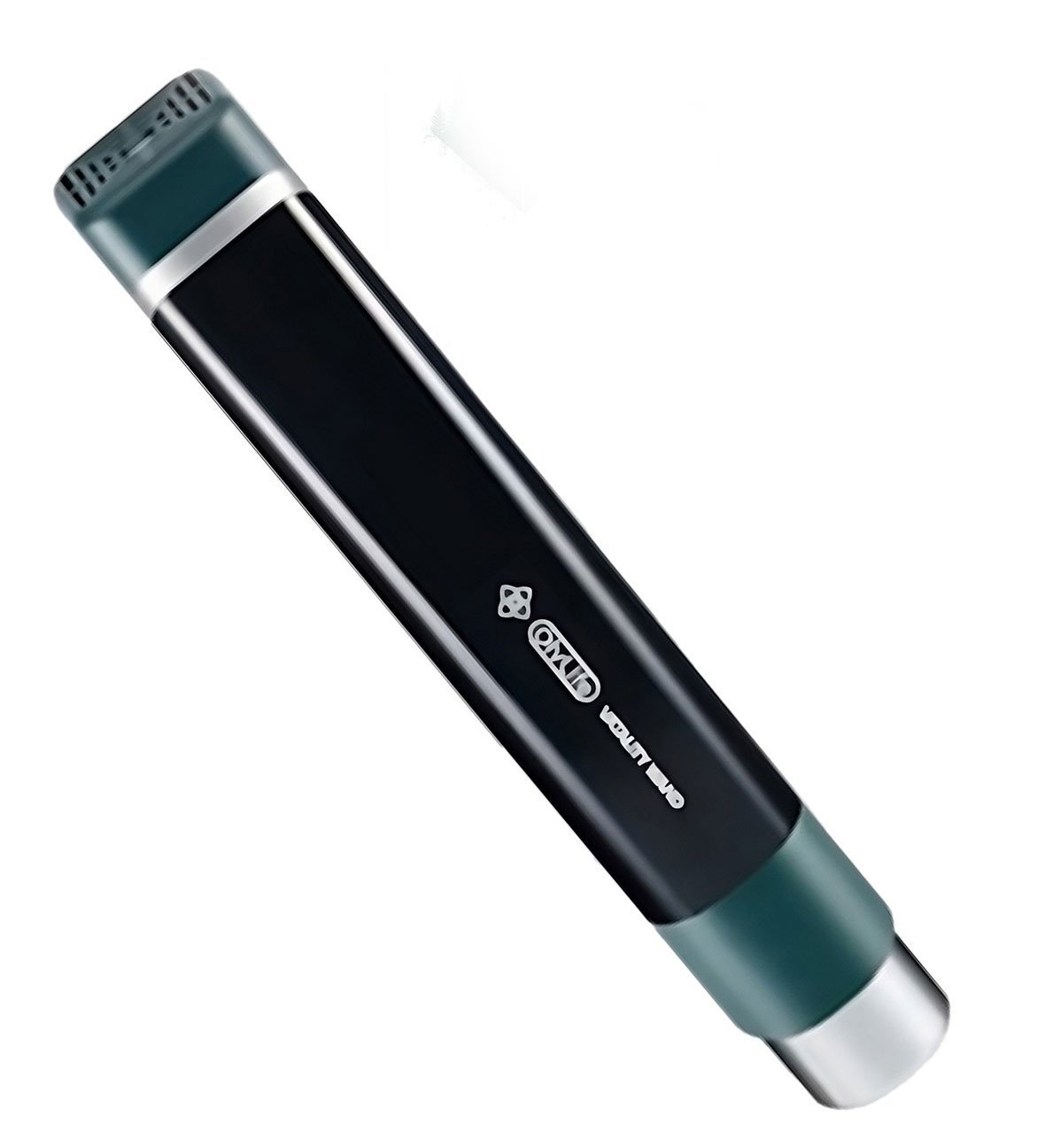
And if, after reading this, you realize you’re curious about at-home energy wellness beyond light, you might enjoy exploring the OlyLife Vitality Wand. It’s a different modality, combining terahertz and PEMF technology in a handheld device, not an LED light therapy tool, but many of our readers like it as part of a calming evening or recovery ritual. You can read more about that approach in our terahertz therapy guide.
A Handheld Companion for Your Wellness Ritual
The OlyLife Vitality Wand pairs terahertz and PEMF technology in one portable device, a gentle way to bring a moment of focused self-care into your evening or post-workout routine. ✨
🎁 Get a Free Wellness Gift
Enter your name and email below to receive a special wellness gift from OlyLife — absolutely free!
How to Use Red and Near-Infrared Light Safely
Both red and near-infrared light are generally well tolerated by healthy adults when used as directed. A few simple habits keep it that way.
A gentle starting routine
- Follow your device’s guidance first. Distances and times differ between masks, wands, and panels.
- Start short: around 5–10 minutes per area for the first week or two, then build toward 10–20 minutes if it feels good.
- Keep a comfortable distance: many panels are designed for about 6–18 inches. Closer isn’t better.
- Aim for consistency: 3–5 sessions per week tends to matter more than long, occasional sessions. Most studies look at results over 4–12 weeks.
- Start with clean skin: remove sunscreen, heavy makeup, or reflective lotions before a session.
A sample week using both wavelengths
If you own a combination device, here’s one gentle way to structure a week. Adjust it to your schedule and how your body responds:
- Monday, Wednesday, Friday: 10 minutes of red plus near-infrared on your face and neck in the morning, as a calm start to the day.
- Tuesday and Thursday: 10–15 minutes of near-infrared-emphasized light on whatever feels tight, such as the lower back, knees, or shoulders, ideally after movement.
- Weekend: rest, or one relaxed full-body session if you have a larger panel.
Keep a simple note of what you used, for how long, and how you felt. After a month, you’ll have your own personal answer to the infrared vs red light therapy question, based on real experience rather than marketing.
Protect your eyes, especially with near-infrared
Bright red LEDs are uncomfortable to look into, so you naturally look away. Near-infrared is invisible, so your eyes won’t warn you. Wear the goggles that come with your device, keep your eyes closed during facial sessions, and never stare into the LEDs.
Check with your healthcare provider first if you
- Are pregnant or breastfeeding
- Take medications or supplements that increase light sensitivity (some antibiotics, acne treatments, and St. John’s wort, for example)
- Have a history of skin cancer, or an unusual mole or lesion in the area you’d treat
- Have a thyroid condition and plan to use light on your neck
- Have an eye condition, epilepsy triggered by light, or any ongoing medical condition
Stop if you notice redness that doesn’t fade, headaches, or eye strain. And remember, light therapy is a complement to good habits, not a substitute. Pairing it with restorative sleep (see how to improve sleep quality naturally) and active recovery (our PEMF recovery guide) is where the real magic of a wellness routine happens.
Frequently Asked Questions
Is infrared light therapy stronger than red light therapy?
Not stronger, just different. Near-infrared light travels deeper into tissue, while red light concentrates its effect near the surface. “Better” depends entirely on your goal: red for skin and hair, near-infrared for muscles and joints.
Can I use red and infrared light therapy together?
Yes, and that’s how most home panels are designed. Using both wavelengths at once lets you support the skin’s surface and deeper tissue in the same session.
For anti-aging, which wins in the infrared vs red light therapy debate?
For visible skin goals, red light has the most research behind it, and many studies pair it with near-infrared for added depth. A face mask or panel offering both 630–660 nm and 830–850 nm is a balanced choice for most people.
Why can’t I see the infrared light on my device?
Near-infrared light is beyond the range of human vision. You may see a faint dull-red glow from the LED itself, but most of the light is invisible. That’s normal, and it’s also why eye protection matters.
Does infrared light therapy feel hot?
LED near-infrared therapy should feel neutral or only slightly warm. If a product feels genuinely hot, it’s likely using far-infrared heat, as in a sauna or heating pad, which works differently.
How long until I notice anything?
Many people notice a relaxing effect right away, but skin and recovery changes usually take consistent use over 4–12 weeks. Track how you feel and take a few photos so you can see gradual progress.
Is red light therapy the same as an infrared sauna?
No. Red light therapy uses LEDs to deliver specific wavelengths without much heat. An infrared sauna uses far-infrared heaters to warm your whole body. They can complement each other, but they aren’t interchangeable.
Final Thoughts
When it comes to infrared vs red light therapy, you don’t really have to pick a side. Red light is your go-to for skin and scalp, near-infrared reaches deeper for muscles and joints, and a combination device gives you both in one gentle session. The bigger trap is the word “infrared” itself: make sure you know whether you’re buying LED light therapy, far-infrared heat, or a passive textile, because each offers a very different experience.
Whatever you choose, keep it simple: specific wavelengths, honest specs, a comfortable distance, eye protection, and a steady routine you actually enjoy. Small, consistent rituals are what help you feel your best over time. ✨
This article is for educational purposes only and is not medical advice. Please consult a qualified healthcare professional before starting any new wellness practice, especially if you are pregnant, have a medical condition, or take medication.