
If you lie awake at night with a busy mind, you’re not alone — and you may have wondered whether a simple mineral could help. Magnesium for sleep has become one of the most talked-about natural approaches to more restful nights, and for good reason: this essential mineral plays a quiet but central role in how your body winds down, relaxes, and prepares for deep sleep. While it isn’t a magic sleeping pill, research suggests that magnesium may support the calm, settled state that good sleep depends on.
In this complete guide, we’ll walk through exactly how magnesium works in the body, the signs you might be running low, which forms are best for rest, how much to take and when, the everyday foods that top up your levels, and a gentle evening routine to bring it all together. As always at OlyLife, our goal is to help you make informed, empowered choices — never to replace the guidance of your own healthcare provider.
What Does the Research Say About Magnesium and Sleep?
It’s fair to ask whether magnesium for sleep is backed by evidence or simply wellness hype. The honest answer is somewhere in between — and understanding that nuance helps you set realistic expectations.
A number of studies, particularly in older adults and people with low magnesium status, have found that magnesium supplementation may be associated with modest improvements in how quickly people fall asleep, how long they stay asleep, and how rested they feel. Reviews of the research generally describe the effects as promising but gentle, noting that the strongest benefits tend to appear in those who were low in magnesium to begin with. In other words, magnesium is less likely to transform sleep for someone whose levels are already healthy, and more likely to help when it’s filling a genuine gap.
It’s also worth being realistic: magnesium is a supportive nutrient, not a sedative. Research suggests it may support the biological calm that good sleep depends on, but it works best as one piece of a bigger picture that includes consistent habits, a restful environment, and stress management. With that context in mind, let’s look at exactly how it works.
How Magnesium for Sleep Actually Works in the Body

Magnesium is involved in more than 300 enzyme reactions throughout the body, and several of them relate directly to relaxation and the sleep-wake cycle. Understanding the mechanisms helps explain why so many people reach for magnesium for sleep in the first place.
One of magnesium’s most important roles is supporting GABA (gamma-aminobutyric acid), the brain’s primary calming neurotransmitter. GABA is the “slow down” signal that quiets mental chatter and helps the nervous system shift out of high alert. Magnesium binds to and helps activate GABA receptors, which is part of why it’s associated with a more settled, ready-for-rest feeling.
At the same time, magnesium helps regulate NMDA receptors, which are linked to stimulation and alertness. By keeping these receptors from being overactivated, magnesium may help prevent the “wired but tired” sensation that keeps racing thoughts going long after your head hits the pillow.
Magnesium is also connected to healthy levels of cortisol, the body’s main stress hormone. When cortisol stays elevated in the evening, it can work against your natural drive to sleep. Research suggests adequate magnesium may support a calmer stress response, which in turn supports the body’s own melatonin rhythm. If chronic stress is part of your sleep picture, you may find it helpful to pair this with practical vagus nerve exercises that gently activate your relaxation response.
Finally, magnesium plays a role in the production and regulation of melatonin, the hormone that governs your sleep-wake timing, and it supports healthy muscle and nerve function. That’s why low magnesium is so often linked with restless legs and nighttime muscle cramps — the same mineral that calms the mind also helps muscles relax. Taken together, these overlapping roles explain why magnesium shows up again and again in conversations about natural sleep support: it isn’t targeting one narrow pathway, but gently supporting the whole “wind-down” system at once.
Signs You Might Be Low in Magnesium

Many people simply don’t get enough magnesium from diet alone. Modern soil depletion, processed foods, and higher stress levels all nudge our needs upward while our intake often falls short. Because magnesium touches so many systems, low levels can show up in surprisingly varied ways.
Some commonly reported signs that may point to lower magnesium status include:
- Difficulty falling asleep or staying asleep, and lighter, less refreshing rest
- Muscle cramps, twitches, or restless legs, especially at night
- Feeling tense, on-edge, or unable to switch off mentally
- Daytime fatigue despite spending enough hours in bed
- Occasional headaches or heightened sensitivity to stress
Certain groups may be more likely to run low, including people with higher stress loads, those who exercise intensely, older adults, and anyone with digestive conditions that affect mineral absorption. Diets high in ultra-processed foods and low in leafy greens, nuts, and whole grains also tend to fall short, since magnesium is concentrated in exactly those whole foods that modern eating patterns often crowd out. Even heavy caffeine and alcohol intake can nudge magnesium out of the body more quickly. Some medications can also lower magnesium levels over time. None of these signs diagnose a deficiency on their own — a simple conversation with your doctor, and sometimes a blood test, is the reliable way to know. Still, they can be a useful nudge to look at your intake, particularly if restless nights have become a pattern. If anxiety is compounding the problem, our guide to natural remedies for anxiety offers complementary calming strategies.
The Best Types of Magnesium for Sleep

Walk down any supplement aisle and you’ll notice magnesium comes in many different forms. They aren’t interchangeable — each is bound to a different compound that changes how well it absorbs and how it tends to feel in the body. Choosing the right type is one of the most practical things you can do when exploring magnesium for sleep.
Magnesium Glycinate
Often considered a top choice for rest, magnesium glycinate pairs magnesium with the amino acid glycine, which itself is associated with relaxation and sleep quality. It’s gentle on the stomach and well absorbed, making it a popular pick for people whose main goal is calm, restful evenings.
Magnesium L-Threonate
This form is prized for its ability to cross into the brain more readily, and it’s frequently discussed in the context of cognitive calm and sleep. It tends to be more expensive, but many people who want brain-focused support gravitate toward it.
Magnesium Citrate
Well absorbed and widely available, magnesium citrate is a solid all-rounder. Because it can have a mild laxative effect at higher doses, it may suit those who also deal with occasional constipation — though that same quality means going gently is wise in the evening.
Magnesium Malate and Chloride
Magnesium malate is often chosen by people focused on daytime energy and muscle comfort, while magnesium chloride is well absorbed and available in both capsule and topical forms. Both can contribute to your overall magnesium status, which indirectly supports sleep.
Magnesium Oxide
This is the least expensive and most common form, but it’s poorly absorbed and mostly used for digestive relief rather than sleep. If restful nights are your goal, the more bioavailable forms above are usually a better investment.
| Form | Absorption | Best suited for |
|---|---|---|
| Glycinate | High | Calm, restful sleep; sensitive stomachs |
| L-Threonate | High (brain) | Mental calm and cognitive support |
| Citrate | Good | All-round use; occasional constipation |
| Malate | Good | Daytime energy and muscle comfort |
| Chloride | Good | Capsules or topical use |
| Oxide | Low | Digestive relief, not ideal for sleep |
A quick tip: check the label for the amount of elemental magnesium — the actual usable magnesium per serving — rather than the total compound weight, so you can compare products fairly. Two products with the same milligram number on the front can deliver very different amounts of usable magnesium.
How Much Magnesium for Sleep to Take — and When

Dosage is where people most often have questions, and it’s an area where a little knowledge goes a long way. General wellness references suggest most adults need roughly 310–420 mg of total magnesium per day from all sources, including food. When it comes to supplements specifically, health authorities set an upper limit of around 350 mg of supplemental magnesium per day for adults — a ceiling worth respecting unless your doctor advises otherwise.
Many people exploring magnesium for sleep start at the lower end, around 100–200 mg of elemental magnesium in the evening, and adjust gradually based on how they feel and what their healthcare provider recommends. Starting low and slow helps you find your personal sweet spot while minimizing the chance of digestive upset.
Timing matters too. Because magnesium supports the body’s natural wind-down, taking it roughly 30 minutes to an hour before bed is a common approach. Consistency tends to matter more than any single dose — magnesium supports sleep by topping up your baseline levels over time, not by knocking you out on the spot. If you’re drawn to a broader, technology-supported relaxation routine, the OlyLife THz Tera-P90+ PEMF and Terahertz system is designed to complement a calming evening ritual alongside foundational habits like magnesium and good sleep hygiene.
🎁 Get a Free Wellness Gift
Enter your name and email below to receive a special wellness gift from OlyLife — absolutely free!
Magnesium-Rich Foods to Try First

Before reaching for a supplement, it’s worth remembering that food is the most natural way to build your magnesium levels — and whole foods deliver fiber, antioxidants, and other nutrients that support sleep in their own right. A “food first” approach is something we champion across all of our wellness content.
Some of the most magnesium-rich foods to weave into your week include:
- Leafy greens — spinach, Swiss chard, and kale are among the richest sources
- Nuts and seeds — pumpkin seeds, almonds, cashews, and chia seeds
- Legumes — black beans, edamame, lentils, and chickpeas
- Whole grains — brown rice, quinoa, and oats
- Dark chocolate — a square of 70%+ cocoa is a genuinely good source (enjoy earlier in the evening, since it contains some caffeine)
- Avocado, banana, and fatty fish like salmon and mackerel
A simple evening snack of a small handful of pumpkin seeds or a banana with almond butter is an easy, sleep-friendly way to nudge your intake upward. It also helps to remember that magnesium doesn’t work in isolation: nutrients like vitamin D, vitamin B6, and adequate protein all influence how well your body absorbs and uses it. This is one more reason a varied, whole-food diet often outperforms any single supplement — you’re supporting the whole system rather than one nutrient in isolation. Pairing magnesium-rich foods with an overall calming lifestyle — including gentle movement and stress support — tends to work far better than relying on any single food or pill. Adaptogenic herbs can be another supportive layer here; our guide to adaptogen supplements for stress explains how they may complement magnesium.
Beyond the Pill: Topical Magnesium, Baths, and a Calming Wind-Down

Capsules aren’t the only way to enjoy magnesium’s calming reputation. Some of the most soothing options are also the most sensory — and they double as a signal to your nervous system that the day is done.
Epsom salt baths are a classic evening ritual. Epsom salt is magnesium sulfate, and while the science on how much magnesium absorbs through the skin is still developing, a warm 20-minute soak is deeply relaxing regardless — the warmth, quiet, and slowing down all help prepare the body for sleep. Topical magnesium in the form of oils, sprays, or lotions is another gentle option many people enjoy massaging into the legs or shoulders before bed.
The real power comes from building magnesium into a consistent wind-down routine. A calming evening protocol might look like:
- Dim the lights and put screens away 30–60 minutes before bed
- Take your magnesium (or enjoy a warm Epsom bath) as a signal to relax
- Add a few minutes of slow breathing or gentle stretching to settle the nervous system
- Keep the bedroom cool, dark, and quiet for the best sleep environment
Layering these habits helps each one work better. For a deeper look at the surrounding habits that make any sleep aid more effective, our complete guide to sleep hygiene tips is the perfect companion to this one.
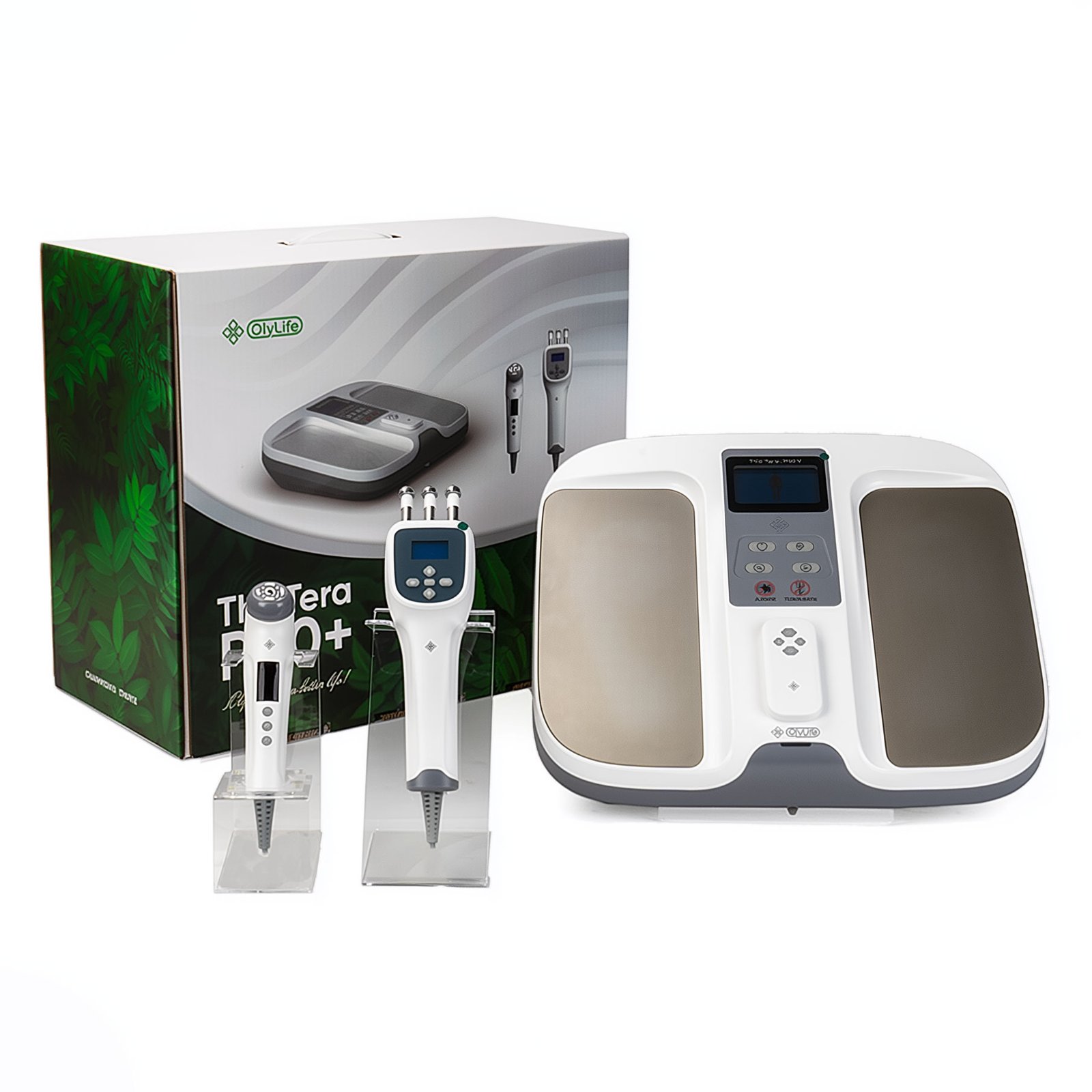
Make Wind-Down a Ritual
Support your evening calm alongside magnesium and good sleep habits. The OlyLife THz Tera-P90+ pairs PEMF and Terahertz technology with a deep-relaxation massager to help you ease into rest, naturally.
Safety, Side Effects, and Interactions to Know
Magnesium is generally well tolerated, and that’s part of its appeal. Still, more is not better, and a few sensible cautions apply — especially if you take medication or have an underlying health condition.
The most common side effect of too much supplemental magnesium is digestive upset, including loose stools or stomach cramping. This is usually a sign to lower the dose or switch to a gentler, better-absorbed form like glycinate. Sticking to the 350 mg supplemental upper limit for adults helps keep things comfortable.
Magnesium can also interact with certain medications, including some antibiotics, bisphosphonates, and diuretics, and it can affect how they’re absorbed. People with kidney conditions need to be particularly careful, since impaired kidneys can’t clear excess magnesium efficiently — for them, supplementation should only happen under medical supervision. If you’re pregnant, breastfeeding, or managing a chronic condition, it’s always best to check with your healthcare provider first.
One more common question: magnesium versus melatonin. They work differently — melatonin directly signals the timing of sleep, while magnesium supports the underlying calm that makes sleep easier. Some people find a gentle, non-hormonal mineral approach fits their preferences better, while others use them for different situations. There’s no single right answer, only what works well and safely for you.
Frequently Asked Questions About Magnesium for Sleep
How long before bed should I take magnesium?
Many people take magnesium about 30 minutes to an hour before bed, so it aligns with the body’s natural wind-down. Consistency each night tends to matter more than exact timing.
Which type of magnesium is best for sleep?
Magnesium glycinate is one of the most popular choices for rest because it’s gentle and well absorbed, while L-threonate is favored for brain-focused calm. The “best” one is the well-absorbed form your body tolerates comfortably.
Can I take magnesium for sleep every night?
For most healthy adults, nightly use within the recommended supplemental limit (up to about 350 mg) is considered reasonable. Because individual needs and medications vary, it’s wise to confirm with your healthcare provider, especially for long-term use.
Does magnesium help with anxiety as well as sleep?
Magnesium is often discussed in the context of a calmer stress response, and many people notice the two go hand in hand. It isn’t a treatment for anxiety, but supporting your magnesium status may complement other calming practices.
How long does it take to notice a difference?
Because magnesium works by topping up your baseline levels, some people notice a gentler, calmer feeling within a few days, while for others it takes a few weeks of consistent use. Patience and consistency are key.
Final Thoughts: A Gentle, Foundational Ally for Rest
Magnesium for sleep isn’t a quick fix, and that’s actually part of its charm. Rather than forcing sleep, this essential mineral supports the calm, relaxed foundation your body needs to drift off naturally — quieting the nervous system, easing tension, and helping your own rhythms do their work. Paired with magnesium-rich foods, a soothing evening routine, and good sleep habits, it can be a genuinely helpful part of your wellness toolkit.
As with any change to your routine, start gently, listen to your body, and check in with your healthcare provider if you have questions or existing health conditions. Here’s to calmer evenings and deeper, more restful nights. 🌿