Long before modern supplements lined pharmacy shelves, ancient healers across Asia were reaching for one humble root: ginger. Used for over 5,000 years in both Ayurvedic and Traditional Chinese Medicine, this warming spice has earned its place as one of nature’s most versatile wellness allies — and modern research is beginning to explain why. 🌿
A Root With Deep Roots
Ginger (Zingiber officinale) was one of the first spices exported from Asia to Europe along the ancient trade routes. In Ayurveda, it’s called vishwabhesaj — which translates to “universal medicine.” Traditional Chinese Medicine practitioners have used it for thousands of years to warm the body, support circulation, and ease digestive discomfort.
Today, researchers have identified over 100 bioactive compounds in ginger, including gingerols, shogaols, and zingerone — each contributing to its distinctive warming flavor and potential health-supporting properties.
How Ginger May Support Your Digestion
One of ginger’s most well-studied traditional uses is digestive support. Research suggests it may:
- Ease occasional nausea — A 2019 review in the Journal of the Academy of Nutrition and Dietetics found ginger may help reduce nausea intensity in various contexts
- Support healthy motility — Ginger may help food move through the digestive tract at a comfortable pace, according to research in the European Journal of Gastroenterology & Hepatology
- Promote a calm stomach — The warming compounds in ginger have traditionally been used to soothe occasional stomach discomfort
- Complement gut health — As an anti-inflammatory food, ginger pairs beautifully with probiotic-rich fermented foods to support your overall gut-brain connection
🎁 Get a Free Wellness Gift
Enter your name and email below to receive a special wellness gift from OlyLife — absolutely free!
3 Simple Ways to Enjoy Ginger Daily
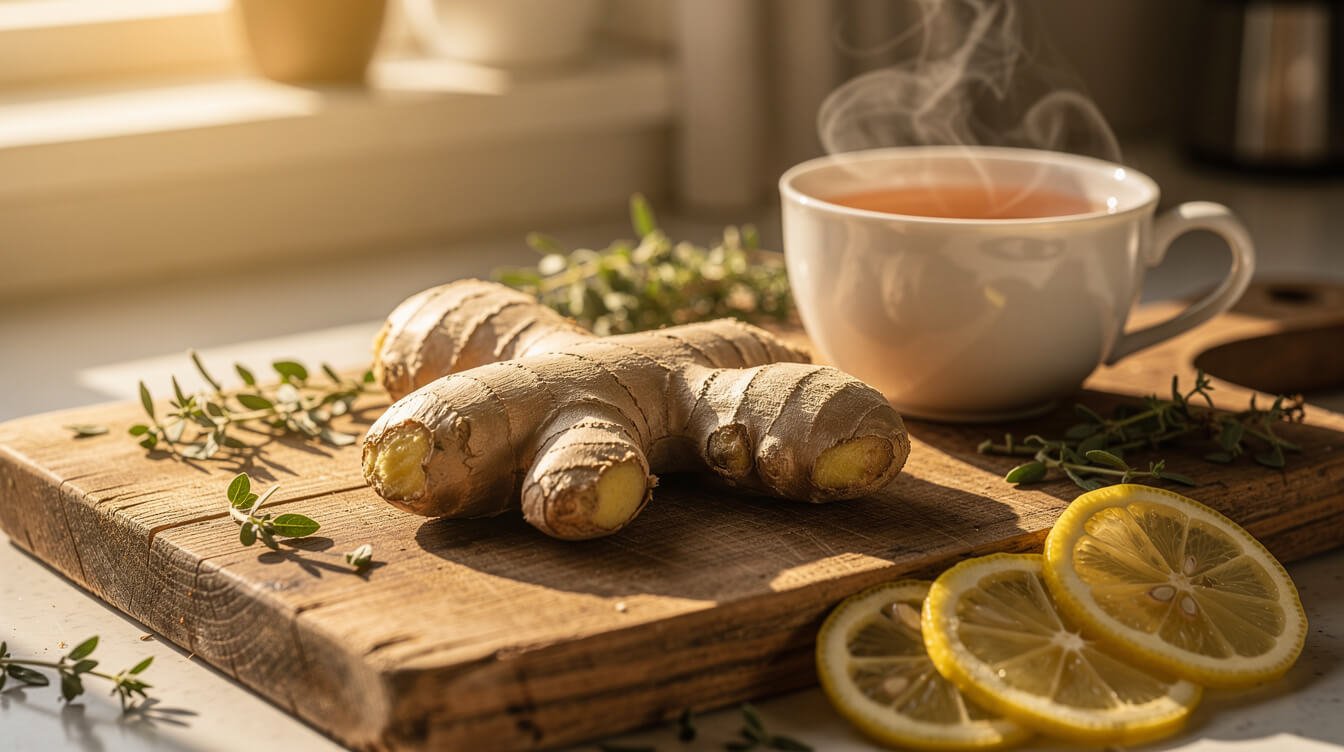
- Morning ginger tea: Steep 2–3 thin slices of fresh ginger in hot water for 5–10 minutes. Add a squeeze of lemon and a drizzle of raw honey for a gentle digestive wake-up call.
- Smoothie boost: Grate a thumb-sized piece of fresh ginger into your morning smoothie. It pairs especially well with banana, turmeric, and coconut milk.
- Cooking staple: Add minced ginger to stir-fries, soups, and anti-inflammatory meals. Fresh ginger is more potent than dried, but both offer benefits.
A Quick Note
While ginger is generally well-tolerated, those taking blood-thinning medications or preparing for surgery should check with their healthcare provider. Start with small amounts if you’re new to ginger — your taste buds (and stomach) will thank you for the gentle introduction.
The takeaway: Sometimes the most powerful wellness tools are the ones that have stood the test of millennia. A simple cup of ginger tea each morning is a small ritual that connects you to thousands of years of healing wisdom — and it may just help your digestion feel a little more balanced, too. ✨
Curious about more ways to support your gut naturally? Explore our guide to recognizing the signs of poor gut health and simple steps you can take today.