Chuẩn bị cho ngày Chủ nhật: Lên kế hoạch cho một tuần đi bộ mùa đông chỉ trong 15 phút
When the mornings turn dark and frosty, walking is usually the first healthy habit to slip. It’s not that we stop caring. It’s that “I’ll go for a walk sometime” doesn’t hold up against cold toes and a 4:30 p.m. sunset. 🌿 This week’s Sunday Setup takes about fifteen minutes. You’ll plan your winter walks for the week so they’re on your calendar before Monday gets busy.
Why Plan Walks at All?
The U.S. Physical Activity Guidelines for Americans suggest that adults aim for at least 150 minutes of moderate activity each week. For many of us, brisk walking is the easiest way to get there. That’s about 20–30 minutes on most days, and it can be split into shorter pieces.
You also don’t need to hit a big number to benefit. In a 2022 meta-analysis of 15 international cohorts covering more than 47,000 adults, taking more steps per day was associated with a lower risk of death from any cause. The benefit leveled off at around 6,000–8,000 steps a day for adults 60 and older and around 8,000–10,000 for younger adults. That’s observational research, so it shows a link rather than proof. Still, it suggests that every walk counts, not just perfect 10,000-step days. You’ll find more on what walking may do for you in our guide to đi bộ mang lại lợi ích cho sức khỏe.
Step 1: Pick Your Walking Windows (5 minutes)
Open your calendar and look at the week ahead. Choose three to five walks and give each one a time, the same way you’d book an appointment. A few windows that tend to work well in winter:
- The late-morning light walk. If you can get out between about 10 a.m. and 2 p.m., you’ll catch the warmest, brightest part of a short winter day. That may be a welcome lift if the darker months weigh on your mood.
- The after-meal stroll. Even 10–15 easy minutes after lunch or dinner is worth booking. A 2022 review of short-term trials found that breaking up long stretches of sitting with light walking lowered post-meal blood sugar and insulin compared with staying seated.
- The anchor walk. Pair a walk with something you already do, like right after your morning coffee or straight after you log off work. If you’re working on a steady wake time, a walk at the same hour each morning fits right in.
🎁 Nhận quà tặng chăm sóc sức khỏe miễn phí
Hãy nhập tên và email của bạn bên dưới để nhận quà tặng chăm sóc sức khỏe đặc biệt từ OlyLife — hoàn toàn miễn phí!
Step 2: Set Out Your Gear (5 minutes)
Most skipped walks happen at the front door. Make leaving easy:
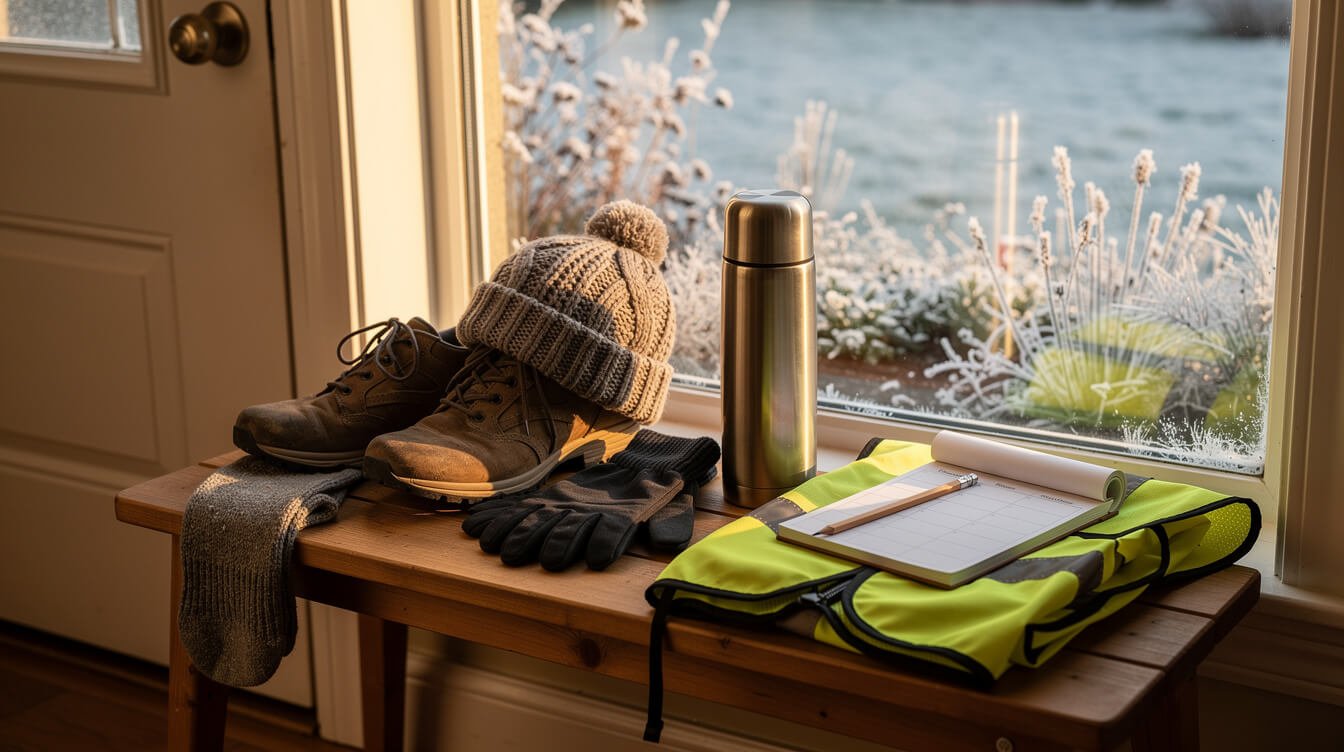
- Layers you can peel off. A wicking base layer, a warm middle layer, and a wind-resistant outer layer. You’ll warm up after about ten minutes.
- Warm socks and shoes with grip. Feet are often the first to feel the cold. If yours always do, these gentle ways to support circulation in your feet Có thể hữu ích.
- Hat, gloves, and something bright or reflective for early-morning or after-dark walks, so drivers can see you.
- A thermos of warm water or herbal tea for the walk home. If you put together a bộ dụng cụ tiện nghi mùa lạnh last week, your walking gear can live in that basket by the door.
Step 3: Choose a Bad-Weather Backup (5 minutes)
Ice, sleet, or a howling wind will cancel at least one walk this winter, so decide your Plan B now. Some options: laps of a mall or big store, a few rounds of the stairs, or a 10-minute indoor walk around your home with a favorite podcast playing. Write it next to each walk in your calendar. If the weather turns, you just switch to Plan B instead of skipping.
Tóm lại
Winter walking gets much easier when you plan it ahead instead of hoping you’ll find time. Spend fifteen minutes today booking your walks, setting out your gear, and picking a backup, and future-you will thank you every chilly morning this week. Start small, go at your own pace, and enjoy the crisp air. ✨
This post is for general wellness education only and is not medical advice. If you have a heart or lung condition, balance concerns, diabetes, or symptoms like chest pain, unusual breathlessness, or leg pain when walking, please talk with a qualified healthcare professional before starting or increasing a walking routine. In icy conditions, choose an indoor option.
Tài liệu tham khảo
- Piercy KL, Troiano RP, Ballard RM, et al. The Physical Activity Guidelines for Americans. JAMA. 2018;320:2020–2028.
- Paluch AE, Bajpai S, Bassett DR, et al. Số bước đi hàng ngày và tỷ lệ tử vong do mọi nguyên nhân: phân tích tổng hợp từ 15 nhóm nghiên cứu quốc tế. Tạp chí Y tế Công cộng Lancet. 2022;7(3):e219–e228.
- Buffey AJ, Herring MP, Langley CK, Donnelly AE, Carson BP. The acute effects of interrupting prolonged sitting time in adults with standing and light-intensity walking on biomarkers of cardiometabolic health in adults: a systematic review and meta-analysis. Sports Med. 2022;52:1765–1787.