夜間腳冷:原因、睡前暖腳習慣、何時就醫
You’ve brushed your teeth, switched off the lamp and pulled the covers up to your chin, and then you notice your toes. They feel like ice cubes. The rest of you is warm, but your feet won’t settle, and neither will you. If you’re dealing with cold feet at night, you’re in good company. It’s one of the most common winter sleep complaints, and it’s especially common in women and in adults over 50.
Most of the time, cold feet in bed are a normal (if annoying) part of how your body cools itself down for sleep. Sometimes they’re a gentle nudge to look a little deeper at circulation, thyroid, iron or nerve health. The good news is that research on sleep and skin temperature gives us a surprisingly practical toolkit, from the humble bed sock to a well-timed footbath.
In this guide you’ll learn why your feet get cold at bedtime, how to tell an ordinary chill from a sign worth checking, what research suggests about warm feet and falling asleep, a simple 30-minute warm-feet routine, how to set up your socks and bedding, the daytime habits that help, the heat-safety rules nobody mentions, and when it’s time to see your doctor. Think of it as a warm, practical companion to your care, not a replacement for it.
Why You Get Cold Feet at Night (and Why It Matters for Sleep)
Your body runs on a daily temperature rhythm. In the evening, your core temperature begins to drift down by roughly a degree or so, and that gentle drop is one of the signals that helps you fall asleep. To shed that heat, your body opens up the small blood vessels in your hands and feet, so they act a bit like radiators.
That’s where things can go sideways. If the blood vessels in your feet stay narrowed, because the room is chilly, you’ve been sitting still for hours, you’re stressed, or your circulation simply runs “cool”, your feet don’t warm up the way they’re meant to. Instead of radiators, they become cold spots that your brain keeps noticing.
Warm feet are a “time to sleep” signal
One of the best-known studies in this area appeared in 自然 in 1999. Swiss researchers tracked skin and core temperatures in healthy volunteers through the evening and found that how warm the hands and feet were compared with the trunk (the “distal-proximal gradient”) was the best physiological predictor of how quickly people fell asleep (Kräuchi et al., 1999). In their fuller analysis, that gradient predicted sleep onset better than core body temperature, heart rate, melatonin or even how sleepy people said they felt (Kräuchi et al., 2000). In other words, warming of the hands and feet seems to be part of the body’s own runway into sleep.
Researchers have also looked at the flip side. In a small Lancet report, people with a tendency toward cold, constricted hands and feet (called vasospastic syndrome) reported taking noticeably longer to fall asleep than healthy controls, both at bedtime and after waking in the night (Pache et al., 2001). So if your cold feet seem to keep you awake, it isn’t in your head. There’s real physiology behind it.
Why some people run colder than others
- Women more often than men. In a Japanese lab study, young women who complained of “unusual coldness” kept a normal core temperature in a cool room, but their fingertips cooled more sharply and they felt cold discomfort more strongly than women without the complaint (Nagashima et al., 2002). Their blood vessels simply clamped down harder.
- Lower body fat or muscle mass. Less insulation and less heat-producing muscle mean feet cool faster.
- Age. Circulation and temperature regulation tend to become less responsive over the years.
- Long periods of sitting. Calf muscles help move blood. A day at a desk, then an evening on the sofa, leaves feet cooler by bedtime.
- Stress. The “fight or flight” response narrows blood vessels in the hands and feet, which is why anxious evenings can bring icy toes.
If your hands get cold too, our guide to 為什麼你的手腳總是冰涼 goes deeper into the daytime causes. Here we’ll stay focused on the bedtime side of the story.
Cold Feet at Night: Normal Chill or a Sign to Check?
Before you change anything, it helps to know which kind of cold feet you’re dealing with. A few quick observations can tell you a lot, and they’re useful to bring to your doctor if you need to.
| 你注意到了什麼 | What it often points to | 該怎麼辦 |
|---|---|---|
| Feet are cold only at night or in a cool room, and warm up within 15–20 minutes with socks or a blanket | A normal evening temperature shift, a chilly bedroom or a quiet, sit-still day | Try the routine and bedding tips below |
| Feet are cold all day, even in a warm room | Circulation, thyroid, iron or medicine-related causes are worth ruling out | Mention it at your next check-up |
| Feet 感覺 cold, but are warm when someone else touches them | Nerve-related sensation changes (neuropathy), often with numbness or tingling | See your doctor, and be very careful with heat |
| Toes turn white or blue, then red, with cold or stress | 雷諾現象 | See your doctor for an assessment |
| One foot is clearly colder or paler than the other, or calves cramp when you walk | Possible narrowing of the leg arteries (peripheral artery disease) | Book an appointment soon |
| A suddenly cold, pale, painful foot or leg | A possible blocked artery | Seek emergency care right away |
Harvard Health makes a helpful distinction here. With narrowed arteries, the feet are actually cold to the touch and may look pale or bluish. With nerve damage, the person senses cold even though the skin isn’t cold, because the temperature-sensing nerves aren’t reporting accurately. That difference matters for both diagnosis and safety.
A two-minute bedtime self-check
- Touch test. Ask a partner to feel both feet, or compare with your own warm hand. Cold to the touch, or only cold to you?
- Color check. Look at your toes in good light. Are they their usual color, or pale, blue or purple?
- Side-by-side. Is one foot noticeably colder than the other?
- Sensation. Any numbness, pins and needles or burning?
- Skin. Any cuts, blisters or sores that are slow to heal?
If everything looks normal and your feet warm up with simple measures, you’re most likely dealing with ordinary cold feet at night. If anything on that list catches your eye, jot it down and skip ahead to the doctor section.
What Research Suggests About Warming Your Feet for Better Sleep
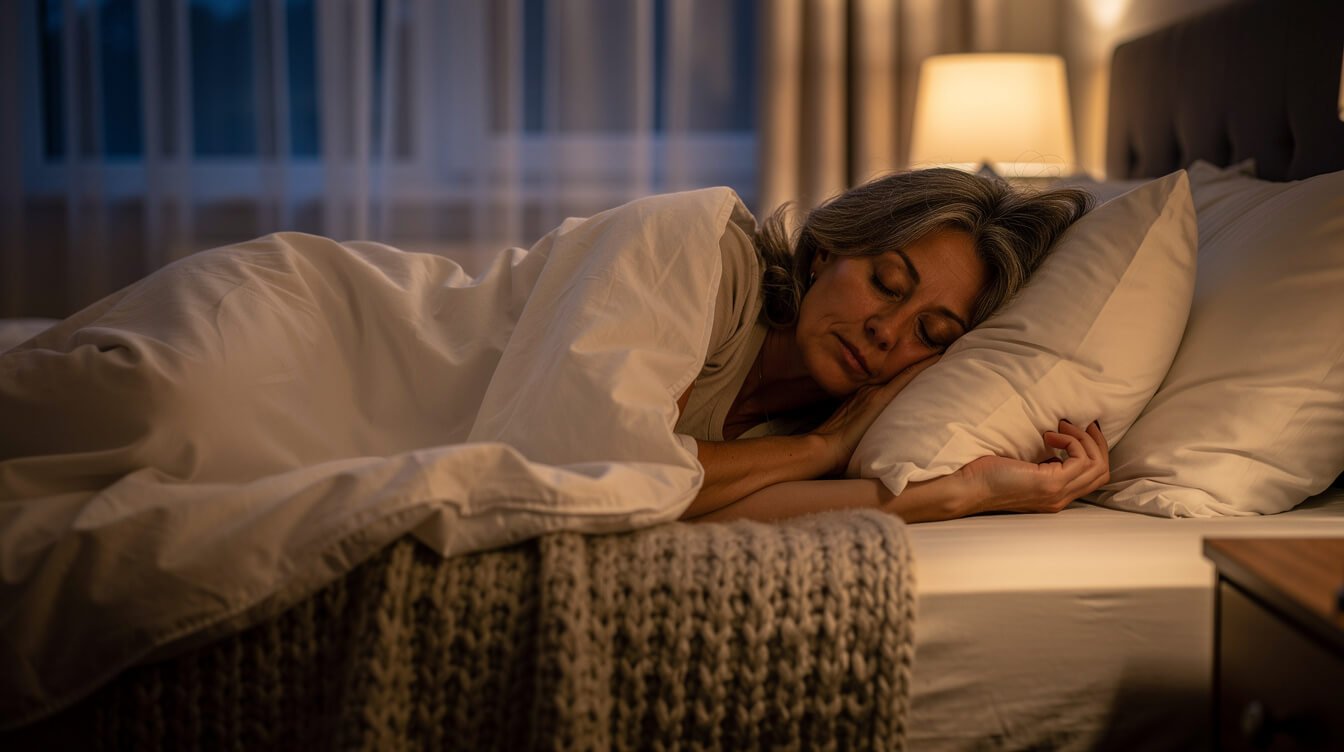
The idea of warming your feet to sleep better isn’t just folk wisdom, although the studies are mostly small, so it’s worth being honest about what they show and what they don’t.
床襪
In a Korean study, six healthy young men slept in a cool room (23°C, about 73°F) with and without feet-warming bed socks. With the socks, their foot temperature stayed about 1.3°C higher, they fell asleep 7.5 minutes faster on average, slept 32 minutes longer and woke up less often (Ko & Lee, 2018). It’s a tiny study, but the direction fits everything we know about warm feet and sleep onset.
A Dutch research group found something important about age. In younger and middle-aged adults, both warm and neutral bed socks worn after lights-out helped people fall asleep faster. In healthy older adults, neutral socks and a warm footbath before lights-out helped. But in older adults with insomnia, none of the foot-warming methods sped up sleep onset (Raymann et al., 2007). So warm feet can help, but they won’t solve every sleep problem on their own.
Warm footbaths
The footbath has the most research behind it, mainly in older adults. A 2025 meta-analysis pooled 18 studies with 950 people aged 60 and over and found that warm footbaths before bed improved how well people 毛氈 they slept. The biggest benefits showed up with water at or below 40°C (104°F), soaks of at least 10 minutes, and a habit kept up for at least a week (Chang et al., 2025).
The picture isn’t perfectly tidy. In a careful sleep-lab crossover study, a 20-minute footbath at 40°C clearly warmed the feet but didn’t change measured sleep or sleep quality over a single night (Liao et al., 2013). An older Japanese study of nine women in winter did find faster sleep onset after a hot footbath (Sung & Tochihara, 2000). The honest takeaway: footbaths reliably warm your feet, and many people find them relaxing and feel they sleep better, especially as a nightly habit. They’re not a sleeping pill.
A warm bath or shower
Full-body warming works too. A meta-analysis found that a warm bath or shower at about 40–42.5°C (104–108.5°F), taken one to two hours before bed for as little as 10 minutes, was linked to falling asleep faster (Haghayegh et al., 2019). In a large Japanese study of 1,094 older adults, bathing 1–3 hours before bedtime was associated with shorter time to fall asleep and warmer hands and feet relative to the body in the half hour before bed (Tai et al., 2021). The timing matters: it gives your body time to release that heat through your hands and feet just as you lie down.
A 30-Minute Warm-Feet Bedtime Routine
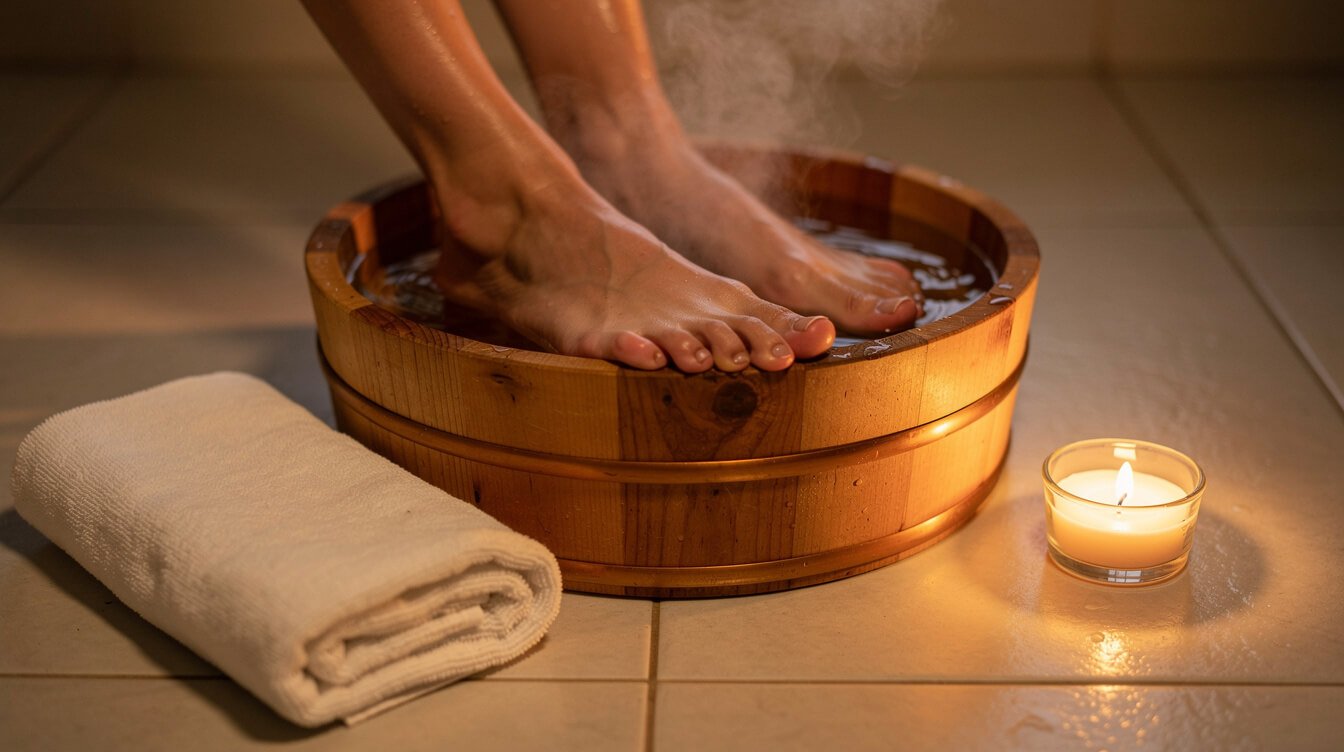
Here’s a gentle routine for cold feet at night that pulls the research together. You don’t need to do every step every night. Start with two or three and see what your feet like.
90 to 60 minutes before bed: warm shower or bath (optional)
If you enjoy a bath or shower in the evening, this is the ideal window. Keep the water comfortably warm, not scalding, and stay in for 10 minutes or more. Then dress in soft, warm layers so the heat you’ve gained has somewhere gentle to go.
30 minutes before bed: a 10–15 minute footbath
- Fill a basin deep enough to cover your ankles with warm water, around 38–40°C (100–104°F). Use a bath thermometer if you have one. It should feel pleasantly warm on your wrist, never hot.
- Sit comfortably, soak for 10–15 minutes and let your shoulders drop. A few slow breaths help here, because stress narrows the blood vessels in your feet.
- Pat your feet completely dry, especially between the toes. Damp skin cools fast and is prone to cracking in winter.
- Pull on dry, loose socks straight away to hold the warmth in.
Skip the footbath if you have diabetes, numbness, open wounds or reduced feeling in your feet unless your doctor or podiatrist has said it’s fine. More on why in the safety section below.
20 minutes before bed: move and massage
A couple of minutes of gentle movement gets your calf muscles pumping. Try 15–20 slow calf raises while holding the edge of a counter, or ankle circles and toe curls while sitting on the bed. Then give each foot a few minutes of slow, comfortable massage from toes to heel. If you’d like a full routine, our guide to 足部按摩的好處 has a step-by-step version with a pressure scale.
Some readers like to add a quiet wellness ritual to this part of the evening. The OlyLife活力魔杖 combines terahertz and PEMF technology with an adjustable warm or cool airflow, and many people enjoy gliding it over their feet and calves as part of a slow wind-down. It isn’t a treatment for cold feet or circulation problems, and if you have numbness, diabetes or poor feeling in your feet, check with your doctor before using any warm device there.
10 minutes before bed: wind down
Dim the lights, put your phone across the room and sip something warm and caffeine-free if you like. Our list of 有助於放鬆的草本茶 has some cozy options. Then slip into a bed you’ve already warmed (see the next section).
If you wake up with cold feet at 3 a.m.
Instead of lying there shivering, sit up, rub your feet briskly for a minute, do ten ankle circles each side and swap into a fresh pair of dry socks if your feet feel damp. Keep a spare pair on the nightstand so you don’t have to hunt in the dark.
Socks, Bedding and Bedroom Temperature for Warm Feet
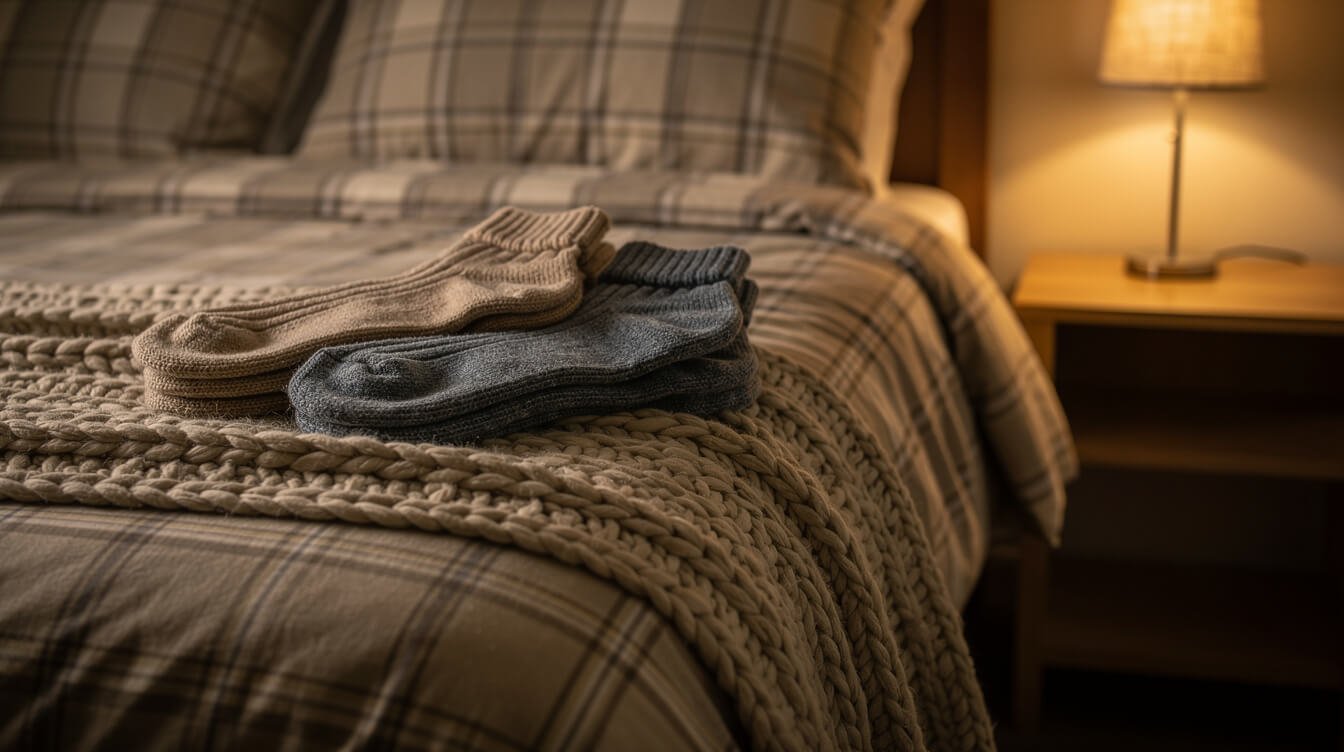
The environment you sleep in can make or break your feet’s chances of staying warm, and it’s one of the easiest places to tackle cold feet at night. A review of thermal environment and sleep notes that in real-life conditions, cool air on its own doesn’t change sleep stages much, but bedding and sleepwear are critical for keeping you comfortable and sleeping well in the cold. The review also found that cold exposure still affects the heart’s nervous-system activity during sleep, even when people don’t notice it (Okamoto-Mizuno & Mizuno, 2012). That’s good news, because your bed is much easier to adjust than your thermostat.
Choosing bed socks
- Go for soft, breathable fibers. Merino wool, cashmere blends or thick cotton blends hold warmth while letting moisture escape. Damp socks get cold fast.
- Look for a loose, non-binding cuff. Tight elastic can leave grooves in your skin and isn’t what you want around your ankles overnight.
- Skip compression socks at night unless a clinician has prescribed them for you. Compression is designed for specific needs and isn’t a general bedtime warmer.
- Pre-warm them. Tuck tomorrow’s bed socks under your pillow or drape them over a warm (not hot) radiator for a few minutes before you put them on.
- Keep them clean and dry. Put on a fresh pair at bedtime rather than the socks you wore all day.
Setting up the bed
- Add an extra layer at the foot end. A folded blanket across the bottom third of the bed keeps your feet warm without overheating the rest of you.
- Try flannel sheets in winter. They feel warm against the skin the moment you get in.
- Pre-warm the bed for 15–20 minutes before you get in, using a covered hot water bottle or an electric blanket on a low setting, and then remove or switch it off before sleep (see the safety rules below).
- Sharing a bed? If one of you runs hot and the other cold, two separate duvets or a light blanket on one side can end the nightly tug-of-war.
Bedroom temperature
You still want a cool bedroom for good sleep. Many sleep organizations suggest roughly 60–67°F (15.5–19.5°C) for most adults. Rather than cranking up the heat, which can leave you restless and dry-mouthed, keep the room cool and the bed cozy. Warm feet, cool head is a combination your body tends to like. For more ideas, see our guide on 如何自然地改善睡眠品質.
Daytime Habits That Help With Cold Feet at Night
What happens in your day shapes how warm your feet are at bedtime, so the best approach to cold feet at night often starts in the morning. These habits aren’t glamorous, but they’re the foundation.
Keep blood moving
Your calf muscles are often called your “second heart” because each contraction helps push blood back up from your legs. Every hour you sit, stand up for a minute or two: walk to refill your water, do ten calf raises, or circle your ankles under the desk. A brisk daily walk, even 20–30 minutes, helps too. Our guide on 如何改善足部血液循環 includes a five-minute routine you can do anywhere.
Don’t smoke, and go easy on what narrows blood vessels
Nicotine narrows blood vessels, and smoking is a known risk factor for Raynaud’s phenomenon (Garner et al., 2015). If you smoke, cutting down or quitting is one of the best things you can do for your feet. Alcohol can make your skin feel warm at first, but it increases heat loss from the body, so a nightcap tends to leave feet colder later in the night.
Eat enough, and eat regularly
Your body makes heat partly by digesting food. Very low-calorie diets and skipped meals can leave you feeling colder overall. Iron matters here as well: in a classic study, women with iron-deficiency anemia had lower core temperatures during cold exposure than other women, and correcting the anemia with iron improved it (Beard et al., 1990). That doesn’t mean you should start iron supplements on your own, because too much iron can be harmful. It means it’s worth asking your doctor to check your iron if you’re always cold and tired. For food ideas, see our evidence-graded guide to 促進血液循環的食物.
Ease the evening stress spike
Because stress narrows the blood vessels in your hands and feet, a calmer evening often means warmer toes. A short breathing practice, a few gentle stretches or simply a screen-free half hour before bed all help signal “safe to rest” to your nervous system.
🎁 領取免費健康禮品
在下方輸入您的姓名和電子郵件地址,即可免費獲得 OlyLife 提供的特別健康禮物!
Heat Safety: How to Warm Cold Feet Without Burns
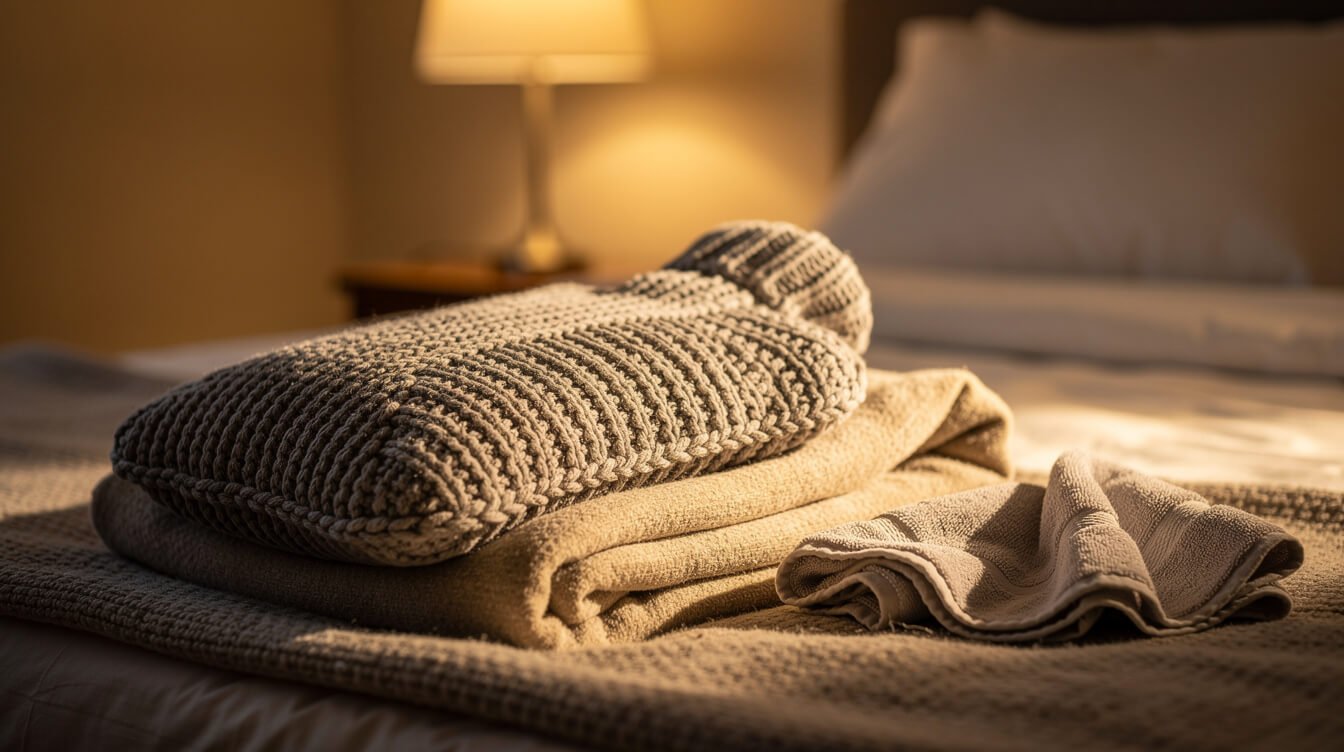
This is the section most cold-feet articles skip, and it matters. Hot water bottles, heating pads and electric blankets are lovely, but they cause real injuries every winter, especially in people who can’t feel heat well.
One London burns unit treated 80 people for hot water bottle injuries in just 15 months. Half of the burns were on the lower limbs, and 30 people had full-thickness burns, many needing surgery (Begum et al., 2019). Emergency doctors have reported serious foot burns from electric heating pads in people with reduced skin sensation (Bill et al., 1994). Surgeons have also described people with diabetes who burned their numb feet while trying to warm them with heat at home, leading to long hospital stays (Thng et al., 1999).
Simple heat-safety rules
- Never use boiling water in a hot water bottle. Use hot tap water, and don’t overfill it.
- Always use a cover and never rest a hot water bottle directly on bare skin.
- Warm the bed, then remove it. Use hot water bottles and heating pads to pre-warm the bed, then take them out or switch them off before you fall asleep.
- Replace old hot water bottles. Rubber perishes over time. Check for cracks and replace any that look worn.
- Use electric blankets as directed. Follow the manufacturer’s instructions, use a model with an automatic shut-off, and don’t use one if you’re unable to feel heat properly or can’t switch it off easily.
- If you have diabetes, neuropathy or numb feet: don’t put heat directly on your feet at all. Stick with warm socks and blankets, test bath water with your elbow or a thermometer, and check your feet every day for redness, blisters or cuts.
For everyday cold feet at night, bed socks remain the simplest, safest option for most people. They warm your feet gradually, and there’s nothing to overheat.
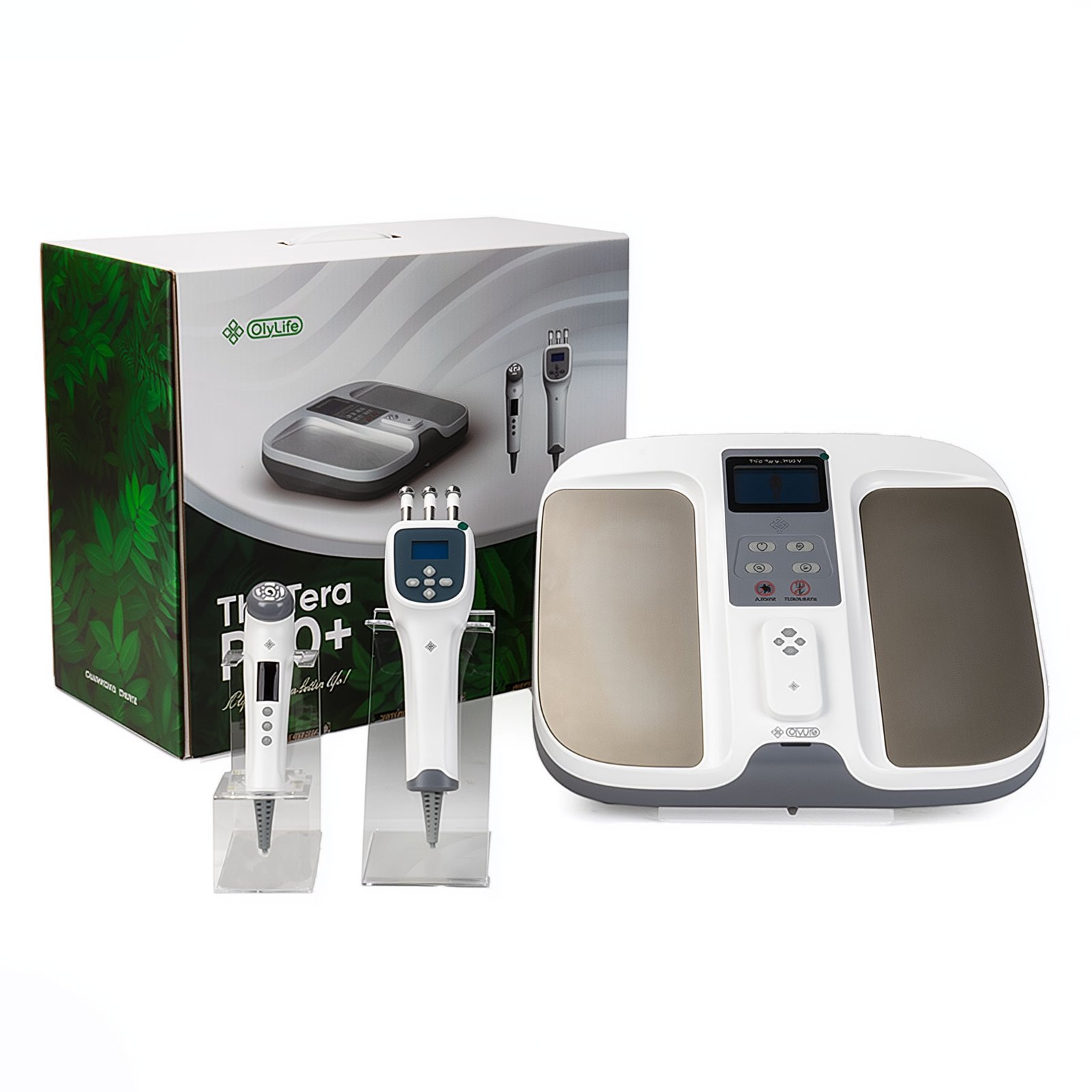
A Cozy Ritual for Winter Evenings 🌿
If slow, screen-free evenings help you unwind, the OlyLife THz Tera-P90+ is designed to deliver focused PEMF and terahertz frequencies during relaxing at-home sessions, with a Revitaluxe Massager included. Many customers enjoy it as part of their wind-down before bed. It’s intended to support relaxation and general wellbeing. It isn’t a treatment for cold feet, circulation problems or any other condition, so please keep your doctor in the loop.
When Cold Feet at Night Need a Doctor’s Look
Most cold feet at night are harmless. But because cold feet can be an early clue to conditions that are very manageable when found early, it’s worth knowing the main ones. As a Mayo Clinic family physician put it, a few simple tests can check your circulation, and some blood tests can look for things like anemia or autoimmune issues.
| Possible cause | Clues that often come with it | What a doctor may check |
|---|---|---|
| 雷諾現象 | Toes or fingers turn white or blue, then red, with cold or stress; often runs in families | History, examination, sometimes blood tests to look for an underlying cause |
| 週邊動脈疾病(PAD) | Calf pain or cramping when walking that eases with rest, one foot colder or paler, slow-healing sores, smoking or diabetes history | Foot pulses and an ankle-brachial index (ABI) test |
| 週邊神經病變 | Numbness, tingling or burning; feet feel cold but aren’t cold to the touch; often linked to diabetes or vitamin B12 deficiency | Sensation tests, blood sugar, B12 |
| Underactive thyroid | Feeling cold all over, tiredness, dry skin, weight gain, constipation | Thyroid blood tests (TSH) |
| 缺鐵性貧血 | Tiredness, breathlessness, pale skin, heavy periods | 血球計數和鐵含量檢查 |
| Medicine side effects | Cold feet began after starting a new medicine, such as some blood pressure medicines (for example, beta-blockers) | Medication review. Please don’t stop any medicine on your own |
A few numbers help put this in perspective. A large review of 33 studies estimated that primary Raynaud’s affects about 4.85% of the general population. It’s more common in women, and a family history raises the odds substantially (Garner et al., 2015). PAD affects more than 230 million adults worldwide, and the American Heart Association notes that it’s still widely underappreciated by both patients and clinicians (Criqui et al., 2021). Many people with PAD don’t have classic symptoms, so cold feet plus risk factors like smoking, diabetes or high blood pressure deserve a conversation.
Make an appointment if:
- Your feet are cold most of the time, not only at night, and simple measures don’t help.
- One foot is colder, paler or a different color than the other.
- You notice numbness, tingling, burning or pain, especially if you have diabetes.
- Your toes change color with cold or stress.
- You have sores, cuts or blisters on your feet that are slow to heal.
- You also feel unusually tired, short of breath or cold all over.
Seek urgent care if a foot or leg suddenly turns cold, pale or blue and becomes painful or numb, or if a toe turns black. For a fuller look at circulation-related signs, read our guide to 足部血液循環不良.
Cold feet sometimes show up alongside other night-time leg sensations. If yours come with a crawling urge to move your legs at rest, our guide on 如何預防不寧腿症候群 may help you sort out what’s going on.
Frequently Asked Questions About Cold Feet at Night
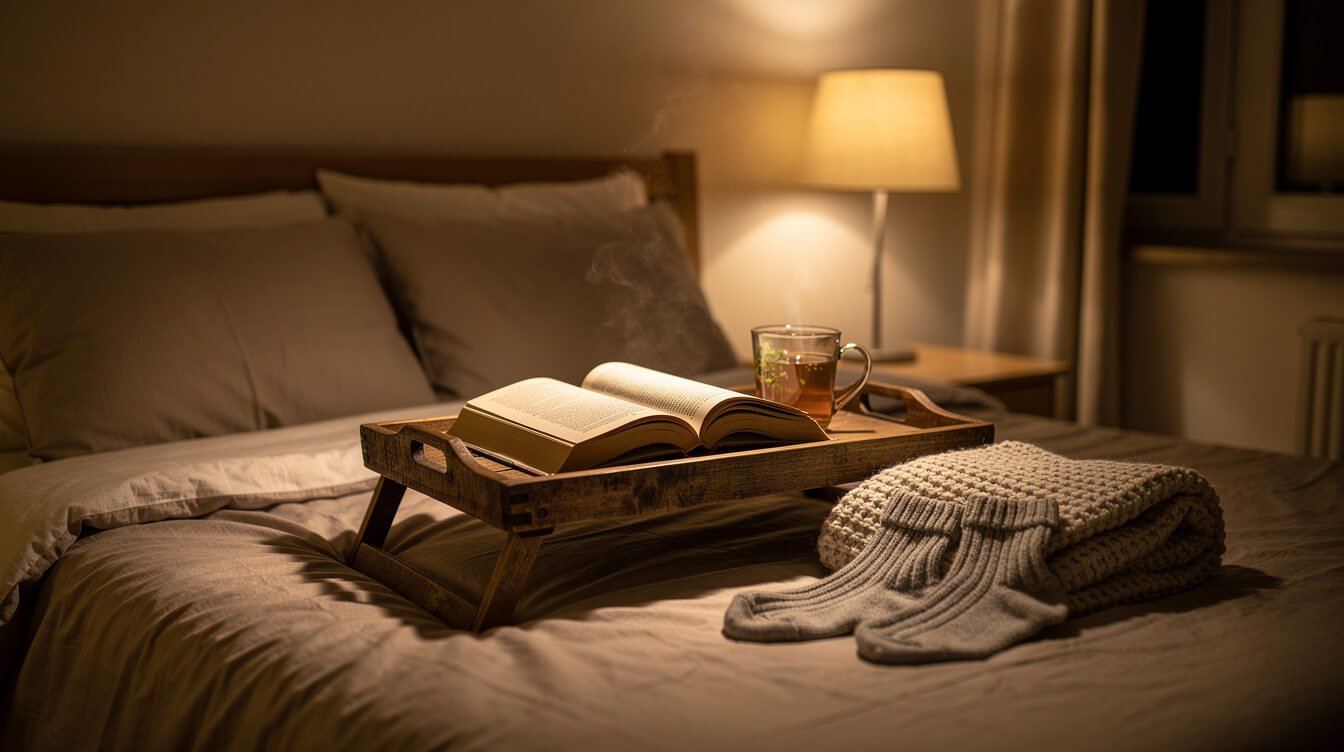
Is it OK to sleep with socks on?
For most people, yes. Clean, dry, loose-fitting socks are a safe and simple way to keep your feet warm, and a small study found that feet-warming bed socks helped young adults fall asleep faster and wake less often in a cool room (Ko & Lee, 2018). If your feet get hot or sweaty during the night, simply take them off. Avoid tight cuffs and don’t wear compression socks to bed unless a clinician has advised it.
Is a hot water bottle or an electric blanket better?
Both can be used safely to pre-warm the bed, then removed or switched off before sleep. Neither should be used directly on numb feet or by people who can’t feel heat well. For all-night warmth, bed socks and an extra blanket at the foot of the bed are the safest choice.
Are cold feet at night a sign of diabetes?
Not on their own. But diabetes can affect both nerves and blood vessels in the feet, so if you have diabetes or risk factors for it and notice cold feet along with numbness, tingling or slow-healing sores, talk with your doctor. Daily foot checks are a good habit for anyone with diabetes.
Why do women seem to get colder feet than men?
Research suggests that some women’s blood vessels in the hands and feet constrict more strongly in cool conditions, and they may perceive cold more intensely, even when their core temperature is normal (Nagashima et al., 2002). Differences in body size, muscle mass and hormones play a role too. Raynaud’s is also more common in women (Garner et al., 2015).
Final Thoughts: Warm Feet, Easier Sleep
Cold feet at night can feel like a small thing until they cost you an hour of sleep, night after night. The encouraging part is how much is in your hands. Start with the simplest steps: a pair of loose, warm bed socks, a folded blanket at the foot of the bed and a few minutes of calf raises before you lie down. If you enjoy rituals, add a 10–15 minute warm footbath or a warm shower an hour or two before bed.
Pay attention to the patterns, too. Cold feet that only show up at bedtime and respond to warmth are usually just your body getting ready for sleep. Cold feet that last all day, look different from one side to the other, or come with numbness, color changes or sores deserve a friendly conversation with your doctor, because the causes behind them are often very manageable when caught early.
Be gentle with yourself as you experiment. Pick one or two ideas from this guide tonight, notice how your feet and your sleep respond, and build from there. Warm toes and a softer slide into sleep are often closer than they seem. 🌿
This article is for general wellness education and isn’t medical advice. Please talk with your healthcare provider about any symptoms, medicines or changes to your routine, especially if you have diabetes, circulation problems or reduced feeling in your feet.
參考
- Beard JL, Borel MJ, Derr J. Impaired thermoregulation and thyroid function in iron-deficiency anemia. Am J Clin Nutr. 1990;52(5):813-819. PMID: 2239756.
- Begum F, et al. In hot water: the impact of burn injuries from hot water bottles. Experience of a UK burns unit and review of the literature. Burns. 2019;45(4):974-982. PMID: 30765161.
- Bill TJ, Edlich RF, Himel HN. Electric heating pad burns. J Emerg Med. 1994;12(6):819-824. PMID: 7533807.
- Chang SY, et al. A systematic review and meta-analysis of footbath effects and optimal procedures to improve sleep in older adults. Scand J Caring Sci. 2025;39(3):e70118. PMID: 40973991.
- Criqui MH, et al. Lower extremity peripheral artery disease: contemporary epidemiology, management gaps, and future directions. A scientific statement from the American Heart Association. Circulation. 2021;144(9):e171-e191. PMID: 34315230.
- Garner R 等。原發性雷諾氏現象的盛行率、危險因子和關聯:觀察性研究的系統性回顧和統合分析。. BMJ Open. 2015;5(3):e006389. PMID: 25776043.
- Haghayegh S 等人。睡前透過溫水淋浴或泡澡進行被動身體加熱以改善睡眠:系統性回顧和統合分析。 睡眠醫學評論. 2019;46:124-135。 PMID:31102877。
- Ko Y, Lee JY. 穿著保暖襪對涼爽環境下睡眠品質和體溫調節反應的影響。. J Physiol Anthropol. 2018;37(1):13. PMID: 29699592.
- Kräuchi K, Cajochen C, Werth E, Wirz-Justice A. Warm feet promote the rapid onset of sleep. 自然。. 1999;401(6748):36-37. PMID: 10485703.
- Kräuchi K, et al. Functional link between distal vasodilation and sleep-onset latency? Am J Physiol Regul Integr Comp Physiol. 2000;278(3):R741-R748. PMID: 10712296.
- Liao WC, et al. Effect of a warm footbath before bedtime on body temperature and sleep in older adults with good and poor sleep: an experimental crossover trial. Int J Nurs Stud. 2013;50(12):1607-1616. PMID: 23669188.
- Nagashima K 等人。年輕日本女性抱怨異常怕冷時,在輕度寒冷暴露期間的體溫調節和舒適度。. J Appl Physiol. 2002;92(3):1029-1035. PMID: 11842036.
- Okamoto-Mizuno K, Mizuno K. Effects of thermal environment on sleep and circadian rhythm. J Physiol Anthropol. 2012;31(1):14. PMID: 22738673.
- Pache M, et al. Cold feet and prolonged sleep-onset latency in vasospastic syndrome. Lancet. 2001;358(9276):125-126. PMID: 11463418.
- Raymann RJ, Swaab DF, Van Someren EJ. Skin temperature and sleep-onset latency: changes with age and insomnia. Physiol Behav. 2007;90(2-3):257-266. PMID: 17070562.
- Sung EJ, Tochihara Y. Effects of bathing and hot footbath on sleep in winter. J Physiol Anthropol Appl Human Sci. 2000;19(1):21-27. PMID: 10979246.
- Tai Y, et al. Hot-water bathing before bedtime and shorter sleep onset latency are accompanied by a higher distal-proximal skin temperature gradient in older adults. 臨床睡眠醫學雜誌. 2021;17(6):1257-1266. PMID: 33645499.
- Thng P, Lim RM, Low BY. Thermal burns in diabetic feet. Singapore Med J. 1999;40(5):362-364. PMID: 10489498.