
Poor Circulation in Feet: Signs, Causes, and When to Get Checked
Cold toes that never seem to warm up. Calves that ache halfway through a walk. Ankles that look puffy by evening, or skin on your feet that’s turned shiny, pale, or a little purple. When something like this keeps happening, it’s natural to wonder about poor circulation in feet, and most articles will hand you a list of ten “warning signs” and tell you to see a doctor.
That’s a fair start, but it skips the part that matters most. Different signs point to different causes. Pain that comes on while you walk and eases when you stop suggests something different from heavy legs and swollen ankles at the end of the day. Toes that turn white in the cold point to something else again. Burning or numb feet may not be a circulation problem at all. Knowing which pattern fits you helps you have a more useful conversation with your healthcare provider, and it helps you choose self-care that suits the problem you actually have.
This guide decodes the common signs of poor circulation in the feet by likely cause. It covers what tends to be behind them, the “lookalike” problems that are often mistaken for circulation, a gentle two-minute foot check, the simple tests your doctor may use, and the red flags that need prompt care. If you’re looking for everyday habits, our companion guide on how to improve circulation in feet covers walking, a seated routine, and when warmth, elevation, and compression help. This article covers the step before that: understanding what your feet may be telling you.
A quick note before we begin: this article is for education, not diagnosis. Some causes of poor foot circulation are common and harmless, and some need medical care. If anything here sounds familiar, the kindest next step is a check-up.
Poor Circulation in Feet: What It Really Means

“Circulation” sounds like one thing, but blood travels to and from your feet through three different parts of your circulatory system. Each can run into trouble in its own way:
- Arteries carry oxygen-rich blood down from your heart to your feet. When they narrow, usually from a gradual buildup of fatty plaque called atherosclerosis, your foot muscles and skin get less blood than they need, especially when you’re active. In the legs, this is called peripheral artery disease (PAD).
- Veins carry blood back up to your heart against gravity. They rely on one-way valves and on your calf muscles squeezing like a pump with every step. When valves weaken, blood tends to pool in the lower legs. This is called chronic venous insufficiency (or chronic venous disease).
- Small vessels in your skin, the tiny arteries and capillaries, constantly widen and tighten to manage your body temperature. When they overreact to cold or stress, your toes can turn pale and numb. The best-known example is Raynaud’s phenomenon.
Then there’s a fourth possibility that often gets lumped in with circulation even though it’s a different system: the nerves. Peripheral neuropathy, which is especially common with diabetes, can cause tingling, burning, or numb feet that feel “like poor circulation” even when blood flow is fine. The two can also happen together, which is one reason diabetic foot care gets so much attention.
Why does this matter? Because a self-care tip that suits one cause can be the wrong choice for another. Putting your feet up and wearing firm compression socks may ease venous swelling, for example, but compression can be unsafe when the arteries are badly narrowed. Warming your feet helps cold-sensitive small vessels, but people with reduced feeling in their feet can burn themselves without noticing. Understanding the pattern comes first.
How common is it?
More common than many people realize. A 2019 analysis in The Lancet Global Health estimated that about 237 million people worldwide were living with PAD in 2015, roughly 5.6% of adults aged 25 and older. Venous problems are even more widespread. A pooled global review in the Annals of Surgery found that around 19% of adults had varicose veins, and about 8% had ankle swelling linked to venous disease. A large meta-analysis in BMJ Open put the prevalence of primary Raynaud’s at around 4.9% of the general population, more often in women and in people with a family history.
Signs of Poor Circulation in Feet, Decoded by Cause

Most “warning sign” lists mix all four systems together. Here’s the same set of signs, grouped by what they tend to suggest. This isn’t a diagnostic tool, since people can have more than one problem at a time and signs overlap, but it can help you notice patterns and describe them clearly to your doctor.
| What you notice | Often points toward | Helpful detail to note |
|---|---|---|
| Cramping, aching, or tiredness in the calf, thigh, or buttock that starts while walking and eases within minutes of resting | Arteries (PAD) | How far you can walk before it starts, and how long rest takes to ease it |
| Foot or toes that feel cooler than the other foot; shiny, thin skin; less hair on the toes or shins; slow-growing, thickened toenails | Arteries (PAD) | Whether it’s one foot or both |
| Sores on the toes, heels, or between the toes that heal slowly | Arteries, often with diabetes or nerve damage | How long it’s been there. Weeks is too long |
| Burning or aching foot pain at night that eases when you hang your foot over the edge of the bed | Advanced arterial narrowing | This one needs prompt medical attention |
| Swollen ankles by evening that improve overnight; heavy, achy, or restless legs after standing; visible varicose or “spider” veins | Veins (venous insufficiency) | Whether swelling is in one leg or both, and whether it’s new |
| Brownish or reddish-brown discoloration, itchy or hardened skin around the inner ankles | Veins (longer-standing venous disease) | Any skin breakdown or weeping |
| Toes turning white or bluish in the cold or under stress, then red and tingly as they rewarm | Small vessels (Raynaud’s) | Triggers, how long an episode lasts, and whether fingers are affected too |
| Feet that just feel cold, but look normal in color with no pain on walking | Often normal temperature regulation | See our guide to cold hands and feet |
| Tingling, pins and needles, burning, or numbness, especially at night, often in a “stocking” pattern in both feet | Nerves (peripheral neuropathy) | Whether you have diabetes or prediabetes, and any loss of feeling |
The classic sign: leg pain that comes and goes with walking
Doctors call this intermittent claudication, from the Latin word for “limping.” The muscles below a narrowed artery need more blood when they work, and when supply can’t keep up, they ache or cramp. The pain reliably returns at about the same distance and fades within a few minutes of standing still. That predictability is a useful clue.
But here’s what many lists leave out: most people with PAD don’t have the classic version. In the PARTNERS study, published in JAMA, researchers screened nearly 7,000 adults in U.S. primary care who were 70 or older, or 50 to 69 with a history of smoking or diabetes. PAD turned up in 29% of them, yet only about 11% of those with PAD described classic claudication. A separate JAMA study by Mary McDermott’s team found that people with PAD often have atypical leg pain, or no leg pain at all, while still walking more slowly and doing less than people without PAD. Some people unconsciously walk less to avoid the discomfort, so the problem stays hidden.
So if you have risk factors, “my legs don’t really hurt” doesn’t rule it out. Ask about a screening test instead of waiting for textbook symptoms.
Skin and nail changes
Lists of signs often feature hair loss on the toes, shiny skin, and brittle nails. These can reflect long-term reduced blood supply, but on their own they’re not very reliable. A systematic review in JAMA‘s Rational Clinical Examination series found that the most useful findings for PAD were claudication, a whooshing sound over an artery (a “bruit”) heard through a stethoscope, an abnormal foot pulse, and, in people who already had leg symptoms, cool skin on the affected leg. Hairless toes are common with age and can run in families. Treat skin and nail changes as one piece of the picture, not as proof.
What Causes Poor Circulation in Feet?

Poor circulation isn’t a diagnosis in itself. It’s a description of what’s happening, and the underlying cause decides what helps. These are the most common causes.
Peripheral artery disease (PAD)
PAD is the main concern because the same plaque that narrows leg arteries often affects arteries to the heart and brain too. People with PAD have a higher risk of heart attack and stroke, which is why diagnosing it is about protecting your whole cardiovascular system, not just your feet.
The good news is that its main drivers are well understood. In a 25-year study of almost 45,000 men published in JAMA, four risk factors (smoking, high blood pressure, high cholesterol, and type 2 diabetes) were present in 96% of the men who went on to develop PAD. Each additional risk factor roughly doubled the risk. The Lancet analysis found the same factors worldwide, along with age. The 2024 ACC/AHA guideline on PAD lists people aged 65 and older, people aged 50 to 64 with risk factors like diabetes or smoking, people under 50 with diabetes plus another risk factor, and people with known atherosclerosis elsewhere among those at increased risk.
Chronic venous insufficiency
When the valves in your leg veins stop closing well, blood drifts back down with gravity and pressure builds in the lower legs. Common risk factors in the Annals of Surgery review included female sex, age, higher body weight, long hours of standing, pregnancies, and a family history. The Edinburgh Vein Study, which examined over 1,500 adults aged 18 to 64, found that about a third had varicose veins in the main leg veins and 7 to 9% had chronic venous insufficiency, with both becoming more common with age.
Venous problems typically cause heaviness, aching, and swelling that are worse at the end of a long day on your feet and better after lying down. They’re usually not dangerous on their own, but over years they can lead to skin changes and, sometimes, slow-healing ulcers near the ankle.
Raynaud’s phenomenon and cold sensitivity
In Raynaud’s, small arteries in the fingers and toes clamp down too hard in response to cold or emotional stress. Affected toes may turn white, then blue, then red as blood returns, often with numbness or tingling. Primary Raynaud’s appears on its own, often beginning in the teens or twenties, and is usually more of a nuisance than a danger. Secondary Raynaud’s is linked to another condition, such as an autoimmune disease, and is more likely to start after 40, affect only some digits, or cause sores. That’s worth getting checked. The BMJ Open meta-analysis linked primary Raynaud’s with a family history, female sex, smoking, migraine, and manual work.
Diabetes
Diabetes affects feet in two ways at once. It speeds up atherosclerosis in the arteries below the knee, and it can damage the nerves that let you feel heat, pressure, and injury. Together, these explain why foot ulcers are so common in diabetes. A review in the New England Journal of Medicine estimated that 19 to 34% of people with diabetes will develop a foot ulcer during their lifetime. If you live with diabetes, a yearly foot exam with your healthcare team is one of the most protective things you can do.
Other contributors
- Smoking and nicotine narrow blood vessels in the short term and damage their lining over time. Smoking is one of the strongest risk factors for PAD and also makes Raynaud’s episodes worse.
- Long hours of sitting or standing still reduce the calf-pump action that helps blood return from the feet.
- Blood clots (deep vein thrombosis) can block a vein, usually causing sudden swelling in one leg. This is urgent. See the red flags below.
- Some medications, such as certain beta-blockers, migraine drugs, and decongestants, can make cold extremities more noticeable. Never stop a prescribed medicine on your own, but do mention the symptoms to your prescriber.
Lookalikes: When It Isn’t Poor Circulation After All

A surprising number of “poor circulation” worries turn out to be something else. That can be a relief, and it matters, because the right next step is different.
Peripheral neuropathy
Nerve damage tends to cause tingling, pins and needles, burning, electric-shock feelings, or numbness, often in both feet in a “stocking” pattern and often worse at night. The foot may look perfectly pink and feel warm to someone else’s touch. Diabetes is the most common cause. The American Diabetes Association notes that diabetic neuropathy affects at least 10 to 15% of people at the time type 2 diabetes is diagnosed, rising to about 50% after 10 years. Up to half of people with it have no symptoms at all, which is why yearly screening matters. Other causes include low vitamin B12 (sometimes linked to long-term metformin use), heavy alcohol use, thyroid problems, and certain medications.
Neuropathy and poor circulation can occur together, and the combination raises the risk of unnoticed injuries. If your feet are numb, daily foot checks become especially important.
Nerve compression in the back
Spinal stenosis, a narrowing around the nerves in the lower back, can cause leg pain with walking that looks a lot like claudication. A few differences can help your doctor tell them apart. Spinal pain is often triggered by standing as well as walking, it eases more with sitting or bending forward (leaning on a shopping cart, for example) than with simply standing still, and it may come with numbness or weakness. In McDermott’s JAMA study, spinal stenosis was more common among people with PAD who had leg pain both at rest and on exertion, so the two can overlap too.
Normal cold feet
Your body protects its core temperature by narrowing blood vessels in your hands and feet when you’re cold, stressed, or still. Feet that feel cold but look normal in color, have no sores, and don’t hurt when you walk are very often simply cold feet. That’s especially common in women, people with a lower body weight, and anyone who spends long hours sitting. Our guide to cold hands and feet covers this in depth, with 12 gentle ways to warm up.
Tight footwear, socks, and everyday pressure
Snug shoes, socks with tight cuffs, or sitting with your legs crossed for long stretches can leave feet tingly, marked, or briefly swollen. If symptoms disappear when you change footwear or posture, that’s a good sign. Roomy, well-fitted shoes are kind to your feet either way.
A Gentle 2-Minute Foot Check You Can Do at Home

You don’t need special equipment to get to know your feet better. A short, regular check can help you notice changes early and give your healthcare provider clearer information. Many podiatrists recommend this every day for people with diabetes or reduced feeling, and once a week is a good habit for everyone else.
- Find good light and a comfortable seat. After a bath or shower is ideal, when your feet are clean and you’re already relaxed.
- Look at both feet side by side. Compare color, swelling, and the size of each ankle. One-sided changes are more meaningful than changes in both feet.
- Check the hidden places. Look between your toes, under your heels, and on the soles. If bending is hard, use a hand mirror on the floor or ask someone you trust to help.
- Feel the temperature with the back of your hand. Is one foot noticeably cooler than the other? Note it, but don’t panic. It’s just one clue.
- Look for anything that wasn’t there before. Cuts, blisters, cracks, sores, color changes, or toenail changes are all worth noticing.
- Dry carefully and moisturize. Pat between your toes, then apply moisturizer to the tops and soles, but not between the toes, where moisture can build up.
Alongside the check, a simple symptom diary can be surprisingly useful. For a week or two, jot down when your feet bother you, what you were doing, how far you’d walked, and what eased it. Bring it to your appointment. “My calf cramps after about two blocks and eases within three minutes of standing” tells a doctor far more than “my legs hurt sometimes.”
A few things to avoid doing on your own: don’t try to “test” your circulation with heat (people with reduced feeling can burn themselves on hot water bottles, heating pads, or hot soaks, so check water with your elbow first), and don’t start wearing firm compression socks before you’ve been checked, since they aren’t safe for everyone.
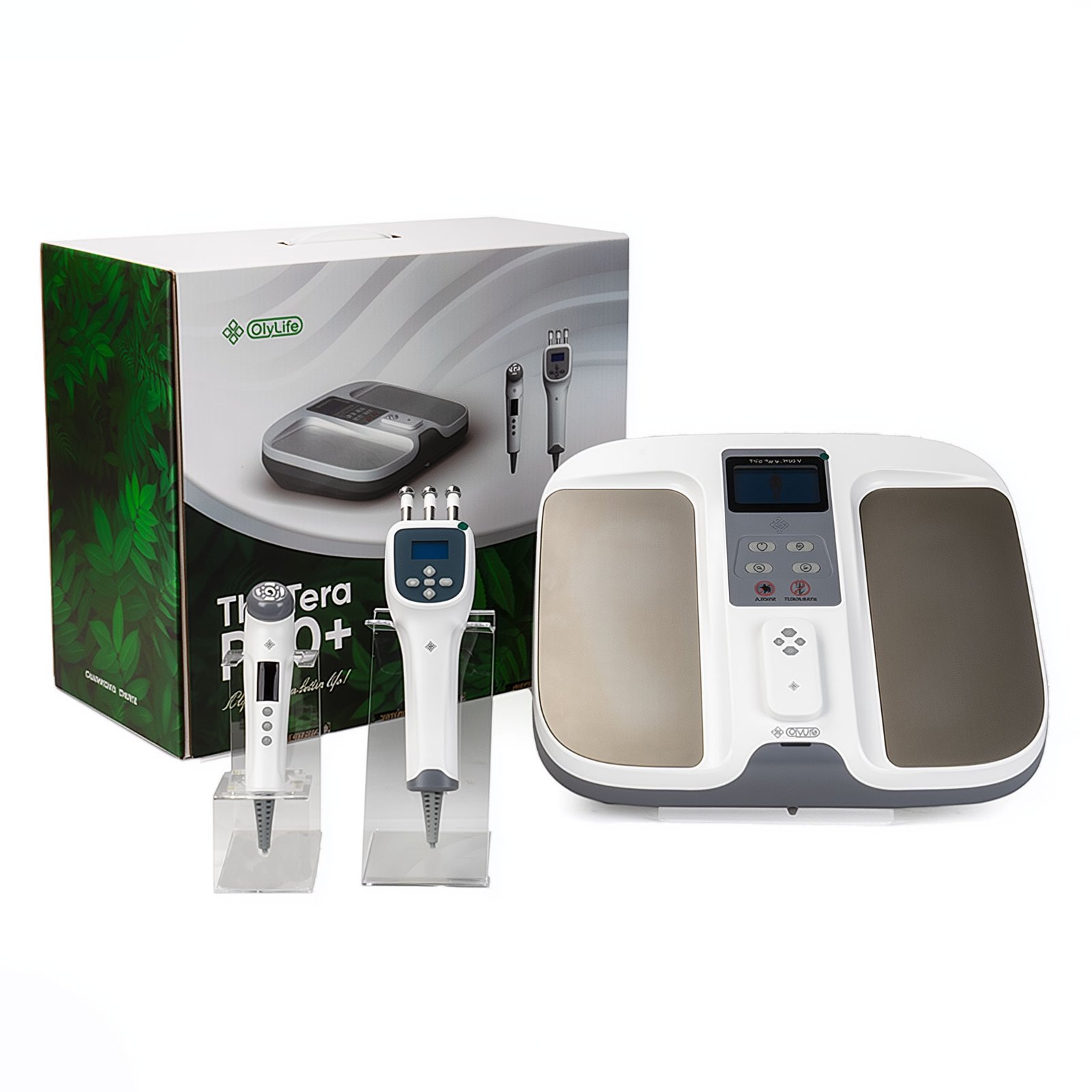
Your foot check can become a small, caring ritual rather than a chore. Some of our customers like to follow it with a few quiet minutes of self-care, such as a gentle foot rub, a cup of something warm, or a relaxing session with the OlyLife Vitality Wand, which is designed to deliver terahertz and PEMF frequencies as part of a wind-down routine. It isn’t intended to diagnose, treat, or improve poor circulation or any other condition, and it’s no substitute for getting checked. If you have reduced feeling in your feet, a pacemaker, or another implanted electronic device, please talk to your healthcare provider first.
Give Your Feet a Few Quiet Minutes Every Evening ✨
Paying attention to your feet is an act of care. The OlyLife THz Tera-P90+ is designed to deliver focused PEMF and terahertz frequencies, and many customers enjoy it as a calming part of their evening self-care routine, alongside the care they get from their healthcare providers. It’s intended to support relaxation and general wellbeing, not to diagnose or treat poor circulation, peripheral artery disease, or any other condition. Not suitable for anyone with a pacemaker or implanted electronic device.
🎁 Get a Free Wellness Gift
Enter your name and email below to receive a special wellness gift from OlyLife — absolutely free!
Getting Checked: How Doctors Assess Poor Circulation in Feet
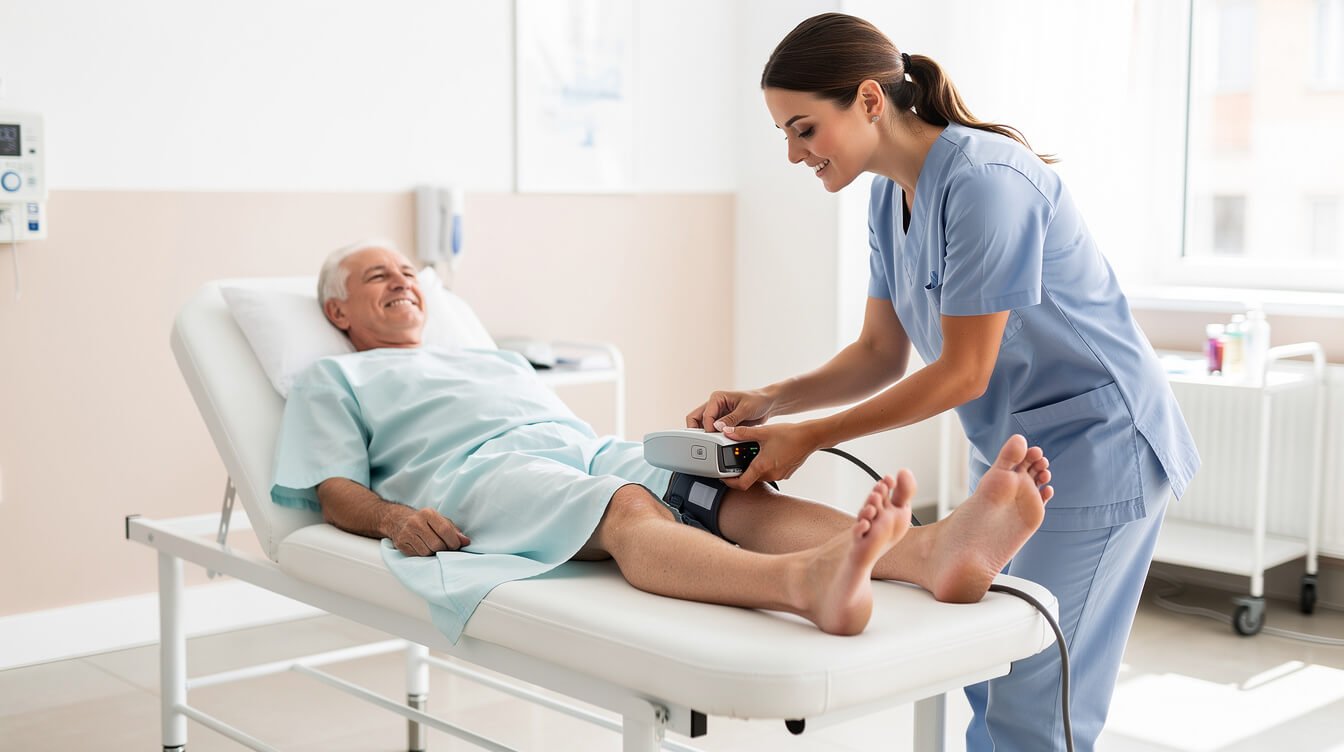
For many people, the most reassuring part of this process is learning how simple the first tests are. A visit usually starts with your story (that symptom diary helps), a look at your feet and legs, and a check of the pulses at your ankle and on top of your foot. From there, your provider may suggest one or more of the following.
Ankle-brachial index (ABI)
This is the standard first test for PAD, and it’s painless. You lie down for a few minutes, then blood pressure cuffs are placed on your arms and ankles, and a small handheld ultrasound device listens to the pulse. The test compares the blood pressure at your ankle with the pressure in your arm. In healthy legs, ankle pressure is about the same as arm pressure or slightly higher. A ratio of 0.90 or lower suggests PAD.
The ABI is good at confirming PAD, but less good at ruling it out. A structured review in Vascular Medicine found that an ABI of 0.90 or less was highly specific (83 to 99%) for significant narrowing, but its sensitivity varied widely, from 15 to 79%, and was lowest in older adults and people with diabetes. That’s because arteries can stiffen and calcify with age and diabetes, which makes them hard to squeeze with the cuff and falsely raises the reading. A very high ABI (above 1.40) is itself a sign that this may be happening.
Toe pressures and exercise testing
When ankle arteries are too stiff to measure reliably, the small arteries in the toes usually aren’t. A toe-brachial index uses a tiny cuff on the big toe instead. If your resting ABI is normal but your symptoms strongly suggest PAD, your provider may repeat the ABI after a short walk on a treadmill, because narrowing sometimes only shows up when muscles are working. The 2024 ACC/AHA guideline recommends both approaches in these situations.
Duplex ultrasound
Ultrasound combined with Doppler shows the arteries and veins directly and how blood is flowing through them. It’s the usual test for venous insufficiency (checking whether valves let blood flow backward), for finding blood clots, and for mapping where an artery is narrowed.
Other tests
Depending on your symptoms, your provider might check blood sugar and HbA1c, cholesterol, kidney function, or vitamin B12. They might also test sensation with a thin nylon filament (a monofilament) or a tuning fork to look for neuropathy, or refer you to a vascular specialist, podiatrist, or rheumatologist.
Questions worth asking at your appointment
- “Based on my symptoms and risk factors, should I have an ankle-brachial index?”
- “If my ABI is normal, could it be falsely normal because of stiff arteries? Would toe pressures or an exercise test help?”
- “Could any of my symptoms be coming from nerves or my back rather than blood flow?”
- “Is it safe for me to use compression socks, a heating pad, or warm foot soaks?”
- “What kind of walking or exercise program would suit me?”
- “How often should my feet be checked from now on?”
Red Flags: When Poor Circulation in Feet Needs Prompt Care
Most foot circulation concerns develop slowly and can be checked at a routine appointment. A few situations, though, need to be seen the same day or treated as an emergency.
Call emergency services or go to the emergency room if you have:
- A foot or leg that suddenly becomes painful, pale or bluish, cold, numb, or weak, especially if you can’t feel a pulse. Doctors remember this as the “6 Ps” of acute limb ischemia (pain, pallor, pulselessness, paresthesia or tingling, paralysis, and a “perishing” cold). It’s a time-critical emergency.
- Sudden swelling, warmth, and pain in one calf or leg, particularly after a long flight, surgery, or illness. This can be a blood clot (DVT).
- Leg symptoms together with chest pain or sudden shortness of breath.
Book an appointment within a day or two if you notice:
- Foot pain at rest, especially at night, that eases when your foot hangs down.
- A sore, blister, or wound on your foot that isn’t clearly healing within a week or two, or any wound if you have diabetes.
- Toes that turn dark, black, or very pale and stay that way.
- Signs of infection: spreading redness, warmth, pus, odor, or fever.
- New swelling in just one leg.
Mention it at your next routine visit if you have:
- Calf, thigh, or buttock discomfort that predictably comes on with walking and eases with rest.
- Ankle swelling, heavy legs, or varicose veins that bother you.
- Raynaud’s-type color changes, especially if they started after age 40 or come with sores.
- Tingling, burning, or numbness in your feet.
- Any of the PAD risk factors above, even without symptoms.
What You Can Do Next, Starting This Week

Once you have a clearer picture, the steps forward are reassuringly practical. Whatever the cause, they share a common theme: gentle, consistent care for your blood vessels and your feet.
- Get the right check. If you’re 65 or older, or 50 or older with diabetes or a history of smoking, ask about an ABI even if your legs feel fine.
- Keep moving, little and often. Walking is one of the best-studied ways to help leg circulation. For people with PAD, structured walking programs are a first-line recommendation in guidelines. Our guide to improving circulation in your feet includes a 5-minute seated routine and walking tips, and our low-impact cardio for beginners guide is a gentle way to build up.
- Break up long sitting. A quick calf-pump break every hour helps your veins do their job. Our circulation reset tip takes about a minute.
- Know your numbers. Blood pressure, cholesterol, and blood sugar are the main drivers of artery health that you can influence, with your healthcare team’s help.
- Step away from nicotine. It’s one of the most powerful changes for PAD and Raynaud’s alike. Free support is available at 1-800-QUIT-NOW in the U.S.
- Keep feet warm, safely. Socks, roomy shoes, and warm (not hot) water are kind to cold-sensitive toes.
- Look after your stress levels. Stress can trigger Raynaud’s episodes and makes healthy routines harder to keep. A calming evening ritual, like a cup of something from our herbal tea for relaxing guide, can help you unwind.
Frequently Asked Questions About Poor Circulation in Feet

What are the first signs of poor circulation in feet?
Early signs vary by cause. With narrowed arteries (PAD), the first sign is often calf or thigh discomfort that comes on while walking and eases with rest, though many people have no obvious symptoms at all. With vein problems, it’s usually ankle swelling and heavy legs by evening. With Raynaud’s, it’s toes turning white or blue in the cold. Cold feet alone are very common and often normal.
How can I check my circulation in my feet at home?
You can notice useful clues at home, such as comparing the color, temperature, and swelling of both feet, checking for slow-healing sores, and keeping a diary of when pain happens. But home checks can’t confirm or rule out PAD. The ankle-brachial index, a quick and painless test done by a healthcare provider, is the standard first step.
Is numbness and tingling in the feet a sign of poor circulation?
Sometimes, but often it’s a sign of nerve problems (peripheral neuropathy) instead, especially if it’s burning, worse at night, and in both feet. Diabetes is the most common cause. Because the two can overlap, persistent numbness or tingling is worth checking with your doctor.
What does poor circulation in feet look like?
With arterial problems, feet may look pale (especially when raised), shiny, or hairless, and feel cooler than the other foot. They may also have slow-healing sores on the toes or heels. With vein problems, you may see swelling, varicose veins, or brownish skin around the ankles. Raynaud’s causes episodes of white or blue toes that turn red as they warm up. If any color change is sudden, seek care urgently.
Can poor circulation in feet be reversed?
It depends on the cause. Plaque in PAD doesn’t simply disappear, but research suggests that supervised or home walking programs can meaningfully improve how far people can walk. Managing blood pressure, cholesterol, blood sugar, and smoking may help slow progression, and medical procedures are available when needed. Venous symptoms and Raynaud’s can often be managed well too. The earlier the cause is found, the more options there are.
Who should be screened for poor circulation in the legs and feet?
Guidelines suggest that adults at increased risk of PAD may benefit from an ABI. This includes people aged 65 and older, people aged 50 to 64 with risk factors such as diabetes or a history of smoking, people under 50 with diabetes plus another risk factor, and anyone with known artery disease elsewhere. Ask your provider whether it makes sense for you.
Can wellness devices like PEMF or terahertz tools fix poor circulation?
No wellness device should be used to treat or “fix” poor circulation. PEMF research on blood flow is still early and mixed, and these tools aren’t a replacement for diagnosis, walking programs, or medical treatment. Many people simply enjoy them as part of a relaxing self-care routine, and that’s how we’d suggest using them, alongside proper medical care. You can learn more in our introduction to PEMF therapy.
Is a foot massage good for poor circulation?
A massage may help your feet feel warmer and more relaxed, and research shows it can increase blood flow in the skin. It doesn’t open up narrowed arteries, though. If you enjoy it, it’s a lovely ritual. Just be gentle on skin that’s fragile or has reduced feeling, and avoid massaging a leg that might have a blood clot. Our guide to reflexology benefits explores the traditional practice.
Final Thoughts: Listen to Your Feet
Your feet are often where your circulation speaks up first, simply because they’re the farthest point from your heart. Poor circulation in feet isn’t one condition but a family of them. Narrowed arteries, struggling veins, overreactive small vessels, and nerve problems can all feel alike at first, and each one calls for different care.
The most helpful thing you can do is notice your patterns with curiosity rather than worry. When does it happen? What eases it? Is it one foot or both? Then share what you’ve found with a healthcare provider who can check it properly, often with a simple, painless test. Many causes are very manageable, and finding them early opens the most doors.
In the meantime, treat your feet kindly. Keep them warm and moving, check on them once in a while, and give them a little rest at the end of a long day. They carry you through everything, so they deserve a little care in return. 🌿
Ready to take gentle action? Our guide on how to improve circulation in feet walks you through everyday habits and a simple 5-minute seated routine.
This article is for general information only and is not medical advice. It isn’t a substitute for diagnosis or treatment by a qualified healthcare provider. If you have diabetes, known or suspected peripheral artery disease, a heart condition, reduced feeling in your feet, a pacemaker or other implanted device, or any of the red-flag symptoms described above, please talk to your healthcare provider promptly.
References
- Song P, Rudan D, Zhu Y, et al. Global, regional, and national prevalence and risk factors for peripheral artery disease in 2015: an updated systematic review and analysis. Lancet Glob Health. 2019;7(8):e1020-e1030. PMID 31303293
- Salim S, Machin M, Patterson BO, Onida S, Davies AH. Global epidemiology of chronic venous disease: a systematic review with pooled prevalence analysis. Ann Surg. 2021;274(6):971-976. PMID 33214466
- Evans CJ, Fowkes FG, Ruckley CV, Lee AJ. Prevalence of varicose veins and chronic venous insufficiency in men and women in the general population: Edinburgh Vein Study. J Epidemiol Community Health. 1999;53(3):149-153. PMID 10396491
- Garner R, Kumari R, Lanyon P, Doherty M, Zhang W. Prevalence, risk factors and associations of primary Raynaud’s phenomenon: systematic review and meta-analysis of observational studies. BMJ Open. 2015;5(3):e006389. PMID 25776043
- Wigley FM, Flavahan NA. Raynaud’s phenomenon. N Engl J Med. 2016;375(6):556-565. PMID 27509103
- Hirsch AT, Criqui MH, Treat-Jacobson D, et al. Peripheral arterial disease detection, awareness, and treatment in primary care. JAMA. 2001;286(11):1317-1324. PMID 11560536
- McDermott MM, Greenland P, Liu K, et al. Leg symptoms in peripheral arterial disease: associated clinical characteristics and functional impairment. JAMA. 2001;286(13):1599-1606. PMID 11585483
- Khan NA, Rahim SA, Anand SS, Simel DL, Panju A. Does the clinical examination predict lower extremity peripheral arterial disease? JAMA. 2006;295(5):536-546. PMID 16449619
- Joosten MM, Pai JK, Bertoia ML, et al. Associations between conventional cardiovascular risk factors and risk of peripheral artery disease in men. JAMA. 2012;308(16):1660-1667. PMID 23093164
- Gornik HL, Aronow HD, Goodney PP, et al. 2024 ACC/AHA/AACVPR/APMA/ABC/SCAI/SVM/SVN/SVS/SIR/VESS guideline for the management of lower extremity peripheral artery disease. Circulation. 2024;149(24):e1313-e1410. PMID 38743805
- Xu D, Li J, Zou L, et al. Sensitivity and specificity of the ankle-brachial index to diagnose peripheral artery disease: a structured review. Vasc Med. 2010;15(5):361-369. PMID 20926495
- Armstrong DG, Boulton AJM, Bus SA. Diabetic foot ulcers and their recurrence. N Engl J Med. 2017;376(24):2367-2375. PMID 28614678
- Pop-Busui R, Boulton AJ, Feldman EL, et al. Diabetic neuropathy: a position statement by the American Diabetes Association. Diabetes Care. 2017;40(1):136-154. PMID 27999003