Cold Hands and Feet: Why Your Hands and Feet Are Always Cold, and 12 Gentle Ways to Warm Up
If you’re the person who keeps socks on in July, reaches for a mug just to hold it, or makes your partner jump when you slip into bed, you’re in good company. Cold hands and feet are one of the most common comfort complaints there is, and they tend to show up right when the weather turns. If “my hands and feet always cold” sounds like your permanent state rather than a winter quirk, it’s fair to wonder what’s going on.
The reassuring news is that, for most people, chilly fingers and toes are simply your body doing its job: protecting your core by turning down blood flow to the edges. The important news is that, sometimes, cold extremities are a clue worth showing your doctor.
In this guide, you’ll learn why the body cools your hands and feet first, the everyday habits that make it worse, the health conditions linked to it (and the warning signs to take seriously), 12 gentle warming habits, and why warm feet may even help you fall asleep faster. We’ll keep it honest, too: where the research is strong, we’ll say so, and where it’s thin, we’ll say that as well. 🌿
Why Are My Hands and Feet Always Cold? Your Body’s Heat-Saving Design
Your body has one top priority when it comes to temperature: keep the core (your brain, heart, lungs, and other organs) warm and steady, at around 98.6°F (37°C). Your hands and feet are the body’s radiators. They have a lot of surface area, very little muscle to generate heat, and they sit at the far end of your circulation.
The “thermostat” in your fingers and toes
Your fingers, toes, palms, and soles contain special shortcuts between small arteries and veins, called arteriovenous anastomoses. Think of them as heat valves. When you’re warm, they open and send warm blood to the skin so heat can escape. When you’re cool, stressed, or still, your nervous system squeezes them shut. Blood flow to the skin of your fingers can drop dramatically within minutes, so the heat stays in your core.
A review of research on how the hands and feet respond to cold describes it simply: the first response to cold is a strong narrowing of the blood vessels (vasoconstriction), which quickly drops hand and foot temperature. That’s also why cold fingers feel clumsy and numb. Interestingly, the same review notes a “hunting response,” where blood vessels in the fingers and toes periodically reopen in the cold to bring a pulse of warmth back, before closing again (Cheung, 2015).
So, when your hands are icy but you feel fine otherwise, that’s often this heat-saving system working exactly as designed, maybe just a little too enthusiastically.
Why women more often say “my hands and feet are always cold”
If it feels like the women in your life are cold more often, research backs that up. A widely cited research letter in The Lancet found that women’s hands ran a few degrees cooler than men’s on average, even though their core temperatures were slightly higher (Kim et al., 1998). In a small Japanese lab study, young women who described “unusual coldness” saw their fingertip temperature fall further during a mild chill than women who didn’t, while core temperature stayed the same in both groups (Nagashima et al., 2002).
Researchers point to a mix of reasons: generally less muscle mass (muscle produces heat), hormonal shifts across the menstrual cycle and in perimenopause, and a more sensitive “cold alarm” in the skin. None of this means something is wrong. It does help explain why one person is reaching for a blanket while another is opening a window.
Key takeaway: Cold hands and feet are usually your body protecting its core. The goal isn’t to fight that system, but to give it fewer reasons to clamp down.
Common Everyday Reasons for Cold Hands and Feet

Before thinking about health conditions, it’s worth looking at the everyday factors that nudge your heat valves closed. Many people find that one or two of these explain most of their chill.
1. Sitting still for long stretches
Muscles are your built-in furnace. When you sit at a desk, on a couch, or in a car for hours, heat production drops and blood flow to your legs slows. Cold feet under a desk is one of the most common versions of this.
2. A cool core, even if you don’t notice it
If your torso is a little underdressed, your body shields it by stealing warmth from your hands and feet first. That’s why a vest or a warm layer around your middle can do more for chilly fingers than gloves alone.
3. Stress and anxiety
Your stress response (the “fight or flight” system) sends blood toward your big muscles and away from your skin. Clammy, cold hands before a presentation or a difficult phone call are a classic example. If stress runs high for weeks at a time, your hands may run colder, too.
4. Caffeine, nicotine, and some medications
Nicotine narrows blood vessels, and smoking is linked to cold fingers and toes over time. Caffeine can have a mild narrowing effect for some people. Cleveland Clinic also lists beta-blockers, decongestants, amphetamine-type stimulants, and certain cancer drugs among medications that can make hands or feet feel cold. Never stop or change a prescription on your own. If you suspect a link, bring it up with your doctor or pharmacist.
5. Not eating enough, or a very low body weight
Digesting food produces heat, and body fat works as insulation. Skipping meals, eating very little, or having a low body weight can all leave you feeling the cold more.
6. Damp skin, tight footwear, and thin socks
As water evaporates from skin, it carries heat away, so damp feet chill fast. Tight boots or socks can also squeeze circulation, and cotton holds moisture. Wool or alpaca socks that fit comfortably usually keep feet warmer.
7. Poor sleep
Short or broken sleep can make you feel colder the next day, and as you’ll see below, the link runs both ways: cold feet can make it harder to fall asleep.
Health Conditions Linked to Cold Hands and Feet (and When to See a Doctor)

Sometimes cold hands and feet are a sign that something else needs attention. This section isn’t here to worry you. It’s here so you know which patterns are worth a conversation with your healthcare provider, who can check things properly with a simple exam and, often, a blood test.
| Condition | What it may look like | How it’s usually checked |
|---|---|---|
| Raynaud’s phenomenon | Fingers or toes turn white, then blue or purple, then red when they rewarm, often triggered by cold or stress. Numbness or tingling during attacks. | History, exam, and sometimes blood tests or a look at the nailfold capillaries |
| Iron-deficiency anemia | Feeling cold plus tiredness, pale skin, shortness of breath on stairs, brittle nails | Blood count and iron studies |
| Underactive thyroid (hypothyroidism) | Feeling cold all over, fatigue, weight gain, dry skin, constipation, low mood | Thyroid blood test (TSH) |
| Vitamin B12 deficiency | Cold hands and feet with tingling, numbness, fatigue, or balance changes | B12 blood test |
| Peripheral artery disease (PAD) | One foot colder than the other, leg cramps when walking that ease with rest, slow-healing sores, shiny skin on the shins | Comparing blood pressure in the ankle and arm (ankle-brachial index) |
| Diabetes | Cold or numb feet, burning or tingling, cuts that heal slowly | Blood sugar tests and regular foot checks |
A closer look at Raynaud’s
Raynaud’s is the condition most people think of when they search for cold hands and feet. In Raynaud’s, the small arteries in the fingers and toes overreact to cold or stress and spasm, briefly cutting off blood flow. A large review of 33 studies estimated that around 5% of the general population has primary Raynaud’s, the more common form that isn’t caused by another illness (Garner et al., 2015). It was more common in women, people who smoke, and people with migraine, and having a family member with Raynaud’s was the strongest link.
Secondary Raynaud’s is linked to another condition, often an autoimmune one such as scleroderma or lupus, and tends to start later in life and feel more severe (Wigley & Flavahan, 2016). That’s why new color changes in your fingers after about age 30 are worth mentioning to your doctor.
Red flags: when to call your doctor promptly
- Fingers or toes that change color (white, blue, purple) and don’t improve with warming
- Sores, ulcers, cracks, or dark spots on fingertips or toes
- Coldness in only one hand or foot, especially if it’s new
- Leg pain or cramping when you walk that eases with rest
- Numbness, burning, tingling, or weakness
- Thick or tight skin on the fingers, joint pain, rashes, or fever
- Coldness along with unexplained tiredness or weight change
Seek emergency care if a hand or foot suddenly becomes cold, pale, painful, or numb, as that can signal a blocked artery.
If you live with diabetes or have reduced feeling in your feet, check them daily and be very careful with heat. Hot water bottles, heating pads, and very hot foot baths can burn skin you can’t fully feel.
12 Gentle Habits That May Help Warm Cold Hands and Feet
If your doctor has ruled out a medical cause, or you simply run cold, these everyday habits work with your body’s heat-saving system rather than against it. The common thread: keep your core warm, keep moving, and give your nervous system a reason to relax.
Warm the core first
- Layer your torso. A thin wool base layer or a vest tells your body there’s heat to spare, so it’s more willing to send warmth to your hands and feet.
- Cover your head and neck. A scarf and hat reduce heat loss from areas with lots of blood flow near the surface.
- Sip something warm. A warm drink warms your hands directly and feels wonderful. Ginger tea is a traditional favorite in many cultures for “warming” the body. One small study found that a hot ginger drink nudged up the heat produced by digesting a meal (Mansour et al., 2012), but it didn’t measure hands or feet, so think of it as a comforting ritual, not a fix. Our guide to herbal teas for digestion covers ginger and other gentle options.
Get your internal furnace going
- Take a movement break every 30–60 minutes. March in place, climb a flight of stairs, or do 20 calf raises. Working the big leg muscles produces heat quickly.
- Try arm circles or “windmills.” Swinging your arms in big circles uses momentum to push blood toward your fingertips. Many skiers and outdoor workers swear by it.
- Flex your feet under the desk. Point and flex your toes, and roll your ankles. It’s small, but it keeps the calf “pump” working.
- Eat regular meals. Going too long without food can leave you feeling chilly. A warm breakfast, like oatmeal or eggs, is a cozy start on cold mornings.
Soothe the stress response
- Breathe low and slow. A few minutes of slow breathing, with a longer exhale than inhale, may help shift your nervous system toward “rest and digest,” when the heat valves in your hands are more likely to open.
- Press and massage your hands. Gentle hand massage warms the skin through friction and touch. If you enjoy acupressure, our guide to acupressure points on the hand shows a few traditional points you can fold into a two-minute routine.
Warm the hands and feet directly (safely)
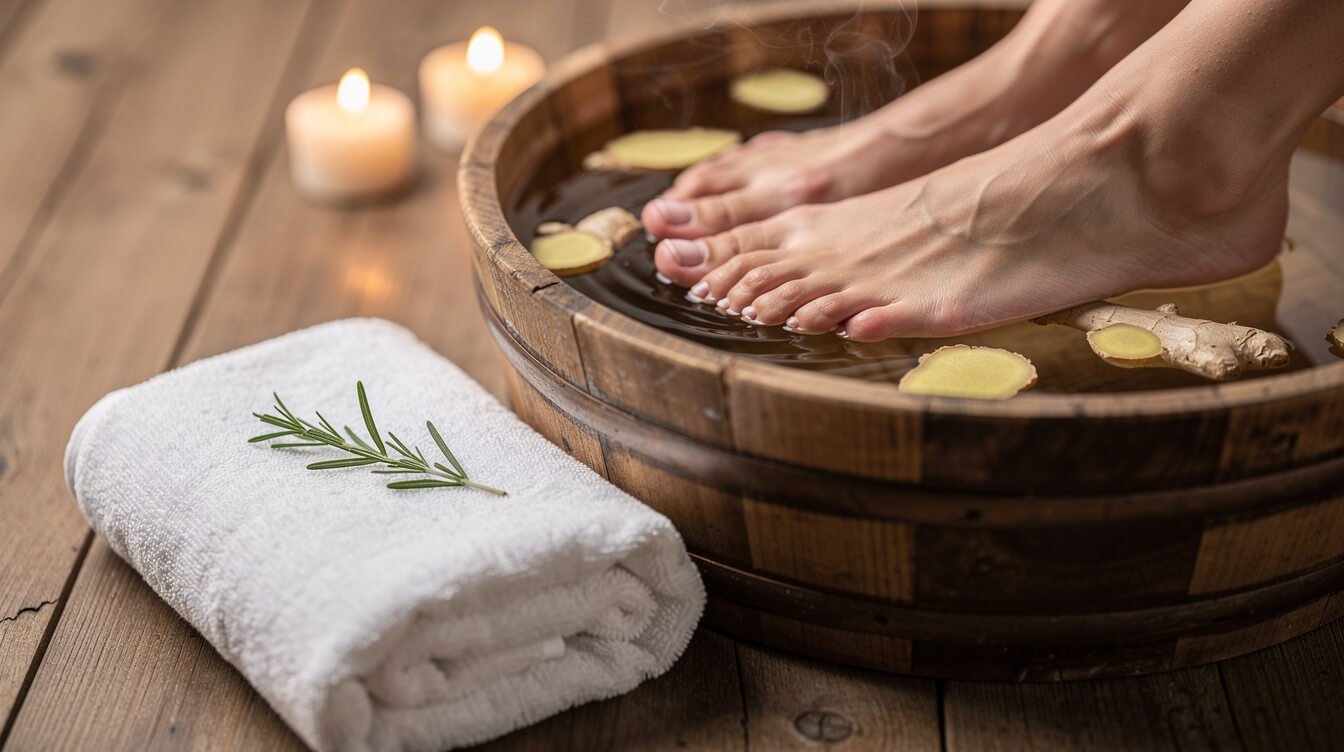
- Enjoy a warm (not hot) foot or hand soak. Ten minutes in comfortably warm water, then dry thoroughly, especially between the toes. Cleveland Clinic recommends warm rather than hot water for gradual rewarming.
- Choose wool, and keep it dry. Wool or alpaca socks and mittens (mittens keep fingers together, so they share warmth) and a quick change if your socks get damp.
- Stop smoking, if you smoke. It’s one of the most meaningful steps for the blood vessels in your hands and feet, and support is available through your doctor or local quitline.
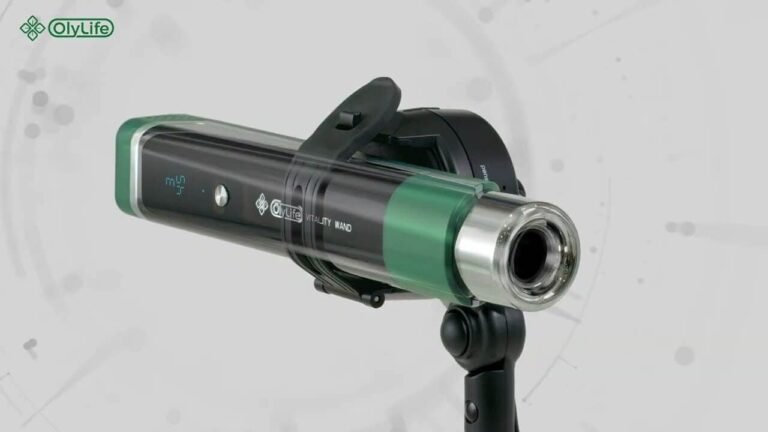
If you like a longer evening wind-down, some of our customers fold the OlyLife Vitality Wand into a cozy self-care ritual after a warm foot soak. It’s designed to deliver terahertz and PEMF frequencies as part of a relaxing routine, and it isn’t intended to diagnose or treat cold hands and feet, Raynaud’s, or any circulation condition. If you have reduced feeling in your hands or feet, check with your healthcare provider before using any warming device.
What doesn’t have strong evidence? Cold showers are popular online for “training” circulation, but they can trigger symptoms in people with Raynaud’s, so skip them if your fingers change color in the cold. (If you’re curious about cold therapy in general, our guide to the benefits of cold plunge covers who should be careful.) And in the largest trial of “think warm” temperature biofeedback for primary Raynaud’s, involving 313 people, biofeedback didn’t reduce attacks more than a control technique, while a prescription medication did (Raynaud’s Treatment Study, 2000). That’s a good reminder to bring persistent symptoms to your doctor rather than relying on willpower.
🎁 Get a Free Wellness Gift
Enter your name and email below to receive a special wellness gift from OlyLife — absolutely free!
Cold Feet at Night: How Warm Feet May Support Better Sleep
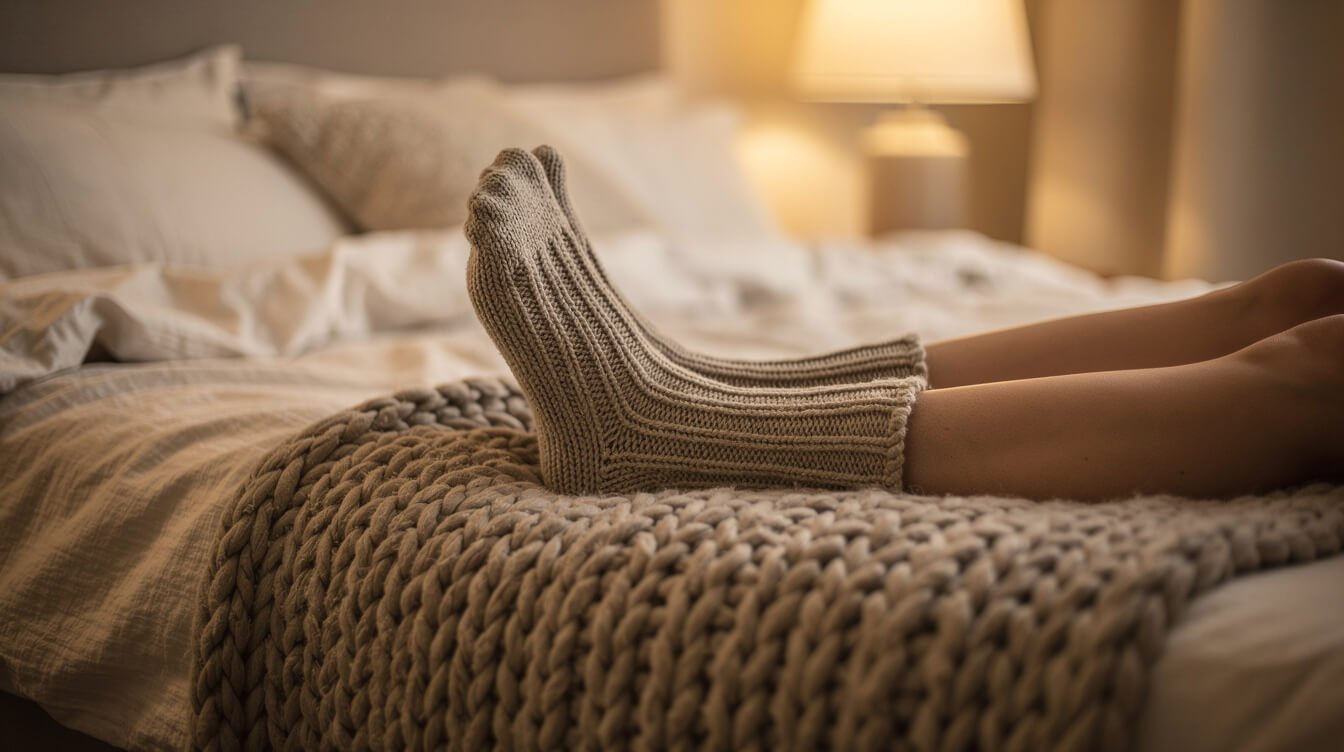
Here’s something most articles about cold hands and feet miss: your hands and feet play a starring role in falling asleep.
As bedtime approaches, your body naturally opens those heat valves in your hands and feet to release heat and lower your core temperature, one of the signals that it’s time to sleep. In a well-known study published in Nature, the degree of warming in people’s hands and feet was the best predictor of how quickly they fell asleep, better than core temperature or heart rate (Kräuchi et al., 1999).
So, if your feet are cold when you get into bed, your body may struggle to send that “heat dump” signal. In a small Korean study, six young men slept in a cool room with and without warm bed socks. With socks, they fell asleep about 7.5 minutes faster, slept about 32 minutes longer, and woke up less often during the night (Ko & Lee, 2018). Six people is a tiny study, so take the numbers lightly, but the direction matches what many cold-footed sleepers already know.
A simple warm-feet bedtime routine
- 60–90 minutes before bed: take a warm shower or bath, or a 10-minute warm foot soak. Dry feet completely.
- 30 minutes before bed: put on clean, loose wool or cashmere-blend bed socks.
- In bed: keep the room cool (around 65–68°F / 18–20°C) and let your feet stay warm. If your feet overheat, kick off the socks.
- Skip the heating pad overnight, especially if you have diabetes or reduced sensation in your feet.
For more ways to set up your evening, see our sleep hygiene tips. And if shorter, darker days are also dragging on your mood, our guide to the winter blues pairs well with this one.
Make Your Evening Wind-Down Something to Look Forward To ✨
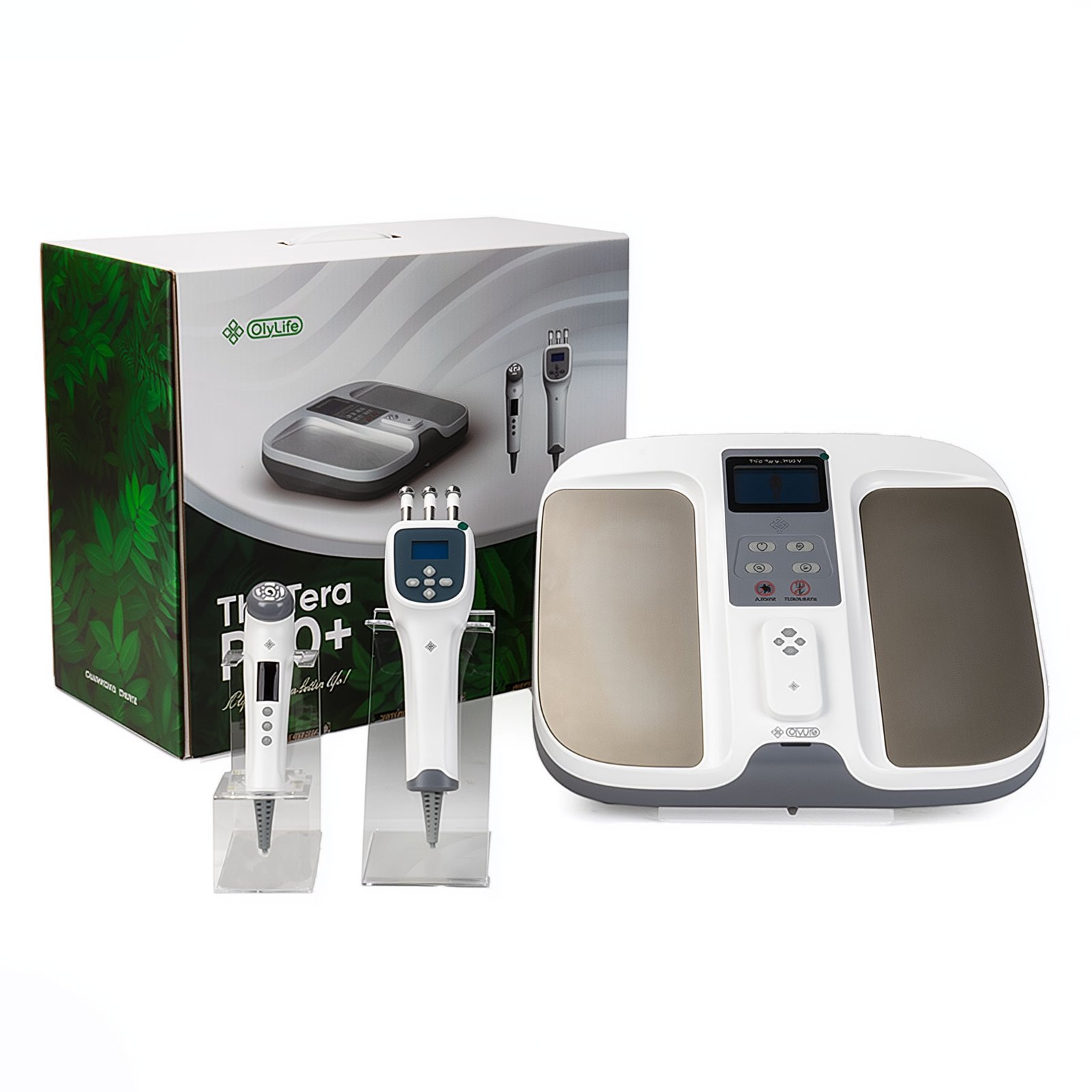
The OlyLife THz Tera-P90+ is designed to deliver focused PEMF and terahertz frequencies, and many customers use it as an adjunct to their existing wellness routine, alongside warm socks, slow breathing, and a cozy foot soak. It’s designed to support relaxation and general wellbeing, not to diagnose or treat cold hands and feet, Raynaud’s, or any other condition.
Frequently Asked Questions About Cold Hands and Feet
Why are my hands and feet always cold even when the room is warm?
Some people simply have a more sensitive “cold alarm” and narrower blood flow to the skin, and it often runs in families. Stress, sitting still, under-eating, caffeine, nicotine, and certain medications can all add to it. If it’s new, getting worse, or comes with fatigue, numbness, or color changes, ask your doctor about checking iron, thyroid, and B12 levels.
Is having cold hands and feet a sign of poor circulation?
Not necessarily. In most healthy people, it’s normal blood-flow regulation rather than a “circulation problem.” It can, however, be a sign of conditions like peripheral artery disease or Raynaud’s, especially with one-sided coldness, sores, color changes, or leg pain when walking. Your healthcare provider can check this with a quick exam.
What deficiency causes cold hands and feet?
Iron deficiency (with or without anemia) and vitamin B12 deficiency are the two most commonly linked. An underactive thyroid can also make you feel cold. A blood test is the only way to know, so check before starting supplements, since extra iron isn’t safe for everyone.
Are cold hands and feet a sign of anxiety?
They can be. Your stress response pulls blood away from the skin toward your muscles, which can leave hands cold and clammy. If stress is a regular part of your day, slow breathing, movement breaks, and good sleep may help, and so can talking with a professional if anxiety feels hard to manage.
Why are my feet cold at night when I’m in bed?
Cooler bedrooms, a long day of sitting, and a body winding down can all leave feet chilly at night. Warm socks, a warm bath an hour or so before bed, and a quick foot massage are simple places to start. Research suggests warmer feet are linked with falling asleep faster.
Do cold hands and feet get worse with age?
Many people notice it more as they get older, partly because muscle mass tends to decrease and blood vessels become less flexible, and partly because conditions like diabetes and PAD become more common. Staying active and keeping up with regular checkups both help.
When are cold hands and feet an emergency?
If a hand or foot suddenly turns cold, pale, painful, or numb, or if fingers or toes stay white or blue after warming, seek medical care right away.
Final Thoughts: Be Kind to Your Cold Hands and Feet
Having hands and feet that are always cold can feel like a small, daily nuisance, but it’s usually your body making a sensible trade: warm core first, fingers and toes second. Once you understand that, the fixes become intuitive. Warm your middle, move more often, soften stress, choose wool, and treat warm feet as part of your bedtime routine.
At the same time, listen to the pattern. Cold that’s new, one-sided, painful, or comes with color changes, sores, numbness, or fatigue deserves a conversation with your healthcare provider. A simple blood test or exam can bring real peace of mind, and these warming habits work beautifully alongside whatever your doctor recommends.
Start with one or two habits this week, maybe a movement break every hour and warm socks at bedtime, and notice how your hands and feet respond. Small, cozy rituals add up. ✨
This article is for general education and isn’t a substitute for personal medical advice. Please talk with your healthcare provider about any new or ongoing symptoms.
References
- Cheung SS. Responses of the hands and feet to cold exposure. Temperature (Austin). 2015. PMID 27227009
- Kim H, et al. Cold hands, warm heart. Lancet. 1998. PMID 9605814
- Nagashima K, et al. Thermal regulation and comfort during a mild-cold exposure in young Japanese women complaining of unusual coldness. J Appl Physiol. 2002. PMID 11842036
- Garner R, et al. Prevalence, risk factors and associations of primary Raynaud’s phenomenon: systematic review and meta-analysis of observational studies. BMJ Open. 2015. PMID 25776043
- Wigley FM, Flavahan NA. Raynaud’s phenomenon. N Engl J Med. 2016. PMID 27509103
- Raynaud’s Treatment Study Investigators. Comparison of sustained-release nifedipine and temperature biofeedback for treatment of primary Raynaud phenomenon. Arch Intern Med. 2000. PMID 10789602
- Mansour MS, et al. Ginger consumption enhances the thermic effect of food and promotes feelings of satiety without affecting metabolic and hormonal parameters in overweight men: a pilot study. Metabolism. 2012. PMID 22538118
- Kräuchi K, et al. Warm feet promote the rapid onset of sleep. Nature. 1999. PMID 10485703
- Ko Y, Lee JY. Effects of feet warming using bed socks on sleep quality and thermoregulatory responses in a cool environment. J Physiol Anthropol. 2018. PMID 29699592
- Cleveland Clinic Health Essentials. 7 reasons why your hands and feet are always cold. health.clevelandclinic.org