Herbal Tea for Digestion: 7 Soothing Herbs, What Research Suggests, and How to Brew Them
There’s a reason so many cultures end a big meal with something warm in a cup. In Morocco it’s fresh mint tea poured from high above the glass. In India, a pinch of fennel seeds is passed around after dinner. In many European homes, a pot of chamomile appears as the plates are cleared. Herbal tea for digestion is one of the oldest wellness rituals there is, and it’s still one of the gentlest.
But what can a cup of peppermint or ginger tea actually do for your stomach? Which herbs are traditionally used for bloating, heaviness, or a queasy feeling? And who should skip certain teas altogether? Most guides give you a pretty list and stop there. This one goes further.
In this guide you’ll find seven herbs worth knowing, an honest look at what research suggests (including the big difference between a brewed tea and a concentrated oil capsule), a “match the tea to the feeling” table, brewing ratios, three simple after-dinner blends, a holiday-meal plan, and the safety checks every tea lover should know. Let’s put the kettle on. 🌿
A gentle note: This article is for general education and isn’t medical advice. Herbal teas may support everyday digestive comfort, but they aren’t a treatment for any digestive condition. If you have ongoing symptoms, talk with your healthcare provider.
Herbal Tea for Digestion: What a Warm Cup Can (and Can’t) Do

Before we get to specific herbs, it helps to know what’s going on when you sip a warm herbal tea after eating. Several things happen at once, and only some of them are about the herb itself.
1. Warm fluid and a pause
A cup of tea is, first of all, a cup of warm water. It adds to your daily fluids, which matter for regularity, especially if you’re eating more fiber. Just as important, making and sipping tea is a pause. It slows you down after a meal instead of sending you straight to the couch or the screen. Our guide to mindful eating explains why slowing down around meals may support more comfortable digestion.
2. The plant compounds
Many digestive herbs are rich in aromatic oils: menthol in peppermint, anethole in fennel, gingerols in ginger, bisabolol in chamomile. In lab and clinical studies, these compounds have been looked at for their effects on smooth muscle in the gut, on gas, and on how quickly the stomach empties. That’s where the traditional reputation of these herbs comes from.
3. The calm factor
Your gut and your nervous system are in constant conversation. A soothing ritual, a warm mug, and a few quiet breaths may help nudge your body toward “rest and digest” mode. If you’re curious about this link, our piece on the gut-brain connection is a good next read.
What tea can’t do
Here’s the honest part. Much of the strongest research on digestive herbs used concentrated extracts or oil capsules, not brewed tea. A cup of peppermint tea contains far less menthol than an enteric-coated peppermint oil capsule. So when you read “studies show peppermint helps IBS,” it’s worth asking: which peppermint, and in what form?
Tea also can’t fix the root cause of ongoing symptoms. Persistent bloating, reflux, constipation, or pain deserves a proper conversation with a professional. Think of herbal tea as a comforting, low-risk part of a healthy routine, not a replacement for care.
7 Best Herbal Teas for Digestion and What Each Is Traditionally Used For
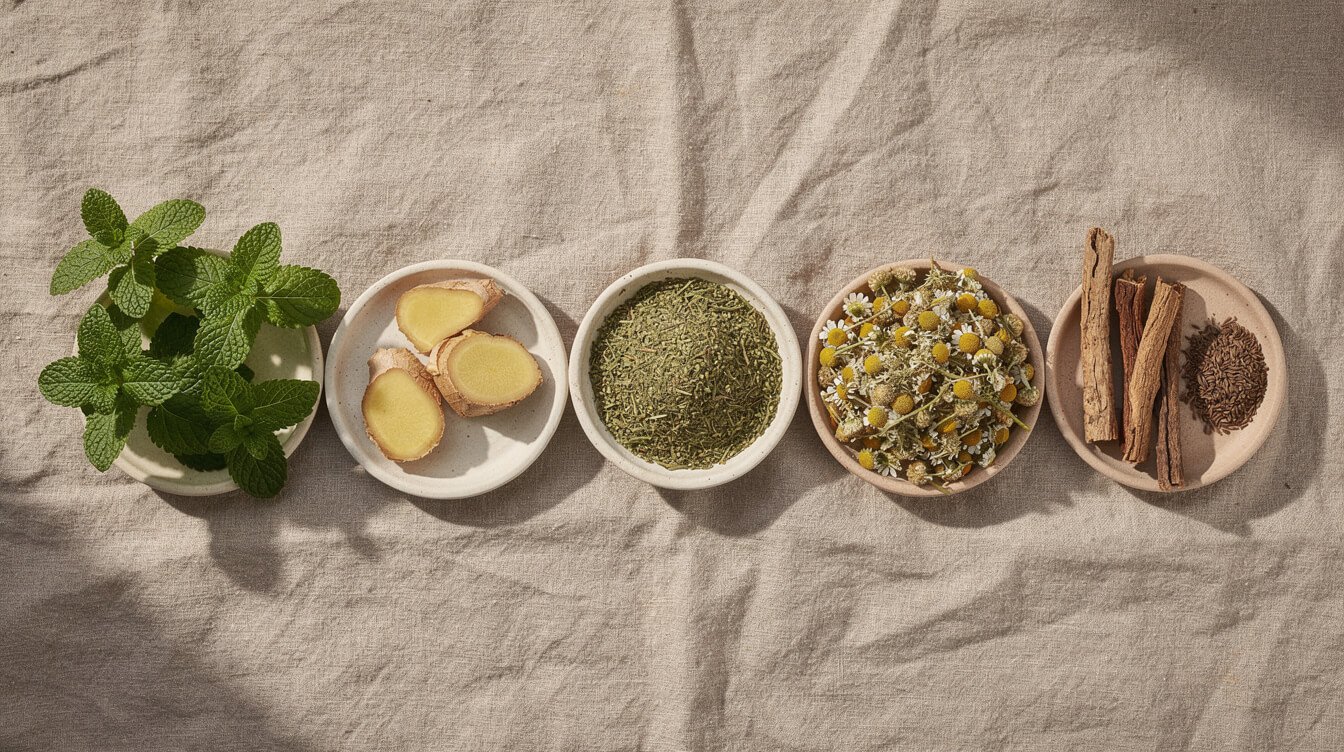
These seven herbs show up again and again in traditional digestive blends around the world, and they’re the backbone of most herbal tea for digestion you’ll find on store shelves. Here’s what each one is known for, how it tastes, and who might enjoy it most.
1. Peppermint (Mentha × piperita)
Traditionally used for: bloating, gas, and that tight, crampy feeling after a meal.
Flavor: cool, bright, clean.
Peppermint is probably the most famous after-dinner tea. Its main compound, menthol, is known to relax smooth muscle, which is why it’s been studied for abdominal cramping. Research suggests peppermint oil capsules may ease IBS symptoms (more on that below). The tea is gentler and less studied, but many people find it refreshing after a heavy meal. One big caveat: because peppermint may also relax the valve between the stomach and esophagus, it can make heartburn worse for some people. Our peppermint spotlight has more on this cooling herb.
2. Ginger (Zingiber officinale)
Traditionally used for: nausea, a heavy “food just sitting there” feeling, and sluggish digestion.
Flavor: warm, spicy, a little sweet.
Ginger has one of the deepest research bases of any culinary herb. Studies suggest it may help the stomach empty a bit faster, and it’s well known for easing queasiness. Fresh ginger simmered for 10 minutes makes a punchy, warming tea that’s perfect for cooler months. See our ginger spotlight for ways to use it beyond tea.
3. Fennel (Foeniculum vulgare)
Traditionally used for: gas and bloating.
Flavor: sweet, mild licorice-like.
Fennel seeds are a classic carminative, a traditional term for herbs used to help relieve gas. In India, roasted fennel seeds (saunf) are offered after meals for exactly this reason. Lightly crush the seeds before steeping to release their aromatic oils. Fennel pairs beautifully with peppermint for a sweet-cool after-dinner blend.
4. Chamomile (Matricaria chamomilla)
Traditionally used for: a nervous or unsettled stomach, mild cramping, and evening wind-down.
Flavor: soft, honeyed, floral.
Chamomile is traditionally used for both the belly and the mind, which makes it a natural fit when stress shows up in your stomach. Human research on chamomile for digestion specifically is limited, but it’s one of the gentlest, most widely enjoyed herbal teas, and it’s a lovely choice for later in the evening since it’s caffeine-free.
5. Lemon Balm (Melissa officinalis)
Traditionally used for: a tense, “knotted” stomach and digestive discomfort linked to stress.
Flavor: lemony, fresh, gently herbal.
A member of the mint family, lemon balm has been used in European herbalism for centuries as a calming digestive herb. It’s often blended with chamomile or peppermint. If you’ve ever felt your stomach clench before a big meeting, this is a tea worth trying.
6. Licorice Root (Glycyrrhiza glabra)
Traditionally used for: soothing the stomach lining and adding natural sweetness to blends.
Flavor: intensely sweet, earthy.
Licorice root has a long history in both Western and Chinese herbal traditions, and it’s an ingredient in some well-studied herbal formulas for indigestion. But it’s also the herb on this list that needs the most care. Its compound glycyrrhizin can raise blood pressure and lower potassium when taken regularly. Enjoy it occasionally and in small amounts, and skip it entirely if you have high blood pressure, heart or kidney concerns, or are pregnant (see the safety section below).
7. Caraway (Carum carvi)
Traditionally used for: gas, fullness, and bloating, especially after rich or heavy meals.
Flavor: warm, slightly peppery, rye-bread-like.
Caraway is the underdog of digestive herbs. You probably have some in your spice rack already. In Central European kitchens it’s added to cabbage and bean dishes to make them easier on the stomach. Interestingly, a peppermint-and-caraway oil combination is one of the better-studied herbal approaches for indigestion. A teaspoon of crushed caraway seeds steeped for 10 minutes makes a surprisingly pleasant tea.
Want to explore beyond these seven? Our complete herbal remedies guide covers dozens of traditional plants, and the Thursday spotlights on cinnamon and turmeric are lovely warming additions to any digestive blend.
What Research Suggests About Digestive Herbal Teas

Here’s where we separate tradition from evidence, without throwing either away. The most useful question isn’t “does it work?” but “what form was studied, and what does that mean for my cup of tea?”
Peppermint: strong evidence for the oil, less for the tea
A 2019 meta-analysis in BMC Complementary and Alternative Medicine pooled 12 randomized trials with 835 adults with IBS. People taking peppermint oil capsules were more than twice as likely to report overall symptom improvement as those on placebo, and side effects were similar between groups. A 2008 review in the BMJ reached a similar conclusion. But the U.S. National Center for Complementary and Integrative Health notes that this evidence applies to peppermint oil, and there isn’t enough evidence to say whether peppermint leaf tea does the same. Peppermint tea itself appears to be safe for most people.
Ginger: it may help the stomach empty faster
In a small 2008 trial of 24 healthy adults, 1.2 grams of ginger in capsule form sped up gastric emptying compared with placebo. A 2011 follow-up in 11 people with functional dyspepsia (chronic indigestion) found the same faster emptying, although participants didn’t report fewer symptoms. For nausea, the evidence is stronger: a 2014 review of 12 trials in pregnant women found ginger improved nausea compared with placebo. A 2019 review of clinical trials concluded that ginger looks most useful for nausea and that more research is needed for other digestive complaints.
Herbal blends: promising for indigestion
A 2023 Cochrane review looked at 41 trials (4,477 people) of non-Chinese herbal medicines for functional dyspepsia. It found that a peppermint and caraway oil combination probably leads to a large improvement in indigestion symptoms (moderate-certainty evidence), and that a multi-herb formula containing chamomile, peppermint, licorice, and caraway, among others, may help, though that evidence was very uncertain. Again, these were standardized preparations, not home-brewed tea.
Fennel and chamomile: mostly traditional, some early data
A 2016 Italian trial of 121 people with IBS found that capsules combining curcumin (from turmeric) and fennel essential oil reduced symptom scores more than placebo over 30 days. For chamomile, human digestive trials are limited. Its reputation rests largely on centuries of traditional use and lab research into its calming compounds.
The honest summary
| Herb | Best evidence | Form studied | What it means for your tea |
|---|---|---|---|
| Peppermint | Meta-analysis of 12 RCTs (IBS) | Enteric-coated oil capsules | Tea is gentler and less studied; may feel soothing for gas or cramping |
| Ginger | Small RCTs (gastric emptying); 12 RCTs (nausea) | Capsules, ~1–1.5 g/day | A strong fresh ginger tea gets you closer to studied amounts |
| Peppermint + caraway | Cochrane 2023, moderate certainty | Standardized oil combination | A peppermint-caraway tea is a traditional cousin, not the same thing |
| Fennel | 1 RCT (with curcumin, IBS) | Essential oil capsules | Mostly traditional use for gas |
| Chamomile | Limited human digestive trials | Various | Traditional; a calming, very gentle option |
| Lemon balm | Mostly in multi-herb formulas | Extracts | Traditional for stress-related stomach upset |
| Licorice | Ingredient in studied formulas | Extracts | Use sparingly; watch blood pressure |
Bottom line: research suggests several of these herbs may support digestive comfort, and herbal tea for digestion is a gentle, food-level way to enjoy them. Just keep your expectations kind and realistic.
Match the Tea to the Feeling: A Simple Guide

Choosing an herbal tea for digestion is easier when you start with how you feel, because different herbs are traditionally used for different kinds of discomfort. Use this table as a starting point for choosing a cup, not as a diagnosis.
| How you feel | Teas traditionally reached for | Good to know |
|---|---|---|
| Heavy, overfull, “food is just sitting there” | Ginger, ginger + lemon | A short walk pairs well (see below) |
| Gassy or bloated | Fennel, caraway, peppermint | Crush seeds before steeping |
| Crampy, tight belly | Peppermint, chamomile | Skip peppermint if you get heartburn |
| Queasy or a little nauseous | Ginger | Sip slowly; small, frequent sips |
| Stomach in knots from stress | Chamomile, lemon balm | Add three slow breaths before your first sip |
| Prone to heartburn or reflux | Chamomile, ginger (mild) | Avoid peppermint and spearmint; don’t lie down right after |
| Want something sweet without sugar | Fennel, a pinch of licorice root | Keep licorice occasional |
| A bit sluggish and irregular | Ginger, warm water + fiber-rich food | Tea helps with fluids; fiber does the heavy lifting |
If irregularity is your main concern, remember that fluids, fiber, and movement work as a team. Our fiber FAQ explains how to add more without extra bloating. And if you’re dealing with an achy, upset stomach rather than simple fullness, our guide to natural relief for stomach pain covers more gentle options, along with the signs that mean it’s time to call a doctor.
How to Brew Herbal Tea for Digestion (Plus 3 Simple Blends)

The way you brew makes a real difference. Many digestive herbs owe their character to aromatic oils that escape with the steam. A few simple habits get more flavor, and more of those compounds, into your cup.
Brewing basics
- Cover your cup. Pop a saucer or lid on top while it steeps so the aromatic oils condense back into the tea instead of floating away.
- Crush your seeds. Fennel and caraway seeds release much more flavor when lightly crushed with a mortar and pestle or the back of a spoon.
- Simmer roots, steep leaves. Tough roots like ginger and licorice benefit from a gentle simmer. Delicate leaves and flowers just need hot water poured over them.
- Use loose herbs when you can. Tea bags are convenient, but loose herbs are often fresher and more aromatic.
| Herb | Amount per 8 oz (240 ml) | Method | Time |
|---|---|---|---|
| Peppermint (dried) | 1–2 tsp | Steep, covered | 5–10 min |
| Ginger (fresh) | 4–6 thin slices (about 1 inch) | Simmer gently | 10–15 min |
| Fennel seeds | 1 tsp, crushed | Steep, covered | 10 min |
| Chamomile (dried flowers) | 1–2 tbsp | Steep, covered | 5–10 min |
| Lemon balm (dried) | 1–2 tsp | Steep, covered | 5–10 min |
| Licorice root (dried, cut) | ¼–½ tsp | Simmer briefly or steep | 5–10 min |
| Caraway seeds | 1 tsp, crushed | Steep, covered | 10 min |
Blend 1: The After-Dinner Classic
1 tsp dried peppermint + ½ tsp crushed fennel seeds. Steep covered for 8 minutes. Cool, sweet, and refreshing, a lovely choice after a big holiday meal (unless you’re prone to heartburn).
Blend 2: Warm Ginger-Fennel
5 thin slices of fresh ginger + ½ tsp crushed fennel seeds + a strip of lemon peel. Simmer for 10 minutes, then strain. Add a little honey if you like. Warming and cozy on a cold evening.
Blend 3: Calm Belly
1 tbsp chamomile + 1 tsp lemon balm. Steep covered for 7 minutes. A soft, floral blend for evenings when stress has settled in your stomach. It’s caffeine-free, so it fits right into a bedtime routine.
Looking for more ways to work tea into your week? Our Sunday Setup on herbal teas and the hibiscus spotlight have a few more favorites.
🎁 Get a Free Wellness Gift
Enter your name and email below to receive a special wellness gift from OlyLife — absolutely free!
When to Drink It: A Gentle After-Meal Ritual (and a Holiday Plan)

There’s no strict “right time” to drink herbal tea for digestion, but a few simple patterns tend to feel best.
Timing tips
- After meals: 15–30 minutes after eating is a popular window for peppermint, fennel, ginger, or caraway, when fullness tends to peak.
- Before a big meal: some people like a small cup of ginger tea 30 minutes before eating.
- In the evening: chamomile and lemon balm are natural fits for winding down.
- If your iron is low: drink tea between meals rather than with them (see the safety section for why).
Pair your tea with a short walk
Here’s a simple upgrade that research supports. In a small German study, healthy volunteers who walked slowly on a treadmill after a large meal emptied their stomachs noticeably faster than when they sat still. In that same study, the traditional after-dinner digestifs (brandy, herbal liqueur) and espresso made no difference. So: brew your tea, take a 10–15 minute stroll, then come back and enjoy it. Our post-meal walk tip explains more.
Don’t forget plain water
Tea counts toward your fluids, but plain water does too, and it’s the easiest habit to build. If you find water boring, making it more appealing really helps. Some people in our community enjoy the OlyLife H+ Molecular Hydrogen Infusing Water Bottle as a nudge to keep sipping through the day. Whatever bottle you use, the goal is simple: steady hydration, especially when you’re adding more fiber.
A gentle holiday-meal plan
With Thanksgiving on November 26 and the holiday season close behind, here’s a simple plan for big-meal days:
- Morning: start with a glass of water and a normal breakfast. Skipping meals often leads to overeating later.
- 30 minutes before the feast: a small cup of ginger tea, if you enjoy it.
- At the table: eat slowly, put your fork down between bites, and pause before seconds.
- Right after: a 10–15 minute family walk around the block.
- Back home: a pot of the After-Dinner Classic (or Calm Belly if heartburn is an issue) for the table.
- Before bed: give yourself 2–3 hours between your last big bite and lying down.
Gut comfort is about more than one meal, too. If you’d like to build a stronger foundation, our guides on fermented foods for gut health and the signs of poor gut health are great next steps.
Pair Your Evening Tea With a Moment of Calm 🌿
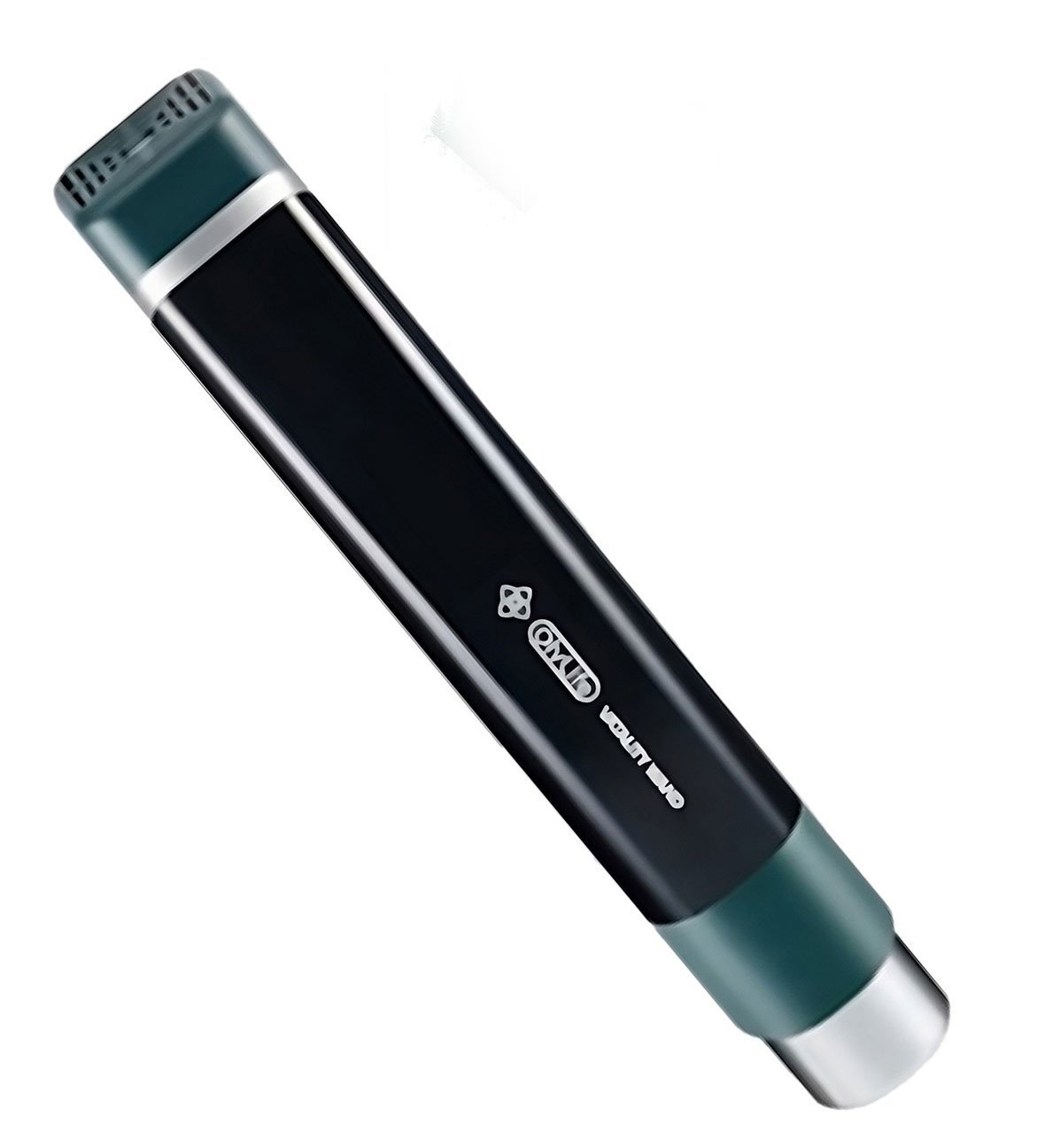
The OlyLife Vitality Wand is a compact terahertz and PEMF wellness device that many customers make part of an unhurried evening wind-down: a warm cup of tea, soft lights, and a few relaxing minutes for tired shoulders and back. It’s designed to support relaxation, not to treat any digestive or medical condition.
Safety First: Who Should Be Careful With Herbal Teas
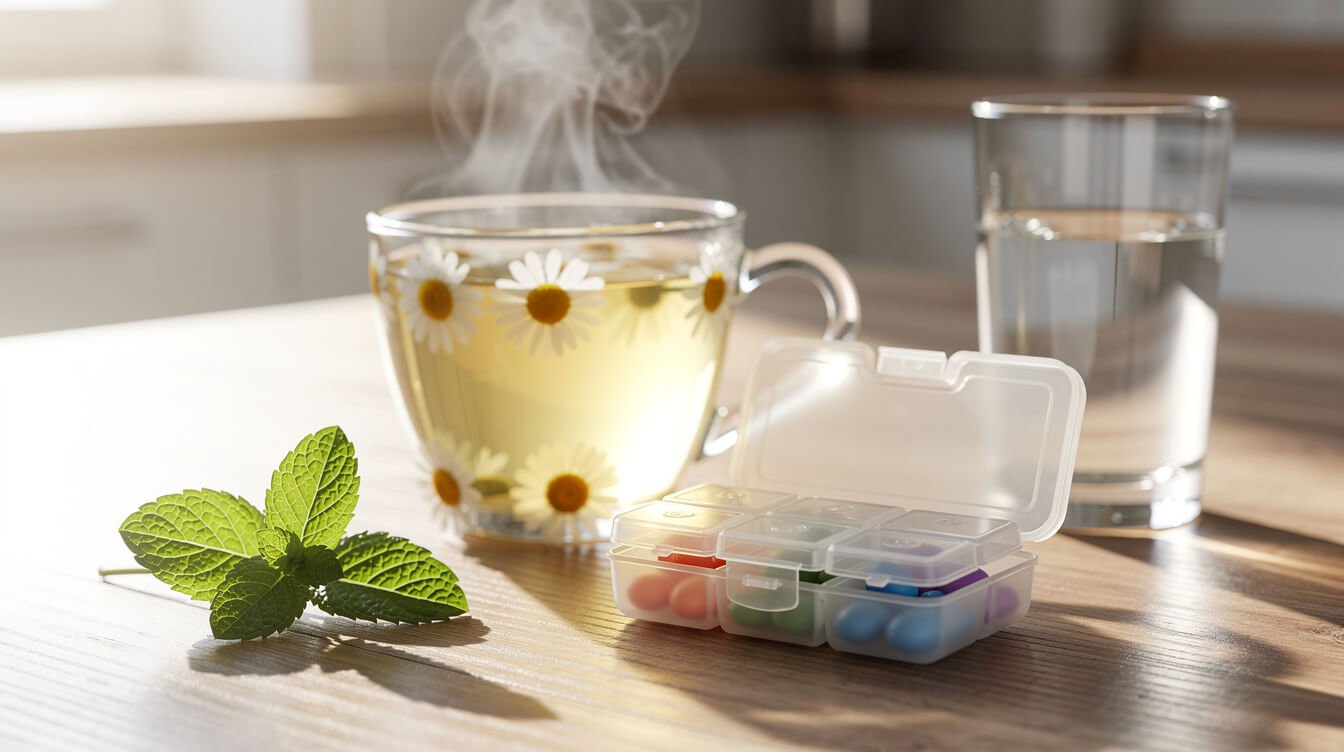
“Natural” doesn’t automatically mean right for everyone. Herbal tea for digestion is generally gentle at normal food-level amounts, but a few situations call for extra care.
| Situation | Herbs to be careful with | Why |
|---|---|---|
| Heartburn or reflux (GERD) | Peppermint, spearmint | Mint may relax the valve at the top of the stomach and worsen heartburn for some people |
| High blood pressure, heart or kidney disease | Licorice root | Glycyrrhizin can raise blood pressure and lower potassium |
| Pregnancy or breastfeeding | Licorice root; medicinal amounts of any herb | Food-level amounts of many teas are likely fine, but ask your provider first |
| Blood thinners (e.g., warfarin) | Chamomile, ginger, others | Possible interactions have been reported; check with your pharmacist |
| Ragweed or daisy-family allergy | Chamomile | Chamomile is in the same plant family and may cause reactions |
| Low iron or anemia | Peppermint, black tea, many herbal teas | Polyphenols can reduce iron absorption from a meal |
| Young children | Concentrated herbs, peppermint oil | Ask your pediatrician before offering herbal teas |
A closer look at licorice
Licorice deserves its own note. A dose-response study from Iceland and Sweden found that healthy volunteers eating as little as 50 grams of licorice a day for two weeks saw a measurable rise in blood pressure, and the effect grew with larger amounts. Case reports have also linked daily licorice-containing herbal teas to dangerously low potassium. Many “digestive” and “throat” tea blends include licorice root, so check the label, especially if you drink several cups a day.
Tea and iron
A classic 1999 study in the British Journal of Nutrition found that drinking herbal teas with a bread meal reduced iron absorption: peppermint tea by about 84% and chamomile by about 47%, compared with water. Black tea had a similar effect. If you have low iron, are vegetarian, or are pregnant, enjoy your tea an hour or so away from iron-rich meals.
“Detox” and “slimming” teas aren’t digestive teas
Many teas marketed for “detox,” “flat tummy,” or weight loss contain senna or cascara, which are stimulant laxatives. They’re designed for occasional short-term use, not daily sipping, and overuse can cause cramping, dehydration, and electrolyte problems. If a tea’s main job is to make you run to the bathroom, it’s not the gentle digestive support we’re talking about here. Our honest guide to detox explains why your liver and kidneys already do this job beautifully.
When to see a doctor
Herbal tea is for everyday comfort, not for ignoring warning signs. Please check in with a healthcare provider if you notice:
- Blood in your stool or black, tarry stools
- Unexplained weight loss or loss of appetite
- Difficulty or pain when swallowing
- Persistent vomiting
- Severe, worsening, or night-time abdominal pain
- Heartburn more than twice a week, or new symptoms after age 50
- Any change in bowel habits that lasts more than a few weeks
Frequently Asked Questions About Herbal Tea for Digestion
What is the best herbal tea for digestion?
There’s no single “best” tea. It depends on how you feel. Peppermint and fennel are traditionally used for gas and bloating, ginger for heaviness and nausea, and chamomile or lemon balm for a stress-sensitive stomach. If you get heartburn, chamomile or ginger is usually a gentler choice than peppermint.
How soon after eating should I drink herbal tea?
Many people enjoy digestive teas 15–30 minutes after a meal. There’s no strict rule, so choose the timing that feels best for you. If you have low iron, try to drink tea between meals rather than with them.
Can I drink herbal tea for digestion every day?
For most healthy adults, a few cups a day of gentle herbs like peppermint, ginger, fennel, or chamomile are generally considered safe at food-level amounts. Licorice is the exception: keep it occasional. If you’re pregnant, take medication, or have a health condition, check with your provider first.
Is peppermint tea good for bloating?
Peppermint is traditionally used for bloating, and research suggests peppermint oil capsules may ease IBS symptoms including bloating and pain. The tea is milder and less studied, but many people find it soothing. Skip it if you’re prone to heartburn.
Does ginger tea help with an upset stomach?
Ginger is one of the best-researched herbs for nausea, and small studies suggest it may help the stomach empty a little faster. A fresh, strong ginger tea made by simmering several slices for 10–15 minutes is a comforting option for a queasy or heavy stomach.
Is herbal tea good for constipation?
Warm fluids can support regularity, especially alongside fiber and movement. Gentle herbs like ginger may help you feel more comfortable. Teas containing senna are stimulant laxatives and aren’t meant for regular use. If constipation is ongoing, talk to your healthcare provider.
Do tea bags work as well as loose herbs?
Good-quality tea bags work well and are convenient. Loose herbs are often fresher and more aromatic, which can mean more flavor and more of the herbs’ natural oils. Whichever you use, cover your cup while it steeps.
Can herbal tea replace my reflux or IBS medication?
No. Herbal teas may be a soothing part of your routine, but they aren’t a substitute for medical care or prescribed treatment. Please don’t stop or change any medication without speaking to your doctor.
Final Thoughts: Make Herbal Tea Part of a Kinder Digestive Routine
Herbal tea for digestion is one of the simplest wellness rituals you can build. It’s affordable, comforting, and rooted in centuries of tradition. Research suggests some of these herbs, especially peppermint and ginger, may genuinely support digestive comfort, even if the strongest evidence comes from more concentrated forms than your teacup.
The real magic may be in the whole ritual: slowing down at the table, taking a short walk, sipping something warm, and giving your body a moment to do what it already knows how to do. Start with one herb that matches how you feel, brew it with care, and notice how your body responds. Keep what works, and let go of what doesn’t.
And if your stomach keeps telling you something isn’t right, listen. Herbal tea is a gentle companion, not a stand-in for a good conversation with your healthcare provider.
Here’s to warm cups, slower meals, and a more comfortable season ahead. ✨
This article is for educational purposes only and isn’t intended to diagnose, treat, cure, or prevent any disease. Always consult a qualified healthcare provider before using herbs if you are pregnant, breastfeeding, taking medication, or managing a health condition.
Sources
- Alammar N, et al. The impact of peppermint oil on the irritable bowel syndrome: a meta-analysis of the pooled clinical data. BMC Complement Altern Med. 2019. PMID 30654773
- Ford AC, et al. Effect of fibre, antispasmodics, and peppermint oil in the treatment of irritable bowel syndrome. BMJ. 2008. PMID 19008265
- National Center for Complementary and Integrative Health. Peppermint Oil
- Wu KL, et al. Effects of ginger on gastric emptying and motility in healthy humans. Eur J Gastroenterol Hepatol. 2008. PMID 18403946
- Hu ML, et al. Effect of ginger on gastric motility and symptoms of functional dyspepsia. World J Gastroenterol. 2011. PMID 21218090
- Viljoen E, et al. A systematic review and meta-analysis of the effect and safety of ginger in the treatment of pregnancy-associated nausea and vomiting. Nutr J. 2014. PMID 24642205
- Nikkhah Bodagh M, et al. Ginger in gastrointestinal disorders: a systematic review of clinical trials. Food Sci Nutr. 2019. PMID 30680163
- Báez G, et al. Non-Chinese herbal medicines for functional dyspepsia. Cochrane Database Syst Rev. 2023. PMID 37323050
- Portincasa P, et al. Curcumin and fennel essential oil improve symptoms and quality of life in patients with irritable bowel syndrome. J Gastrointestin Liver Dis. 2016. PMID 27308645
- Franke A, et al. Postprandial walking but not consumption of alcoholic digestifs or espresso accelerates gastric emptying in healthy volunteers. J Gastrointestin Liver Dis. 2008. PMID 18392240
- Sigurjónsdóttir HA, et al. Liquorice-induced rise in blood pressure: a linear dose-response relationship. J Hum Hypertens. 2001. PMID 11494093
- Saha P, et al. A case of hypokalemia caused by the consumption of licorice-containing herbal tea. Cureus. 2025. PMID 40672027
- Hurrell RF, et al. Inhibition of non-haem iron absorption in man by polyphenolic-containing beverages. Br J Nutr. 1999. PMID 10999016
- Tan CSS, Lee SWH. Warfarin and food, herbal or dietary supplement interactions: a systematic review. Br J Clin Pharmacol. 2021. PMID 32478963