Thursday Herbal Spotlight: Hibiscus — The Tart, Ruby-Red Tea Research Suggests May Support Healthy Blood Pressure
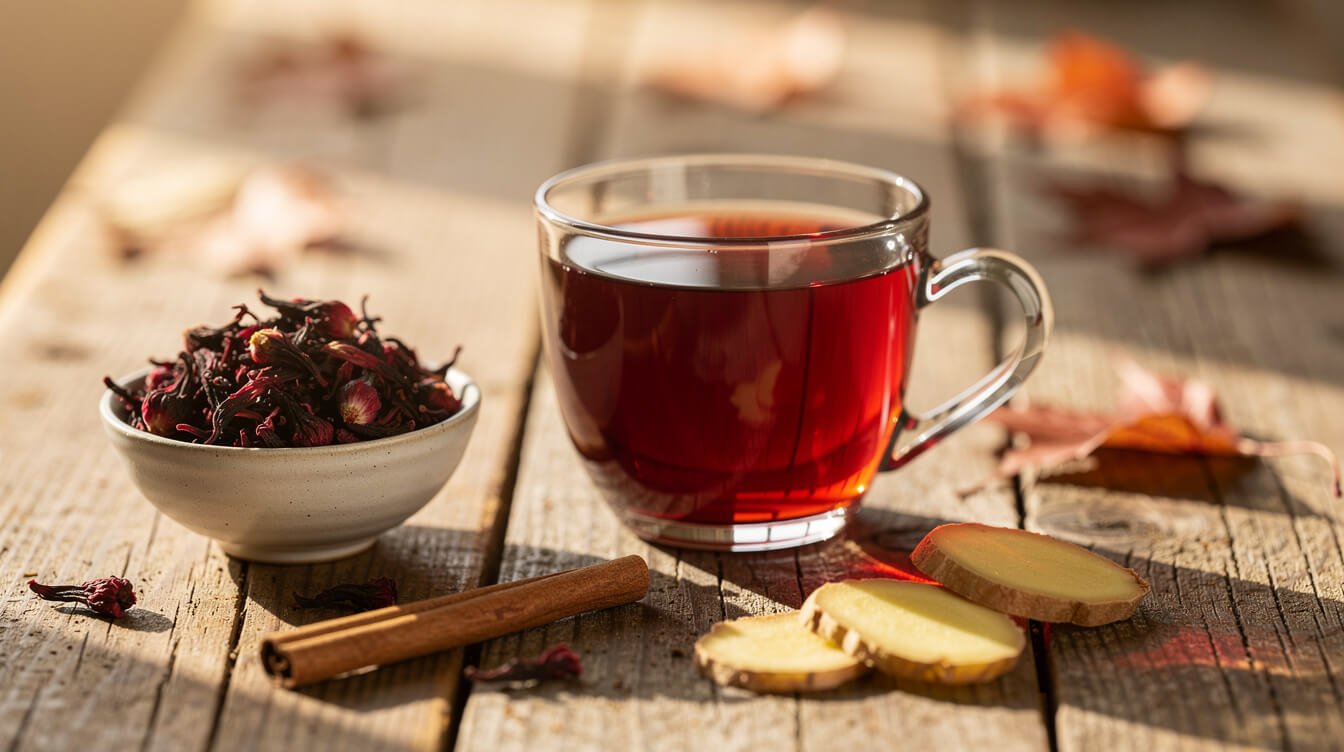
Happy Thursday Herbal Spotlight! This week’s herb is the one that turns a cup of hot water deep ruby red: hibiscus. It’s tart, bright, naturally caffeine-free, and it might be the most beautiful thing you brew all autumn. 🌿
Meet Hibiscus (Roselle)
The hibiscus used for tea is Hibiscus sabdariffa, also called roselle. It isn’t the big ornamental flower you see in gardens and hotel lobbies. The part we brew is the calyx, the fleshy, crimson cup that wraps around the seed pod after the flower fades. Dried, those calyces look like crinkly red petals. Their color comes from anthocyanins, the same family of plant pigments found in blueberries and red cabbage.
Hibiscus is loved around the world under many names:
- Agua de jamaica in Mexico, served chilled and lightly sweetened
- Karkadé in Egypt and Sudan, sipped hot or cold
- Bissap in Senegal and across West Africa
- Sorrel in Jamaica and the Caribbean, a festive holiday drink steeped with ginger, cloves, and cinnamon
- Rosella in Indonesia and Australia
What Research Suggests
Hibiscus is best known for its link to blood pressure. In a 2010 study published in the Journal of Nutrition, 65 adults with blood pressure in the high-normal to mildly elevated range drank three cups of hibiscus tea a day for six weeks. Their systolic blood pressure dropped by about 7 points on average, compared with about 1 point in the group that drank a placebo drink.
A 2015 review that pooled five small trials found a similar pattern. Still, it’s worth keeping this in perspective. The studies were small and short, and a Cochrane review concluded there isn’t yet enough high-quality evidence to recommend hibiscus for treating high blood pressure. Think of hibiscus tea as a lovely supporting habit that may support healthy blood pressure as part of an overall lifestyle, not as a replacement for anything your doctor has prescribed.
It’s also simply a flavorful, zero-calorie way to drink more fluids. If plain water feels like a chore in cooler weather, a warm cup of hibiscus counts toward your daily intake (more on that in our hydration FAQ).
🎁 Get a Free Wellness Gift
Enter your name and email below to receive a special wellness gift from OlyLife — absolutely free!
3 Cozy Ways to Enjoy It This Autumn
- Simple hot tea. Steep 1 to 2 teaspoons of dried hibiscus in a cup of just-boiled water for 5 to 10 minutes, then strain. The flavor is tart, a bit like cranberry, so a drizzle of honey or a slice of orange softens it nicely.
- Mulled “sorrel-style” brew. Simmer a handful of dried hibiscus with a cinnamon stick, a few slices of fresh ginger, and 2 or 3 whole cloves, then steep off the heat for 15 minutes. It makes your kitchen smell like the holidays. (Catch up on why we love cinnamon in our cinnamon spotlight.)
- Overnight cold brew. Add 2 tablespoons of hibiscus to a quart jar of cool water and leave it in the fridge overnight. You’ll wake up to a smooth, less tart drink that’s ready to pour.
Shopping tip: Look for dried, food-grade hibiscus labeled “hibiscus flowers” or “flor de jamaica.” You’ll often find it at tea shops and in the Latin American aisle of the grocery store, usually for less than boxed tea bags.
A Few Gentle Cautions
- Medications: Because hibiscus may lower blood pressure, check with your doctor first if you take blood pressure medication, a diuretic, or diabetes medication. It may also interact with some other medicines.
- Pregnancy and nursing: Hibiscus is traditionally avoided during pregnancy, and there isn’t enough safety research, so it’s best to skip it unless your provider says otherwise.
- Low blood pressure: If you tend to feel lightheaded when you stand up, go easy.
- Your teeth: Hibiscus is quite acidic. Sip it with meals or rinse with water afterward rather than sipping all day long.
The Takeaway
Hibiscus is one of the easiest and most cheerful herbs to bring into your routine. Brew one warm cup in the afternoon this week, maybe with a cinnamon stick, and notice how nice it feels to slow down with something this vibrant. ✨ For more plant allies and how they’ve traditionally been used, explore our complete guide to herbal remedies.
Have you tried agua de jamaica or Caribbean sorrel? We’d love to hear how you like your hibiscus.
This post is for general educational purposes and isn’t medical advice. Please talk with your healthcare provider before adding any herb to your routine, especially if you take medication, are pregnant or nursing, or have a health condition.