Anti-Inflammatory Foods Recipes: 15+ Delicious Meals That May Support Your Wellness
What if the meals you already love could quietly work to support your body’s natural balance? Anti-inflammatory foods recipes aren’t about restriction or complicated ingredients — they’re about choosing vibrant, whole foods that taste incredible and may help your body feel its best. Whether you’re dealing with occasional joint stiffness, digestive discomfort, or simply want to eat in a way that supports long-term wellness, the right recipes can make all the difference.
In this guide, you’ll discover over 15 delicious anti-inflammatory recipes spanning breakfast through dinner — plus smoothies, snacks, and healing drinks. Each recipe highlights the specific ingredients that research suggests may help reduce inflammation, so you understand not just what to eat, but why it matters. If you’re looking for a deeper dive into which foods fight inflammation and how they work, our complete guide to anti-inflammatory foods is the perfect companion to these recipes.
Understanding Anti-Inflammatory Eating: The Foundation for Better Recipes
Before diving into the recipes, it helps to understand what makes a food “anti-inflammatory” in the first place. Chronic, low-grade inflammation is increasingly recognized by researchers as a factor in many wellness challenges — from persistent fatigue and digestive issues to joint discomfort and skin concerns. While acute inflammation is your body’s natural healing response, chronic inflammation may quietly affect how you feel day to day.
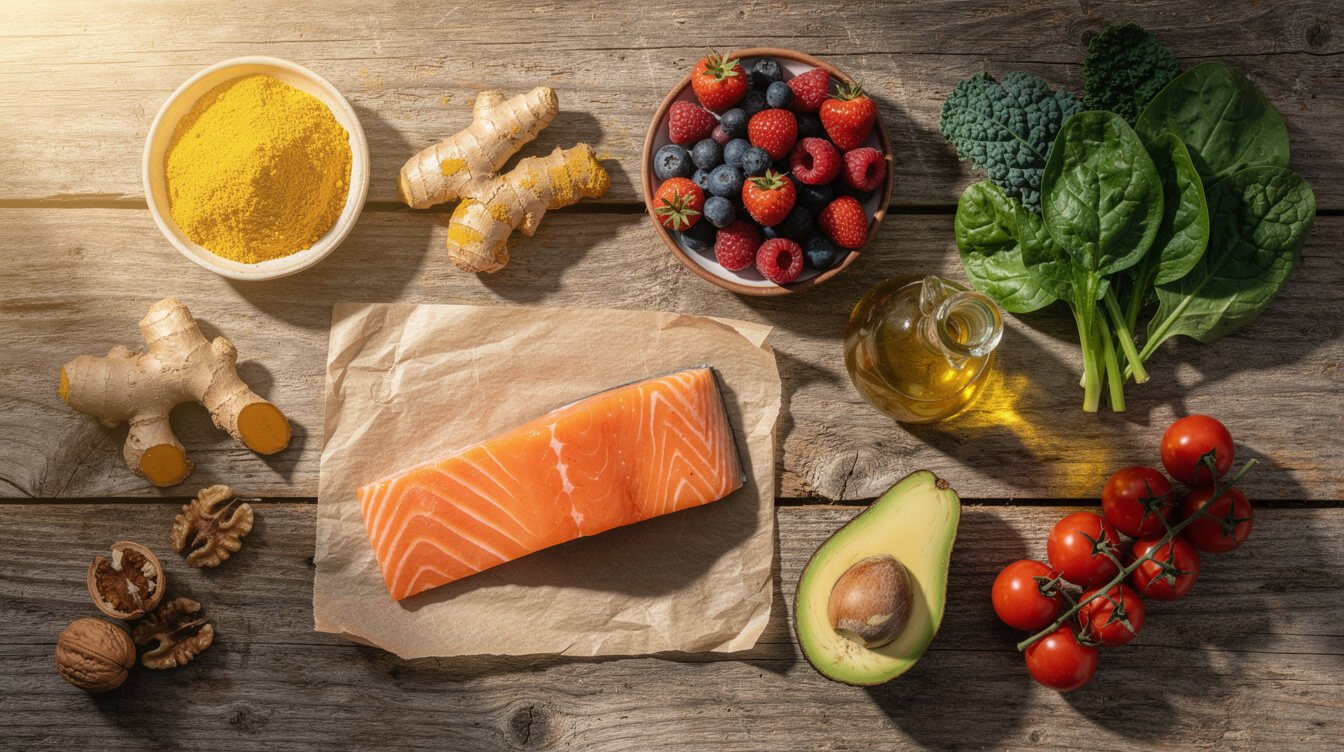
The good news? Certain foods contain compounds that research suggests may help modulate your body’s inflammatory pathways. These include:
- Omega-3 fatty acids — found in salmon, sardines, walnuts, and flaxseeds, these essential fats may help balance your body’s inflammatory response
- Polyphenols and antioxidants — abundant in berries, leafy greens, and colorful vegetables, these plant compounds may support cellular health
- Curcumin — the active compound in turmeric that has been studied extensively for its potential anti-inflammatory properties
- Fiber — feeds beneficial gut bacteria, which play a crucial role in regulating inflammation throughout the body
- Gingerols — bioactive compounds in ginger that traditional medicine has used for centuries to support comfort and digestion
The anti-inflammatory foods recipes below weave these ingredients into meals that are genuinely enjoyable — because the best wellness strategy is one you’ll actually stick with.
Anti-Inflammatory Breakfast Recipes to Start Your Day Right
Morning is the perfect time to set an anti-inflammatory tone for your day. These breakfast recipes are quick enough for busy mornings yet packed with ingredients that may support your body’s natural balance.
Golden Turmeric Overnight Oats
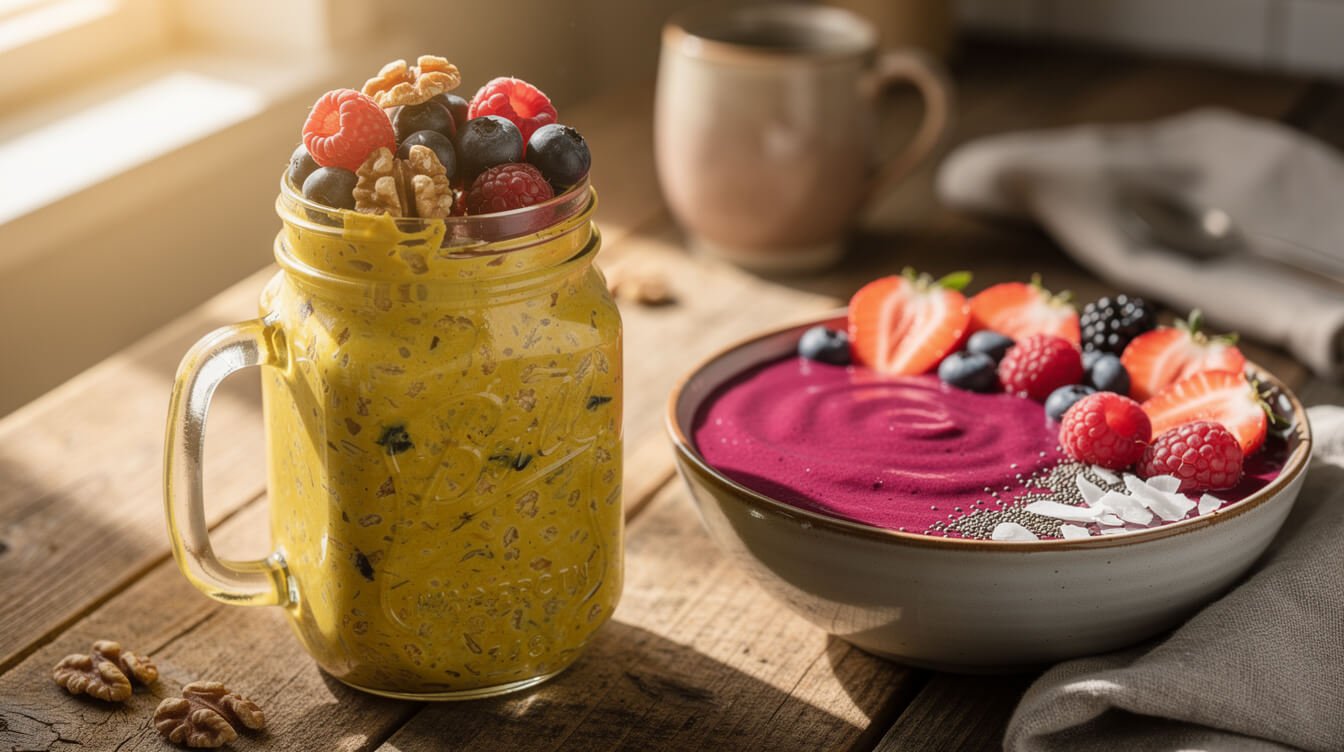
This no-cook breakfast combines the convenience of overnight oats with the potential anti-inflammatory power of turmeric and ginger. The black pepper is essential — research shows piperine may increase curcumin absorption by up to 2,000%.
- 1/2 cup rolled oats
- 1 cup unsweetened almond milk (or oat milk)
- 1 teaspoon ground turmeric
- 1/2 teaspoon ground ginger
- Pinch of black pepper
- 1 tablespoon chia seeds
- 1 tablespoon raw honey or maple syrup
- Top with: walnuts, fresh berries, and a drizzle of almond butter
Combine oats, milk, turmeric, ginger, pepper, chia seeds, and sweetener in a jar. Stir well, refrigerate overnight, and top with walnuts and berries in the morning. The chia seeds provide omega-3s while the oats deliver beta-glucan fiber that may support gut health.
Berry-Spinach Anti-Inflammatory Smoothie Bowl
This vibrant smoothie bowl packs a serious antioxidant punch with minimal effort.
- 1 cup frozen mixed berries (blueberries, strawberries, raspberries)
- 1 handful fresh spinach
- 1/2 frozen banana
- 1 tablespoon ground flaxseed
- 1/2 cup unsweetened coconut milk
- Top with: hemp seeds, sliced almonds, fresh berries, and a drizzle of raw honey
Blend until thick and creamy — it should be spoonable, not drinkable. The berries provide anthocyanins, the spinach delivers magnesium and folate, and the flaxseed adds plant-based omega-3s. For a deeper understanding of how magnesium supports whole-body wellness, check out our complete guide.
Avocado and Smoked Salmon Toast
Simple, satisfying, and loaded with anti-inflammatory omega-3 fatty acids.
- 2 slices whole-grain or sourdough bread, toasted
- 1 ripe avocado, mashed
- 100g wild-caught smoked salmon
- Fresh lemon juice, capers, and fresh dill
- Everything bagel seasoning or red pepper flakes
Spread mashed avocado on toast, layer with smoked salmon, and finish with lemon juice, capers, and dill. The avocado provides oleic acid (a monounsaturated fat associated with reduced inflammation), while the salmon delivers EPA and DHA omega-3 fatty acids.
Anti-Inflammatory Lunch Recipes for Sustained Energy
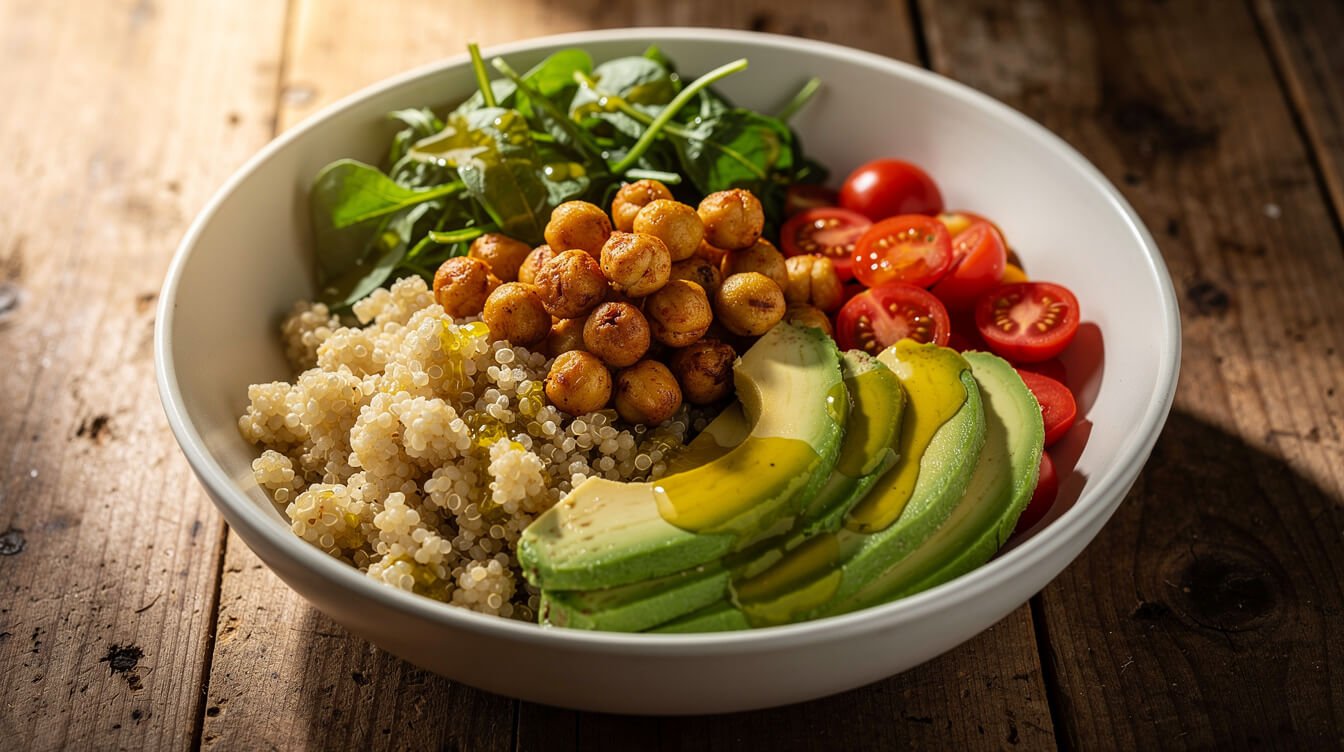
Midday meals should refuel your body without triggering the afternoon energy crash that often comes from processed, inflammatory foods. These lunch recipes keep you energized and nourished.
Mediterranean Rainbow Bowl
This customizable grain bowl draws from the Mediterranean diet — widely studied for its potential anti-inflammatory benefits.
- 1 cup cooked quinoa or farro
- 1/2 cup chickpeas (roasted with cumin and smoked paprika)
- 1 cup mixed greens (arugula, spinach, or kale)
- 1/2 cup cherry tomatoes, halved
- 1/4 cup cucumber, diced
- 2 tablespoons kalamata olives
- 2 tablespoons crumbled feta (optional)
- Dressing: 3 tablespoons extra-virgin olive oil, 1 tablespoon lemon juice, 1 clove garlic (minced), 1 teaspoon dried oregano, salt and pepper
Assemble all ingredients in a bowl, drizzle with the lemon-olive oil dressing. Extra-virgin olive oil contains oleocanthal, a compound that research suggests may work similarly to ibuprofen in how it interacts with inflammatory pathways — though through food, not as a medication.
Ginger-Miso Salmon Salad
This Asian-inspired salad combines wild-caught salmon with the probiotic benefits of miso paste.
- 150g baked or pan-seared wild salmon (seasoned with ginger and garlic)
- 2 cups mixed Asian greens (bok choy, napa cabbage, watercress)
- 1/2 avocado, sliced
- 1/4 cup edamame
- Sesame seeds and sliced scallions for garnish
- Miso-ginger dressing: 1 tablespoon white miso paste, 1 tablespoon rice vinegar, 1 teaspoon fresh grated ginger, 1 teaspoon sesame oil, 1 tablespoon water
Whisk dressing ingredients together until smooth. Arrange greens, top with salmon and avocado, drizzle with dressing. The miso provides beneficial probiotics that may support gut health — and emerging research increasingly connects gut microbiome balance with whole-body inflammatory response.
Turmeric-Lentil Soup
This hearty soup is a warming bowl of anti-inflammatory goodness that’s easy to batch-cook for the week.
- 1 cup red lentils, rinsed
- 1 large onion, diced
- 3 cloves garlic, minced
- 1 tablespoon fresh turmeric (or 1 teaspoon ground)
- 1 teaspoon ground cumin
- 4 cups vegetable broth
- 1 can coconut milk
- 2 cups fresh spinach
- Juice of 1 lemon
- Fresh cilantro and black pepper to finish
Saute onion and garlic in olive oil until soft. Add spices and cook for 30 seconds until fragrant. Add lentils and broth, simmer 20 minutes until lentils are tender. Stir in coconut milk and spinach, cook 2 more minutes. Finish with lemon juice, cilantro, and a generous grind of black pepper. The lentils provide both protein and prebiotic fiber, while the combination of turmeric and black pepper maximizes curcumin bioavailability.
Anti-Inflammatory Dinner Recipes for Evening Nourishment
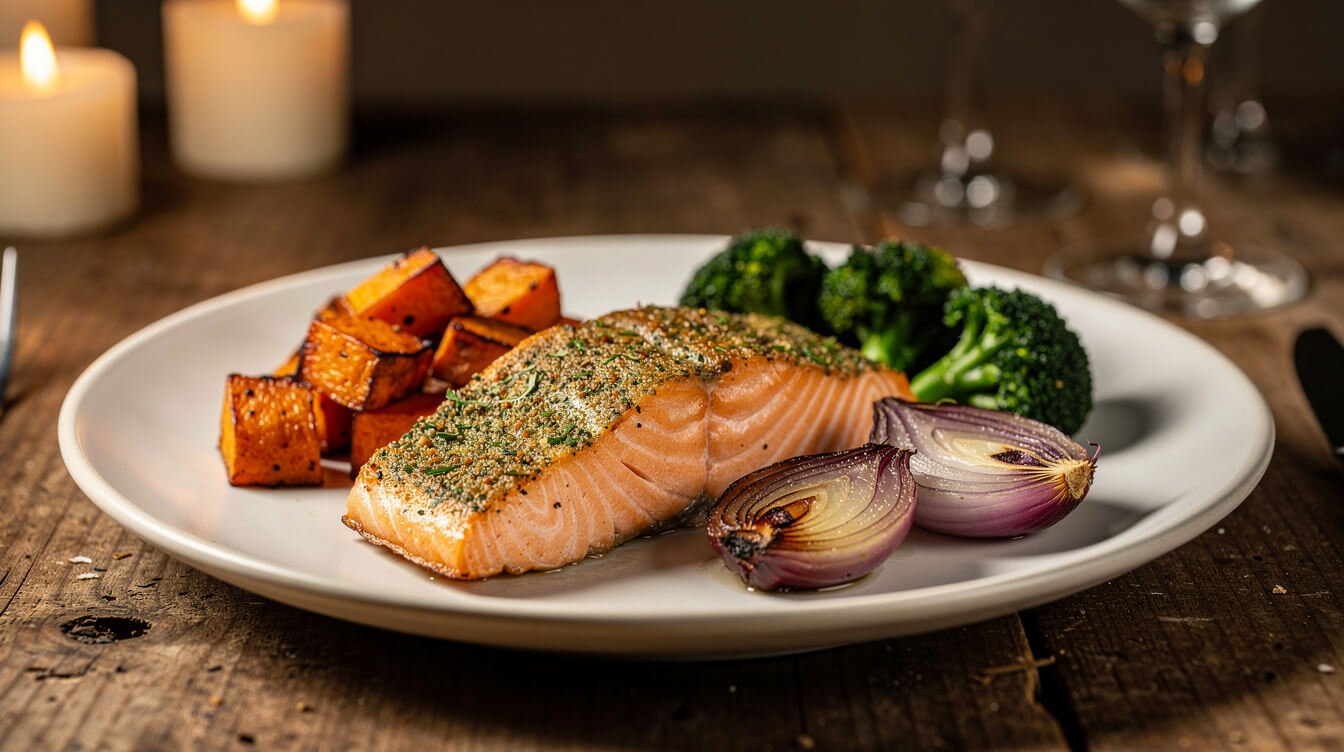
Dinner is your chance to create something truly satisfying while giving your body the nutrients it needs for overnight recovery and repair. These anti-inflammatory dinner recipes prove that eating well doesn’t mean sacrificing flavor.
Herb-Crusted Baked Salmon with Roasted Vegetables
Salmon is the undisputed star of anti-inflammatory eating, and this simple preparation lets its natural richness shine.
- 2 wild-caught salmon fillets (about 170g each)
- 2 tablespoons extra-virgin olive oil
- 2 tablespoons fresh herbs (dill, parsley, and thyme), finely chopped
- 1 clove garlic, minced
- Zest and juice of 1 lemon
- Roasted vegetables: sweet potato (cubed), broccoli florets, red onion (quartered), tossed in olive oil with rosemary and sea salt
Preheat oven to 200 degrees C (400 degrees F). Toss vegetables with olive oil and roast for 20 minutes. Mix herbs, garlic, lemon zest, and olive oil into a paste, spread over salmon fillets. Add salmon to the baking sheet with vegetables and bake 12-15 minutes until salmon flakes easily. The sweet potato provides beta-carotene, the broccoli delivers sulforaphane, and the salmon contributes those essential omega-3s — a trifecta of anti-inflammatory compounds in one meal.
One-Pan Chicken and Vegetable Turmeric Bake
For busy weeknights, this one-pan wonder delivers maximum anti-inflammatory impact with minimal cleanup.
- 4 bone-in chicken thighs
- 2 tablespoons olive oil
- 1 tablespoon ground turmeric
- 1 teaspoon smoked paprika
- 1 teaspoon garlic powder
- 1/2 teaspoon black pepper
- 2 cups cauliflower florets
- 1 cup Brussels sprouts, halved
- 1 red bell pepper, sliced
- Fresh lemon wedges for serving
Toss chicken and vegetables with olive oil and spices. Arrange on a large baking sheet, chicken skin-side up. Roast at 220 degrees C (425 degrees F) for 35-40 minutes until chicken is golden and cooked through. Serve with lemon wedges. The cruciferous vegetables — cauliflower and Brussels sprouts — contain glucosinolates, compounds that research suggests may support your body’s natural detoxification processes.
Supporting your body’s wellness doesn’t stop at the dinner table. Many people find that pairing anti-inflammatory nutrition with targeted body care amplifies their results. The OlyLife OptiRelax Gel is designed to complement your wellness routine — a soothing topical gel that pairs beautifully with the nourishing meals you’re already preparing.
Walnut-Pesto Zucchini Noodles with Cherry Tomatoes
This plant-based dinner is light yet deeply satisfying, perfect for warmer evenings.
- 4 medium zucchini, spiralized
- Walnut pesto: 1 cup fresh basil, 1/2 cup walnuts, 2 cloves garlic, 1/4 cup extra-virgin olive oil, 2 tablespoons nutritional yeast, juice of 1/2 lemon, salt and pepper
- 1 cup cherry tomatoes, halved
- 1/4 cup pine nuts, toasted
- Fresh basil leaves for garnish
Blend pesto ingredients in a food processor until your desired consistency. Lightly saute spiralized zucchini for 2-3 minutes (just until slightly tender — don’t overcook). Toss with walnut pesto and cherry tomatoes. Top with toasted pine nuts and fresh basil. Walnuts are one of the richest plant sources of alpha-linolenic acid (ALA), a type of omega-3 fatty acid, while the tomatoes provide lycopene — an antioxidant that may support cardiovascular wellness.
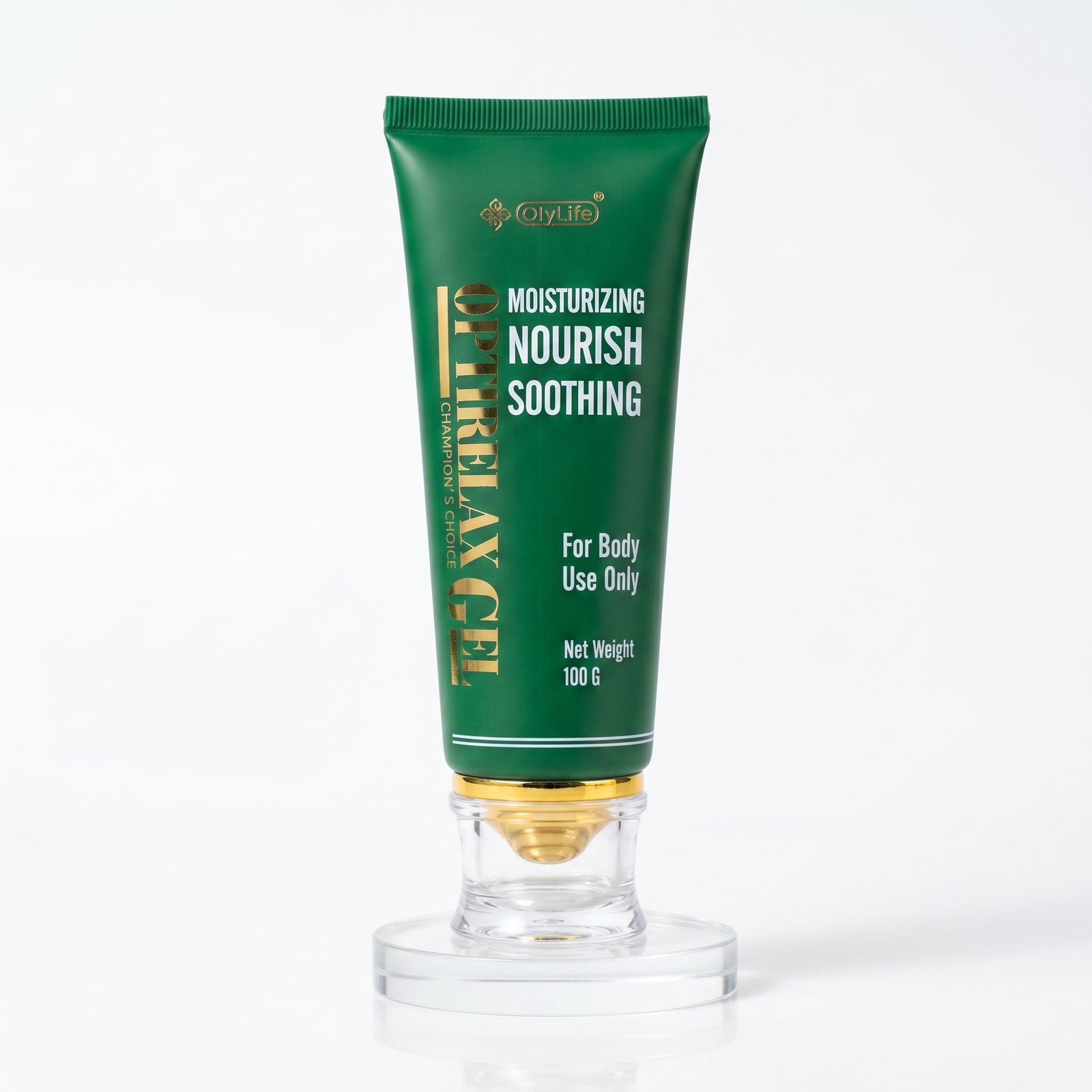
Support Your Body Inside and Out
Pair your anti-inflammatory meals with the OlyLife OptiRelax Gel — a soothing topical companion designed to complement your whole-body wellness routine.
🎁 Get a Free Wellness Gift
Enter your name and email below to receive a special wellness gift from OlyLife — absolutely free!
Anti-Inflammatory Snacks and Smoothies
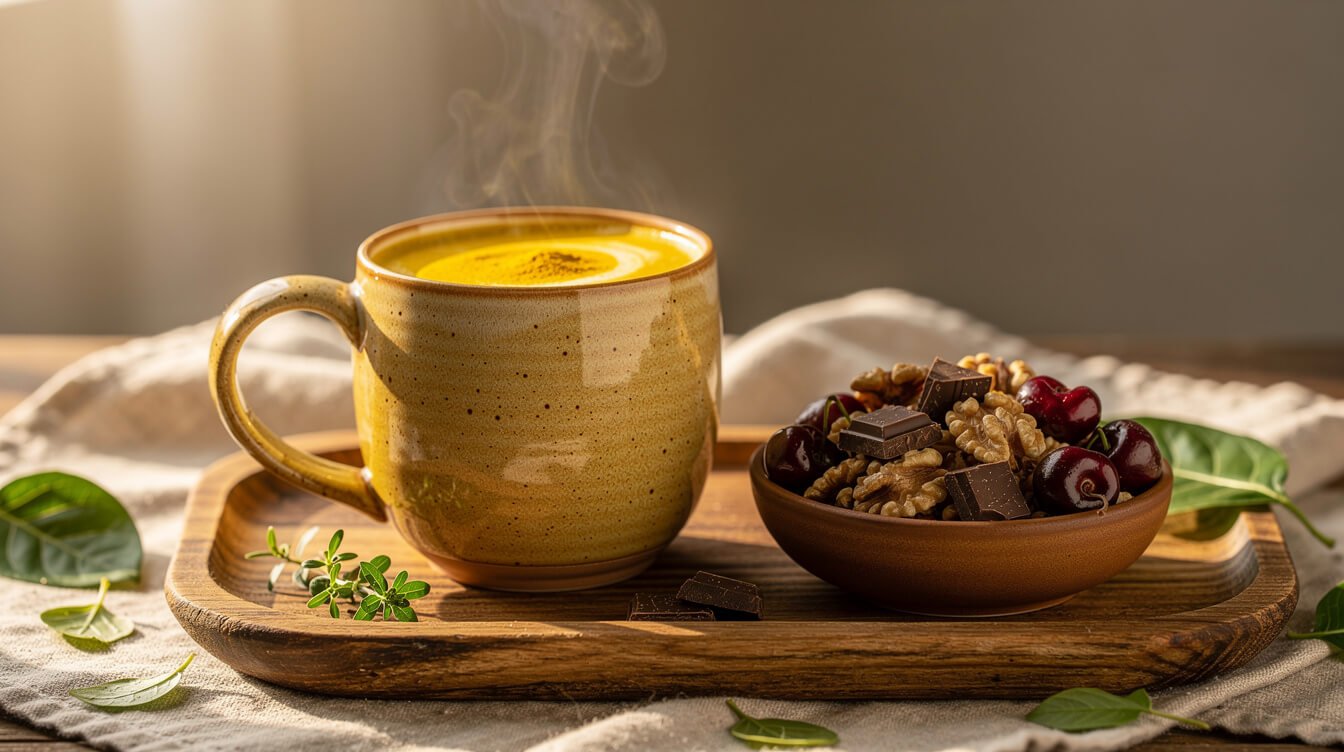
What you eat between meals matters just as much as the meals themselves. These anti-inflammatory snacks and smoothies help you avoid the processed, sugar-laden options that may contribute to inflammation.
Golden Milk (Turmeric Latte)
This traditional Ayurvedic drink has gained popularity for good reason — it’s warming, comforting, and packed with potential anti-inflammatory compounds.
- 1 cup unsweetened oat milk or coconut milk
- 1 teaspoon ground turmeric (or 1 tablespoon fresh, grated)
- 1/2 teaspoon ground cinnamon
- 1/4 teaspoon ground ginger
- Pinch of black pepper
- 1 teaspoon raw honey or maple syrup
- Optional: pinch of cardamom
Heat milk in a small saucepan over medium heat. Whisk in turmeric, cinnamon, ginger, and pepper. Heat until warm but not boiling. Stir in honey and pour into your favorite mug. This soothing drink combines multiple traditionally used anti-inflammatory spices in one comforting ritual. For a comprehensive look at turmeric’s wellness potential, explore our complete guide to turmeric benefits.
Anti-Inflammatory Trail Mix
Keep this mix in your desk drawer or bag for a quick, nutrient-dense snack that may support your body’s balance.
- 1/2 cup raw walnuts
- 1/4 cup raw almonds
- 1/4 cup pumpkin seeds
- 1/4 cup dried tart cherries (no added sugar)
- 2 tablespoons dark chocolate chips (70% cacao or higher)
- 1 tablespoon ground turmeric (toss with nuts before roasting at 150 degrees C for 10 minutes)
Tart cherries contain anthocyanins that research has linked to reduced markers of inflammation after exercise. The dark chocolate provides flavanols — another class of polyphenols that may support cardiovascular health. Together with the omega-3-rich walnuts, this trail mix is a powerhouse of anti-inflammatory compounds.
Ginger-Berry Recovery Smoothie
Perfect after a workout or whenever you need a refreshing anti-inflammatory boost.
- 1 cup frozen blueberries
- 1/2 cup frozen pineapple chunks
- 1 tablespoon fresh ginger, peeled and grated
- 1 tablespoon ground flaxseed
- 1 scoop plant-based protein powder (optional)
- 1 cup coconut water
- Handful of fresh mint leaves
Blend all ingredients until smooth. The pineapple provides bromelain, an enzyme traditionally used to support digestion and comfort. The blueberries deliver one of the highest antioxidant concentrations of any common fruit, while the ginger adds its well-studied gingerol compounds. This smoothie pairs beautifully with a holistic wellness routine that includes movement and mindfulness.
Building Your Anti-Inflammatory Kitchen: Essential Pantry Staples
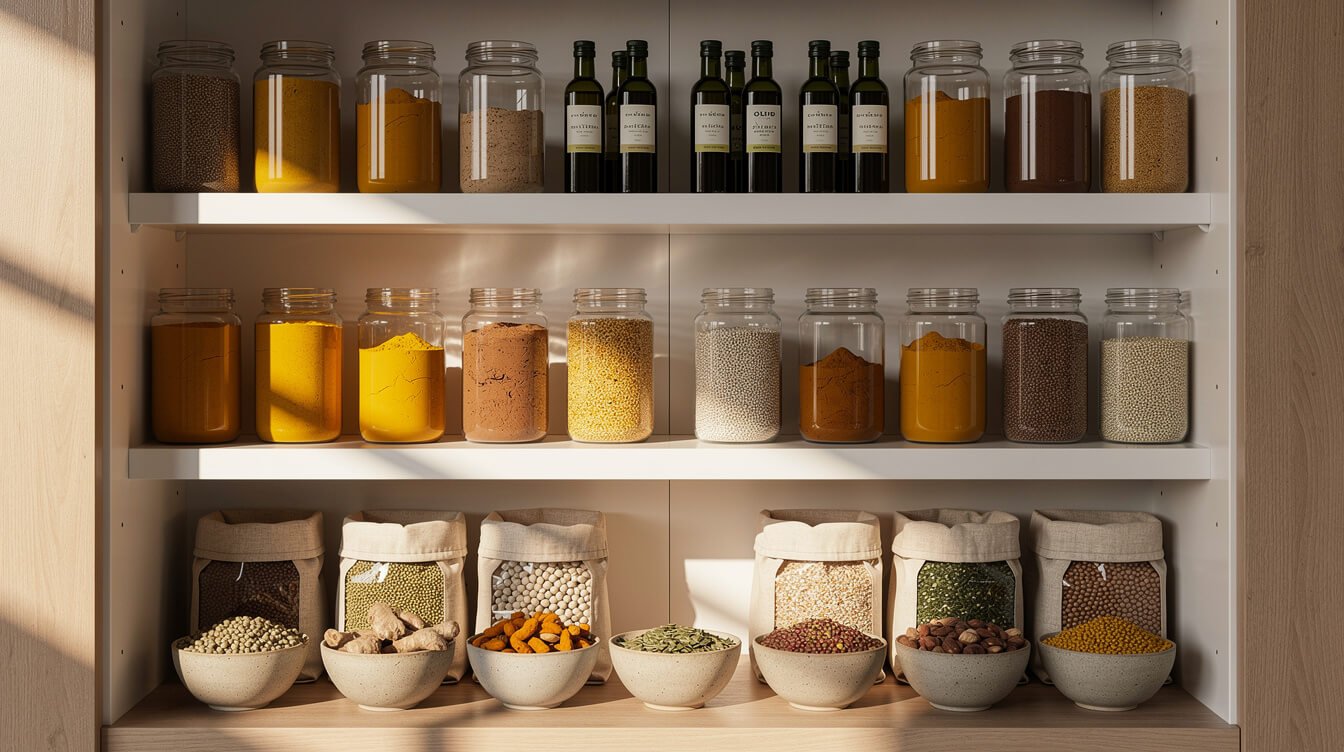
Having the right ingredients on hand makes anti-inflammatory cooking effortless. Stock your kitchen with these staples and you’ll always be ready to create nourishing meals.
The Anti-Inflammatory Spice Rack
These spices do double duty — they add incredible flavor while providing compounds that research associates with reduced inflammatory markers:
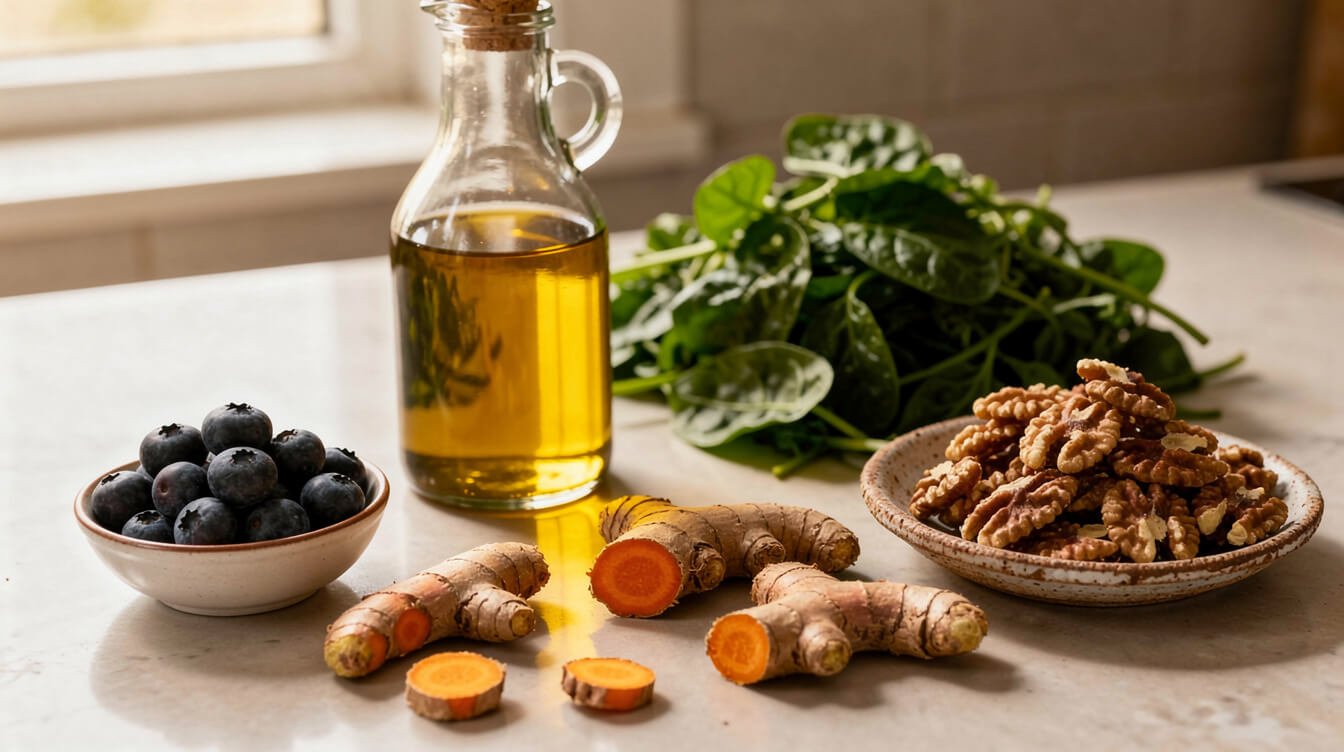
- Turmeric — the golden powerhouse, rich in curcumin
- Ginger — warming and traditionally used for digestive comfort
- Cinnamon — Ceylon variety preferred, may support healthy blood sugar balance
- Black pepper — contains piperine, which may enhance absorption of other beneficial compounds
- Rosemary — contains carnosic acid, a polyphenol with potential antioxidant benefits
- Oregano — one of the highest-antioxidant herbs, with compounds like rosmarinic acid
Fridge and Freezer Essentials
- Wild-caught salmon (fresh or frozen) — the most concentrated food source of EPA and DHA omega-3s
- Leafy greens — spinach, kale, Swiss chard, arugula
- Frozen berries — blueberries, strawberries, raspberries (frozen at peak ripeness retains maximum antioxidants)
- Fresh ginger and turmeric root — more potent than dried versions
- Avocados — rich in oleic acid and glutathione, a master antioxidant
- Extra-virgin olive oil — look for cold-pressed, single-origin for highest polyphenol content
Pantry Power Players
- Nuts and seeds — walnuts, almonds, chia seeds, flaxseeds, hemp hearts
- Legumes — lentils, chickpeas, black beans (excellent sources of fiber and plant protein)
- Whole grains — quinoa, brown rice, oats, farro
- Canned wild salmon and sardines — convenient omega-3 sources
- Raw honey and maple syrup — natural sweeteners with trace minerals (used sparingly)
- Apple cider vinegar — traditionally used for digestive support, excellent in dressings
When building your anti-inflammatory pantry, prioritize quality over quantity. Choose organic produce when possible (especially the “Dirty Dozen” high-pesticide items), opt for wild-caught over farmed fish, and select extra-virgin olive oil in dark bottles to protect those precious polyphenols from light degradation.
Frequently Asked Questions About Anti-Inflammatory Foods Recipes
How quickly can anti-inflammatory foods make a difference?
While individual results vary significantly, many people report noticing subtle improvements in energy and digestion within 2-4 weeks of consistently eating anti-inflammatory meals. Research on the Mediterranean diet — which shares many ingredients with these recipes — suggests that measurable changes in inflammatory markers may appear within 6-12 weeks. The key word is consistency. One anti-inflammatory meal won’t undo years of dietary patterns, but building these recipes into your regular rotation may support gradual, sustainable improvements in how you feel.
Can I follow anti-inflammatory recipes if I have food allergies?
Absolutely. Anti-inflammatory eating is inherently flexible because it’s based on principles rather than rigid rules. If you’re allergic to tree nuts, swap walnuts for pumpkin seeds or sunflower seeds. If you avoid dairy, most of these recipes are naturally dairy-free or easily adapted. If you’re sensitive to nightshades (tomatoes, peppers), simply substitute with beets, carrots, or squash. The core principle remains the same: prioritize whole, colorful, minimally processed foods rich in omega-3s, antioxidants, and fiber.
Are anti-inflammatory recipes expensive to make?
They don’t have to be. While wild-caught salmon and organic berries can be pricier, many anti-inflammatory staples are budget-friendly — lentils, chickpeas, frozen berries, oats, olive oil, turmeric, and seasonal vegetables. Buying frozen fruit (picked and frozen at peak ripeness) is often cheaper than fresh and retains comparable nutrient levels. Batch cooking soups and grain bowls also stretches ingredients further.
What foods should I avoid on an anti-inflammatory diet?
While these recipes focus on what to eat more of, research suggests that certain foods may promote inflammatory responses when consumed in excess: highly processed foods with refined seed oils, added sugars (especially high-fructose corn syrup), refined carbohydrates (white bread, pastries), excessive alcohol, and processed meats. The goal isn’t perfection — it’s gradual shifts toward more whole, plant-rich foods and fewer ultra-processed options.
Can children eat anti-inflammatory foods recipes?
Yes — in fact, most of these recipes are naturally family-friendly. Golden turmeric overnight oats, berry smoothie bowls, herb-crusted salmon, and trail mix are foods most children enjoy. You may want to adjust spice levels for younger palates and introduce new flavors gradually. Teaching children to enjoy colorful, whole foods early may set the foundation for a lifetime of healthier eating habits.
How does anti-inflammatory eating connect to overall holistic wellness?
Nutrition is one pillar of a comprehensive wellness approach. Research increasingly shows that inflammation doesn’t exist in isolation — it’s influenced by sleep quality, stress levels, movement, hydration, and even your connection to nature. Many people find that combining anti-inflammatory eating with other natural wellness practices — like adaptogenic herbs for stress support, regular movement, and mindfulness — creates a synergistic effect. Our guide to holistic wellness explores how these pillars work together.
Your Anti-Inflammatory Kitchen: Where Wellness Meets Flavor
The most powerful thing about anti-inflammatory foods recipes is their simplicity. You don’t need exotic superfoods or complicated techniques — just fresh, whole ingredients prepared with care. The golden turmeric overnight oats you prep tonight, the vibrant Mediterranean bowl you pack for lunch tomorrow, the herb-crusted salmon you share with your family this weekend — each meal is a quiet act of wellness.
Start where you are. Pick one or two recipes from this guide that genuinely appeal to you and make them this week. Notice how you feel. Over time, as these anti-inflammatory ingredients become second nature in your kitchen, you may find that eating well stops feeling like a diet and starts feeling like something you genuinely enjoy.
Your body does remarkable work every single day to keep you healthy. These recipes are simply a way of working with it — giving it the nourishment it needs to do what it does best. And that’s a delicious place to start.