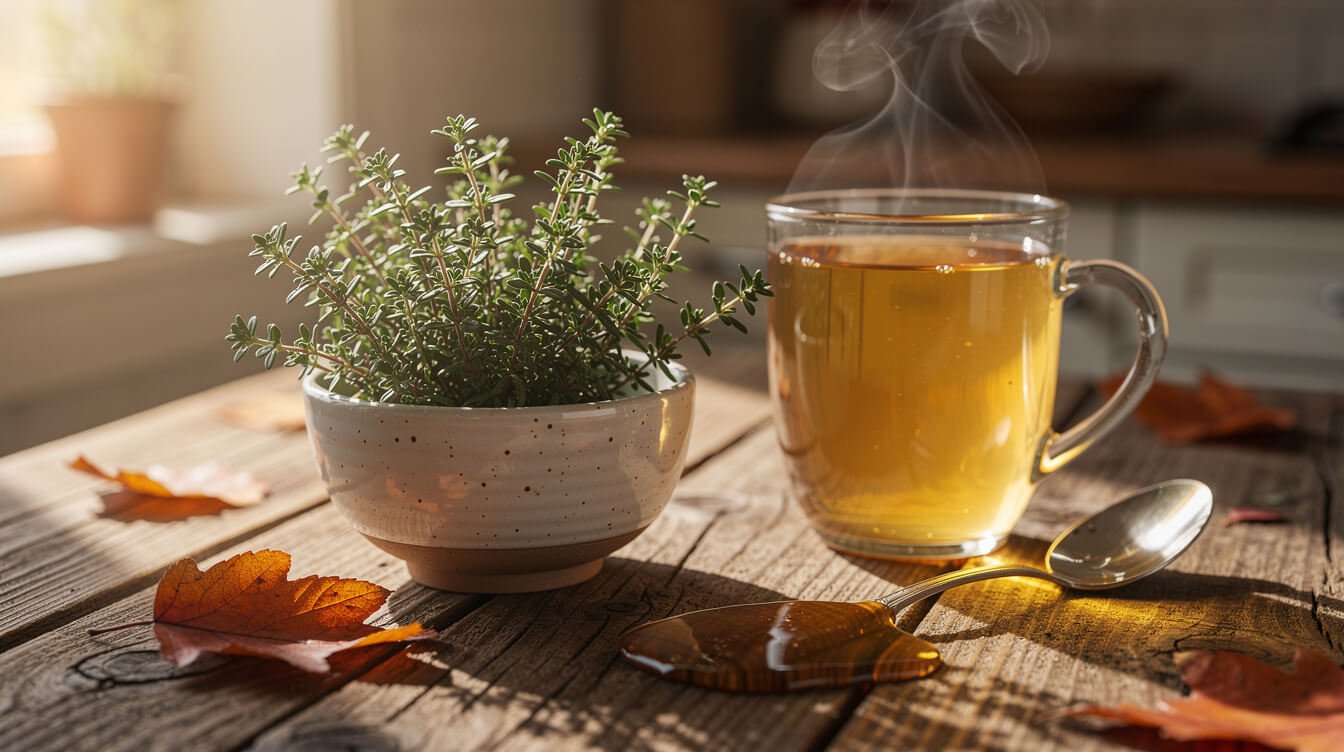
Thursday Herbal Spotlight: Thyme — The Humble Kitchen Herb Traditionally Used for Autumn Throat Comfort
Few herbs are as easy to overlook as thyme. It sits quietly in the spice rack, waiting for a roast or a pot of soup. But this tiny-leaved Mediterranean herb has a long story in traditional wellness. As the autumn air turns crisp and dry, it’s a lovely one to get to know better. 🌿
A Little History
Thyme (Thymus vulgaris) is part of the mint family, alongside rosemary, oregano, and lavender. The ancient Greeks burned it as incense, and according to medieval tradition, sprigs were given to knights as a symbol of courage. For centuries, European folk healers reached for thyme during the colder months, most often in teas and steams for the throat and chest.
What Research Suggests
Much of thyme’s character comes from thymol, an aromatic compound so well regarded that it’s still an active ingredient in some popular mouthwashes today. Lab studies suggest thymol has antimicrobial properties, though a test tube is very different from the human body.
Thyme has the strongest traditional standing as a gentle throat-and-chest herb. Germany’s Commission E recognized thyme for symptoms of bronchitis and coughs. The European Medicines Agency also lists it as a traditional herbal remedy that may help loosen a cough linked to the common cold. A 2006 clinical trial found that a syrup combining thyme and ivy leaf may have helped reduce coughing fits in adults with acute bronchitis. It’s encouraging, but it’s one study, and it tested a standardized extract, not a cup of tea.
🎁 Get a Free Wellness Gift
Enter your name and email below to receive a special wellness gift from OlyLife — absolutely free!
3 Simple Ways to Enjoy Thyme This Week
- A cozy thyme tea: Steep a few fresh sprigs (or about 1 teaspoon dried) in a cup of hot water for 5–10 minutes, covered to keep the aromatic oils in. Add a squeeze of lemon and a spoonful of honey.
- A warming steam: Pour hot water over a handful of thyme in a wide bowl and breathe in the fragrant steam for a few minutes. Keep a comfortable distance from the hot water. This pairs nicely with the indoor humidity tips we shared this week.
- Generous cooking: Toss thyme into roasted root vegetables, bean stews, or homemade broth. It’s an easy way to bring more plants into your autumn meals.
Thyme is a natural companion to last week’s spotlight, rosemary. Explore more gentle plant allies in our complete guide to herbal remedies.
A Gentle Note
Thyme in food and tea is generally considered safe for most people. Concentrated supplements and essential oils are much stronger. Never swallow thyme essential oil, and always dilute it before using it on skin. Talk with your healthcare provider before using thyme in larger amounts if you’re pregnant, nursing, take medications, or are sensitive to plants in the mint family. A cough that lasts more than a few weeks, or comes with fever or trouble breathing, deserves a visit to your doctor. And as our cold-weather myth-buster reminds us, rest and good habits matter most.
This post is for educational purposes only and is not medical advice. Thyme is not a treatment or cure for any condition.
Here’s to small, fragrant rituals that make autumn feel a little warmer. ✨