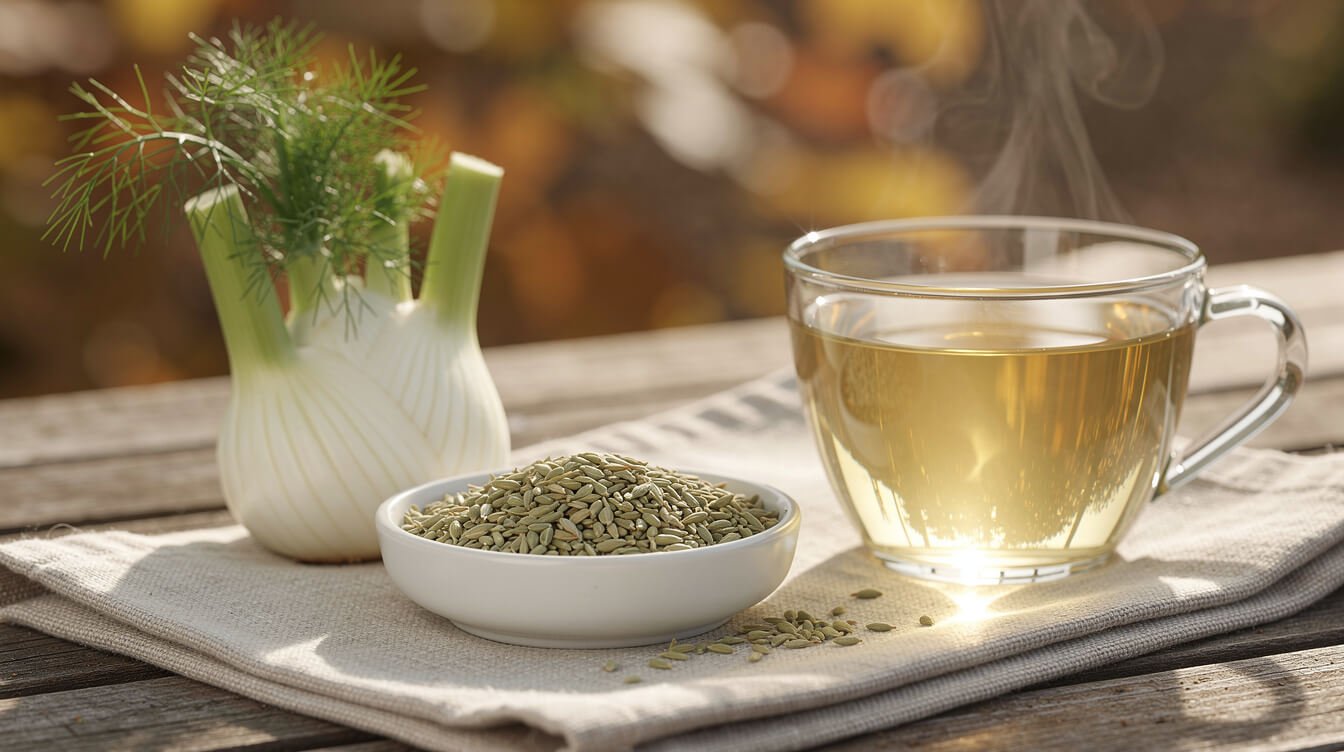
Thursday Herbal Spotlight: Fennel — The After-Dinner Seed for Your Thanksgiving Table
Happy Thanksgiving! 🌿 If today ends with a long, generous meal, there’s a small tradition from across the world worth borrowing for afterward. In many Indian homes and restaurants, a little bowl of fennel seeds arrives with the check. People take a pinch and chew it slowly. Today’s spotlight is that humble after-dinner seed: fennel (Foeniculum vulgare).
A Little Background
Fennel belongs to the carrot family and is native to the Mediterranean. Every part of the plant gets used: the crisp white bulb, the feathery fronds, and the small, ridged seeds (technically the dried fruit). Its sweet, licorice-like flavor comes mostly from a natural compound called anethole. Fun fact: the ancient Greek word for fennel was marathon, and the famous battlefield is thought to have been named for the fennel growing there.
Fennel has a long history as an after-meal herb. In India, roasted seeds called saunf are offered after meals, sometimes candy-coated as mukhwas. Here in Indonesia, fennel is known as adas and appears in traditional jamu blends. In Europe, fennel tea has been a household staple for generations.
What Research Suggests
Europe’s herbal medicines committee (part of the European Medicines Agency) recognizes sweet fennel fruit as a traditional herbal medicine for the relief of mild, cramping digestive discomfort, including bloating and wind. That listing is based on long-standing use, not on strong clinical trial evidence.
The clinical research is still small. In one 2016 randomized, placebo-controlled trial, 121 adults with mild-to-moderate irritable bowel syndrome (IBS) took capsules containing fennel essential oil combined with curcumin for 30 days. The capsule group reported a greater reduction in symptoms and better quality-of-life scores than the placebo group.
Some honest context:
- The capsules combined two ingredients, so we can’t say how much came from fennel alone.
- Participants had diagnosed IBS, used concentrated capsules rather than seeds or tea, and were followed for just one month. The study was also funded by the product’s manufacturer.
- A cup of fennel tea after dinner is a pleasant ritual, not a treatment. If you have ongoing digestive symptoms, talk to your healthcare provider.
3 Simple Ways to Enjoy Fennel After a Big Meal
- A post-dinner pinch: Chew about half a teaspoon of fennel seeds slowly after the meal, the way it’s done in India. Lightly toasting them in a dry pan for a minute brings out the sweetness. It may also leave your breath feeling fresh.
- Fennel seed tea: Lightly crush 1 teaspoon of seeds and pour a cup of just-boiled water over them. Cover the cup and let it steep for about 10 minutes, then strain. Covering it keeps the aromatic oils in your cup. Add a slice of fresh ginger or a cardamom pod for a warming twist.
- Leftover-friendly bulb: Shave raw fennel bulb thinly with apple and a squeeze of lemon. It makes a crisp, bright salad next to tomorrow’s leftovers. Save the fronds to use like fresh dill.
Shopping tip: Look for seeds that are green-tinged and fragrant, not dull gray. Store them whole in an airtight jar away from heat and light, and crush them just before using.
🎁 Get a Free Wellness Gift
Enter your name and email below to receive a special wellness gift from OlyLife — absolutely free!
A Few Gentle Cautions
- Culinary amounts are generally well tolerated by most adults. Concentrated extracts and essential oils are much stronger. Never swallow fennel essential oil.
- Europe’s herbal medicines committee does not recommend fennel medicinal preparations for children under 4 or during pregnancy or breastfeeding, as a general precaution. Ask your doctor or pediatrician first.
- If you are allergic to celery, carrot, or mugwort pollen, you may also react to fennel. Stop using it if you notice any signs of an allergic reaction.
- If you have a hormone-sensitive condition or take prescription medications, check with your healthcare provider before using fennel in supplement form.
Want to make the most of your holiday table? Pair fennel with our guide to herbal teas for digestion, rethink the post-feast slump with our food coma myth-busting, or try the slow meal today. Last week’s spotlight, cardamom, makes a lovely partner in a cup of fennel tea. From all of us at OlyLife, we’re grateful you’re here. ✨
This content is for general educational purposes only and is not medical advice. Please consult a qualified healthcare provider before making changes to your diet or supplement routine.
Sources
- European Medicines Agency, Committee on Herbal Medicinal Products. Foeniculi dulcis fructus (sweet fennel fruit): herbal medicine summary and EU herbal monograph.
- Portincasa P, Bonfrate L, Scribano ML, et al. Curcumin and fennel essential oil improve symptoms and quality of life in patients with irritable bowel syndrome. Journal of Gastrointestinal and Liver Diseases. 2016;25(2):151–157. doi:10.15403/jgld.2014.1121.252.ccm