FAQ Friday: 5 Common Questions About Omega-3s, Answered (Plus Easy Autumn Sources)
Happy FAQ Friday! This week we’re answering the questions we hear most about omega-3s: what they are, where to find them, and whether you really need a supplement. As the days get cooler and cozier, it’s a lovely time to add a few omega-3-rich meals to your week. 🌿
1. What are omega-3s, exactly?
Omega-3s are a family of fats your body needs but can’t make on its own, so they have to come from food. There are three main types:
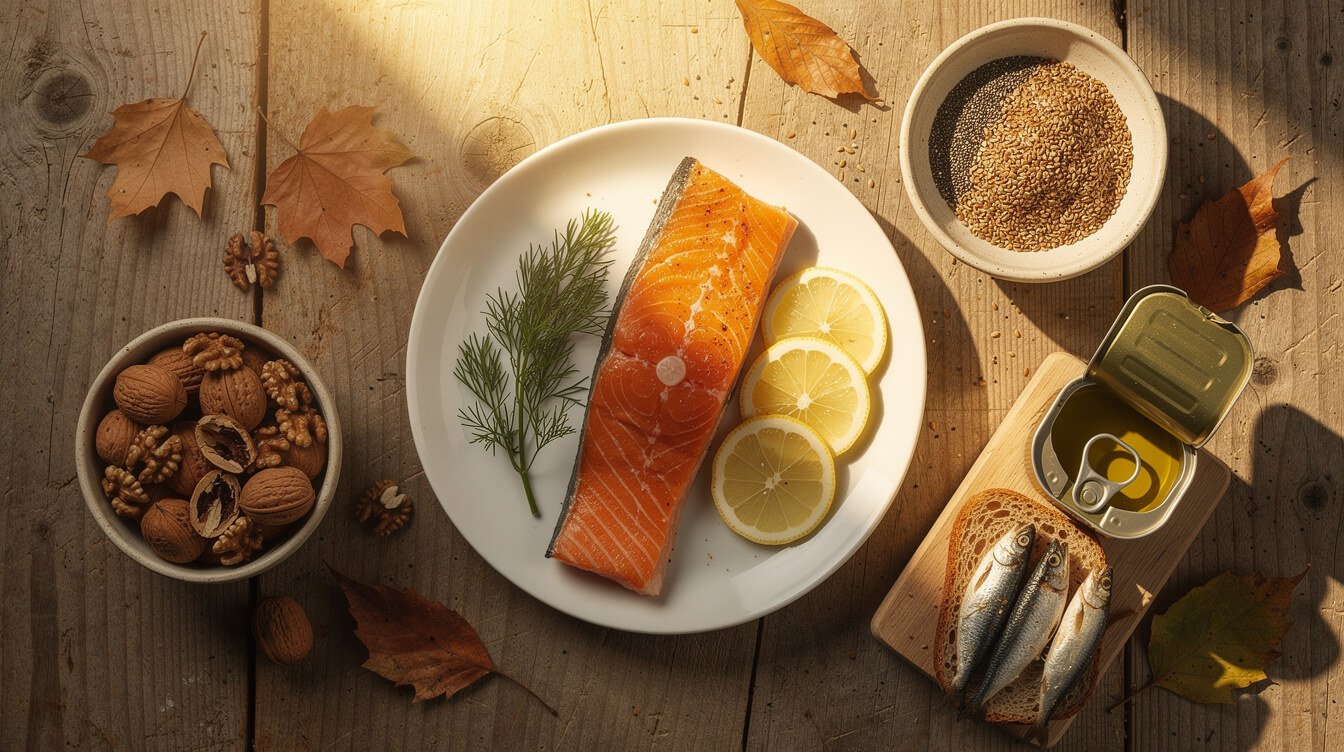
- ALA (alpha-linolenic acid) is found in plant foods like flaxseed, chia seeds, hemp seeds, and walnuts.
- EPA and DHA are found mainly in fatty fish and seafood, and in algae.
Omega-3s are part of the membranes around every cell in your body. DHA is especially concentrated in the brain and the retina of the eye, which is one reason researchers are so interested in it.
2. Can I get enough from plant foods alone?
Plant foods are a great source of ALA. The general guideline from the NIH is about 1.6 grams of ALA a day for men and 1.1 grams for women. One tablespoon of ground flaxseed provides about 1.6 grams on its own.
The catch is that your body converts only a small fraction of ALA into EPA and DHA. If you eat a fully plant-based diet, an algae-based omega-3 is worth asking your healthcare provider about. It’s where fish get their EPA and DHA in the first place.
3. How much fish should I aim for?
The Dietary Guidelines for Americans suggest about 8 ounces of seafood a week for most adults, which is roughly two servings. Research suggests that people who eat fish regularly tend to have better heart health, though diet studies like these show associations rather than proof.
To keep mercury low, choose options the FDA lists as “best choices,” such as salmon, sardines, anchovies, herring, trout, and Atlantic mackerel. Canned sardines and salmon are affordable, shelf-stable, and count just as much as fresh.
🎁 Get a Free Wellness Gift
Enter your name and email below to receive a special wellness gift from OlyLife — absolutely free!
4. Do I need a fish oil supplement?
For many people, food is the best place to start. Large trials of omega-3 supplements in healthy adults have found mixed results, and a capsule doesn’t come with the protein, vitamin D, and selenium that a piece of fish does.
That said, supplements may make sense for some people, such as those who don’t eat fish. If you’re considering one, it’s best to talk with your doctor first, especially if you:
- take blood thinners or have a surgery coming up, since higher doses may affect bleeding
- have a heart condition, since some studies link higher-dose supplements to a higher risk of an irregular heart rhythm
- are pregnant or nursing, or have a fish or shellfish allergy
If you do take one, taking it with a meal may help with fishy aftertaste. Keep the bottle somewhere cool, and toss it if it smells strongly fishy, since that’s a sign the oil has gone rancid.
5. What are easy ways to eat more omega-3s this autumn?
- Sheet-pan salmon with roasted squash and Brussels sprouts, all on one tray
- Sardines on toast with lemon, black pepper, and a few herbs for a 5-minute lunch
- Ground flax or chia stirred into your morning oatmeal (ground flax is easier for your body to absorb than whole seeds)
- A handful of walnuts on salads, roasted pears, or straight from the bowl
Need more breakfast inspiration? Our anti-inflammatory breakfast guide has plenty of omega-3-friendly ideas. For a full week-by-week plan, see our 21-day anti-inflammatory diet. Omega-3s also come up in our look at natural relief for joint pain.
The Takeaway
Try for two servings of fatty fish a week, or add a daily spoonful of ground flax or chia, plus a handful of walnuts. Small, steady habits like these add up. Pair them with plenty of fiber (catch up on last week’s FAQ Friday on fiber) and you’ve got a nourishing foundation for the season. ✨
Which omega-3 food is your favorite? We’d love to hear how you work it into your week.
This post is for general educational purposes and isn’t medical advice. Please talk with your healthcare provider before starting any supplement, especially if you take medication, are pregnant or nursing, or have a health condition.