The meditation benefits that science continues to uncover may surprise you — from measurably thicker brain tissue to lower blood pressure and sharper focus, this ancient practice offers something for nearly every aspect of your wellbeing. Yet despite thousands of years of tradition and decades of modern research, meditation remains one of the most misunderstood wellness practices today.
Whether you’re a complete beginner curious about starting a daily practice or someone looking to deepen your understanding of how meditation works at the neurological level, this guide covers everything you need to know. We’ll explore the rich cultural origins of meditation, break down the science behind its remarkable benefits, compare different meditation styles, and give you a practical roadmap to get started — all in one comprehensive resource.
What Is Meditation? Ancient Roots of a Modern Wellness Practice

Meditation is a mind-body practice that trains your attention, awareness, and emotional regulation through focused mental techniques. But to truly appreciate its power, it helps to understand where this practice came from — and how profoundly it has shaped human wellbeing across cultures for millennia.
Buddhist Vipassana and Mindfulness Traditions
The earliest written records of meditation date back roughly 2,500 years to Buddhist texts describing vipassana — a practice of “insight meditation” that involves observing thoughts, sensations, and emotions without attachment. This tradition forms the foundation of what we now call mindfulness-based practices, which have become the most widely studied form of meditation in Western science.
Hindu Dhyana and Vedic Meditation
Even older references appear in the Hindu Vedas, where dhyana (the Sanskrit root of “meditation”) describes the practice of sustained, focused contemplation. The Upanishads, composed around 800–500 BCE, outline meditation as a path to self-knowledge and inner peace. Transcendental Meditation (TM), popularized in the West by Maharishi Mahesh Yogi in the 1960s, draws directly from this Vedic lineage.
Taoist, Sufi, and Contemplative Christian Traditions
Meditation is not exclusive to Eastern traditions. Taoist meditation practices — including zuowang (“sitting and forgetting”) — date back to at least the fourth century BCE in China. Sufi Muslims developed muraqaba, a contemplative practice of heart-centered awareness. And Christian contemplative traditions, from the Desert Fathers’ hesychasm to the medieval Lectio Divina, all share meditation’s core principle: quieting the mind to cultivate deeper awareness.
What’s remarkable is that these traditions — separated by thousands of miles and centuries — all converge on the same insight: regularly turning your attention inward may profoundly change how you experience the world. Modern neuroscience is now confirming what these traditions intuited all along.
The Science Behind Meditation Benefits: How Your Brain Actually Changes

One of the most exciting developments in meditation research is the discovery that regular practice doesn’t just feel good — it physically restructures your brain. Here’s what the science reveals about the mechanisms behind meditation benefits.
Neuroplasticity: Your Brain Reshapes Itself
A landmark 2005 study published in NeuroReport by Sara Lazar at Harvard Medical School found that experienced meditators had measurably thicker cortical tissue in brain regions associated with attention, sensory processing, and interoception (body awareness). Even more striking, a follow-up study showed that just eight weeks of mindfulness meditation produced observable increases in gray matter density in the hippocampus — the brain’s memory and learning center (Hölzel et al., Psychiatry Research: Neuroimaging, 2011).
The Default Mode Network and Mental Chatter
Your brain has a “default mode network” (DMN) — a set of interconnected regions that activate when you’re mind-wandering, ruminating, or thinking about yourself. Overactivity in the DMN is associated with anxiety, depression, and chronic stress. Research from Yale University (Brewer et al., PNAS, 2011) found that experienced meditators show significantly reduced DMN activity — and critically, when the DMN does activate, meditators are better at noticing and disengaging from the rumination loop.
Amygdala Downregulation and Stress Response
The amygdala — your brain’s threat-detection center — tends to be overactive in people dealing with chronic stress or anxiety. Research published in Social Cognitive and Affective Neuroscience (2013) demonstrated that after eight weeks of mindfulness-based stress reduction (MBSR), participants showed measurably reduced amygdala reactivity to emotional stimuli. Essentially, meditation may help your brain respond to stressors with proportional calm rather than disproportionate alarm.
The Cortisol-HPA Axis Connection
When your amygdala fires a stress response, it triggers the hypothalamic-pituitary-adrenal (HPA) axis, flooding your body with cortisol. Chronically elevated cortisol is linked to inflammation, impaired immune function, weight gain, and disrupted sleep. A 2013 meta-analysis in Health Psychology Review found that meditation practices consistently reduced cortisol levels, suggesting a direct biological pathway from regular practice to reduced physiological stress.
10 Evidence-Based Meditation Benefits for Mind and Body
The meditation benefits that researchers have documented span mental health, physical wellbeing, cognitive performance, and emotional resilience. Here are 10 of the most well-supported benefits, each backed by peer-reviewed research.
1. May Significantly Reduce Stress and Anxiety
A 2014 meta-analysis published in JAMA Internal Medicine — one of the most rigorous reviews ever conducted — analyzed 47 clinical trials with 3,515 participants and found that mindfulness meditation programs showed moderate evidence of improving anxiety and stress. This effect size was comparable to what studies typically find for antidepressant medications, making meditation one of the most evidence-supported natural stress management tools available.
2. May Support Emotional Wellbeing and Mood
The same JAMA meta-analysis found moderate evidence that meditation improves depression symptoms. Mindfulness-Based Cognitive Therapy (MBCT) has been shown to reduce relapse rates in people with recurrent depression by up to 44% — so effective that the UK’s National Institute for Health and Care Excellence (NICE) recommends it as a frontline treatment.
3. May Enhance Focus and Attention Span
A study published in Psychological Science (2010) found that even brief meditation training — just four days of 20-minute sessions — significantly improved visuospatial processing, working memory capacity, and executive functioning. Longer-term practitioners show even more pronounced improvements in sustained attention, with some research suggesting meditation may counteract the age-related decline in attention span.
4. May Improve Sleep Quality
Research published in JAMA Internal Medicine (2015) compared mindfulness meditation to sleep hygiene education in older adults with moderate sleep disturbances. The meditation group showed significantly greater improvements in sleep quality, insomnia severity, and daytime fatigue. If you struggle with restless nights, combining meditation with natural sleep strategies may offer meaningful relief.
5. May Lower Blood Pressure
The American Heart Association reviewed the evidence on meditation and cardiovascular health in a 2017 scientific statement and concluded that meditation may provide a modest but meaningful reduction in blood pressure. Transcendental Meditation (TM) in particular has shown consistent results across multiple randomized controlled trials, with some studies reporting systolic blood pressure reductions of 4–5 mmHg.
6. May Reduce Chronic Pain Perception
A fascinating study by Zeidan et al. (2011) in the Journal of Neuroscience found that just four days of mindfulness meditation training reduced pain intensity ratings by 40% and pain unpleasantness by 57%. Brain scans revealed that meditation activated regions associated with cognitive control and reappraisal — suggesting that meditation doesn’t block pain signals but changes how the brain processes and interprets them.
7. May Strengthen Your Immune System
Research published in Psychosomatic Medicine (Davidson et al., 2003) found that participants who completed an eight-week mindfulness meditation program showed significantly greater antibody production in response to an influenza vaccine compared to non-meditators. While more research is needed, these findings suggest that regular meditation may support your body’s natural immune function.
8. May Cultivate Compassion and Social Connection
Loving-kindness meditation (metta) — a practice of directing warm wishes toward yourself and others — has been shown to increase positive emotions, reduce social isolation, and even improve vagal tone (a marker of your body’s ability to manage stress). A study in Psychological Science (Fredrickson et al., 2008) found that just seven weeks of loving-kindness practice produced lasting increases in daily positive emotions and overall life satisfaction.
9. May Support Healthy Aging and Memory
Research from UCLA (Luders et al., 2015) found that long-term meditators had better-preserved gray matter volume throughout the brain as they aged compared to non-meditators. This suggests that meditation may offer a form of neuroprotection — potentially supporting cognitive function and memory well into later years.
10. May Help With Addiction and Habit Change
Mindfulness-based relapse prevention (MBRP) has shown promising results in helping people manage cravings and reduce substance use. A study in JAMA Psychiatry (2014) found that MBRP was as effective as cognitive-behavioral relapse prevention and significantly more effective than standard treatment programs at reducing substance use over a 12-month follow-up period.
Types of Meditation: Finding the Practice That Fits Your Life
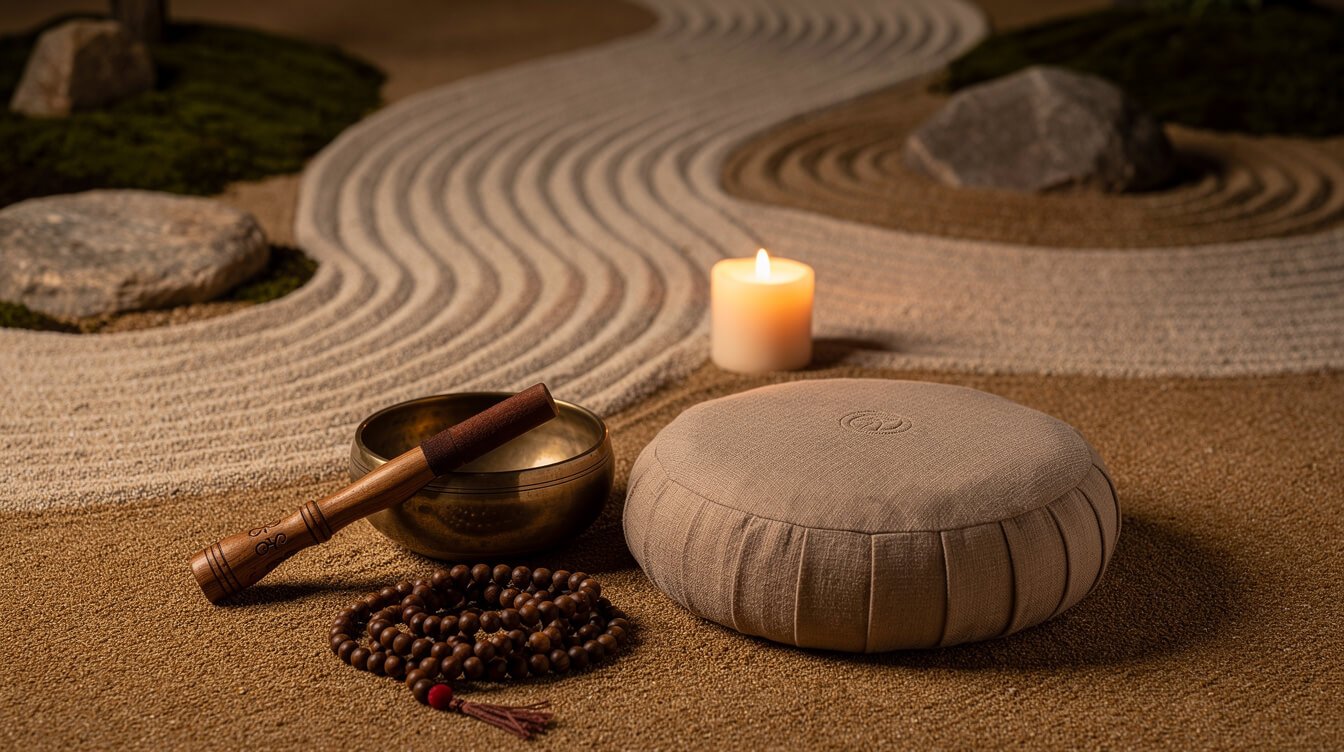
One of the most common reasons people give up on meditation is choosing a style that doesn’t resonate with them. The truth is, there’s no single “right” way to meditate — and understanding the different approaches can help you find a practice you’ll genuinely enjoy and stick with.
Mindfulness Meditation
Best for: Stress reduction, anxiety, beginners
The most researched form of meditation, mindfulness involves paying non-judgmental attention to your present-moment experience — thoughts, sensations, emotions, and sounds. You don’t try to empty your mind; you simply observe what arises without getting caught up in it. MBSR (Mindfulness-Based Stress Reduction), developed by Jon Kabat-Zinn at the University of Massachusetts, is the gold-standard clinical program.
Transcendental Meditation (TM)
Best for: Deep relaxation, cardiovascular health, people who prefer structure
TM involves silently repeating a personalized mantra for 20 minutes twice daily. It’s one of the most studied meditation techniques, with strong evidence for blood pressure reduction and stress relief. TM is taught through certified instructors and follows a standardized protocol.
Loving-Kindness Meditation (Metta)
Best for: Emotional resilience, self-compassion, improving relationships
This practice involves systematically directing feelings of warmth and goodwill — first toward yourself, then toward loved ones, acquaintances, difficult people, and finally all living beings. Research suggests it may be particularly effective for people dealing with self-criticism, social anxiety, or relationship difficulties.
Body Scan Meditation
Best for: Physical tension, insomnia, body awareness
A body scan guides your attention systematically through different parts of your body, noticing sensations without trying to change them. This technique is especially effective for people who carry tension physically and pairs beautifully with practices like dry brushing or abhyanga self-massage as part of a comprehensive body-awareness routine.
Walking Meditation
Best for: People who struggle sitting still, nature lovers, active individuals
Walking meditation brings mindful awareness to the simple act of walking — feeling each foot make contact with the earth, noticing your balance and rhythm. This practice connects beautifully with grounding (earthing) and forest bathing (shinrin-yoku) for a deeply restorative outdoor experience.
Guided Visualization
Best for: Goal setting, relaxation, creative thinkers
Guided visualization involves creating detailed mental imagery — often a peaceful scene, a healing light, or a desired future state. This technique works well for people who find purely attention-based practices challenging, and it can complement sound healing sessions for an immersive sensory experience.
If you feel drawn to the relaxation aspect of meditation, consider exploring complementary technologies that may support your practice. The OlyLife Galaxy G-One Eye Device, for example, uses smart PEMF technology to gently massage the eye area — creating a calming sensory environment that some practitioners find helpful for deepening their relaxation before or after meditation sessions.
🎁 Get a Free Wellness Gift
Enter your name and email below to receive a special wellness gift from OlyLife — absolutely free!
How to Start Meditating: A Practical Beginner’s Guide

Starting a meditation practice doesn’t require special equipment, a dedicated meditation room, or years of training. Here’s a practical framework to help you begin — and more importantly, to help you build a sustainable daily habit.
Step 1: Choose Your Style
Based on the types described above, pick the approach that resonates most. If you’re unsure, start with basic mindfulness — it’s the most versatile and well-researched. You can always explore other styles as your practice deepens.
Step 2: Start Small — Really Small
Forget the 30-minute sessions you see online. Research suggests that even 5 minutes of daily meditation can produce measurable benefits. Start with just 2–3 minutes and gradually increase by a minute each week. Consistency matters far more than duration — a daily 5-minute practice is more beneficial than an occasional 30-minute session.
Step 3: Find Your Posture
You don’t need to sit cross-legged on the floor. Any comfortable, upright position works:
- Chair sitting: Feet flat on the floor, hands resting on thighs, spine tall but relaxed
- Floor cushion: Cross-legged or kneeling, hips elevated above knees on a cushion
- Lying down: On your back with arms at your sides (be aware you may fall asleep — which isn’t necessarily bad)
- Walking: Slow, deliberate steps in a quiet space
Step 4: Anchor Your Attention
Choose a focal point for your attention:
- Breath: Notice the sensation of air at your nostrils, the rise and fall of your chest, or the expansion of your belly
- Body: Scan from head to toe, noticing sensations
- Sound: Listen to ambient sounds without labeling them
- Mantra: Silently repeat a word or phrase (e.g., “peace,” “calm,” or a traditional Sanskrit mantra)
Step 5: Handle Wandering Thoughts With Kindness
Your mind will wander. This is not failure — it’s the entire point. Every time you notice your mind has drifted and gently return your attention to your anchor, you’re strengthening the neural circuits associated with attention and self-regulation. Think of it like a bicep curl for your brain: the “rep” is the return, not the hold.
Step 6: Build the Habit
The most effective strategy for maintaining a meditation practice is habit stacking — attaching meditation to an existing daily routine:
- Morning stack: Wake up → brush teeth → meditate 5 minutes → coffee
- Evening stack: Dinner → dishes → meditate 5 minutes → read before bed
- Breathwork stack: If you already practice breathwork, add 2–3 minutes of silent meditation afterward

Deepen Your Relaxation Practice
The OlyLife Galaxy G-One Smart PEMF Eye Massager uses gentle frequency-based technology to create a calming pre-meditation ritual — helping you transition from a busy day into a centered, peaceful mindset.
Common Meditation Myths — and What the Research Actually Says

Misconceptions about meditation keep many people from trying it — or cause them to quit prematurely. Let’s address the most persistent myths head-on.
Myth 1: “You Need to Empty Your Mind”
Reality: This is perhaps the biggest barrier to entry. Meditation is not about stopping thoughts — it’s about changing your relationship to them. Even experienced monks with decades of practice still have thoughts during meditation. The goal is to observe them without getting carried away, like watching clouds pass across a sky. If your mind is busy, that’s completely normal and doesn’t mean you’re “doing it wrong.”
Myth 2: “It Takes Years to See Benefits”
Reality: While deeper transformative effects may develop over years of practice, measurable benefits appear surprisingly quickly. The Zeidan et al. (2011) study found significant pain reduction after just four days of practice. Studies on MBSR consistently show improvements in anxiety, stress, and sleep after just eight weeks. Even a single meditation session can measurably reduce cortisol levels and improve mood.
Myth 3: “Meditation Is a Religious Practice”
Reality: While meditation has deep roots in spiritual traditions, the forms most commonly practiced and studied today — mindfulness meditation, body scan, and loving-kindness — are entirely secular. MBSR was specifically designed to be non-religious, and it’s used in hospitals, schools, corporate settings, and military training programs worldwide.
Myth 4: “You Need Complete Silence”
Reality: While a quiet environment can be helpful for beginners, meditation can be practiced anywhere — on a noisy commuter train, in a busy office, or in a park full of birdsong. In fact, learning to meditate with background noise can build a more robust practice, since ambient sounds become additional objects of awareness rather than distractions.
Myth 5: “Meditation Is Just Sitting Still and Doing Nothing”
Reality: Brain imaging studies show that meditation is one of the most neurologically active states the brain can be in. You’re actively training attention, emotional regulation, and self-awareness — all of which require genuine cognitive effort. Walking meditation, yoga, tai chi, and qi gong are also valid meditation practices that involve physical movement.
Complementary Wellness Practices That May Enhance Your Meditation

Meditation rarely exists in isolation — it’s often most powerful as part of a broader wellness ecosystem. Here are several complementary practices that may deepen and amplify the meditation benefits you experience.
Breathwork
Breathwork techniques — such as box breathing, alternate nostril breathing, and 4-7-8 breathing — naturally calm the nervous system and serve as a powerful on-ramp to meditation. Many practitioners find that 3–5 minutes of structured breathwork before sitting meditation helps them settle into stillness more quickly and deeply.
Sound Healing
Sound healing — including singing bowls, tuning forks, and binaural beats — provides an auditory anchor that can deepen meditative states. Research suggests that certain sound frequencies may entrain brainwaves into alpha and theta states, which are associated with deep relaxation and heightened creativity.
Grounding (Earthing)
Practicing grounding exercises alongside meditation — especially outdoor walking meditation with bare feet on natural surfaces — may help reduce cortisol, improve sleep, and enhance the calming effects of your practice. The combination of mindful awareness and direct earth contact creates a uniquely grounding experience.
Aromatherapy
Aromatherapy with essential oils like lavender, frankincense, and sandalwood has been traditionally used to support meditation for centuries. These scents may help activate the parasympathetic nervous system (your body’s “rest and digest” mode), creating an ideal physiological state for deep meditation.
Frequency-Based Wellness
Emerging research into frequency-based wellness approaches — including PEMF (Pulsed Electromagnetic Field) therapy — suggests that certain electromagnetic frequencies may support relaxation and recovery. Some practitioners incorporate frequency-based tools as part of their pre- or post-meditation wellness routine, finding that they complement the stress-reduction benefits of meditation.
Forest Bathing (Shinrin-Yoku)
The Japanese practice of shinrin-yoku (forest bathing) combines mindful awareness with immersion in natural environments. Research published in Environmental Health and Preventive Medicine found that forest bathing significantly reduces cortisol, blood pressure, and heart rate — making it a perfect companion to a meditation practice, especially for those who find indoor sitting meditation challenging.
Final Thoughts: Your Meditation Journey Starts With a Single Breath
The meditation benefits we’ve explored — from reduced stress and better sleep to measurable changes in brain structure and immune function — represent one of the most exciting frontiers in wellness science. What makes meditation truly remarkable isn’t any single benefit, but the way it touches virtually every aspect of your health and wellbeing through a practice that costs nothing and can be done anywhere.
Remember: there is no “perfect” meditation. The best practice is the one you’ll actually do. Start with just two or three minutes tomorrow morning. Choose a style that resonates with you. Be patient and gentle with yourself when your mind wanders. And know that every single moment you spend in mindful awareness — even the ones that feel scattered or unfocused — is building the neural pathways that may support your wellbeing for years to come.
Your body already knows how to breathe. Your mind already knows how to be aware. Meditation simply helps you tap into the wisdom that’s been there all along. 🌿