Sound Healing Benefits: Your Complete Guide to How Therapeutic Sound May Transform Your Wellness
Have you ever noticed how certain sounds instantly shift your mood — the gentle crash of ocean waves, the resonant hum of a bell, or the soft chime of wind through bamboo? Sound healing benefits go far beyond simple relaxation. This ancient therapeutic practice harnesses specific frequencies, vibrations, and resonant tones to support your body’s natural ability to restore balance, ease tension, and promote deep wellness.
Whether you’re new to the world of vibrational therapy or looking to deepen your existing practice, this complete guide explores everything you need to know about sound healing benefits — from the science behind why therapeutic sound works to practical ways you can bring this powerful practice into your daily life.
What Is Sound Healing and Why Does It Work?
Sound healing is a therapeutic practice that uses specific tones, frequencies, and vibrations to influence the body’s physical and emotional state. Far from a modern wellness trend, sound healing has roots stretching back thousands of years — from the sacred chanting traditions of ancient India to the resonant bronze bells of Tibetan monasteries and the didgeridoo ceremonies of Aboriginal Australians.
But what makes sound healing more than just listening to pleasant music? The answer lies in the science of vibration.
The Science of Resonance and Entrainment
Every cell in your body vibrates at its own natural frequency. When you’re healthy, these vibrations maintain a harmonious rhythm. Stress, illness, and emotional tension can disrupt this natural resonance — and that’s where sound healing steps in.
Sound healing works through two key scientific principles:
- Resonance: When an external sound frequency matches a natural frequency in your body, it amplifies and reinforces that vibration. Think of it like pushing a child on a swing — when you time your pushes to match the swing’s natural rhythm, the movement becomes effortless and powerful.
- Entrainment: Your brainwaves naturally synchronize with external rhythmic stimuli. When exposed to specific sound frequencies, your brain gradually shifts its own electrical patterns to match. This is why a slow, steady drumbeat can guide you from an alert, busy mental state into deep relaxation within minutes.
Research published in the Journal of Evidence-Based Integrative Medicine (2017) found that singing bowl meditation significantly reduced tension, anxiety, and depression while increasing spiritual well-being — with participants who had never tried sound meditation experiencing the most dramatic benefits.
How Sound Affects Your Nervous System
One of the most well-documented sound healing benefits is its ability to shift your nervous system from sympathetic (“fight or flight”) mode into parasympathetic (“rest and digest”) mode. When therapeutic sounds enter your ears and body, they can:
- Slow your heart rate and lower blood pressure
- Reduce cortisol (the primary stress hormone) levels
- Deepen and regulate breathing patterns
- Release muscular tension held throughout the body
- Shift brainwave patterns from fast beta waves (active thinking) to slower alpha and theta waves (relaxation and meditation)
If you’re interested in how different frequency-based therapies may support your nervous system, our guide to bioresonance therapy explores another fascinating dimension of vibrational wellness.
7 Science-Backed Sound Healing Benefits for Mind, Body, and Spirit
While research into sound healing is still evolving, a growing body of evidence suggests that therapeutic sound may offer remarkable benefits across your entire wellbeing. Here are seven sound healing benefits that science is beginning to confirm.
1. Deep Stress Relief and Relaxation
Perhaps the most immediate and widely reported sound healing benefit is profound relaxation. A 2020 study in the Journal of Evidence-Based Integrative Medicine found that participants in a 60-minute sound bath experienced significant reductions in tension, anger, fatigue, and overall mood disturbance.
The rich, sustained tones of singing bowls and gongs create a sonic environment that essentially gives your overactive mind permission to let go. Unlike guided meditation — where you need to concentrate on instructions — sound healing does the heavy lifting for you. The vibrations naturally coax your nervous system into a state of deep calm.
For those dealing with chronic stress, combining sound healing with adaptogenic herbs may create a particularly powerful foundation for resilience.
2. Improved Sleep Quality
If you struggle with restless nights, sound healing may offer a gentle path to better rest. The slow, rhythmic frequencies used in sound therapy help reset your body’s natural sleep rhythms by guiding your brainwaves from alert beta states down through relaxing alpha waves and into the theta and delta patterns associated with deep, restorative sleep.
A systematic review published in Health Psychology Review (2020) found that music-based interventions — including sound healing modalities — showed consistent improvements in both sleep onset (falling asleep faster) and sleep quality among adults with sleep difficulties.
Our comprehensive guide to natural sleep remedies offers additional evidence-based strategies you can combine with sound healing for your best night’s rest.
3. Reduced Anxiety and Emotional Balance
Sound healing may offer meaningful support for anxiety and emotional regulation. Research has shown that specific frequencies and rhythmic patterns can influence the production of neurotransmitters like serotonin and dopamine — the chemical messengers that play central roles in mood and emotional wellbeing.
A particularly compelling aspect of sound healing is its capacity for emotional release. The deep resonance of instruments like gongs and Tibetan singing bowls can reach beyond conscious awareness, gently surfacing emotions that may have been stored in the body. Many practitioners describe spontaneous waves of relief, clarity, or even tears during sessions — a natural and healthy part of emotional processing.
4. Pain Management and Physical Comfort
Emerging research suggests that sound healing may play a role in natural pain management. Vibroacoustic therapy — which delivers low-frequency sound vibrations directly through the body — has shown particular promise. Studies have explored its potential for conditions ranging from fibromyalgia to chronic lower back discomfort.
The mechanisms may include improved local circulation, reduced muscle tension, and the activation of the body’s natural pain-modulating pathways. A study published in Pain Research and Management found that vibroacoustic interventions were associated with decreased pain intensity and improved quality of life in participants with chronic pain conditions.
5. Enhanced Focus and Cognitive Clarity
Sound healing isn’t just about relaxation — specific frequencies may actually sharpen your mental performance. Binaural beats, where two slightly different tones are played in each ear to create a perceived third frequency, have been studied for their effects on attention and memory.
A meta-analysis reviewing over 20 studies found that binaural beat exposure before or during cognitive tasks was associated with moderate improvements in memory recall and sustained attention. The 40 Hz gamma frequency range has attracted particular research interest from institutions like MIT for its potential effects on neural coherence and cognitive function.
6. Stronger Immune Function
While this area of research is still in its early stages, preliminary findings suggest that the deep relaxation achieved through sound healing may positively influence immune function. Since chronic stress is one of the most significant suppressors of immune activity, any practice that effectively reduces the stress response may indirectly support immune health.
Some researchers have also explored how specific vibrations may influence cellular processes. While definitive conclusions require more study, the connection between stress reduction, improved sleep, and stronger immunity is well established in medical literature.
7. Spiritual Connection and Mindfulness
Many people who practice sound healing report benefits that extend beyond the physical — including a deeper sense of connection to themselves, a greater capacity for present-moment awareness, and enhanced feelings of gratitude and peace.
The meditative state that sound healing naturally induces can serve as a powerful gateway to mindfulness — especially for people who find traditional seated meditation challenging. Because the sounds give your mind a gentle anchor, you may find it easier to settle into stillness without the usual struggle of trying to “empty your thoughts.”
Types of Sound Healing: Finding Your Perfect Practice

One of the beautiful things about sound healing is its diversity. From ancient instruments to modern technology, there’s a modality to suit every preference and need. Understanding the differences can help you choose the approach that resonates most deeply with you.
Singing Bowls (Tibetan and Crystal)
Best for: Deep relaxation, meditation, emotional balance
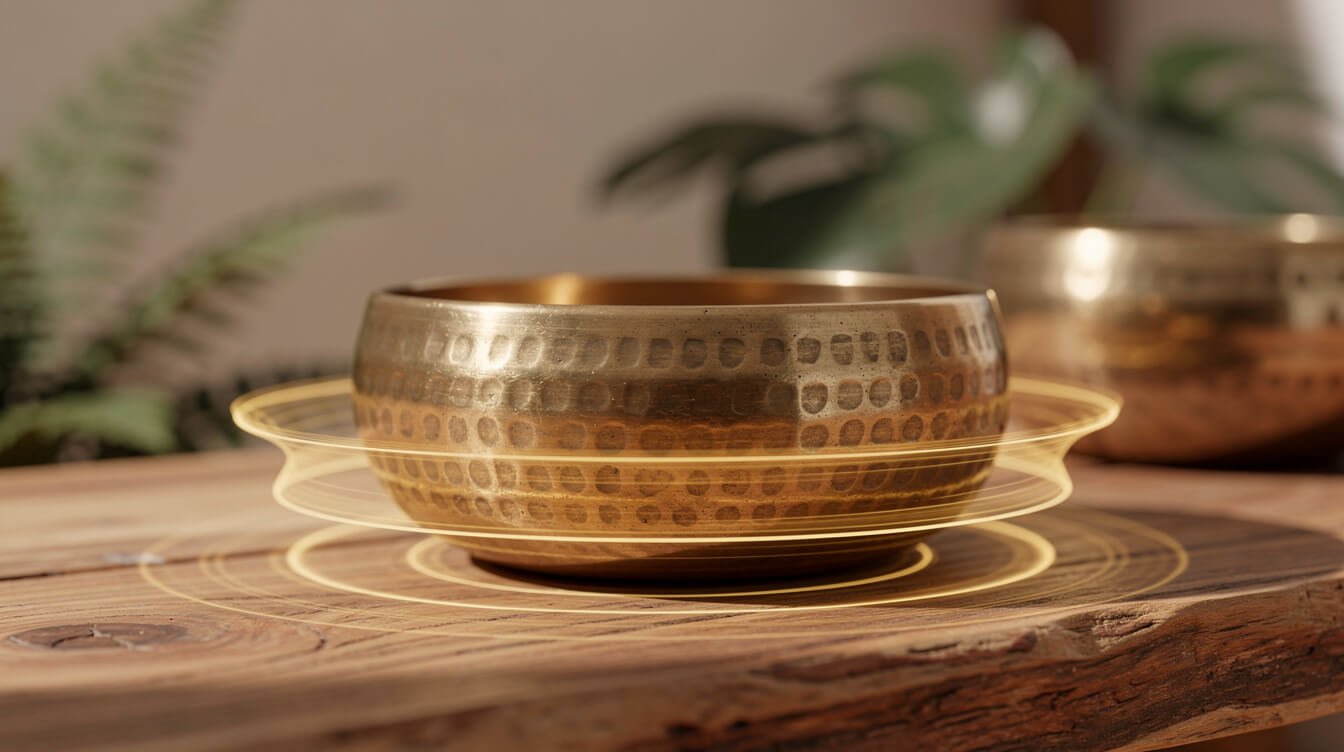
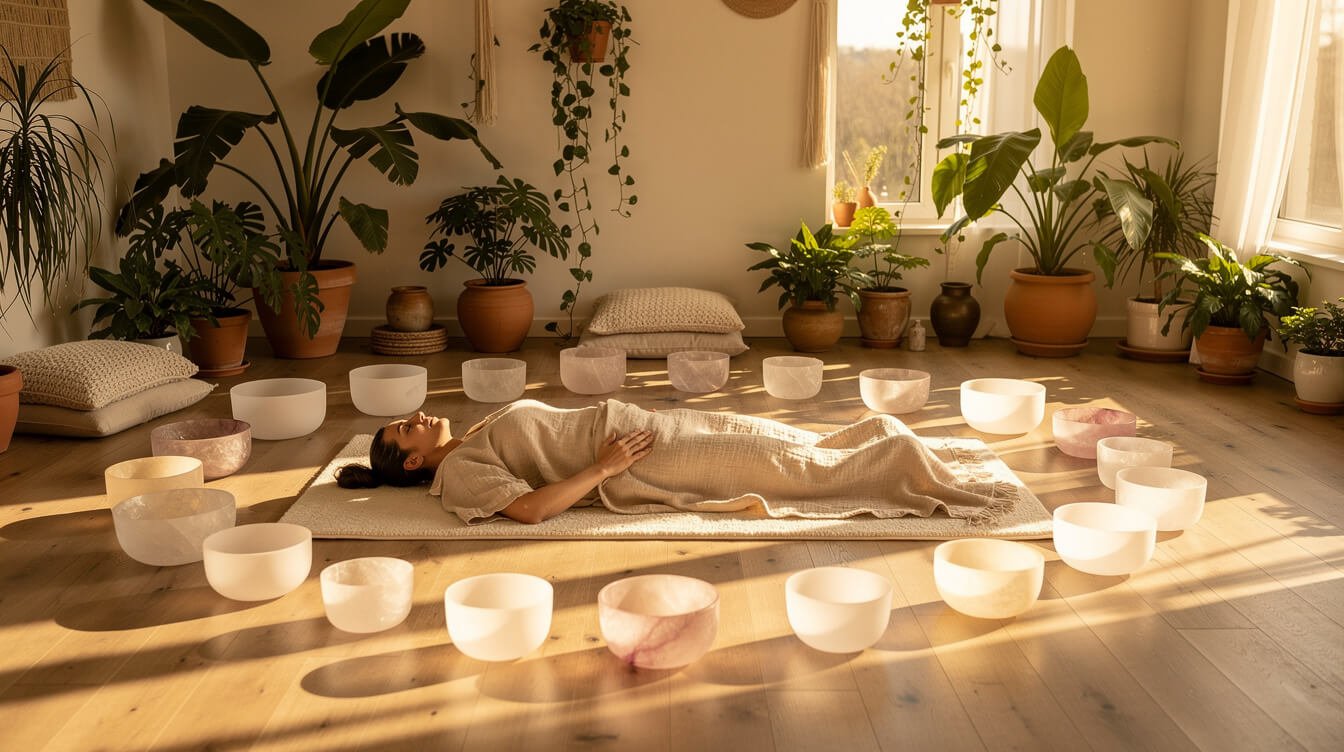
Tibetan singing bowls, crafted from a blend of metals, produce rich, layered overtones that create a deeply immersive sonic experience. Crystal singing bowls, made from crushed quartz, generate pure, sustained tones that many people find particularly penetrating and clarifying.
Both types can be played by striking with a mallet or by circling the rim to produce a continuous singing tone. When placed directly on or near the body, the physical vibrations add a tactile dimension to the healing experience.
Gong Baths
Best for: Emotional release, deep transformation, full-body resonance
Gongs produce a vast spectrum of frequencies simultaneously, creating an all-encompassing sound field that many describe as overwhelming in the most therapeutic sense. The complex overtones of a well-played gong can shift rapidly, keeping the mind from attaching to any single pattern — which is precisely what makes gong baths so effective for breaking through mental and emotional patterns.
Tuning Forks
Best for: Targeted therapy, specific frequency work, energy balancing
Tuning forks produce precise, single frequencies and are often used in more targeted therapeutic applications. Practitioners may place vibrating tuning forks on specific acupuncture points or near the ears to deliver exact frequencies believed to support particular aspects of health.
Binaural Beats
Best for: Focus, sleep, meditation (headphone-based practice)
Unlike acoustic instruments, binaural beats are a modern, technology-based approach. When two tones with slightly different frequencies are played separately in each ear (through headphones), your brain perceives a third “beat” at the frequency difference. For example, a 200 Hz tone in one ear and a 210 Hz tone in the other creates a perceived 10 Hz alpha wave — associated with relaxation.
Drums and Rhythmic Percussion
Best for: Grounding, energy activation, community connection
Rhythmic drumming has been used for healing across virtually every indigenous culture. The steady pulse of a drum quickly entrains brainwaves, and the physical act of drumming (in group settings) releases endorphins and creates a powerful sense of shared experience. If you enjoy grounding exercises, rhythmic percussion may feel like a natural extension of your practice.
Voice and Chanting
Best for: Accessibility, self-practice, emotional expression
Your own voice may be the most powerful — and most accessible — sound healing instrument available. Practices like overtone singing, mantra chanting, and vocal toning have been used therapeutically for millennia. The act of producing sound engages your diaphragm, regulates breathing, stimulates the vagus nerve, and creates internal vibrations that no external instrument can replicate.
Sound Healing Frequencies: Your Guide to Therapeutic Tones
Not all frequencies are created equal. Different sound frequencies are traditionally associated with different therapeutic effects — and understanding this landscape can help you tailor your sound healing practice to your specific needs.
The Solfeggio Frequencies
The Solfeggio scale is a set of ancient frequencies that have been used in sacred music and healing traditions for centuries. While scientific validation is still emerging, many practitioners and listeners report distinct effects from each frequency:
- 174 Hz — Foundation of comfort. Often described as a natural anesthetic frequency, 174 Hz is associated with reducing physical tension and creating a sense of security. It’s an excellent starting point for those new to frequency work.
- 285 Hz — Cellular renewal. This frequency is traditionally associated with tissue healing and cellular repair. Many practitioners use it in sessions focused on physical recovery.
- 396 Hz — Releasing fear and guilt. Used to address deep-seated emotional patterns, 396 Hz may help dissolve feelings of fear, grief, and guilt that can become trapped in the body.
- 432 Hz — Nature’s frequency. Sometimes called the “frequency of the universe,” 432 Hz is mathematically aligned with patterns found throughout nature. Many listeners report that music tuned to 432 Hz (rather than the standard 440 Hz) feels warmer, more natural, and more deeply calming.
- 528 Hz — Transformation and repair. Known as the “love frequency” or “miracle tone,” 528 Hz is one of the most studied Solfeggio frequencies. Research published in the Journal of Addiction Research and Therapy found that 528 Hz sound waves reduced anxiety in rats — suggesting biological mechanisms beyond placebo.
- 639 Hz — Connection and relationships. This frequency is associated with harmonizing interpersonal relationships and enhancing communication.
- 741 Hz — Expression and solutions. Traditionally linked to cleansing and self-expression, 741 Hz may support creative problem-solving and clarity of purpose.
- 852 Hz — Intuition and awareness. Used to awaken inner strength and sharpen intuition, 852 Hz is often featured in advanced meditation practices.
- 963 Hz — Spiritual connection. The highest Solfeggio frequency is associated with unity, oneness, and connection to higher states of consciousness.
For a deeper dive into how specific frequencies may support your wellness practice, explore our guide to frequency music for healing.
Brainwave Frequencies and Their Effects
Beyond the Solfeggio scale, understanding brainwave frequencies can help you select the right sound healing approach for your goals:
- Delta (0.5–4 Hz): Deep sleep and physical regeneration. Ideal for evening sound healing sessions aimed at improving sleep quality.
- Theta (4–8 Hz): Deep meditation, creativity, and emotional processing. The sweet spot for most sound bath experiences.
- Alpha (8–13 Hz): Calm alertness and relaxation. Perfect for stress relief without drowsiness.
- Beta (13–30 Hz): Active thinking and concentration. Certain binaural beats in this range may enhance focus and productivity.
- Gamma (30–100 Hz): Higher cognitive function and neural coherence. The 40 Hz gamma frequency has attracted significant research interest for its potential cognitive benefits.
The world of frequency-based wellness extends well beyond sound. If you’re curious about how electromagnetic frequencies may complement your sound healing practice, explore the science behind PEMF therapy — another modality that harnesses specific frequencies for whole-body support.
If you’re drawn to the idea of frequency-based wellness, you may also want to explore how OlyLife’s PEMF and terahertz therapy devices harness specific electromagnetic frequencies to support whole-body balance — a natural complement to your sound healing practice.
🎁 Get a Free Wellness Gift
Enter your name and email below to receive a special wellness gift from OlyLife — absolutely free!
How to Practice Sound Healing at Home
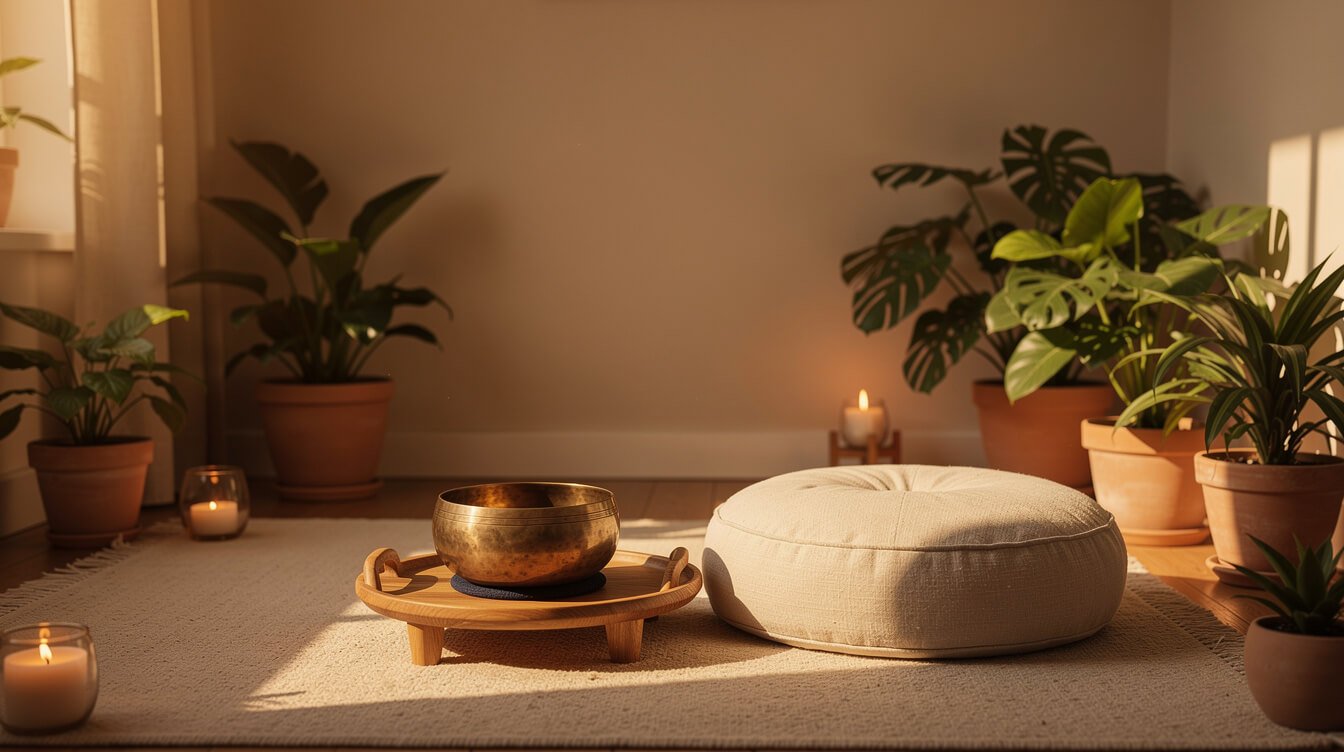
You don’t need to attend a professional sound bath to experience sound healing benefits — though group sessions can be wonderfully powerful. With a few simple tools and techniques, you can create your own healing sonic environment at home.
Building Your Sound Healing Toolkit
Here’s what you need to get started, from the most accessible to more advanced options:
Beginner (no investment needed):
- Your own voice — humming, chanting “Om,” or toning vowel sounds
- Sound healing apps or streaming playlists (search for “432 Hz meditation” or “Tibetan singing bowl session”)
- Quality headphones for binaural beats (over-ear recommended for best spatial effect)
Intermediate:
- A single Tibetan singing bowl (6–8 inch bowls are versatile and affordable)
- A set of tuning forks (the 128 Hz “Otto” tuning fork is a popular starting choice for body work)
- A small hand drum or frame drum for rhythmic practice
Advanced:
- Crystal singing bowls (note-specific bowls for chakra work)
- Multiple singing bowls tuned to complementary frequencies
- A small gong or multiple tuning forks covering the Solfeggio scale
A Simple Daily Sound Healing Routine
This 10-minute morning or evening practice requires nothing more than your voice and a quiet space:
- Settle in (2 minutes): Sit or lie comfortably. Close your eyes. Take three slow, deep breaths — inhaling through your nose and exhaling through your mouth with a gentle audible sigh.
- Humming meditation (3 minutes): Begin humming on a single comfortable pitch. Feel the vibration in your chest, throat, and skull. Let the pitch rise or fall naturally. When one breath ends, inhale gently and begin again.
- Vowel toning (3 minutes): Move through the vowel sounds — “ah,” “oh,” “oo,” “ee,” “mm” — holding each for one full breath. Notice how each vowel resonates in a different area of your body.
- Silent integration (2 minutes): Stop making sound but keep your eyes closed. Notice the quality of silence that follows. Many practitioners find this “afterglow” period is when the deepest healing occurs.
Tips for Your Home Practice
- Consistency matters more than duration. Ten minutes daily may be more beneficial than an hour once a week.
- Create a dedicated space. Even a small corner with a cushion and your instruments creates a signal to your nervous system that it’s time to unwind.
- Combine with other practices. Sound healing pairs beautifully with breathwork, gentle stretching, or an evening wind-down ritual.
- Stay hydrated. Drink water before and after sessions. Sound vibrations can stimulate circulation and the lymphatic system, and hydration supports this natural detoxification process.
- Trust your body’s response. If a particular frequency or instrument feels uncomfortable, honor that signal. Sound healing is deeply personal — what resonates for one person may not resonate for another.

Explore Frequency Wellness at Home
Curious about how frequency-based therapies may support your wellness journey? Discover OlyLife’s range of PEMF and terahertz therapy devices — designed to bring the power of therapeutic frequencies into your daily routine.
Frequently Asked Questions About Sound Healing Benefits
Is sound healing scientifically proven?
Research into sound healing is growing but still in relatively early stages. Multiple peer-reviewed studies have documented measurable effects on stress hormones, brainwave patterns, pain perception, and mood. However, large-scale clinical trials are still needed before sound healing can be considered “scientifically proven” in the conventional medical sense. What the current evidence does suggest is that sound healing may offer meaningful benefits with minimal risk — a promising therapeutic frontier.
How often should I practice sound healing?
There’s no single “correct” frequency for sound healing practice. Many practitioners recommend starting with 2–3 sessions per week and adjusting based on how you feel. Even brief daily sessions of 10–15 minutes can produce cumulative benefits over time. The key is consistency rather than intensity.
Can sound healing replace medical treatment?
Sound healing is a complementary practice, not a replacement for conventional medical care. It may support your overall wellness and enhance other treatments, but it should never be used as a substitute for professional medical advice, diagnosis, or treatment. Always consult your healthcare provider about any health concerns.
Are there any risks or side effects?
Sound healing is generally considered safe for most people. However, certain individuals should exercise caution: those with sound-triggered seizure disorders, people with hearing aids or cochlear implants (check with your audiologist), and individuals with severe tinnitus (some sessions may temporarily increase awareness of ringing). Pregnant individuals should avoid having singing bowls placed directly on the body, though attending a sound bath at a comfortable distance is generally considered safe.
What’s the difference between sound healing and music therapy?
While both use sound therapeutically, they differ significantly. Music therapy is a credentialed clinical profession that may involve singing, songwriting, musical improvisation, and lyrical analysis — typically facilitated by a board-certified music therapist. Sound healing focuses specifically on the vibrational and frequency aspects of sound, using instruments like singing bowls, gongs, and tuning forks to influence the body’s energetic and physiological state. Both approaches have value and can complement each other.
Can I experience sound healing benefits with just headphones?
Absolutely. Binaural beats require headphones to work (since different frequencies must reach each ear separately), and many sound healing recordings — including singing bowl sessions, nature soundscapes, and Solfeggio frequency tracks — can be deeply effective through quality headphones. While in-person sound baths offer the added dimension of whole-body vibration, headphone-based practices are wonderfully accessible for daily use.
Embracing the Healing Power of Sound

The sound healing benefits we’ve explored — from deep stress relief and improved sleep to enhanced cognitive function and emotional balance — represent just the beginning of what this ancient-yet-evolving practice has to offer. As modern research continues to validate what traditional healers have known for millennia, sound healing stands at a fascinating intersection of ancient wisdom and cutting-edge science.
What makes sound healing particularly special is its accessibility. You don’t need expensive equipment, years of training, or even a quiet mind to begin. Your own breath, your own voice, and a willingness to listen are all you need to take the first step.
Whether you choose to explore the transformative depths of a gong bath, the precise frequencies of tuning forks, the gentle resonance of a singing bowl, or the simple power of humming — you’re joining a healing tradition that connects you to something far older and far larger than any single practice.
Start small. Start today. And let the sound carry you wherever you need to go.