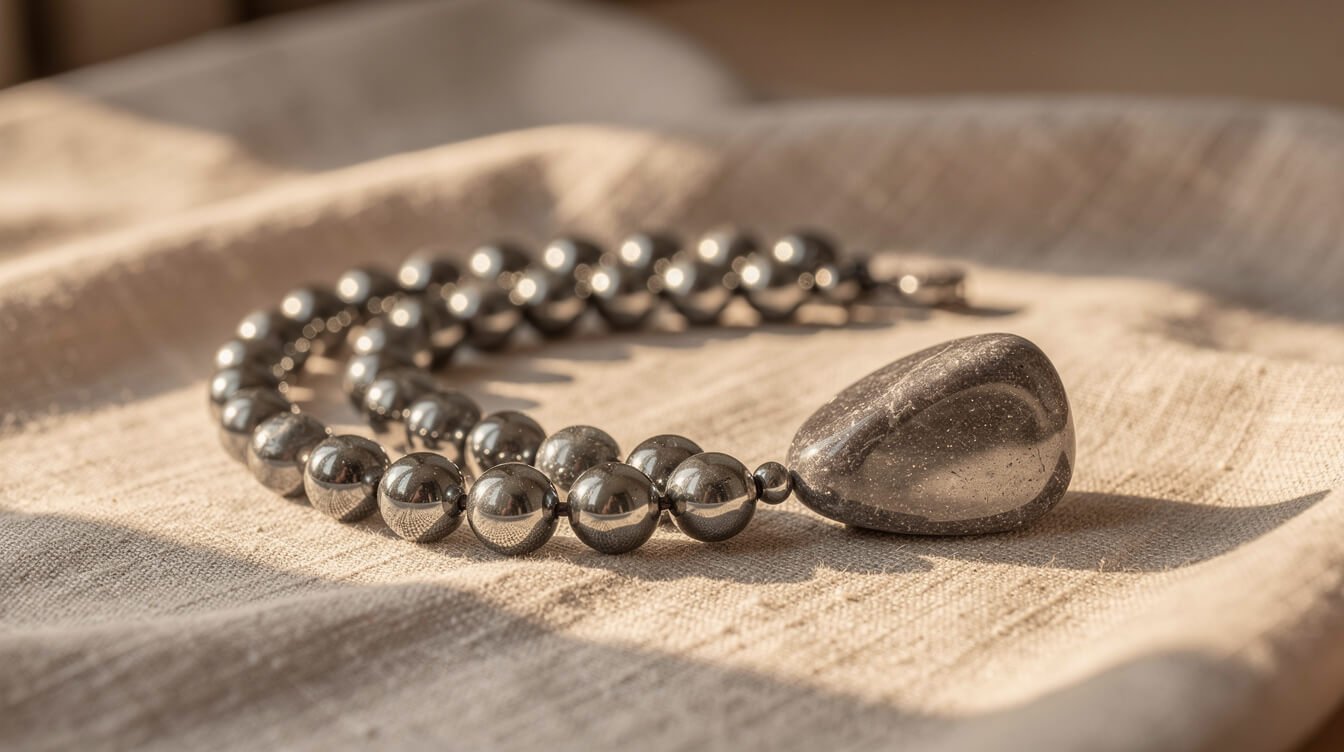
If you have wandered through a crystal shop or scrolled a wellness feed lately, you have probably met a striking silver-grey mineral with a mirror-like shine. Terahertz stones have quietly become one of the most talked-about pieces in the modern crystal and wellness world — worn as bracelets, placed on desks for focus, and cradled during meditation. But what actually are they? Are they a natural gemstone or something made in a lab? And do those frequency-related claims hold up?
This guide answers all of it honestly. You will learn what terahertz stones really are, where the name comes from, how people traditionally use them, how to tell an authentic piece from a fake, and how to care for one. We will also explain the difference between a passive stone you wear and the actual terahertz technology that inspired its name — so you can make a genuinely informed choice.
What Are Terahertz Stones?
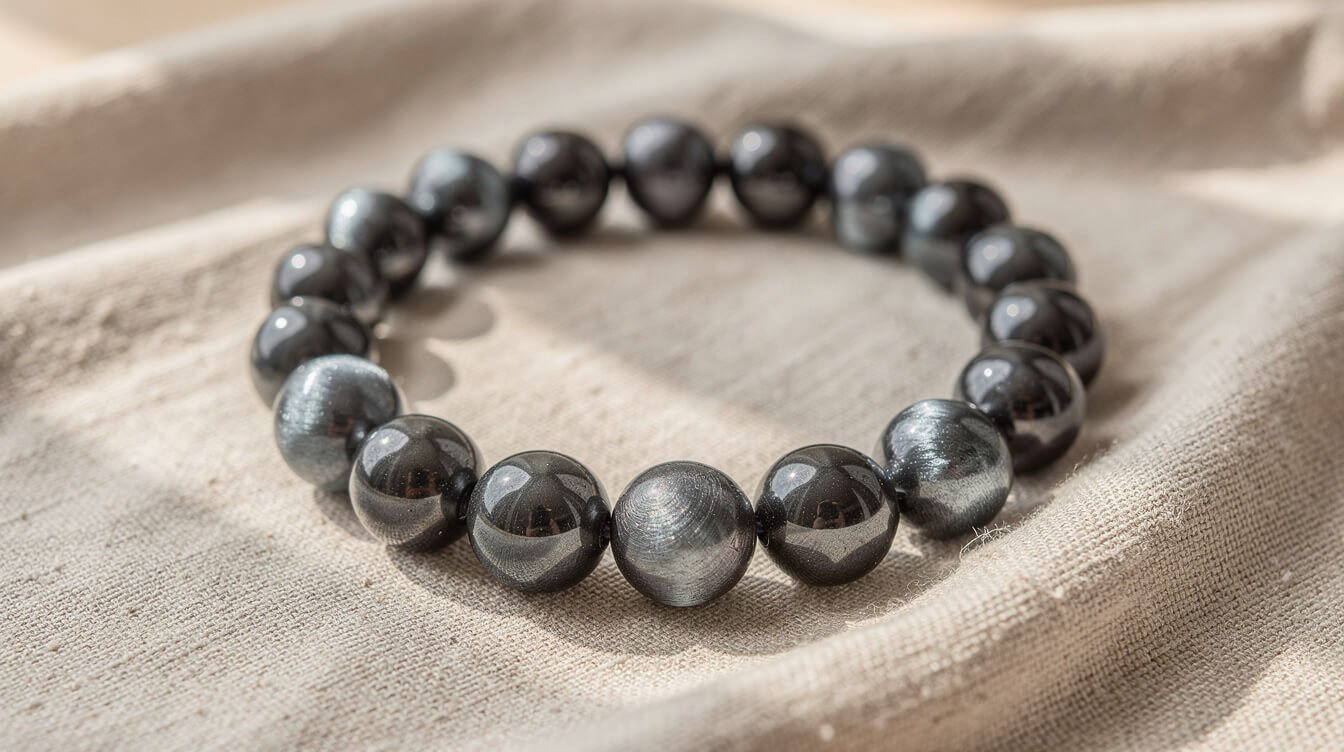
Here is the fact that surprises most people first: terahertz stones are not a naturally occurring gemstone at all. They are a man-made material, generally produced by melting high-purity silica (silicon dioxide) at extremely high temperatures and then cooling it into a dense, glassy solid. The result is a smooth, heavy stone with a distinctive metallic silver-to-charcoal-grey sheen, often polished into beads, tumbled shapes, points, or spheres.
The material is widely reported to have been first developed in Japan, where interest in “terahertz” frequencies in wellness circles took off. Because it is engineered rather than mined, quality and appearance are remarkably consistent — one reason it photographs so beautifully and has spread quickly through jewelry and crystal communities. You will sometimes see it labelled “terahertz gemstone,” “terahertz crystal,” or “high-frequency stone,” but they all refer to this same silica-based synthetic material.
Calling it synthetic is not a criticism. Plenty of beloved wellness and jewelry materials are lab-created, and many people simply love how a terahertz stone looks and feels in the hand — cool, weighty, and grounding. The important thing is to go in with clear eyes about what you are actually holding.
What a terahertz stone looks and feels like
If you are trying to picture one, imagine a piece of polished hematite crossed with liquid mercury: a deep silver-grey body with a bright, almost metallic reflectivity that catches the light as you turn it. Good pieces feel dense and satisfyingly heavy, cool against the skin, and glass-smooth when tumbled. You will find them as round bracelet beads, flat palm stones, obelisk-shaped points, and spheres — each format simply changing how you interact with the same underlying material.
Where the “Terahertz” Name Comes From: The Science and the Story

The name is the most misunderstood part of the whole subject, so let us unpack it carefully. A terahertz is a unit of frequency — one trillion cycles per second. Terahertz radiation is a real and fascinating band of the electromagnetic spectrum that sits between microwaves and infrared light. Scientists study it in fields ranging from medical imaging to security scanning.
The stone borrowed this name because its makers and early promoters claimed the material naturally emits, or resonates with, terahertz-band frequencies. That marketing story is what gave the stone both its name and its mystique. It is worth being honest here: independent, peer-reviewed evidence that a passive lump of silica meaningfully emits therapeutic terahertz waves is limited at best. In other words, the name reflects a claim and a tradition — not a settled scientific fact.
So what does real terahertz science actually study? In laboratories, terahertz waves are used for non-invasive imaging (they can see through materials like clothing and paper without the ionizing risk of X-rays), for analyzing the composition of substances, and increasingly in research exploring how specific frequencies interact with biological tissue. It is a serious, active field — which is precisely why the name carries such appeal. The gap is simply between that science and the marketing that borrowed its vocabulary for a decorative stone.
That distinction matters because genuine terahertz technology is a separate thing entirely. Purpose-built devices can actively generate specific frequencies, and researchers continue to explore how frequency-based wellness tools may support the body. If the science of frequencies is what draws you in, our guide to what terahertz therapy actually is and our overview of frequency healing explain the real mechanisms far more thoroughly than any stone can deliver. We will come back to this important difference near the end.
The Traditional Properties and Benefits of Terahertz Stones
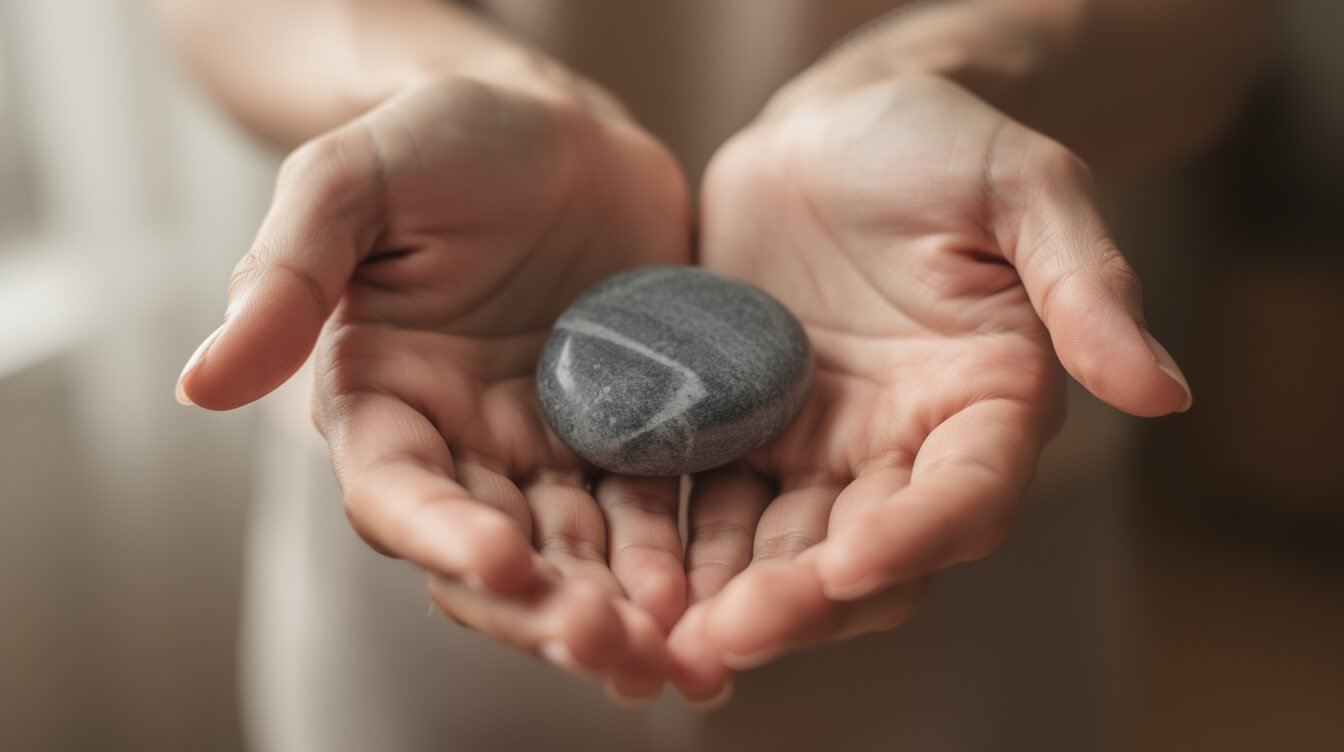
Within crystal and energy-work traditions, terahertz stones are prized as a “high-vibration” material. It is important to frame these as traditional and anecdotal uses rather than medical outcomes — they describe how people experience the stone, not clinically proven effects. With that honest caveat in place, here are the qualities most commonly associated with terahertz stones.
Grounding and a sense of energy flow
The stone’s cool weight in the palm is often described as grounding and centering. Practitioners traditionally use it to feel more anchored and present, in much the same way people describe the calming effects of grounding to the earth.
Focus and mental clarity
Terahertz is popularly kept on a desk or worn during work as a focus companion. Many users say holding or seeing it helps them settle a busy mind and return to the task in front of them — a small, tactile mindfulness cue more than anything mystical.
Vitality and circulation of energy
In metaphysical practice the stone is believed to support the body’s sense of vitality and healthy energy circulation. Again, this is traditional belief, not a clinical claim — but for people who enjoy a mindful ritual, that felt sense of warmth and momentum can be genuinely encouraging.
Emotional steadiness and protection
Like many dark, reflective stones, terahertz is traditionally used as a “protective” piece — something to help you feel shielded from draining influences and emotionally steady during stressful stretches. It pairs naturally with intentional practices such as energy healing and meditation.
A calmer mind at the end of the day
Many people keep a terahertz stone on the nightstand or hold it during an evening wind-down. There is nothing magical required here — the simple act of pausing, feeling the stone’s cool weight, and taking a few slow breaths is a gentle cue for the nervous system to shift out of go-mode. Used that way, it becomes a small, pleasant bookend to the day rather than a promise of anything clinical.
How to Use Terahertz Stones in Daily Life
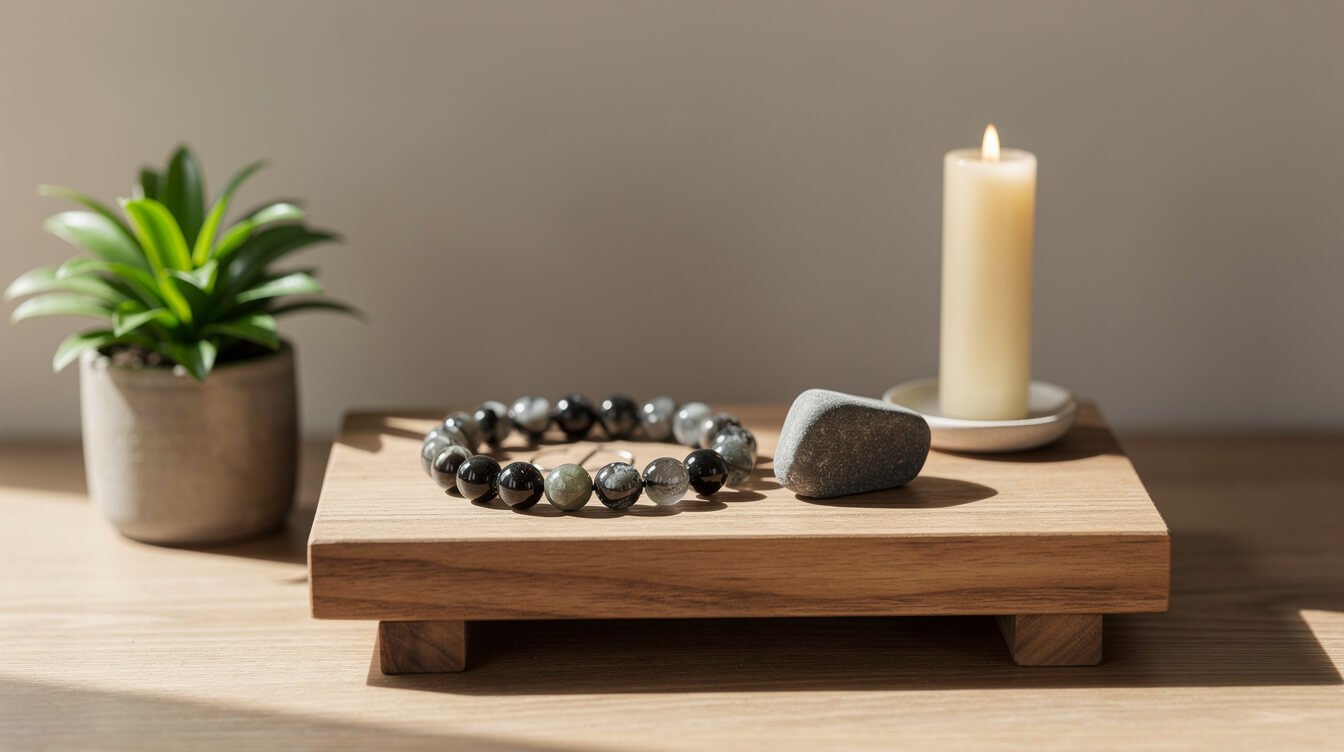
Part of the appeal of terahertz stones is how easily they fit into an ordinary day. Here are the most popular ways people bring them into a wellness routine.
- Wear it as jewelry. Bracelets and necklaces are the most common form, keeping the stone in gentle contact with the skin throughout the day as a wearable reminder of your intention.
- Meditate with it. Holding a smooth terahertz palm stone gives the hands something to rest on and the mind a point of focus during breathwork or quiet sitting.
- Place it in your space. In feng shui practice, terahertz is set on a work desk for focus, in a wealth or career corner for momentum, or by the entryway as a protective presence.
- Carry it with you. A small tumbled stone in a pocket or bag becomes a discreet grounding anchor you can reach for during a stressful moment.
Whatever the format, the real value is the ritual: pausing, setting an intention, and taking a mindful breath. The stone is a beautiful prompt for that pause — a lot like the way a soothing sound-healing frequency can cue your nervous system to slow down.
Pairing terahertz with other stones
Crystal enthusiasts love to combine terahertz with complementary stones to shape the mood of a practice. A few classic pairings:
- Amethyst — for a calmer, more contemplative feel during meditation and rest.
- Clear quartz — traditionally used to “amplify” intention, often placed alongside terahertz on a windowsill or altar.
- Black tourmaline — another grounding, protective favourite that echoes terahertz’s steadying quality.
- Rose quartz — to soften a focus-heavy setup with a gentler, heart-centered energy.
There is no right or wrong combination. The point is to build a small collection that feels meaningful to you and supports the intention you are setting.
That said, if what genuinely excites you is the frequency idea — the notion of terahertz energy actively working with your body — a passive stone can only take you so far. This is where purpose-built tools like the OlyLife THz Tera-P90+ come in: rather than hoping a mineral emits something, it is engineered to generate terahertz-range and pulsed electromagnetic (PEMF) energy on demand. We explore that contrast honestly in the technology section below.
🎁 Get a Free Wellness Gift
Enter your name and email below to receive a special wellness gift from OlyLife — absolutely free!
Real vs. Fake: How to Spot an Authentic Terahertz Stone
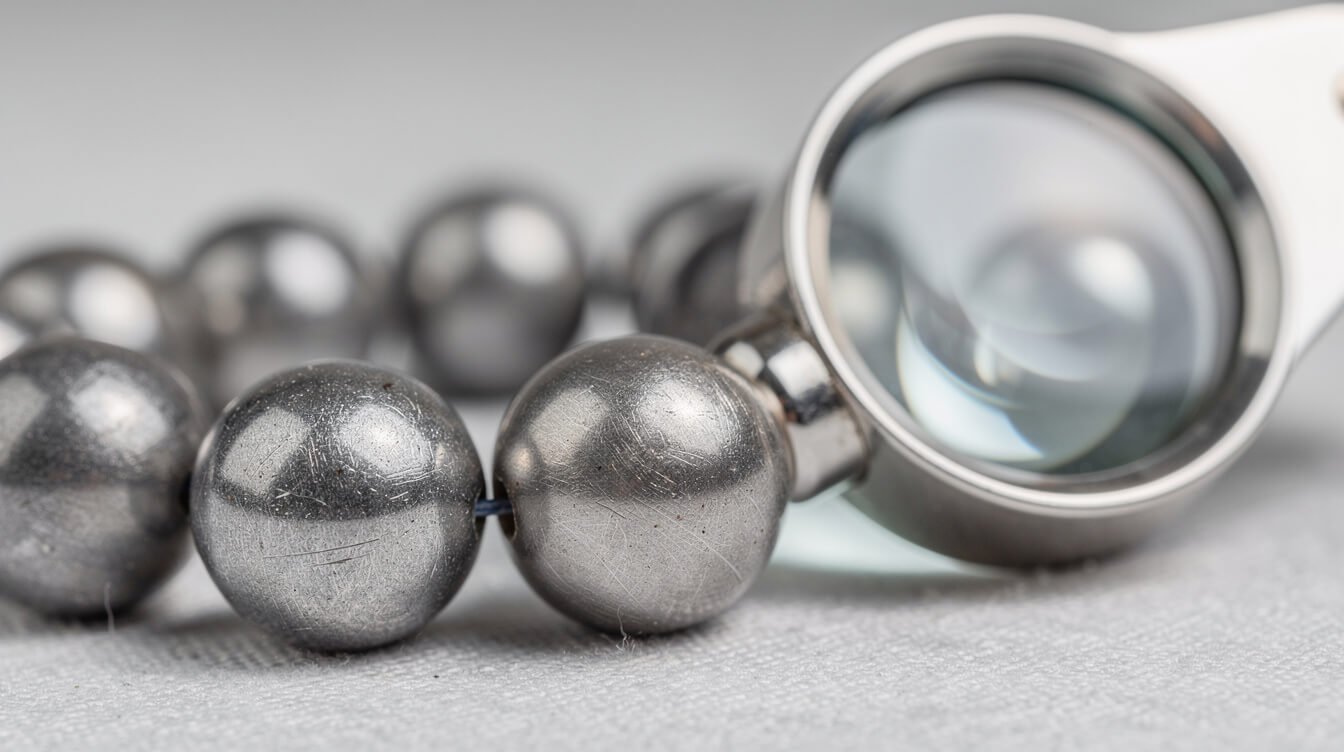
Because terahertz stones are popular and inexpensive to imitate, the market is full of look-alikes — usually dyed glass or cheaper coated materials sold at a premium. Since the “real” version is itself a manufactured silica material, “authentic” here means solid, properly made terahertz rather than hollow or plated glass. Use these checks before you buy.
- Weight. Genuine terahertz is dense and noticeably heavy for its size. A piece that feels suspiciously light is often hollow glass.
- Temperature. The stone stays cool to the touch and warms slowly. Plastic imitations warm up almost instantly in the hand.
- Colour and sheen. Authentic terahertz has a metallic silver-grey to charcoal tone with a mirror-like luster. Overly rainbow, oily, or painted-looking surfaces are red flags for coatings.
- Surface detail. Look closely (a jeweler’s loupe helps) for tiny internal swirls or bubbles from the melting process. Perfectly uniform, glassy clarity can indicate ordinary glass.
- Price and seller. If a deal seems far too cheap, or the listing leans on dramatic medical cure claims, be cautious. Reputable sellers describe the material honestly as a synthetic silica stone.
One more green flag: a trustworthy seller will never promise that a stone diagnoses, treats, or cures any condition. Honest language — “traditionally used for,” “may support a sense of calm” — is a sign you are dealing with someone who respects both the tradition and the truth.
When you are ready to buy, favour sellers who show clear, well-lit photos of the actual item, describe the material accurately as synthetic silica, and are happy to answer questions about weight and origin. A modest price is normal — because the stone is manufactured, authentic terahertz should never cost like a rare mined gemstone. Paying a premium usually buys you nicer finishing and craftsmanship, not a “more powerful” material.
How to Care for and Cleanse Your Terahertz Stone
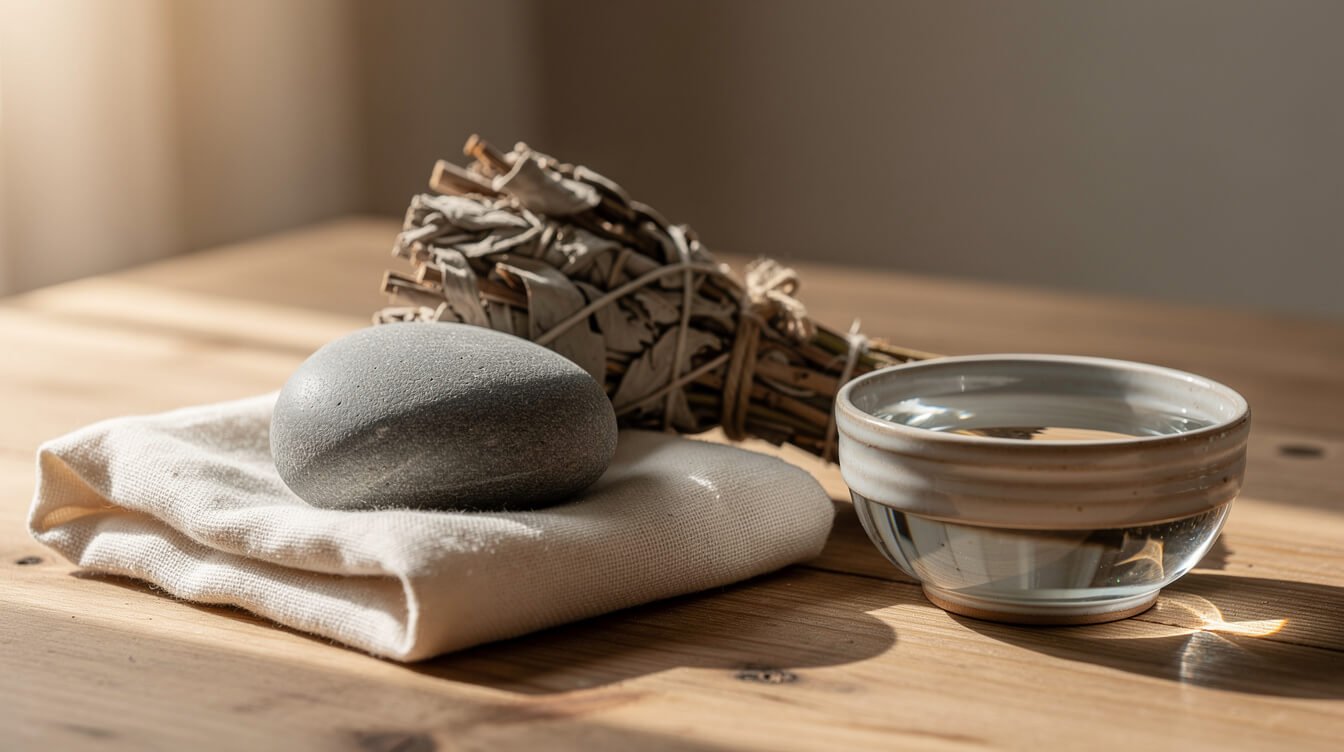
Terahertz stones are durable, but a little care keeps them looking their best. Caring for one has two sides: physical cleaning and, for those who practice it, energetic cleansing.
Physical care
Wipe the stone with a soft, slightly damp cloth and dry it thoroughly. Avoid harsh chemicals, and keep it away from hard knocks against other jewelry, which can chip the polished surface. Brief contact with water is fine, but do not soak it for long periods or leave it in salt water, which can dull the finish over time.
Energetic cleansing
Within crystal traditions, people “reset” a stone’s energy in gentle ways: passing it through the smoke of dried sage or palo santo, resting it on a windowsill in soft moonlight, or setting it beside clear quartz. Bright direct sunlight for long stretches is usually discouraged, as some believe it can fade the material and its perceived charge. Do whatever feels meaningful to you — the practice is really about renewing your own intention.
From Stone to Technology: Terahertz Wellness Beyond the Crystal
Here is the honest heart of this guide. A terahertz stone is a lovely, grounding object and a wonderful focus for a mindful ritual. What it is not is an active source of therapeutic frequency. It borrowed the terahertz name from a genuinely intriguing field of science — but the stone itself does not generate the energy that field describes.
If the science of frequencies is what truly draws you, that is where actual terahertz technology lives. Instead of relying on a passive mineral, purpose-built systems are engineered to produce specific terahertz-range and pulsed electromagnetic field (PEMF) energy that research is actively exploring for wellness support. If you are curious, our complete guide to the terahertz wand and our breakdown of optimal terahertz frequencies for wellness show what a dedicated device can do that a stone simply cannot.
Think of it as a spectrum of engagement: the stone is the gentle, symbolic entry point, and technology is the intentional, hands-on step for those who want to explore frequency wellness more seriously — the same way many people move from terahertz devices for muscle recovery once curiosity turns into commitment.
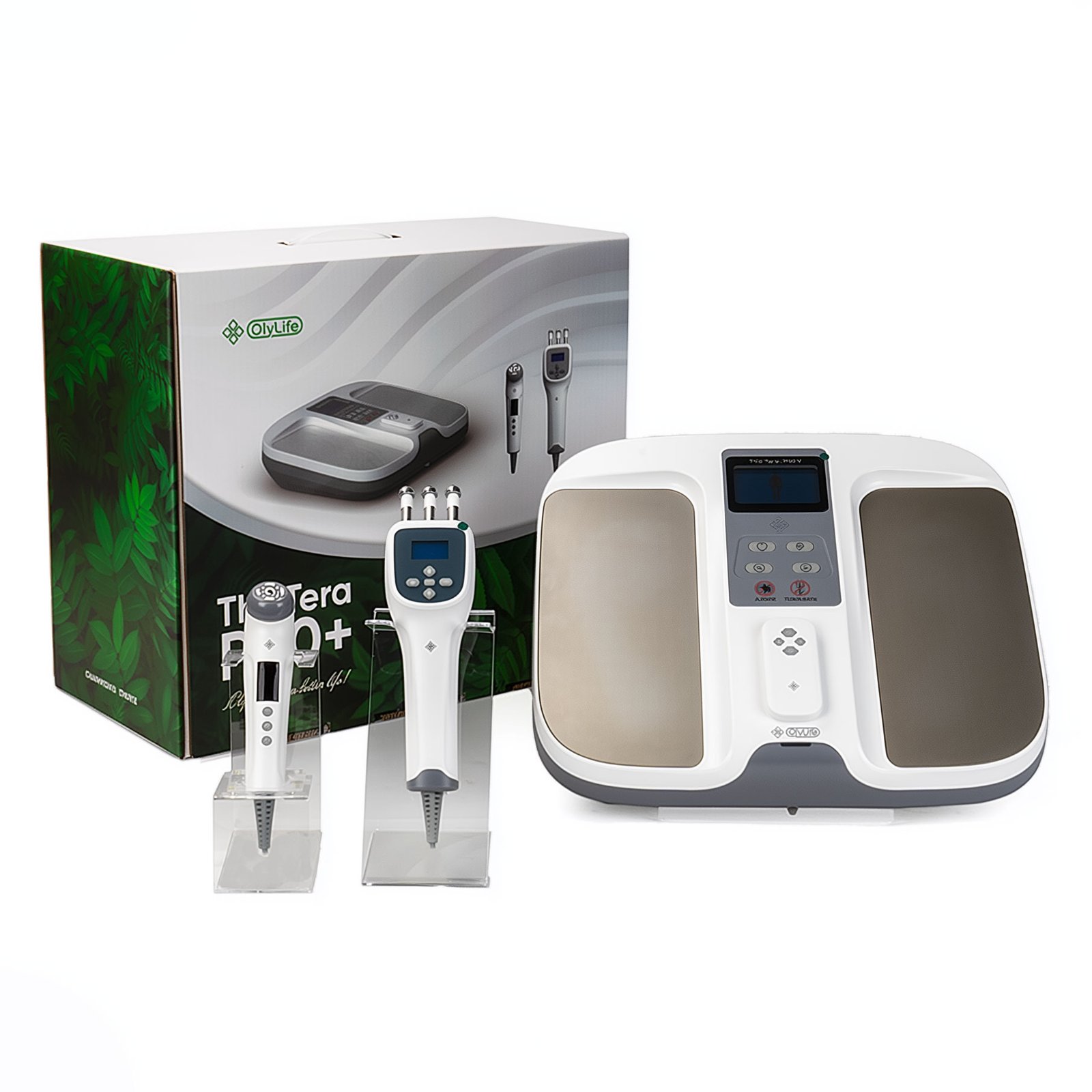
Ready to Go Beyond the Stone?
The OlyLife THz Tera-P90+ is engineered to actively generate terahertz-range and PEMF energy — a purpose-built way to explore frequency wellness that a passive crystal cannot offer.
Frequently Asked Questions About Terahertz Stones
Are terahertz stones natural or man-made?
They are man-made. Terahertz stones are produced by melting high-purity silica into a dense, glassy synthetic material, most famously developed in Japan. There is no naturally mined “terahertz” gemstone.
Do terahertz stones really emit terahertz frequencies?
That is a traditional marketing claim rather than an independently established fact. The stone was named for terahertz frequencies, but robust evidence that a passive stone emits therapeutic terahertz energy is limited. Purpose-built terahertz devices, not stones, are what actively generate those frequencies.
What are terahertz stones traditionally used for?
In crystal and feng shui practice they are traditionally used for grounding, focus, a sense of vitality, and emotional protection. These are anecdotal, experiential uses — not medical treatments — so they are best enjoyed as part of a mindful routine.
How can I tell if my terahertz stone is real?
Check that it is heavy for its size, stays cool to the touch, has a metallic silver-grey mirror sheen, and may show faint internal swirls or bubbles from melting. Suspiciously light, warm, or rainbow-painted pieces are often glass imitations.
Is a terahertz stone the same as a terahertz wand or device?
No. A stone is a passive object you wear or hold. A terahertz wand or system is a powered device engineered to generate terahertz-range and PEMF energy. If you want active frequency wellness, a device such as the OlyLife THz Tera-P90+ is the intentional next step.
Final Thoughts
Terahertz stones are a beautiful example of where tradition, aesthetics, and curiosity meet. Held honestly, they are a striking, grounding object and a lovely anchor for mindful intention — and there is real value in that ritual. Just remember what they are: a synthetic silica stone named for a frequency it does not actively produce.
If the tactile ritual is what you love, enjoy your stone fully and care for it well. And if the deeper promise of frequency wellness is what calls to you, let the stone be your gateway — then step into the technology that was actually built to deliver it. Either way, the most powerful thing you can bring to your practice is an informed, open, and gentle attention to your own wellbeing.