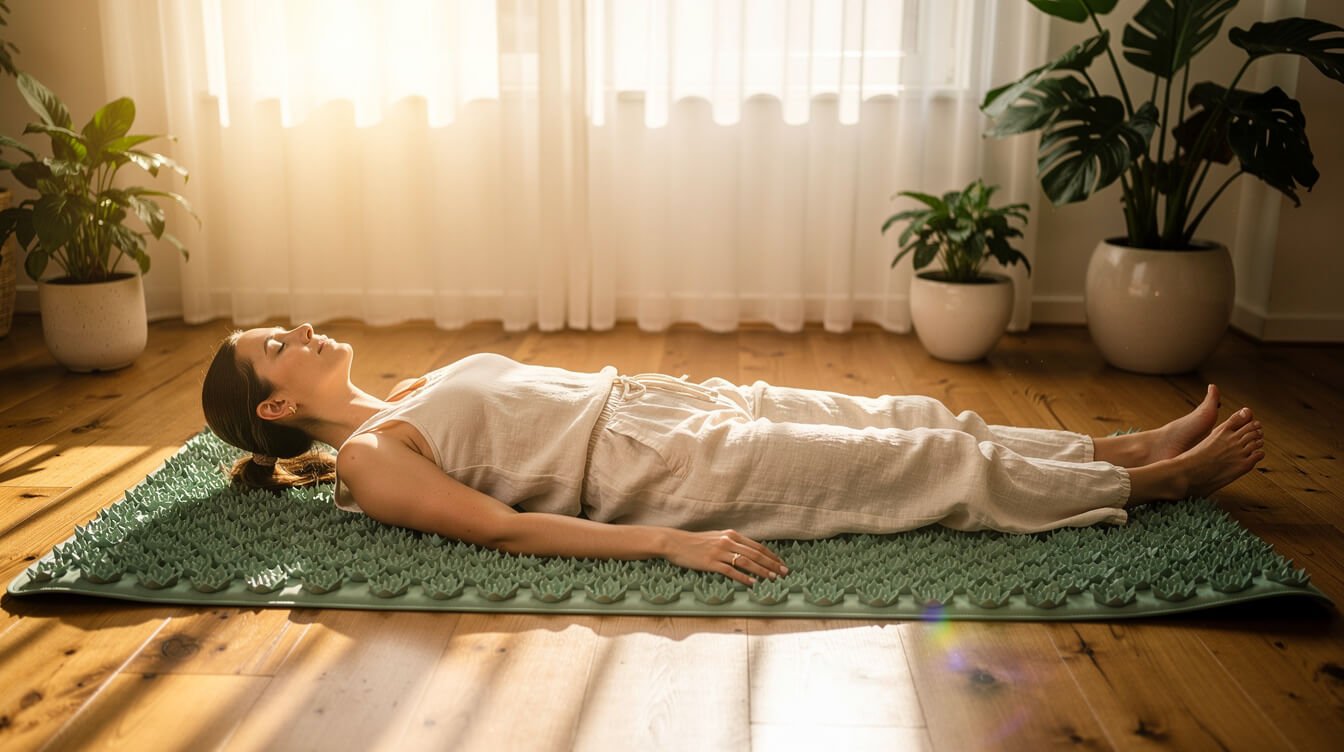
Acupressure Mats for Back Pain: Do They Work and How to Use One Safely
If your lower back tightens up after a long day at the desk, a drive, or an afternoon in the garden, you’ve probably seen them: foam mats covered in thousands of little plastic spikes, promising to melt tension away. Acupressure mats for back pain have become one of the most popular at-home wellness tools of the last decade. They’re inexpensive, quiet, and need no batteries or appointments.
But do they actually help, or is the “bed of nails” simply a very pointy placebo? In this guide, we’ll walk through what an acupressure mat is (and isn’t), the plausible ways it may ease back tension, what the handful of real studies found, and exactly how to use one so the first session isn’t a shock. We’ll also cover how to choose a mat and who should skip it altogether.
The short version: Small studies suggest an acupressure mat may ease everyday back and neck tension and help some people relax. The evidence is early and the effects are modest. It’s a low-cost, low-risk self-care tool, not a treatment for injuries, nerve problems, or the cause of chronic back pain.
What Are Acupressure Mats for Back Pain?
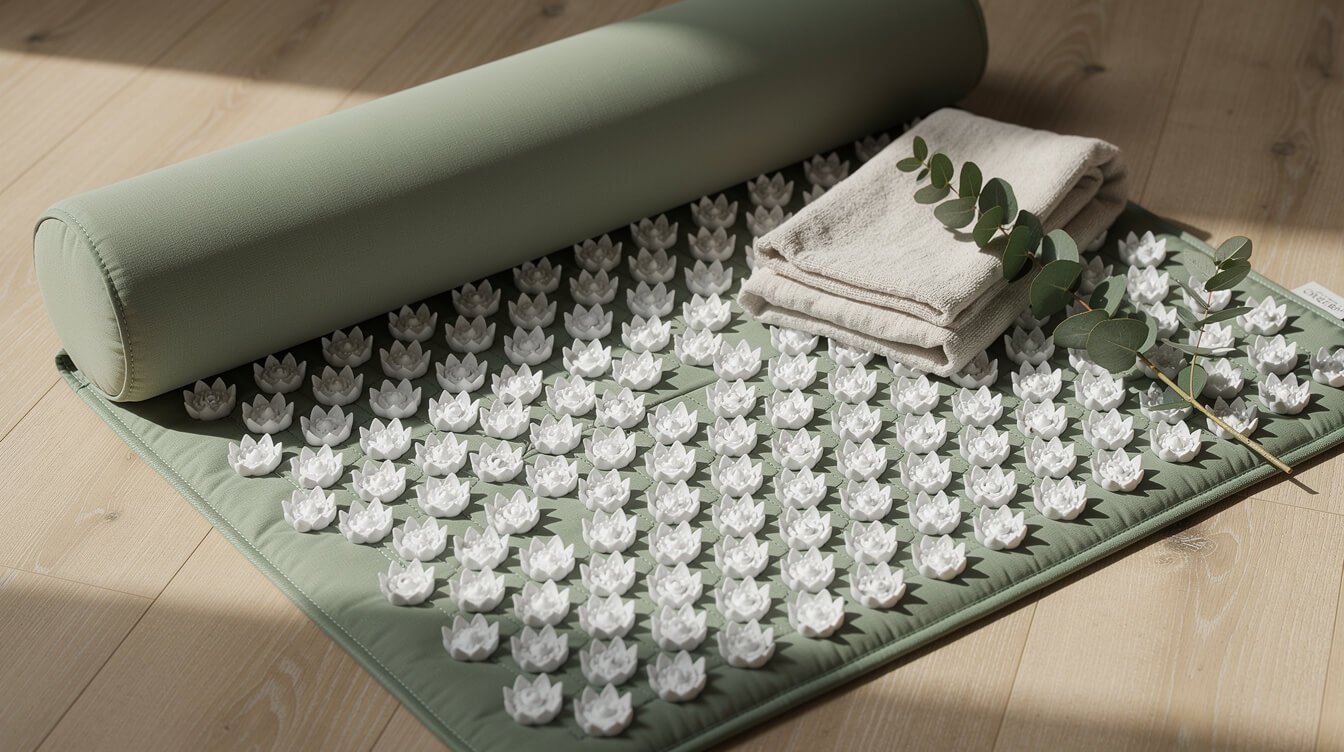
An acupressure mat is a padded mat, usually foam inside a cotton or linen cover, studded with small plastic “flowers” or discs. Each disc carries a cluster of blunt spikes. A typical full-size mat holds a few hundred discs and several thousand points. The mat used in one Swedish study, for example, had 6,210 plastic points about 5 mm apart. Many mats come with a matching pillow for the neck, and some fold out to cover the full length of the spine.
Researchers call them needle stimulation pads, and you’ll also see the nicknames “bed of nails,” “spike mat,” or the brand name Shakti mat. The modern design traces back to a Swedish yoga practitioner in the 2000s, inspired by the much older yogic tradition of lying on actual nails.
Acupressure mat vs. acupressure vs. acupuncture
The names overlap, but these are three different things:
- Acupuncture uses thin needles placed by a licensed practitioner at specific points.
- Acupressure uses firm finger, thumb, or elbow pressure on specific traditional points, given by a practitioner or by yourself.
- An acupressure mat presses on everything it touches at once. It can’t target precise points, so it works more like broad, even pressure stimulation across your back.
That distinction matters when you read claims online. A lot of the “acupressure works for back pain” evidence comes from practitioner-delivered acupressure, and it doesn’t automatically carry over to a mat. We’ll come back to this in the research section.
What a mat can and can’t do
A mat can give you a warm, tingly, deeply relaxing sensation and a dedicated 20 minutes of lying still and breathing slowly. It can’t realign your spine, fix a herniated disc, or “unblock” anything that a physical exam would find. Think of it as one helpful layer in a broader back-care routine, alongside movement, warmth, and rest, not a stand-alone fix.
How an Acupressure Mat May Ease Back Tension: 4 Plausible Mechanisms
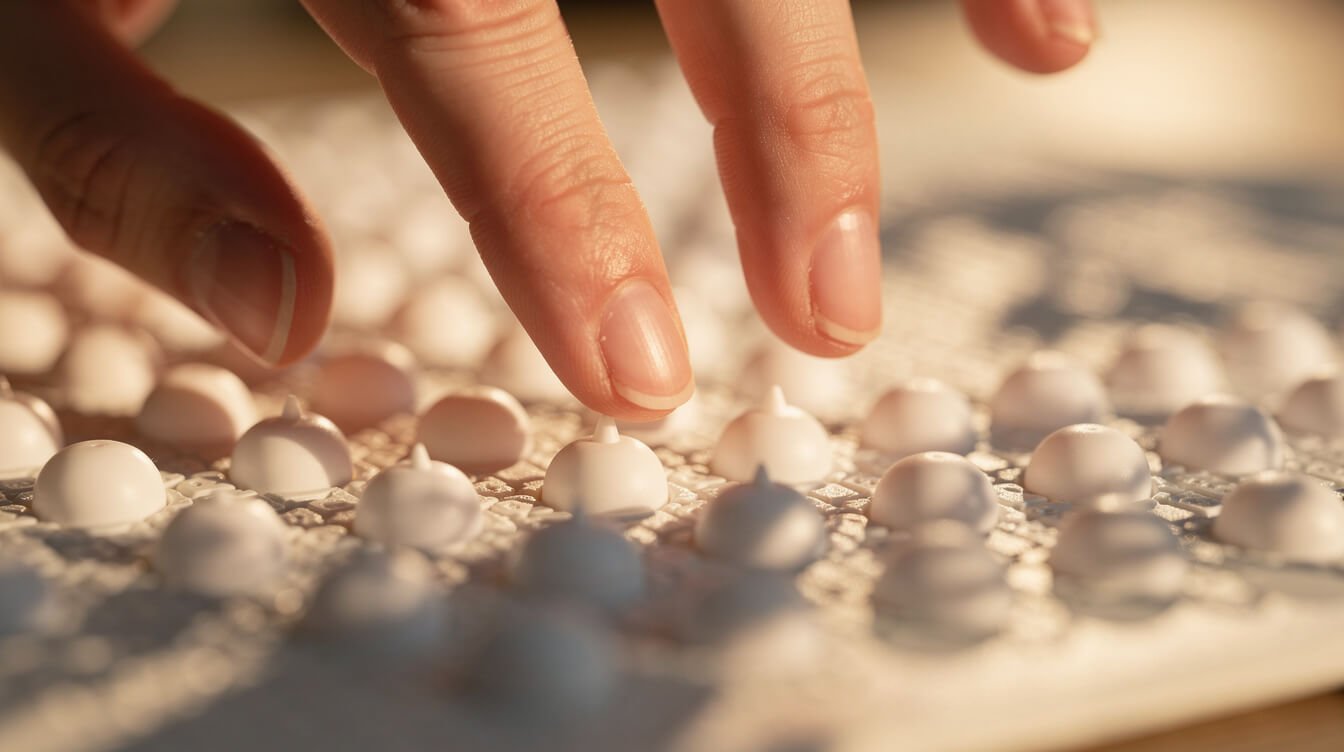
Seller pages often explain mats in terms of qi and meridians. That’s the traditional framework, and it’s fine to appreciate it as such. But there are also a few modern, physiological explanations that researchers have actually explored. None is proven for mats specifically, but each is plausible.
1. “Competing” sensation (gate control)
The gate control theory of pain suggests that strong, harmless sensory input from the skin can turn down how much pain signaling the nervous system pays attention to. It’s the same reason rubbing a bumped elbow helps. Thousands of spikes create a lot of harmless input, and that may temporarily dial down awareness of a dull, aching back.
2. Fast habituation, then relaxation
In a 2011 study of 32 healthy adults published in the Journal of Alternative and Complementary Medicine, Olsson and von Schéele found that discomfort on the mat peaked within about 30 seconds and then steadily faded as people got used to it. Self-rated relaxation increased over the session. Heart rate slowed and high-frequency heart rate variability (a marker linked to the “rest and digest” side of the nervous system) rose. Interestingly, blood pressure was slightly higher on the mat, and cortisol didn’t change. So the body shows signs of both alertness and calm at the same time.
3. Local circulation and warmth
That same study saw signs of increased circulation in the skin of the back, which matches the warm, flushed feeling most people describe. Warmth on tight muscles generally feels good, which is one reason heat-based tools like infrared heating mats are popular for back stiffness too.
4. Built-in “permission” to rest
This one is less glamorous but probably important. Lying still for 15 to 30 minutes, breathing slowly, phone away, is itself relaxing. A 2024 study (more on it below) found that people who practiced relaxation without a mat improved just as much on stress measures as those who used one. The ritual may be doing a lot of the work, and that’s not a bad thing. If a mat helps you actually take that time, it’s earning its place.
What the Research Says About Acupressure Mats for Back Pain

Here’s where most articles go quiet. The honest answer is that there are only a few studies on mats themselves, they’re small, and none used a convincing placebo. Here’s what they found.
The key back pain study (Hohmann et al., 2012)
German researchers ran two small randomized pilot trials, published in Evidence-Based Complementary and Alternative Medicine. They enrolled 40 people with chronic neck pain and 42 with chronic lower back pain. Half of each group used a needle stimulation pad at home for 14 days, and the other half were put on a waiting list.
- Pain ratings dropped significantly in the mat groups compared with the waiting-list groups, in both the neck and the back study.
- Pressure pain thresholds at the most painful spot went up, meaning that area became less sensitive to pressure.
- Neck-related disability scores improved, but the back study’s disability measure (the Oswestry Disability Index) did not change.
That’s encouraging, but read it carefully. A waiting list is a weak comparison, because people who know they’re “getting the treatment” often feel better for that reason alone. The authors called these pilot studies for a reason.
The relaxation studies
The 2011 Swedish study above showed people can relax on a mat after a brief adjustment period. A 2024 study by Kisker and Schöne in Applied Psychology: Health and Well-Being took a closer look: healthy young adults practiced relaxation for three weeks, either on an acupressure mat or with no tool at all. Both groups reported less stress, better sleep quality, and better concentration, but the mat group did not do better than the no-mat group. The authors suggested that any extra benefit from mats might be limited to specific complaints, such as tension-related pain, rather than general stress.
What about the acupressure evidence?
Practitioner-delivered acupressure has stronger data. In a 2006 BMJ randomized trial from Taiwan, 129 people with chronic low back pain received either a month of acupressure or physical therapy. The acupressure group had lower disability scores, and the difference was still there six months later. That’s a meaningful result, but it was skilled, targeted acupressure, not lying on a mat. It tells us the broader idea is worth studying. It doesn’t prove mats work the same way.
Evidence at a glance
| Question | What we know | Evidence strength |
|---|---|---|
| Can a mat ease everyday back or neck tension? | Pain ratings fell vs. waiting list in two small 2-week pilots | Early / promising |
| Does it improve back-related function or disability? | No change on the Oswestry index in the back pain pilot | Not shown |
| Does it help you relax? | Yes, people habituate fast and feel more relaxed | Moderate (small studies) |
| Is it better than relaxing without a mat? | Not for general stress in healthy young adults | One controlled study says no |
| Does it improve sleep? | Some users report it; not shown beyond the relaxation effect | Weak |
| Does it detox, boost energy, or fix posture? | No research supports these claims | None |
Where does this leave you? Major guidelines, such as the American College of Physicians’ 2017 recommendations for low back pain, put non-drug approaches first: staying active, superficial heat, massage, exercise, yoga, tai chi, mindfulness, and acupuncture. An acupressure mat isn’t on that list, simply because it hasn’t been studied enough. But it sits comfortably alongside those approaches as an inexpensive, gentle extra. For a broader overview, see our guide to natural therapy for pain.
How to Use an Acupressure Mat for Back Pain: A Step-by-Step Routine
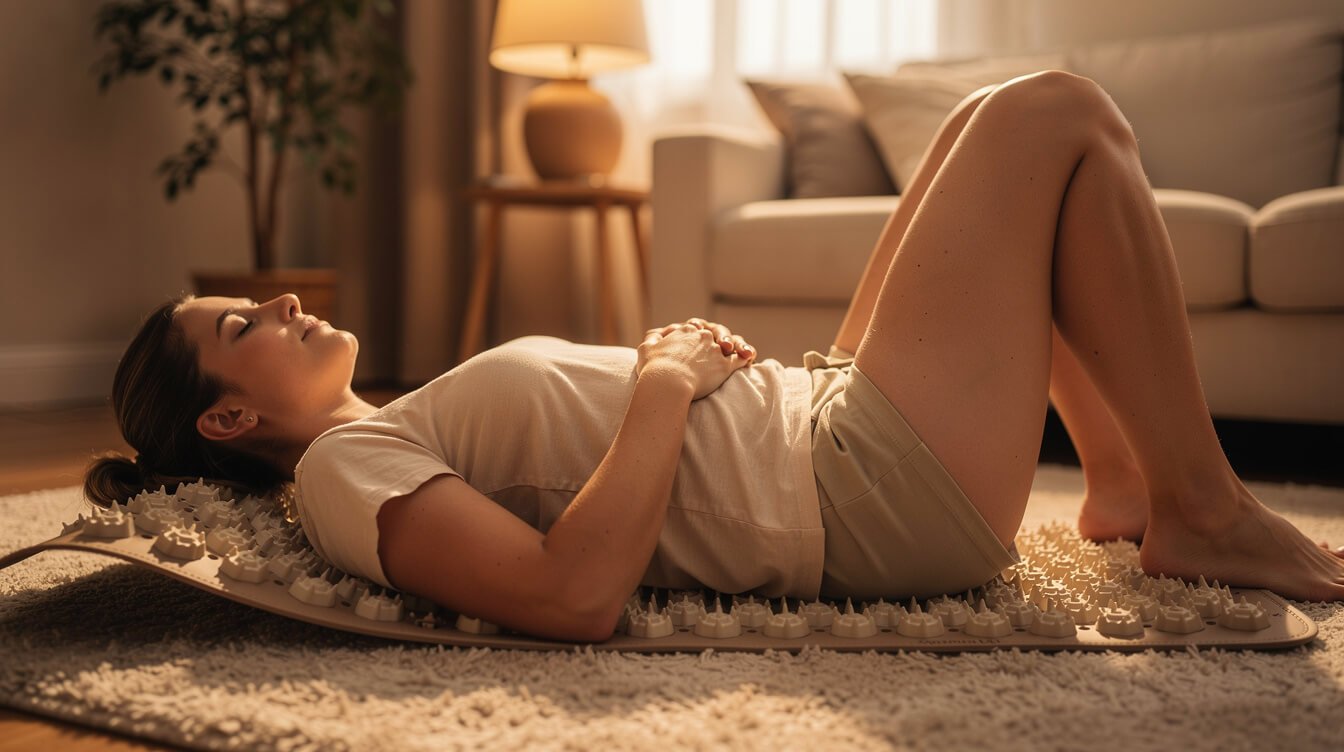
The first 30 to 60 seconds are the hardest part. After that, most people find it surprisingly pleasant. The secret is to ease in gradually rather than toughing it out on day one.
Step 1: Pick your surface
Start on a bed or sofa. A soft surface lets your body sink in so the spikes spread the pressure out. As you get used to it, you can move to a carpeted floor, which feels more intense.
Step 2: Add a layer
For your first few sessions, wear a thin t-shirt or lay a light towel over the mat. Once that feels easy, try bare skin. There’s no prize for going bare on day one.
Step 3: Lower yourself slowly
Sit on the lower end of the mat, then roll down onto your back one vertebra at a time, using your hands for support. Keep your knees bent and feet flat. This takes pressure off the lower back and lets you control how much weight goes onto the spikes. Avoid shuffling or sliding once you’re down, since dragging across the points is what scratches.
Step 4: Breathe through the first minute
Expect a prickly, almost stinging sensation. Breathe slowly in through your nose and out through your mouth, making the exhale a little longer than the inhale. Within a minute or two, that sharpness usually turns into warmth and tingling. This is the habituation effect researchers measured.
Step 5: Stay 10 to 20 minutes
Begin with 5 to 10 minutes and build up to 20, or up to 30 if you enjoy it. In the 2012 back pain study, participants used the mat daily for two weeks. Most people do best with one session a day, often in the evening.
Step 6: Get up carefully
Roll onto your side and push up with your arms rather than sitting straight up. Your skin will likely look pink with a temporary dotted pattern. That normally fades within an hour.
Positions to try
- Lower back focus: lie with the mat under your lower and mid back and a towel roll under your knees.
- Upper back and shoulders: slide up so the mat sits between your shoulder blades, with the pillow under your neck.
- Seated: place the mat against a chair back and lean in gently. This is handy at a desk.
- Feet: stand on the mat for 1 to 5 minutes, holding onto something for balance. This is the most intense option, so wear socks at first.
Pair it with warmth and movement
The mat works best as part of a routine rather than on its own. A short walk or a few gentle stretches before you lie down, plus some warmth for tight muscles, can make the session more comfortable. Some people like to use a handheld warming tool on their lower back for a few minutes first. The OlyLife Vitality Wand has warm and cool air modes that can fit naturally into that kind of evening wind-down. If evening sessions help you unwind, our guide on how to improve sleep quality naturally has more ideas for the hour before bed, and a warm evening bath is another lovely pairing.
🎁 Get a Free Wellness Gift
Enter your name and email below to receive a special wellness gift from OlyLife — absolutely free!
How to Choose an Acupressure Mat: 7-Point Checklist
Most acupressure mats look alike, and you don’t need an expensive one for it to work. These are the details that actually make a difference:
- Spike density and shape. More discs packed closer together spread your weight and feel gentler. Sparse, sharp points feel more intense. Beginners usually do better with denser mats.
- Size. Standard mats (about 26 x 16 inches) cover the mid and lower back. Full-length mats cover the whole spine and legs. If your lower back is the focus, a standard mat is enough.
- A neck pillow. Helpful if your tension sits in the upper back and neck. Not essential otherwise.
- Removable, washable cover. Your skin is in direct contact with the mat, so a cover you can take off and wash is a real plus.
- Materials. Look for non-toxic plastic (often labeled ABS, with no added BPA) and a natural fiber cover such as cotton or linen. Some mats use plant-based foam fillings.
- Thickness. Thicker foam feels softer on hard floors. Thinner mats roll up and travel more easily.
- Honest marketing. Be cautious of mats that promise to “detox,” “cure” back pain, or treat any disease. These claims aren’t supported. A good brand describes comfort and relaxation, not medical outcomes.
Want something you can switch on rather than lie on? Mats that use heat or pulsed electromagnetic fields are a separate category with different research behind them. Our guides to the PEMF therapy mat and PEMF mats for pain relief explain how they compare.

Building an At-Home Relaxation Ritual? 🌿
If you enjoy dedicated wind-down time for your back and shoulders, the OlyLife Tera-P90+ is a 3-in-1 home wellness system that includes the handheld Revitaluxe Massager, designed for relaxing massage sessions. It’s a self-care companion, not a treatment for back pain.
Who Should Skip It, and When to See a Doctor
For most healthy adults, acupressure mats are low risk. The most common side effects are temporary redness, a dotted skin pattern, and some soreness if you start too long or too hard. Small scratches can happen if you slide across the spikes. Still, some people should skip the mat or check with a healthcare professional first.
Talk to your doctor first, or skip it, if you:
- Are pregnant. Some traditions avoid certain pressure points in pregnancy, and many manufacturers advise against use.
- Have diabetes with reduced sensation (neuropathy), poor circulation, or fragile skin. You may not feel when pressure is causing damage.
- Take blood thinners or have a bleeding disorder.
- Have open wounds, rashes, eczema flares, or skin infections on the area.
- Have low blood pressure or tend to feel faint, or have heart conditions. The 2011 study saw blood pressure shift on the mat.
- Have recently had surgery or a back injury, or have osteoporosis.
- Are managing epilepsy or another condition where your doctor has advised against strong sensory stimulation.
Back pain red flags
Self-care is great for everyday aches, but some signs need medical attention promptly. See a doctor (or seek urgent care) if your back pain comes with:
- Numbness, tingling, or weakness in your legs
- Numbness in the groin or “saddle” area, or new trouble controlling your bladder or bowels (seek emergency care)
- Fever, unexplained weight loss, or a history of cancer
- Pain after a fall or accident
- Pain that is severe, keeps getting worse, or wakes you at night
- Pain that hasn’t improved after a few weeks of self-care
If you’re also dealing with stiff or sore joints, our guide to natural relief of joint pain covers what research suggests helps most.
Frequently Asked Questions
Do acupressure mats for back pain really work?
They may help some people. Two small randomized pilot studies found that daily use for two weeks lowered pain ratings in people with chronic neck and lower back pain, compared with a waiting list. But the studies were small, had no placebo, and didn’t show improvements in back-related disability. Think of a mat as a comfort and relaxation tool that may ease tension, not a proven treatment.
How long should I lie on an acupressure mat?
Start with 5 to 10 minutes, ideally with a t-shirt on, and build up to 15 to 20 minutes. Some people enjoy up to 30 minutes. Once a day is plenty for most people.
Is it supposed to hurt?
The first 30 to 60 seconds usually feel prickly or intense. After that, it should turn into warmth and tingling. If it stays genuinely painful, add a layer, use a softer surface, or shorten the session. Sharp, lasting pain means stop.
Can I sleep on an acupressure mat?
It’s best not to. Lying in one position on the spikes for hours can irritate or mark the skin. Use it for a session before bed, then move it aside.
Why is my skin red and dotted afterward?
That’s normal pressure marking and increased blood flow to the skin. It typically fades within an hour. Bruising, broken skin, or marks that last much longer are signs to cut back or stop.
Can an acupressure mat help sciatica?
There’s no good research on mats for sciatica specifically. Nerve-related pain, especially with numbness, tingling, or weakness down the leg, should be checked by a healthcare professional before you try any home tool.
Is an acupressure mat the same as acupuncture?
No. Acupuncture uses needles placed by a trained practitioner at specific points. A mat applies broad pressure everywhere it touches and doesn’t break the skin. The research on one doesn’t automatically apply to the other.
Can I use an acupressure mat every day?
Yes, most healthy adults can use one daily. The back pain pilot study used daily sessions for two weeks. Give your skin a break if it gets irritated.
Final Thoughts
Acupressure mats for back pain are a bit like a warm bath or a good stretch: simple, inexpensive, and surprisingly pleasant once you know how to ease in. Small studies suggest they may lower everyday back and neck tension and help you relax, though the research is still early and the benefits are modest.
If you try one, keep it gentle. Start on a soft surface with a t-shirt, give it 10 to 20 minutes, breathe slowly, and pair it with the things that have the strongest evidence for back comfort: regular movement, warmth, and good rest. And if your back pain comes with numbness, weakness, fever, or keeps getting worse, let a professional take a look.
Your back carries you through every single day. Giving it 20 quiet minutes in the evening is a lovely way to say thank you. 🌿 For more ideas, explore our guide to natural remedies for pain relief and our wider take on holistic wellness.
This article is for educational purposes only and is not medical advice. Acupressure mats are not intended to diagnose, treat, cure, or prevent any disease. Talk to a qualified healthcare provider about persistent or severe back pain, or before starting any new wellness practice if you have a health condition.