Thursday Herbal Spotlight: Lemongrass — The Bright, Citrusy Stalk That Brings Tropical Warmth to Your Cup
If you’ve ever had a bowl of Thai tom yum or a fragrant Balinese curry, you’ve already met lemongrass. That bright, citrusy note comes from a tall, grassy stalk that many tropical kitchens couldn’t do without. Here in Bali it’s called sereh, and it shows up everywhere: in the spice pastes simmering in family kitchens, and in warm cups of wedang sereh on rainy evenings. As the days get shorter and cooler for many of our readers, lemongrass is a lovely way to bring a little sunshine into your mug. 🌿
Meet Lemongrass (Cymbopogon citratus)
Lemongrass is a tropical grass native to South and Southeast Asia. Today it’s grown across the warm regions of the world. It smells like lemon but isn’t related to citrus at all. Its scent comes mostly from citral, a natural aromatic compound that’s also found in lemon peel and lemon balm.
Traditionally, lemongrass has been used in Southeast Asian, Indian, Caribbean, and Brazilian folk practice as a calming evening tea and a comforting drink after heavy meals. In Brazil, where it’s known as capim-santo (“holy grass”), it’s one of the most popular home teas. That popularity is exactly why Brazilian researchers became curious about it.
What Research Suggests
Lemongrass is a great example of why we like to look at the evidence honestly, including the studies that didn’t find much:
- The tea test. In a 1986 study published in the Journal of Ethnopharmacology (Leite et al.), healthy volunteers drank lemongrass tea as a single dose and then daily for two weeks. Researchers found no measurable sleep-inducing or anti-anxiety effect compared with placebo. They also found no signs of harm in the volunteers’ blood and urine tests, which was reassuring for such a widely used tea.
- The aroma test. A small 2015 study in The Journal of Alternative and Complementary Medicine (Goes et al.) took a different approach. Forty healthy men briefly inhaled lemongrass essential oil before a stressful test, and they reported less anxiety and recovered more quickly than the comparison groups. It was a single short session in a small group, so it’s an interesting hint rather than proof.
The honest takeaway: lemongrass isn’t a sedative, and a cup of tea won’t change your stress levels on its own. But a warm, fragrant ritual you genuinely enjoy may be a pleasant part of winding down. Sometimes the comfort is in the pause itself.
3 Warming Ways to Enjoy Lemongrass
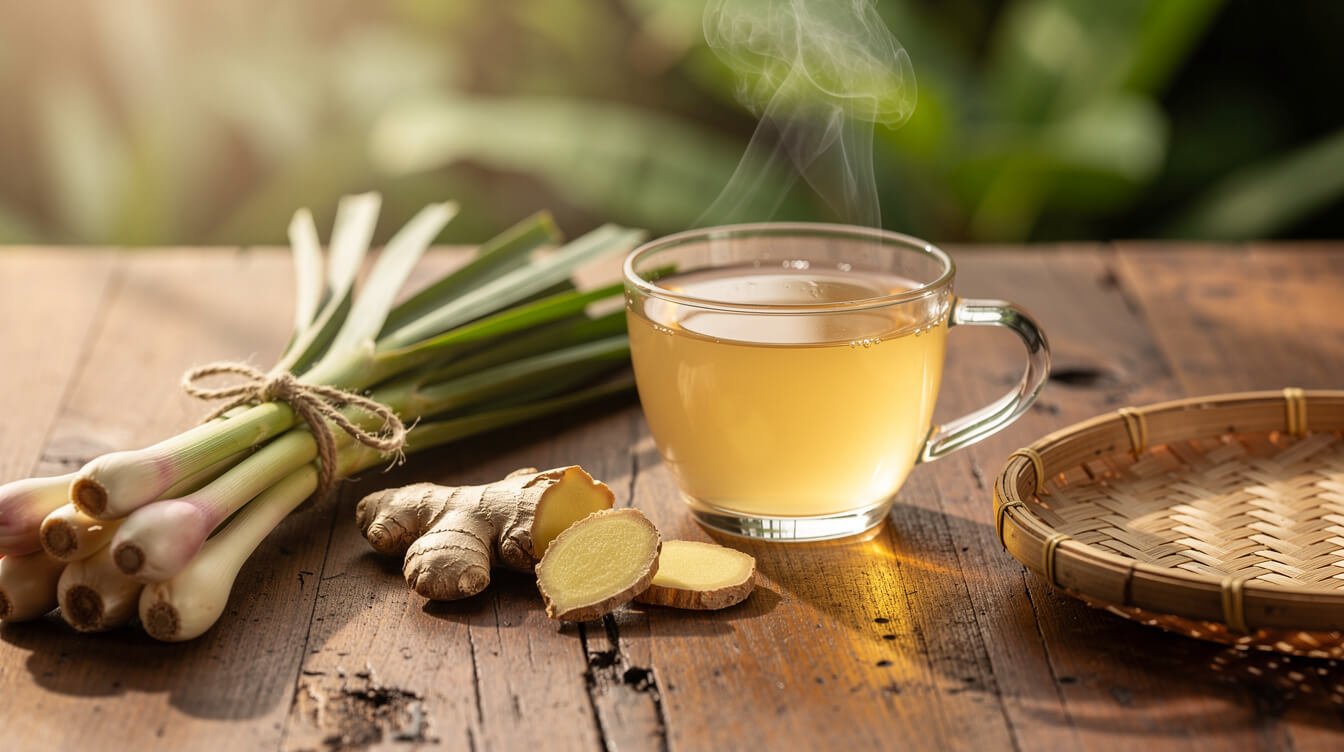
- Fresh stalk tea. Trim one or two fresh stalks, peel off the tough outer layer, and bruise them with the back of a knife to release the oils. Cut them into short pieces, pour over a cup of just-boiled water, and steep for 5–10 minutes. If you only have dried lemongrass, use about 1 teaspoon per cup.
- Bali-style lemongrass and ginger (wedang sereh). Simmer 2 bruised stalks with a few slices of fresh ginger in 2 cups of water for 10 minutes. Add a little palm sugar or honey if you like. It’s warming, bright, and perfect for chilly evenings. For more calming cups, see our guide to herbal tea for relaxing.
- Cook with it. Tie a bruised stalk in a knot and drop it into soups, broths, rice, or curries while they simmer, then remove it before serving. It adds a fresh, lemony lift without any extra salt.
Shopping tip: Look for firm, pale-green stalks with a fragrant base at Asian grocers or farmers’ markets. Wrap extras in a damp paper towel and keep them in the fridge for up to two weeks, or chop and freeze them for later.
🎁 Get a Free Wellness Gift
Enter your name and email below to receive a special wellness gift from OlyLife — absolutely free!
Gentle Cautions
Lemongrass is widely enjoyed as a food and tea, but keep a few things in mind:
- Essential oil is different. Lemongrass essential oil is highly concentrated. Never swallow it, always dilute it before it touches your skin, and keep it away from children and pets (especially cats).
- Pregnancy and breastfeeding: Stick to ordinary food amounts, and ask your doctor or midwife before using lemongrass as a regular tea or supplement.
- Medications and health conditions: There’s limited research on how concentrated lemongrass products interact with medications. If you take prescription medicines or manage a health condition, check with your healthcare provider before using more than culinary amounts.
- Allergies: Stop using it if you notice a rash, stomach upset, or any sign of an allergic reaction.
The Takeaway
Lemongrass may not be a miracle herb, and that’s okay. It’s a fragrant, everyday plant that turns a simple cup of hot water into a small moment of tropical warmth. ✨ Missed last week’s spotlight? Catch up on stinging nettle, the prickly weed that brews a gentle tea, or explore more plants in our guide to herbal remedies.
This post is for general educational purposes only and is not medical advice. Herbs can interact with medications and health conditions. Please talk with a qualified healthcare provider before adding new herbs to your routine, especially if you are pregnant, nursing, or managing a health condition.