Thursday Herbal Spotlight: Stinging Nettle — The Prickly Weed That Brews a Gentle, Nourishing Tea
Most of us meet stinging nettle the hard way: a careless brush past a hedge, then an hour of tingling, itchy welts. So it may surprise you that this same “weed” has been one of the most cherished plants in European folk herbalism for centuries. Once the leaves are dried or cooked, the sting disappears completely. What’s left is a mild, grassy, surprisingly cozy tea. 🌿
Meet Stinging Nettle (Urtica dioica)
Nettle grows almost everywhere in the temperate world, from the edges of farm fields to the corners of city parks. The sting comes from tiny hollow hairs on the leaves and stems. They act like miniature needles that deliver a mix of irritating compounds, including histamine and formic acid. Drying, steeping in hot water, or cooking breaks those hairs down, which is why nettle tea and nettle soup are perfectly comfortable to enjoy.
Traditionally, nettle was gathered as a spring “tonic.” It was one of the first fresh greens after a long winter, and it went into soups, porridges, and teas. Herbalists have long thought of it as a nourishing herb rather than a dramatic one. The leaves naturally contain minerals such as calcium, potassium, and magnesium, plus vitamin K and plant compounds like flavonoids. Exact amounts vary with the soil, the season, and how the leaves are prepared, so think of nettle as a pleasant addition to a varied diet, not a supplement replacement.
What Research Suggests
Nettle has been studied less than herbs like turmeric or ginger, but a few studies are worth knowing about:
- Seasonal sniffles. In a small, one-week, double-blind study of 69 people with hay fever (Mittman, Planta Medica, 1990), participants taking freeze-dried nettle leaf rated it slightly better than placebo overall. The study was short and the effect was modest, so researchers consider it a hint worth exploring rather than proof.
- The sting itself. In a small crossover trial published in the Journal of the Royal Society of Medicine (Randall et al., 2000), 27 people with base-of-thumb pain applied fresh nettle leaf to the area daily for a week. They reported less pain and disability than with a non-stinging look-alike plant. It’s a fascinating echo of the old folk practice of “urtication,” though it’s far too small to draw firm conclusions from.
The honest takeaway: nettle is a gentle traditional herb with a few intriguing early studies, not a cure-all. That’s exactly how we like to approach herbs. Curious, appreciative, and realistic.
🎁 Get a Free Wellness Gift
Enter your name and email below to receive a special wellness gift from OlyLife — absolutely free!
3 Cozy Ways to Enjoy Nettle This Autumn
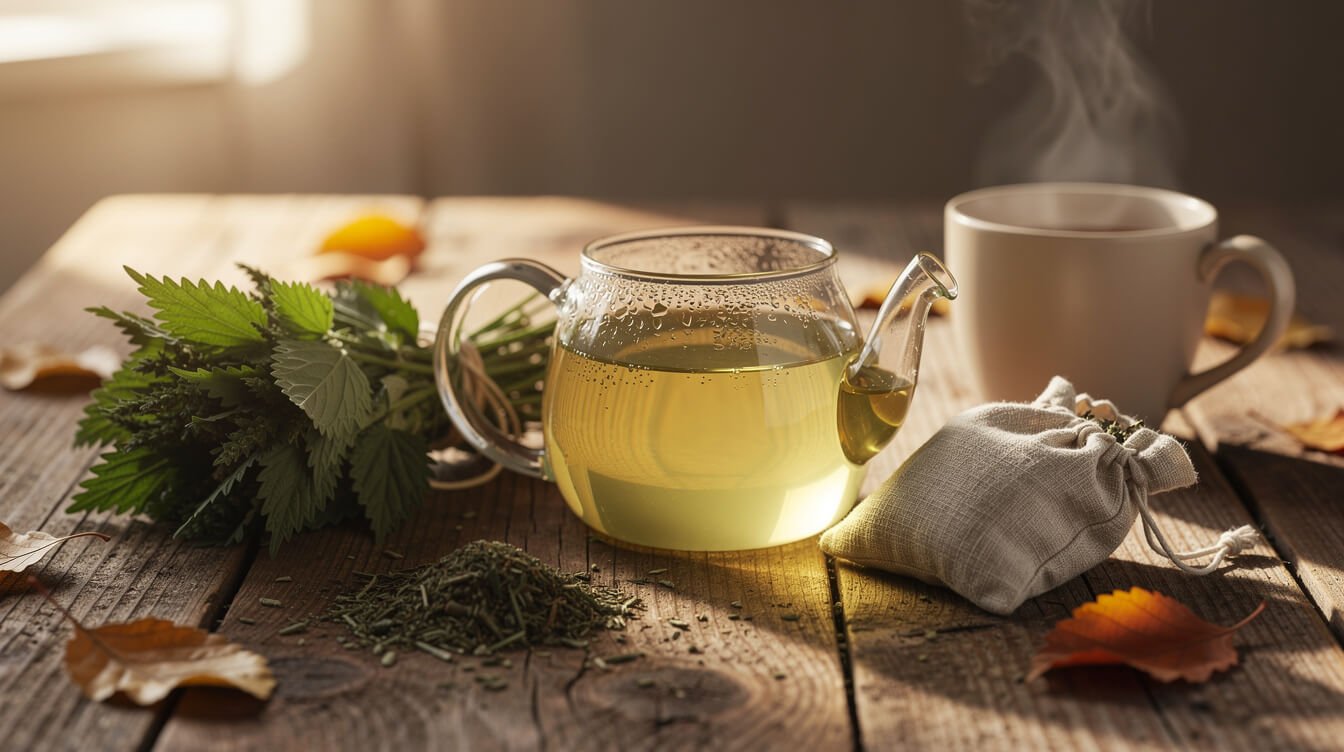
- Simple nettle tea. Steep 1–2 teaspoons of dried nettle leaf in a cup of just-boiled water for 5–10 minutes, then strain. The flavor is mild and green, a little like a softer green tea without the caffeine.
- Nettle + peppermint blend. Mix equal parts dried nettle and peppermint for a brighter, refreshing after-dinner cup. If you enjoy digestive blends, our guide to herbal tea for digestion has more pairing ideas.
- Stir it into soup. A spoonful of dried nettle crumbled into lentil, potato, or vegetable soup adds a spinach-like depth. Use it the way you would any dried green herb.
Shopping tip: Look for loose-leaf or bagged nettle labeled Urtica dioica leaf from a reputable tea or herb supplier. If you forage fresh nettle, wear thick gloves, pick only young tops far from roadsides and sprayed areas, and always cook or dry them before eating.
Gentle Cautions
Nettle is widely enjoyed as a food and tea, but it isn’t right for everyone:
- Medications: Because nettle may have mild diuretic effects and contains vitamin K, talk to your healthcare provider first if you take blood thinners (like warfarin), diuretics, lithium, blood pressure medication, or diabetes medication.
- Pregnancy and breastfeeding: Ask your doctor or midwife before using nettle beyond ordinary food amounts.
- Allergies: Stop using it if you notice stomach upset, a rash, or any sign of an allergic reaction.
- Kidney concerns: If you have a kidney condition, check with your healthcare provider before drinking herbal teas regularly.
The Takeaway
Stinging nettle is a lovely reminder that some of the most traditional herbs are hiding in plain sight. Treat it with a little respect (and gloves!), and it becomes a calm, nourishing cup for the shorter, cooler days ahead. ✨ Missed last week’s spotlight? Catch up on hibiscus, the tart ruby-red tea, or explore more plants in our guide to herbal remedies.
This post is for general educational purposes only and is not medical advice. Herbs can interact with medications and health conditions. Please talk with a qualified healthcare provider before adding new herbs to your routine, especially if you are pregnant, nursing, or managing a health condition.