Saturday Spotlight: Oil Pulling — The Ayurvedic Morning Swish, and What Research Actually Suggests
This week’s Saturday Spotlight is a slow-morning ritual you can do while the kettle boils. Oil pulling means gently swishing a spoonful of edible oil around your mouth for several minutes, then spitting it out. It comes from Ayurveda, where classical texts describe oil-swishing practices called kavala and gandusha as part of a daily self-care routine. Today it’s a popular wellness trend. Here’s what it is, what research suggests, and how to try it safely this weekend. 🌿
What Oil Pulling Is (and Isn’t)
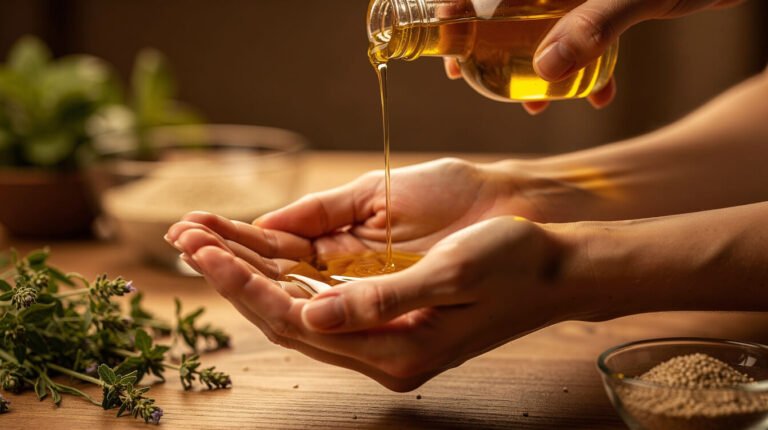
Coconut and sesame oil are the most common choices. You swish the oil slowly through your teeth, without gargling, and then spit it into the trash. You’ll often see claims that it “pulls toxins” out of the body, whitens teeth or eases all kinds of health problems. There’s no good evidence for any of that. The research focuses on one modest question: does it help with plaque and gum health in the short term?
What Research Suggests
The studies are mostly small and short, but the results are interesting:
- An early review: A 2016 systematic review found 5 randomized trials with 160 people in total, each lasting 10–45 days. The authors concluded that oil pulling may have beneficial effects on oral hygiene but said better trials were needed (Gbinigie et al., Complement Ther Med, 2016).
- A bigger meta-analysis: A 2024 review pooled 21 trials. Oil pulling was linked to better gum-health scores than non-chlorhexidine comparisons. Chlorhexidine, a prescription-strength mouthwash, still reduced plaque more. The authors rated the overall certainty of the evidence as very low (Jong et al., Int J Dent Hyg, 2024).
- A recent controlled trial: In a 2025 study, 40 adults swished either sesame oil or distilled water for 15 minutes every morning for 8 weeks. Plaque fell more in the sesame oil group (a median drop of about 19% vs 10%). The researchers described oil pulling as a possible add-on to brushing, not a replacement (Zürcher et al., Clin Oral Investig, 2025).
It’s also worth knowing that the American Dental Association doesn’t recommend oil pulling as a dental hygiene practice because the evidence is still limited. So keep brushing twice a day with fluoride toothpaste, clean between your teeth, and see your dentist. Treat oil pulling as an optional extra, not a substitute.
A Gentle 5-Step Morning Routine
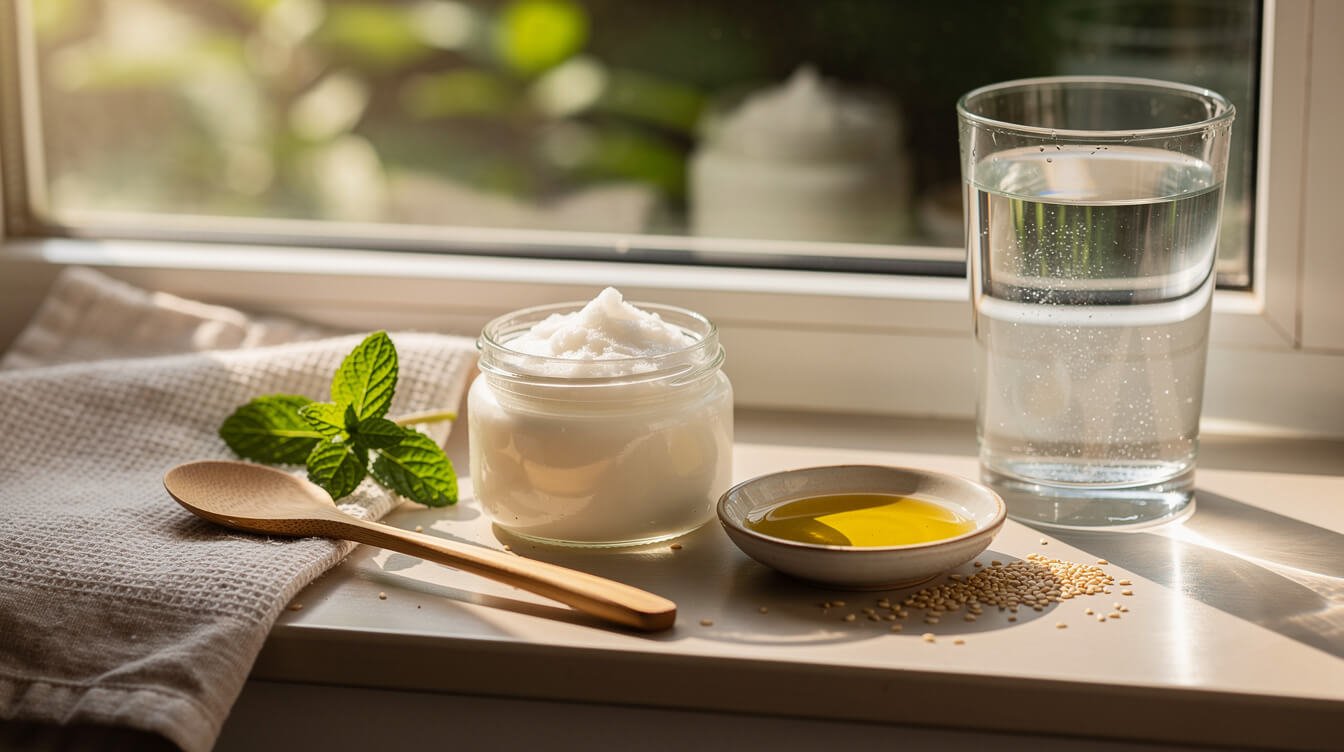
- Start small. Use 1 teaspoon of coconut or sesame oil, and work up to 1 tablespoon if that feels comfortable. Solid coconut oil melts in a few seconds in your mouth.
- Swish, don’t gargle. Push and pull the oil slowly between your teeth with your mouth closed. Keep your head upright and don’t tip it back.
- Keep it short at first. 5 minutes is a fine start. Many studies used 10–15 minutes, but there’s no need to push it if your jaw gets tired.
- Spit into the trash, not the sink. Coconut oil hardens as it cools and can clog pipes. A paper towel works well.
- Rinse and brush. Rinse with warm water, then brush and floss as usual.
It pairs nicely with other quiet morning rituals, like a few minutes of dry brushing before your shower or a slow facial gua sha afterward. ✨
🎁 Get a Free Wellness Gift
Enter your name and email below to receive a special wellness gift from OlyLife — absolutely free!
When to Skip It
The most important safety rule is to never gargle or inhale the oil. Doctors have reported rare cases of lipoid pneumonia, a lung inflammation caused by breathing in oil, in people who practiced oil pulling regularly (Kuroyama et al., BMC Pulm Med, 2015). If you develop a new cough or shortness of breath, stop and talk with your doctor. Oil pulling isn’t a good fit for young children or for anyone who has trouble swallowing, chokes easily or has a coconut or sesame allergy. If your jaw is sore, keep sessions short or skip them. If you have gum bleeding, tooth pain or a dental condition, see your dentist rather than relying on oil pulling.
The Takeaway
Oil pulling is not a detox or a cure, and it won’t replace your toothbrush. But early research suggests it may be a pleasant add-on for gum health, and a few quiet minutes of swishing can be a calm way to start a Saturday morning. For more traditional plant-based practices, explore our guide to herbal remedies.
This post is for general wellness education and isn’t medical or dental advice. If you have concerns about your teeth, gums or breathing, please talk with your dentist or a qualified healthcare provider.
References
Gbinigie O, et al. Effect of oil pulling in promoting oro dental hygiene: a systematic review of randomized clinical trials. Complement Ther Med. 2016;26:47–54.
Jong FJX, Ooi J, Teoh SL. The effect of oil pulling in comparison with chlorhexidine and other mouthwash interventions in promoting oral health: a systematic review and meta-analysis. Int J Dent Hyg. 2024;22:78–94.
Zürcher C, et al. The plaque reducing efficacy of oil pulling with sesame oil: a randomized-controlled clinical study. Clin Oral Investig. 2025;29:53.
Kuroyama M, et al. Exogenous lipoid pneumonia caused by repeated sesame oil pulling: a report of two cases. BMC Pulm Med. 2015;15:135.