FAQ Friday: 5 Common Questions About Adaptogens Answered
Adaptogens are everywhere right now — in your morning latte, your supplement shelf, and all over social media. But what are they, really? This FAQ Friday, we’re cutting through the noise with clear, evidence-informed answers to the questions we hear most. 🌿
1. What Exactly Are Adaptogens?
Adaptogens are a class of herbs and mushrooms that have been traditionally used to help the body adapt to stress. The term was coined in 1947 by Russian scientist Dr. Nikolai Lazarev, but many of these plants have been used in Ayurvedic and Traditional Chinese Medicine for centuries.
To qualify as an adaptogen, a plant must meet three criteria: it should be generally safe for most people, it should help the body resist a wide range of stressors (physical, chemical, and biological), and it should have a normalizing effect — meaning it helps bring the body back toward balance rather than pushing it in one direction.
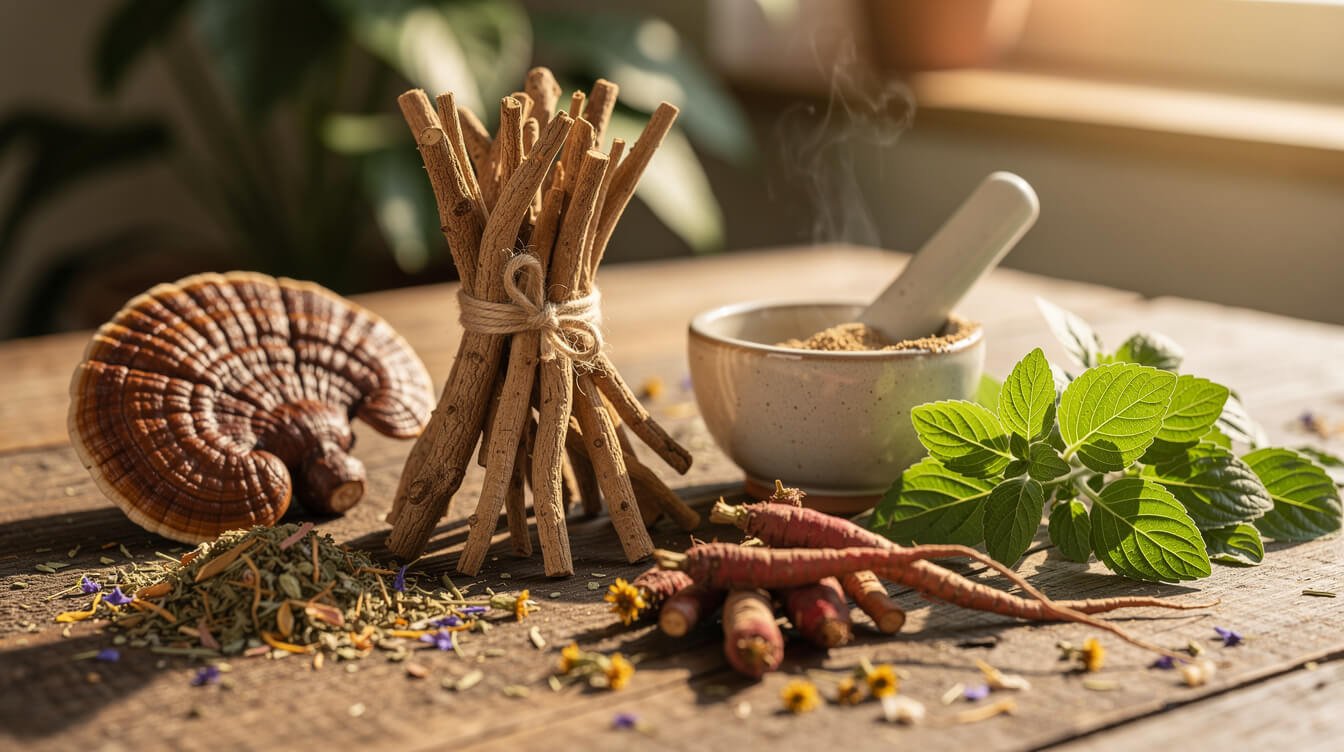
Popular adaptogens include ashwagandha, rhodiola rosea, holy basil (tulsi), reishi mushroom, and maca root.
2. How Do Adaptogens Actually Work?
Research suggests that adaptogens may work by modulating the body’s stress-response system — specifically the hypothalamic-pituitary-adrenal (HPA) axis. When you’re under stress, your body releases cortisol. Over time, chronically elevated cortisol can affect everything from sleep to digestion to immune function.
Adaptogens may help regulate this cortisol response, potentially supporting a more balanced reaction to stress rather than the constant “fight or flight” many of us experience. Think of them as a thermostat for your stress response — they may help keep things from running too hot or too cold.
If you’re interested in other natural approaches to calming your stress response, our guide on why your vagus nerve may be the key to feeling calm explores another fascinating pathway.
3. Which Adaptogen Is Best for Beginners?
There’s no single “best” adaptogen — it depends on what you’re looking for. Here’s a quick guide:
- For stress and sleep: Ashwagandha is one of the most-studied adaptogens, with research suggesting it may support healthy cortisol levels and restful sleep.
- For energy and focus: Rhodiola rosea has been traditionally used to combat fatigue and may support mental clarity during demanding periods.
- For everyday calm: Holy basil (tulsi) is revered in Ayurveda as the “queen of herbs” and is commonly enjoyed as a soothing tea.
- For immune support: Reishi mushroom has been used in Traditional Chinese Medicine for centuries and is often called the “mushroom of immortality.”
Start with one at a time so you can notice how your body responds. Most practitioners suggest giving an adaptogen at least 4–6 weeks before evaluating its effects.
🎁 Get a Free Wellness Gift
Enter your name and email below to receive a special wellness gift from OlyLife — absolutely free!
4. Are There Any Side Effects I Should Know About?
While adaptogens are generally considered safe for most healthy adults, they’re not for everyone. A few things to keep in mind:
- Some adaptogens may interact with medications — especially thyroid, blood pressure, and blood sugar medications.
- Pregnant or nursing individuals should consult a healthcare provider before use.
- Ashwagandha belongs to the nightshade family, which some people are sensitive to.
- Quality matters — look for products that have been third-party tested for purity and potency.
Always talk to your healthcare provider before adding adaptogens to your routine, especially if you’re taking medications or managing a health condition.
5. Can I Combine Adaptogens With Other Wellness Practices?
Absolutely — and many wellness practitioners suggest that adaptogens may work best as part of a holistic approach. Consider pairing them with:
- Breathwork techniques — calming the nervous system from both sides
- Anti-inflammatory nutrition — these anti-inflammatory recipes pair beautifully with an adaptogenic routine
- Quality sleep practices — adaptogens may support sleep, but good sleep hygiene amplifies the benefits
- Regular movement — even gentle walking or yoga may enhance how your body responds to adaptogens
The key is consistency. Adaptogens aren’t a quick fix — they’re traditionally used as a daily practice, much like the holistic wellness approach we champion here at OlyLife.
Your Friday Takeaway
Adaptogens offer a time-tested, nature-based approach to supporting your body’s resilience. Start small, be patient, and always choose quality sources. Your wellness journey is uniquely yours — and these remarkable plants may be a gentle companion along the way. ✨
Have a question about adaptogens we didn’t cover? Let us know — we love hearing from our community!