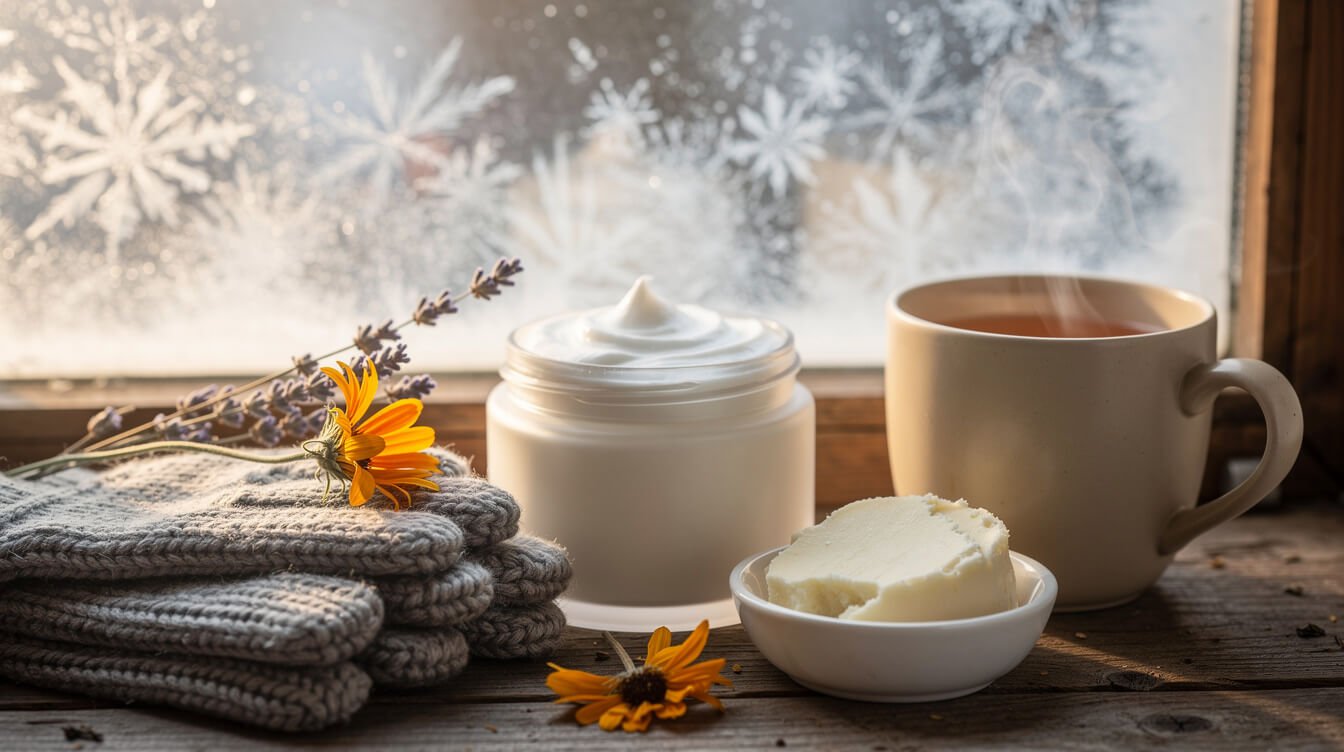
FAQ Friday: Dry Winter Skin — 5 Questions About Keeping Skin Comfortable When the Air Turns Cold
Happy FAQ Friday! As November settles in across the Northern Hemisphere, many of us notice the same thing: tight, flaky skin, rough knuckles and lips that never quite feel comfortable. Cold air outside and dry heated air inside make a tough combination for your skin. Here are the dry-skin questions we hear most, plus a few simple habits that may help this season. 🌿
1. Why does my skin get so dry when the weather turns cold?
Your skin’s outermost layer works like a protective wall that holds moisture in. Cold air carries very little water, and indoor heating dries the air even more. A 2016 review in the Journal of the European Academy of Dermatology and Venereology (Engebretsen and colleagues) found that low humidity and cold temperatures generally weaken that barrier, so skin loses water faster and can become more sensitive. Add hot showers and frequent handwashing, and winter dryness makes sense.
2. Is my long, hot shower making it worse?
Probably a little. Hot water feels wonderful on a cold morning, but it strips away the natural oils that help your skin hold onto moisture. Dermatologists usually suggest:
- Keep it warm, not hot, and aim for about 5–10 minutes.
- Use a gentle, fragrance-free cleanser and save it for the areas that need it.
- Pat your skin dry with a towel instead of rubbing.
3. When should I moisturize, and what kind should I use?
Timing matters more than most people think. The American Academy of Dermatology recommends applying moisturizer within a few minutes of bathing or washing your hands, while your skin is still slightly damp. That helps lock in the water already on your skin.
In winter, thicker usually works better. Creams and ointments tend to hold up better than thin lotions. Look for fragrance-free formulas with ingredients such as glycerin, ceramides, shea butter or petrolatum. Keep a small tube by every sink, and if you’ve been washing your hands for a full 20 seconds (thank you!), follow each wash with a little hand cream. For lips, a plain balm is usually gentler than flavored or tingling ones, which can irritate.
🎁 Get a Free Wellness Gift
Enter your name and email below to receive a special wellness gift from OlyLife — absolutely free!
4. Will drinking more water fix my dry skin?
It may help a bit, but it’s not a magic fix. A small 2015 study of 49 young women found that adding about 2 liters of water a day for a month slightly raised skin hydration readings, mostly in those who drank less to begin with. A 2018 systematic review (Akdeniz and colleagues, Skin Research and Technology) concluded that the evidence is still weak and limited. Staying well hydrated is good for you in many ways, but for winter skin, what you do on the outside (gentle washing, moisturizing, humid air) usually makes the bigger difference.
5. Does a humidifier really help?
It can. Adding moisture back to dry indoor air is one of the easiest ways to take pressure off your skin, especially in the bedroom overnight. Many experts suggest keeping indoor humidity around 30–50%. Our indoor humidity tip shows how to check yours and keep a humidifier clean. If your hands and feet also feel chilly all winter, our guide to cold hands and feet has gentle ways to warm up, and soft gloves outdoors help protect your knuckles from wind, too.
When to Check In With a Professional
Most winter dryness responds to simple care within a week or two. Please talk with your healthcare provider or a dermatologist if your skin cracks and bleeds, itches enough to disturb your sleep, shows signs of infection (redness, warmth, swelling or pus), or doesn’t improve with home care. If you live with diabetes or circulation concerns, cracked skin on your feet deserves prompt attention, so mention it at your next visit rather than waiting.
The Takeaway
Winter skin care can be simple: shorter warm showers, moisturizer within a few minutes of washing, thicker fragrance-free creams, and a little extra humidity at home. Small, steady habits may keep your skin comfortable all season. ✨
What’s your go-to winter skin ritual? We’d love to hear what works for you.
This post is for general educational purposes and isn’t medical advice. If you have a skin condition such as eczema or psoriasis, or you’re unsure what’s right for your skin, please talk with your healthcare provider.