Your body was designed to handle stress — but it wasn’t designed to handle it nonstop. When stress becomes a constant companion rather than a passing response, your nervous system needs help finding its way back to balance. That’s where stress relief relaxation techniques come in: evidence-based practices that activate your body’s natural calming systems and help restore the equilibrium your mind and body crave.
Whether you’re dealing with work pressure, relationship challenges, health concerns, or simply the relentless pace of modern life, the right relaxation techniques may help you shift from survival mode to a state of genuine calm. In this comprehensive guide, you’ll discover breathwork protocols, meditation methods, movement practices, and natural wellness approaches — each backed by research and explained with step-by-step instructions you can use today.
Understanding Your Stress Response (and How Stress Relief Relaxation Techniques Reverse It)
Before diving into specific techniques, it helps to understand what’s actually happening in your body when you feel stressed — and why relaxation isn’t just “nice to have” but physiologically necessary.
The Autonomic Nervous System: Your Internal Switchboard
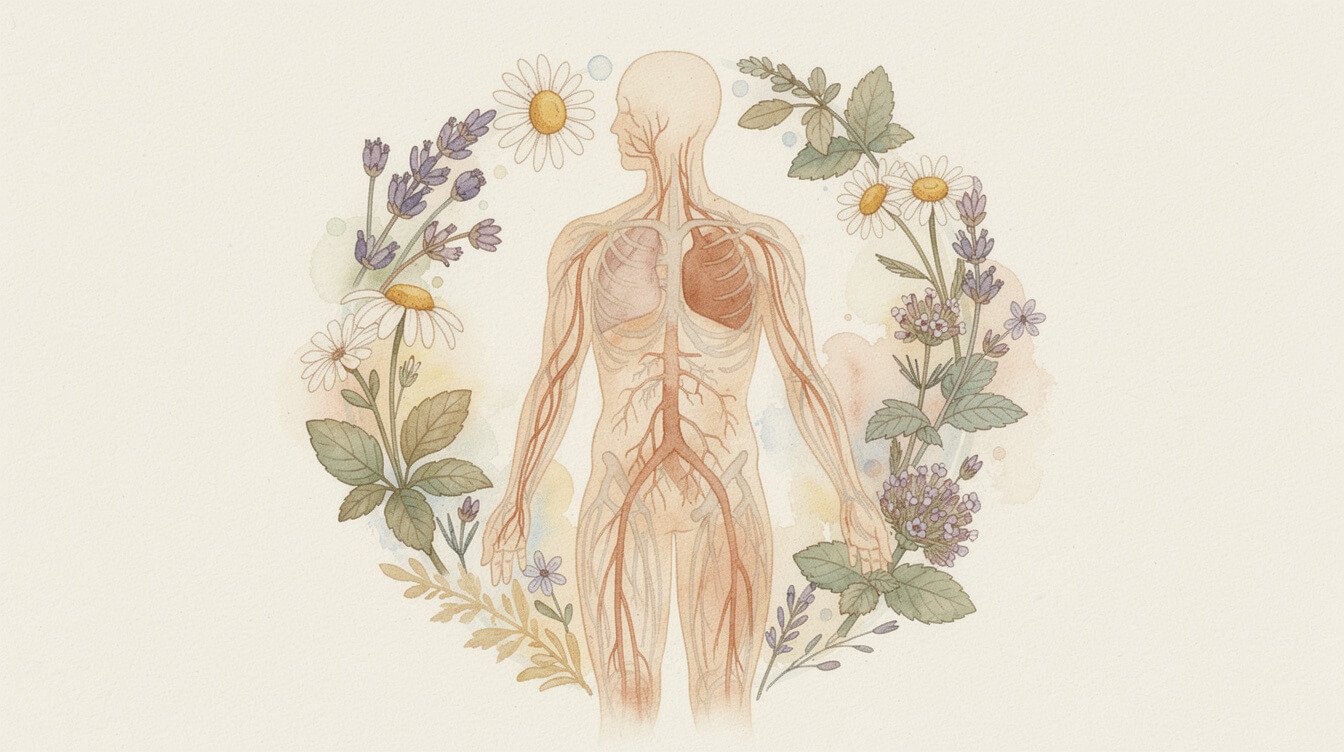
Your autonomic nervous system operates two complementary branches. The sympathetic nervous system activates your fight-or-flight response — increasing heart rate, tensing muscles, and flooding your bloodstream with cortisol and adrenaline. This is your survival system, and it’s incredibly useful when you face genuine danger.
The parasympathetic nervous system does the opposite. Often called the “rest-and-digest” system, it slows your heart rate, relaxes your muscles, improves digestion, and promotes cellular repair. This is your recovery system — and most people in modern life don’t activate it nearly enough.
The Vagus Nerve: Your Relaxation Highway
The vagus nerve is the longest cranial nerve in your body, running from your brainstem through your neck, chest, and abdomen. It serves as the primary communication pathway for your parasympathetic nervous system. When you stimulate the vagus nerve through specific relaxation techniques — deep breathing, humming, cold water exposure, or gentle movement — you essentially press your body’s “calm down” button.
Research published in the journal Frontiers in Neuroscience suggests that higher vagal tone (the measure of vagus nerve activity) is associated with better emotional regulation, reduced inflammation, and improved cardiovascular health. The good news? Vagal tone isn’t fixed — every stress relief relaxation technique in this guide may help strengthen it over time.
Why Chronic Stress Demands Active Relaxation
When your sympathetic nervous system stays activated for extended periods, the consequences compound: elevated cortisol disrupts sleep, weakens immune function, impairs digestion, and may even affect memory and cognitive clarity. Your body can’t simply “snap out of it” — it needs deliberate signals to shift back into parasympathetic mode. That’s exactly what relaxation techniques provide: intentional practices that activate your body’s natural recovery systems.
Breathwork Techniques for Immediate Stress Relief
Your breath is the fastest gateway to your nervous system. Unlike heart rate or digestion, breathing is the one autonomic function you can consciously control — and research consistently shows that specific breathing patterns may activate the parasympathetic response within minutes.
The 4-7-8 Breathing Technique
Developed by Dr. Andrew Weil, this pattern leverages the calming effect of extended exhalation to stimulate the vagus nerve.
How to practice:
- Sit or lie in a comfortable position. Place the tip of your tongue against the ridge behind your upper front teeth.
- Inhale quietly through your nose for 4 seconds.
- Hold your breath for 7 seconds.
- Exhale completely through your mouth, making a gentle whooshing sound, for 8 seconds.
- Repeat this cycle 4 times. Work up to 8 cycles as you become comfortable.
When to use it: Before bed, during moments of acute anxiety, or anytime you need to transition from “wired” to calm.
Box Breathing (Square Breathing)
Used by Navy SEALs and first responders, box breathing creates a rhythm of equal-length inhales, holds, and exhales that brings order to a chaotic nervous system.
How to practice:
- Inhale through your nose for 4 seconds.
- Hold at the top for 4 seconds.
- Exhale slowly through your mouth for 4 seconds.
- Hold at the bottom (lungs empty) for 4 seconds.
- Repeat for 4–6 rounds.
When to use it: During high-pressure work situations, before difficult conversations, or anytime you need focus without drowsiness.
Diaphragmatic (Belly) Breathing
Most people breathe shallowly into their chest — especially when stressed. Diaphragmatic breathing reverses this pattern, engaging the diaphragm muscle and sending a powerful “safe” signal to your brain.
How to practice:
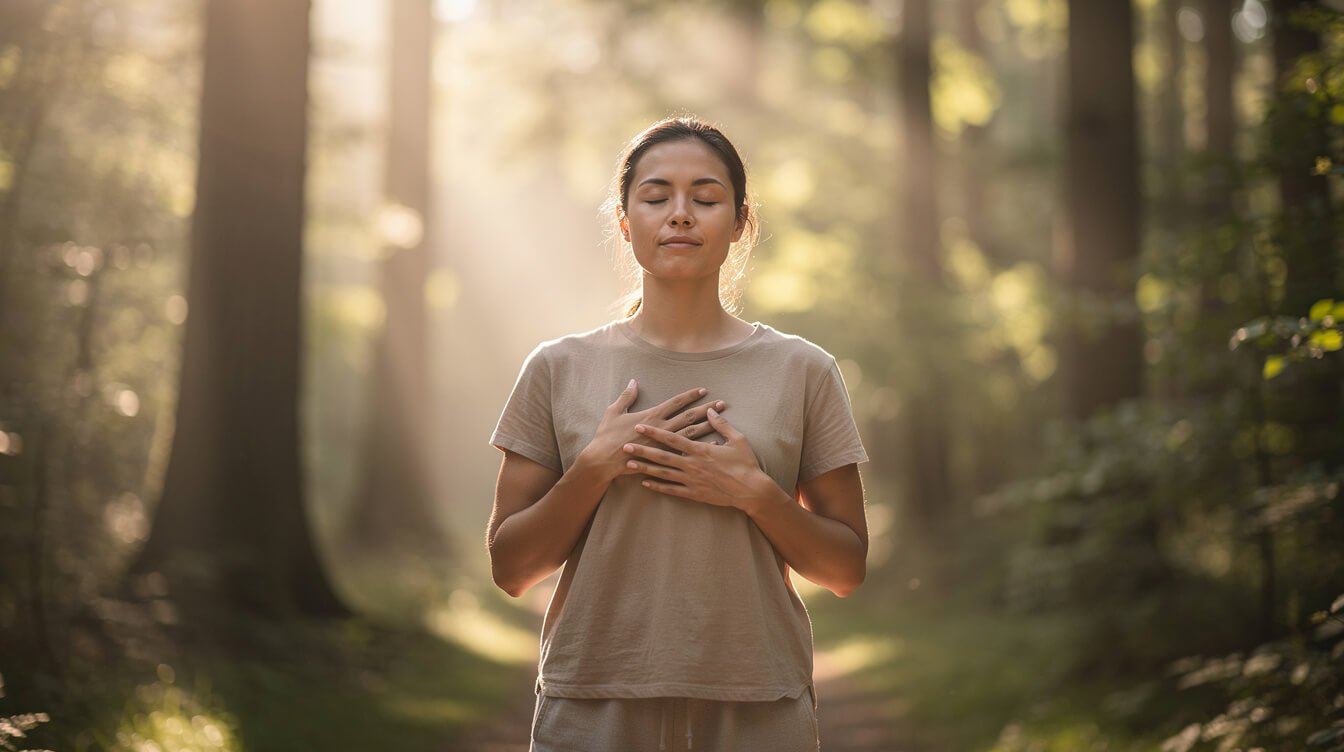
- Place one hand on your chest and the other on your belly.
- Breathe in slowly through your nose, directing the breath so your belly rises while your chest stays relatively still.
- Exhale slowly through pursed lips, feeling your belly fall.
- Aim for 6–10 breaths per minute (most people naturally breathe 12–20).
- Practice for 5–10 minutes daily.
A 2023 study in Cell Reports Medicine found that just 5 minutes of daily cyclic sighing (a variant of diaphragmatic breathing) reduced anxiety and improved mood more effectively than mindfulness meditation of the same duration. If you’re looking for the single most efficient stress relief relaxation technique, breathwork may be your best starting point.
Progressive Muscle Relaxation and Body Scanning
When stress lodges in your body — tight shoulders, clenched jaw, knotted stomach — sometimes the most direct path to relaxation runs through your muscles rather than your mind. Progressive muscle relaxation (PMR) and body scanning are two powerful techniques that work with this body-first approach.
Progressive Muscle Relaxation: A Complete Protocol
Developed by physician Edmund Jacobson in the 1930s, PMR involves systematically tensing and releasing muscle groups throughout your body. The deliberate tension-then-release cycle teaches your nervous system to recognize and let go of physical stress patterns.
Full-body PMR protocol (15–20 minutes):
- Lie down or sit in a comfortable chair. Close your eyes and take three slow diaphragmatic breaths.
- Feet: Curl your toes tightly. Hold for 5 seconds. Release and notice the sensation of relaxation for 10 seconds.
- Calves: Flex your feet, pulling your toes toward your shins. Hold 5 seconds. Release 10 seconds.
- Thighs: Squeeze your thigh muscles. Hold 5 seconds. Release 10 seconds.
- Glutes: Tighten your buttocks. Hold 5 seconds. Release 10 seconds.
- Abdomen: Draw your belly button toward your spine. Hold 5 seconds. Release 10 seconds.
- Hands: Make tight fists. Hold 5 seconds. Release 10 seconds.
- Forearms: Bend your wrists back, fingers pointing up. Hold 5 seconds. Release 10 seconds.
- Upper arms: Flex your biceps. Hold 5 seconds. Release 10 seconds.
- Shoulders: Shrug your shoulders up toward your ears. Hold 5 seconds. Release 10 seconds.
- Neck: Gently press your head back against the surface. Hold 5 seconds. Release 10 seconds.
- Face: Scrunch your entire face — squeeze eyes shut, wrinkle nose, clench jaw. Hold 5 seconds. Release 10 seconds.
- Take three final deep breaths. Notice how your body feels compared to when you began.
Research in the Journal of Clinical Psychology has shown that regular PMR practice may reduce cortisol levels, lower blood pressure, and improve sleep quality — making it one of the most well-studied stress relief relaxation techniques available.
Body Scan Meditation
While PMR uses physical tension and release, body scan meditation uses pure awareness. You simply move your attention through each body part, noticing sensations without trying to change them.
How to practice:
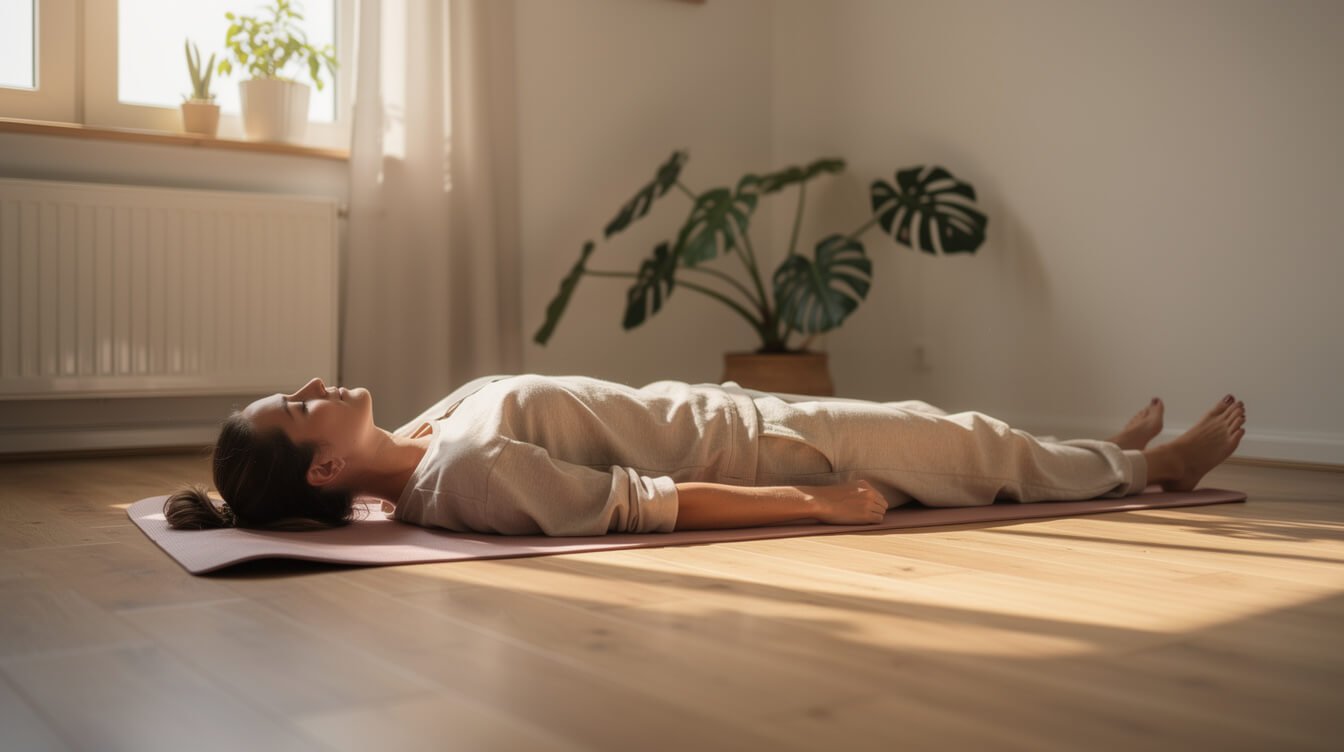
- Lie on your back with your arms at your sides, palms facing up.
- Close your eyes and take several slow breaths.
- Begin at the top of your head. Notice any sensations — warmth, tingling, tension, numbness — without judgment.
- Slowly move your attention downward: forehead, eyes, cheeks, jaw, neck, shoulders, arms, hands, chest, abdomen, hips, thighs, knees, calves, feet.
- Spend 30–60 seconds with each area. If your mind wanders, gently return to wherever you left off.
- After reaching your feet, expand your awareness to your whole body breathing together.
Body scans are particularly effective before sleep or after intense exercise. If you’re exploring the benefits of meditation, body scanning offers a gentle entry point that doesn’t require clearing your mind — just noticing what’s already there.
Meditation and Mindfulness for Lasting Calm
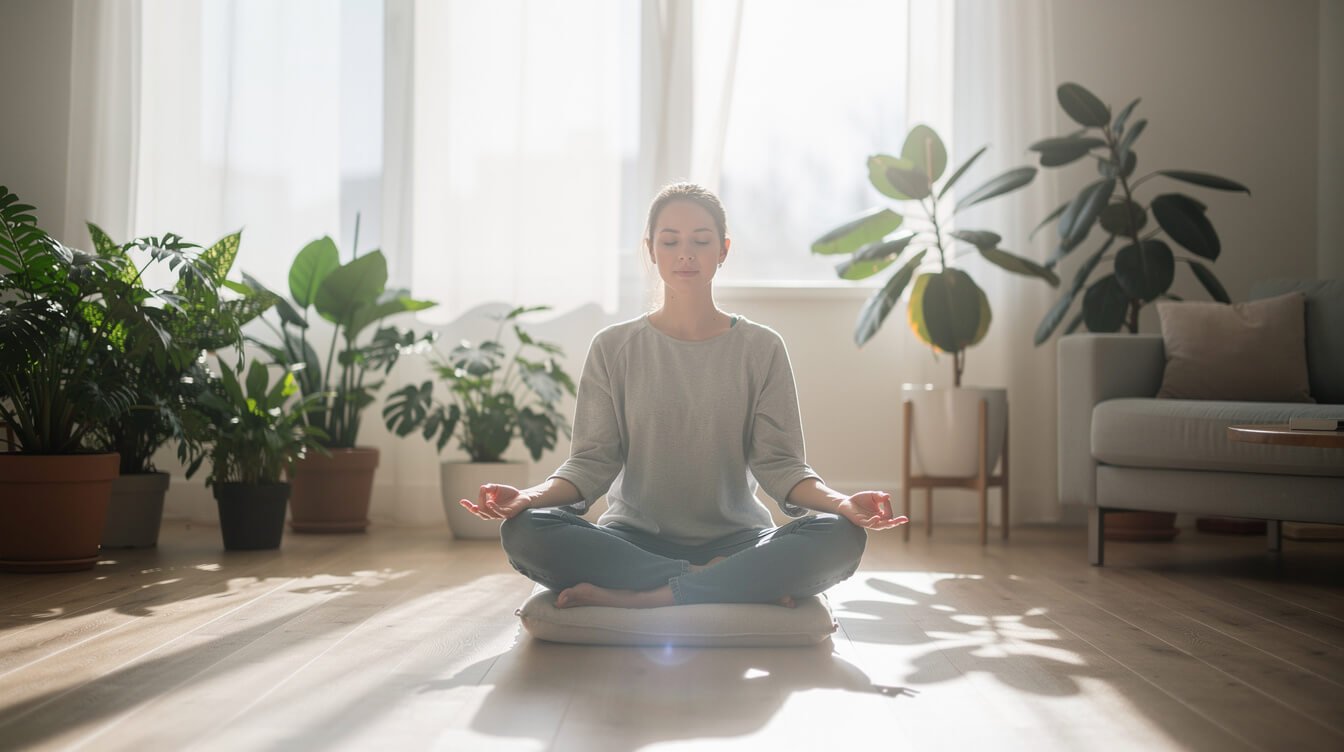
While breathwork and PMR offer quick relief, meditation builds your long-term capacity to handle stress. Think of meditation as strength training for your nervous system — each session may help your brain become more resilient and less reactive over time.
Mindfulness Meditation
Mindfulness is the practice of paying attention to the present moment without judgment. Rather than trying to empty your mind (a common misconception), you’re training yourself to observe thoughts and sensations as they arise, without getting swept away by them.
A simple 10-minute mindfulness practice:
- Sit comfortably with your spine upright but not rigid.
- Set a timer for 10 minutes.
- Close your eyes or soften your gaze toward the floor.
- Focus on the sensation of your breath — the air entering your nostrils, the rise of your chest, the gentle fall of your exhale.
- When thoughts arise (and they will), simply notice them and label them: “thinking,” “planning,” “worrying.” Then return to your breath.
- Each time you notice you’ve drifted and come back — that moment of return IS the practice. It’s not a failure; it’s a repetition, like a bicep curl for your attention.
Loving-Kindness Meditation (Metta)
This form of meditation specifically targets the stress that comes from difficult relationships, self-criticism, or feelings of isolation. Research from Stanford University suggests that even brief loving-kindness practice may increase feelings of social connection and positive emotions.
How to practice:
- Sit comfortably and close your eyes.
- Begin with yourself. Silently repeat: “May I be happy. May I be healthy. May I be safe. May I live with ease.”
- Next, think of someone you love. Direct the same phrases toward them.
- Then someone neutral (a stranger, a cashier).
- Finally, someone you find difficult. Extend the same wishes, even if it feels challenging.
- Close by expanding to all beings everywhere.
Guided Visualization
Visualization harnesses your brain’s inability to fully distinguish between vividly imagined experiences and real ones. By mentally creating a peaceful scene, you may activate many of the same calming neurological pathways as actually being there.
Try this 5-minute visualization:
- Close your eyes and take three slow breaths.
- Imagine yourself in your ideal peaceful place — a beach, forest, garden, mountain meadow.
- Engage all five senses: What do you see? (Specific colors, shapes, light.) What do you hear? (Birds, waves, wind.) What do you feel? (Warm sand, cool breeze, soft grass.) What do you smell? (Salt air, pine, flowers.) What do you taste? (Clean air, perhaps a fruit.)
- Stay in this scene for several minutes, adding details and allowing yourself to feel genuinely present.
- When ready, slowly bring your awareness back to the room.
Visualization works especially well when combined with deep breathing — each exhale deepens your immersion in the imagined scene.
Movement-Based Stress Relief Relaxation Techniques
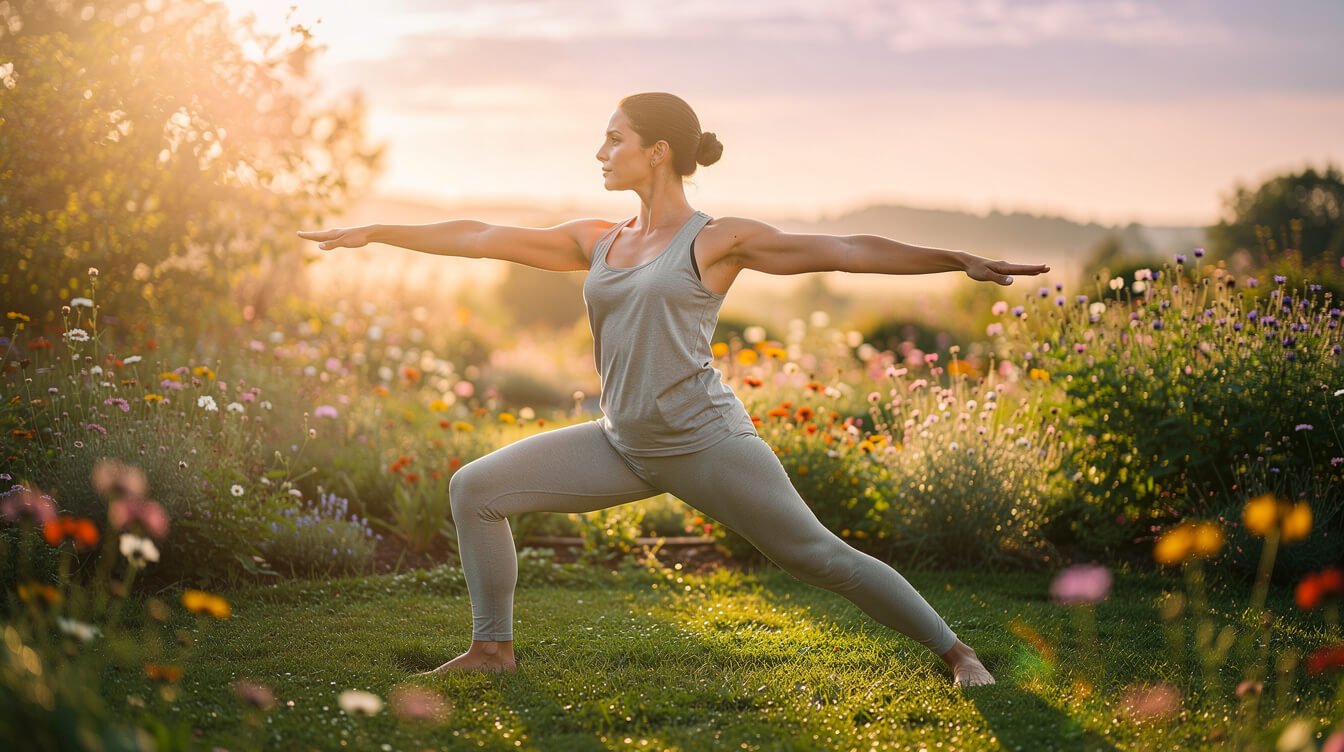
Your body stores stress physically. Movement-based techniques don’t just distract you from tension — they actively discharge it through your muscles, fascia, and nervous system. The best movement practices for stress combine gentle physical effort with mindful awareness.
Yoga for Stress Relief
Yoga’s unique combination of physical postures, breathwork, and meditation makes it one of the most comprehensively studied stress reduction methods. Research published in Psychoneuroendocrinology found that regular yoga practice may lower cortisol, reduce inflammatory markers, and increase GABA (a calming neurotransmitter) in the brain.
Five restorative poses for stress relief:
- Child’s Pose (Balasana): Kneel with knees wide, fold forward, arms extended. Hold 1–3 minutes. Calms the nervous system and gently stretches the back.
- Legs-Up-the-Wall (Viparita Karani): Lie on your back with legs extended up a wall. Hold 5–15 minutes. May reduce heart rate and promote venous return.
- Cat-Cow (Marjaryasana-Bitilakasana): Alternate between arching and rounding your spine on hands and knees, synchronized with breath. 10–15 rounds. Releases spinal tension.
- Supine Twist (Supta Matsyendrasana): Lie on your back, draw one knee across your body. Hold 1–2 minutes per side. Releases lower back and hip tension.
- Corpse Pose (Savasana): Lie flat on your back, arms at sides, palms up. Hold 5–10 minutes with deep breathing. Complete physical and mental surrender.
Tai Chi and Qigong
These ancient Chinese practices combine slow, flowing movements with deep breathing and mental focus. Often described as “meditation in motion,” tai chi and qigong may be particularly effective for people who find stillness-based meditation difficult. A meta-analysis in the British Journal of Sports Medicine found that tai chi may significantly reduce anxiety and depression symptoms while improving sleep quality.
Grounding and Earthing
Grounding involves making direct physical contact with the earth’s surface — walking barefoot on grass, soil, or sand. While the mechanisms are still being studied, research in the Journal of Environmental and Public Health suggests that earthing may reduce cortisol levels and improve sleep patterns. The practice also naturally combines gentle movement with sensory awareness, making it a low-barrier entry point for stress relief.
Curious about the research behind this practice? Our comprehensive guide to grounding benefits covers the science, techniques, and practical ways to incorporate earthing into your daily routine.
Rhythmic Exercise
Any repetitive, rhythmic movement — walking, swimming, cycling, dancing — can become meditative when you add mindful awareness. The key is focusing on the physical sensations of the movement itself: feet striking the ground, water flowing past your skin, the rhythm of pedaling. This combination of physical exertion and present-moment awareness creates a moving meditation that many people find more accessible than sitting still.
🎁 Get a Free Wellness Gift
Enter your name and email below to receive a special wellness gift from OlyLife — absolutely free!
Natural Wellness Approaches to Stress Relief
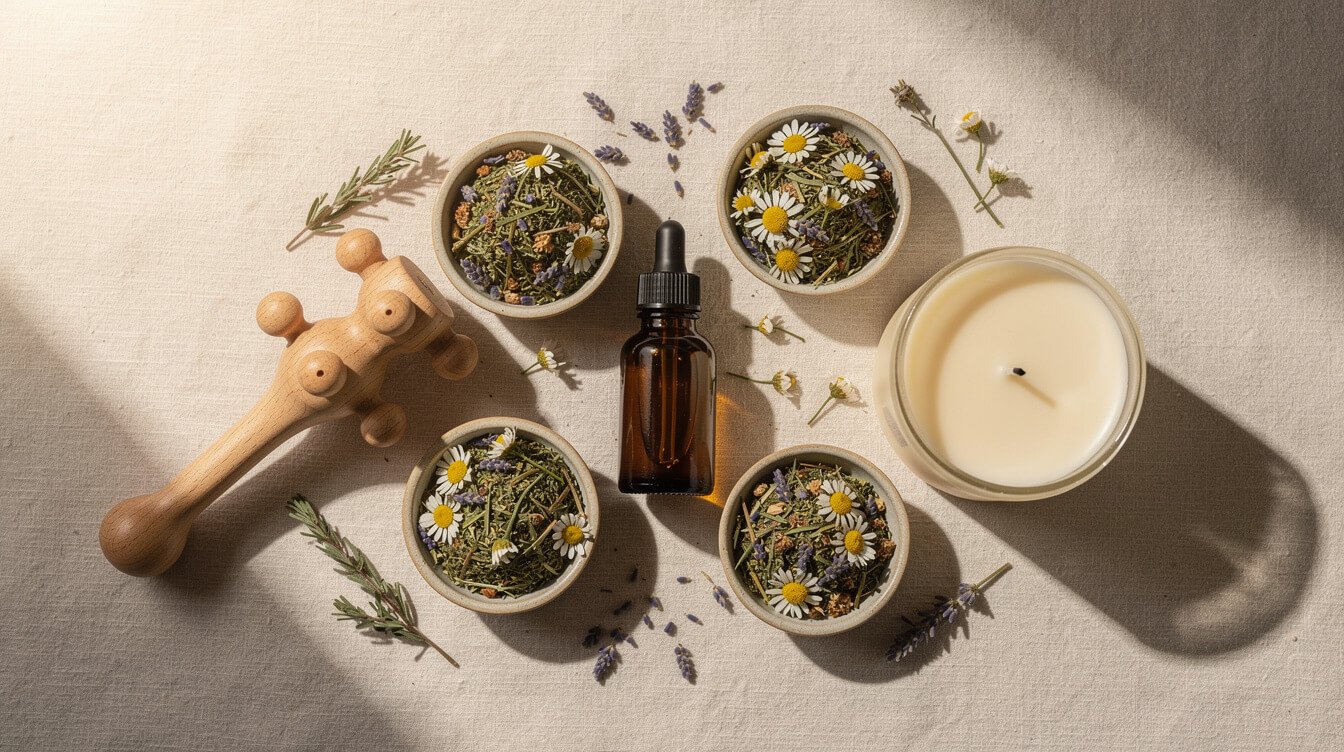
Beyond active techniques, several natural wellness practices may complement your relaxation routine by working through different sensory and physiological pathways.
Aromatherapy and Essential Oils
Your olfactory system has a direct connection to the limbic system — the brain region governing emotions and memory. This is why certain scents can instantly shift your mood. Research suggests several essential oils may support relaxation:
- Lavender: Perhaps the most studied essential oil for stress. A systematic review in the Journal of Alternative and Complementary Medicine found that lavender aromatherapy may reduce anxiety across multiple clinical settings.
- Chamomile: Known for its calming properties, chamomile essential oil may help ease nervous tension when diffused or added to a warm bath.
- Bergamot: This citrus oil may uniquely both uplift and calm — research suggests it may reduce cortisol levels while improving mood.
- Frankincense: Traditionally used in meditation practices, frankincense may help deepen breathwork and promote a contemplative state.
How to use: Add 3–5 drops to a diffuser during your relaxation practice, mix with a carrier oil for self-massage, or add to a warm bath before bed.
Adaptogenic Herbs
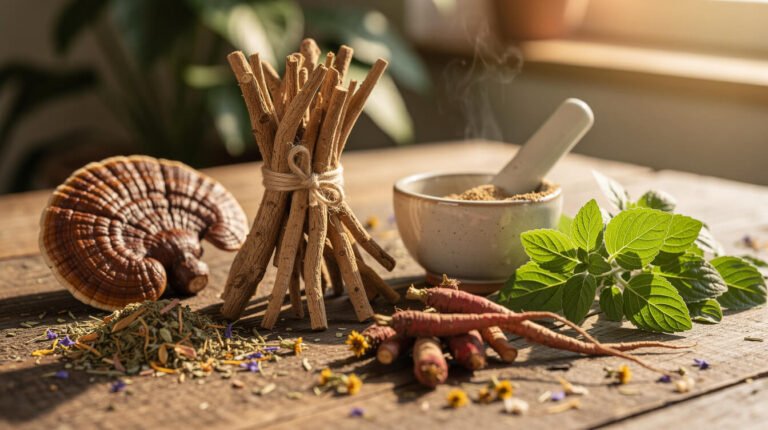
Adaptogens are a class of herbs that may help your body adapt to stress by supporting the HPA (hypothalamic-pituitary-adrenal) axis — the system that regulates your stress hormone production. Rather than sedating you, adaptogens are thought to help normalize your stress response.
- Ashwagandha: One of the most researched adaptogens, ashwagandha has shown promise in clinical trials for reducing cortisol and improving resilience to stress. Learn more in our complete guide to ashwagandha benefits.
- Rhodiola rosea: May support mental performance under stress and reduce fatigue.
- Holy basil (Tulsi): Used in Ayurvedic medicine for centuries, holy basil may help regulate cortisol and support mental clarity.
For a deeper exploration of how these remarkable plants work, visit our guide to adaptogenic herbs and their stress-fighting properties.
Sound Healing
From Tibetan singing bowls to tuning forks to carefully calibrated frequencies, sound healing uses vibration to influence brainwave patterns and promote relaxation. Research published in the Journal of Evidence-Based Integrative Medicine found that sound meditation using singing bowls may reduce tension, anger, fatigue, and depressed mood.
The practice works partly through entrainment — your brainwaves naturally synchronize with external rhythmic stimuli. Slower frequencies (like theta waves at 4–7 Hz) are associated with deep relaxation and meditation. Discover how different frequencies may support your wellness in our guide to sound healing frequency.
Forest Bathing (Shinrin-Yoku)
This Japanese practice involves immersing yourself in a forest environment with slow, mindful awareness. Unlike hiking, the goal isn’t exercise or reaching a destination — it’s simply being present among trees. Research from Japan’s Chiba University found that forest bathing may lower cortisol levels, reduce blood pressure, and boost natural killer cell activity (a measure of immune function). Even 20 minutes in a natural green space may provide measurable stress relief benefits.
How to Build Your Personal Stress Relief Relaxation Routine
Knowing individual techniques is valuable, but the real transformation happens when you weave them into a consistent daily practice. Here’s a framework for building a routine that works with your life, not against it.
Morning: Start Your Day Grounded (5–10 Minutes)
Choose one of these morning anchors:
- 5 minutes of diaphragmatic breathing before checking your phone
- A brief body scan while still lying in bed — notice where you’re holding tension before the day begins
- 3 minutes of gentle stretching (cat-cow, child’s pose) to wake your body mindfully
Midday: The Quick Reset (2–5 Minutes)
When stress builds during the day, use these rapid techniques:
- Box breathing: 4 rounds (about 90 seconds) at your desk
- Micro body scan: Close your eyes, scan from head to feet in 60 seconds, consciously releasing any tension you notice
- Grounding break: Step outside barefoot for 2 minutes if possible, or simply press your feet firmly into the floor and notice the sensation
Evening: Wind Down and Release (10–20 Minutes)
Your evening routine signals to your nervous system that the day’s demands are over:
- Progressive muscle relaxation: Full 15-minute protocol as described above
- Lavender aromatherapy: Diffuse while practicing evening breathwork
- 4-7-8 breathing: 4–8 cycles as you prepare for sleep
- Gratitude reflection: Note three things that went well today — this simple practice retrains your brain away from the negativity bias that fuels chronic stress
For more strategies on creating an optimal evening routine, explore our sleep hygiene tips guide — quality sleep and effective stress relief relaxation techniques reinforce each other in a powerful wellness cycle.
Combining Techniques for Greater Effect
Many of these practices work even better together:
- Breathwork + aromatherapy: Deep breathing while diffusing lavender
- Body scan + sound healing: Play singing bowl recordings during your body scan
- Yoga + visualization: Use guided imagery during savasana
- Walking + mindfulness: Transform your daily walk into a moving meditation
Start with one technique that resonates with you, practice it consistently for a week, then layer in additional practices. The goal isn’t to do everything — it’s to find what genuinely helps YOUR nervous system recalibrate. For a broader perspective on integrating these practices, our holistic wellness guide offers a framework for whole-body health.
Frequently Asked Questions About Stress Relief Relaxation Techniques
What is the fastest stress relief relaxation technique?
The 4-7-8 breathing technique or box breathing may provide the quickest shift — most people notice a calming effect within 60–90 seconds. Diaphragmatic breathing is also highly effective and can be done anywhere without anyone noticing.
How long does it take for relaxation techniques to work?
Most techniques provide some immediate relief within a single session. However, the deeper benefits — reduced baseline cortisol, improved vagal tone, better emotional regulation — typically develop after 2–4 weeks of consistent daily practice. Think of it like physical exercise: one workout helps, but the real transformation comes from regular practice.
Can relaxation techniques help with sleep?
Yes. Research consistently shows that techniques like progressive muscle relaxation, 4-7-8 breathing, and body scan meditation may improve both the time it takes to fall asleep and overall sleep quality. Our natural sleep remedies guide explores this connection in detail.
What if I can’t sit still long enough to meditate?
Movement-based practices like yoga, tai chi, walking meditation, or even rhythmic household tasks (like kneading bread or gardening) offer the same nervous system benefits without requiring stillness. Start with what feels natural to your body — forced sitting meditation isn’t the only path to calm.
Are relaxation techniques a replacement for therapy or medication?
These techniques are complementary practices, not replacements for professional mental health care. If you’re experiencing severe or persistent stress, anxiety, or depression, please consult a qualified healthcare provider. Relaxation techniques work beautifully alongside professional treatment and may enhance its effectiveness.
How do I know which technique is right for me?
Experiment with several and notice which ones leave you feeling genuinely calmer — not which ones you think you “should” like. Body-oriented people often gravitate toward PMR and yoga. Mind-oriented people may prefer meditation and visualization. Sensory people often love aromatherapy and sound healing. There’s no wrong answer.
Final Thoughts: Your Path to Lasting Calm
Stress is an inevitable part of being human — but suffering from chronic, unmanaged stress doesn’t have to be. Every technique in this guide represents a tool you can reach for when life feels overwhelming, and a practice you can build into your daily rhythm for lasting resilience.
The most important step isn’t choosing the “perfect” technique — it’s simply beginning. Pick one practice from this guide that speaks to you, commit to trying it for just five minutes today, and notice how your body responds. Your nervous system has been waiting for this signal. Give it the gift of intentional relaxation, and you may be surprised at how quickly your body remembers what calm feels like.
Remember: wellness isn’t a destination you arrive at — it’s a practice you return to, breath by breath, moment by moment. You deserve that peace.