
Pain Relief Infrared Light Therapy: What Research Suggests and How to Use It at Home
If you live with a stiff lower back, achy knees, or shoulders that tighten up after a long day, you’ve probably seen the glowing red panels and wraps promising comfort. Pain relief infrared light therapy has moved from physical therapy clinics into living rooms. It’s also one of the better-studied areas of light therapy, so it’s worth understanding properly. Research suggests that red and near-infrared light may support comfort for some kinds of musculoskeletal pain, but results depend heavily on the type of pain, the wavelength, and the dose you use.
In this guide, we’ll walk through how infrared light may interact with sore tissue and what studies suggest for back, neck, knee, joint, and tendon discomfort. We’ll also cover how to use a device at home with sensible timing and distance, what to check before you buy, and who should be cautious. It’s a calm, honest look at a tool that can be a helpful part of a broader comfort routine.
Pain Relief Infrared Light Therapy: The Short Answer

Here’s the quick version before we go deeper:
- What it is: Low-level red (about 630–680 nm) and near-infrared (about 800–1,000 nm) light delivered by LEDs or low-power lasers. Clinicians often call it photobiomodulation or low-level laser therapy (LLLT).
- What research suggests: The most consistent findings involve neck pain, chronic low back pain, knee osteoarthritis, tendon discomfort, and short-term joint stiffness. Evidence is promising but uneven, and many studies are small.
- Why near-infrared matters for pain: Near-infrared light travels deeper into tissue than visible red light, which is why most pain-focused devices lean on 810–850 nm wavelengths.
- What it isn’t: It isn’t a cure, it can’t repair a torn ligament or reverse advanced arthritis, and it doesn’t replace a diagnosis. Think of it as a gentle, supportive tool alongside movement, rest, and professional care.
One important note on wording: “infrared” can describe three different things. These are near-infrared LED light, far-infrared heat (like a sauna or heating pad), and passive infrared textiles. This article focuses mainly on red and near-infrared light. If you’re curious how these differ, our guide to infrared vs red light therapy breaks it down, and our far infrared guide covers the heat-based side.
How Infrared Light May Influence Pain and Stiffness

Light therapy for pain isn’t about warmth, although some devices feel slightly warm. The working idea is that specific wavelengths are absorbed by molecules inside your cells and nudge their behavior. Researchers are still mapping the details, but a few mechanisms come up again and again.
1. Cellular energy and the mitochondria
The leading theory centers on an enzyme in the mitochondria called cytochrome c oxidase. It absorbs red and near-infrared light. When it does, research suggests cells may produce more ATP, the molecule they use for energy. Tissue under strain may then have a little more capacity for normal repair and recovery.
2. Nitric oxide and local circulation
Light exposure appears to release nitric oxide from where it’s bound inside cells. Nitric oxide relaxes blood vessels, so this may support local circulation. Better blood flow helps deliver oxygen and nutrients and carry away metabolic byproducts. That’s one reason people often describe a “loosened” feeling after a session.
3. Calming inflammatory signaling
Several lab and clinical studies suggest photobiomodulation may help modulate inflammatory markers. This could be part of why the findings tend to be stronger for inflammation-driven discomfort, such as tendon irritation or rheumatoid stiffness, than for purely mechanical problems. If inflammation is a theme for you, our guide to natural remedies for inflammation pairs well with this topic.
4. Nerve signaling
At higher doses applied directly over a nerve, studies suggest near-infrared light may temporarily slow pain signaling in small nerve fibers. Some researchers think this explains the short-term relief seen in certain trials.
The “Goldilocks” dose
Here’s the part most product pages skip. Light therapy follows a biphasic dose response. Too little light does very little, a moderate dose seems to help, and too much can cancel out the benefit. In other words, longer sessions and closer distances aren’t automatically better. We’ll come back to this when we talk about home routines.
What the Research Suggests, Pain by Pain

“Does it work for pain?” is too broad to answer well. The more useful question is: which pain, and at what dose? Here’s a plain-language map of where the evidence stands.
| Type of discomfort | What studies suggest | Strength of evidence |
|---|---|---|
| Neck pain | A 2009 meta-analysis in The Lancet (16 trials, 820 people) found LLLT reduced pain right after treatment in acute neck pain and for up to 22 weeks after treatment ended in chronic neck pain. | Moderate |
| Chronic low back pain | A small 2006 randomized, placebo-controlled trial using an 800–1,200 nm infrared wrap reported average pain scores falling from 6.9 to 3 out of 10, versus 7.4 to 6 with a sham device, over seven weekly sessions. | Promising but small |
| Knee osteoarthritis | A 2019 systematic review in BMJ Open (22 trials) found that when recommended doses were used, LLLT was associated with reduced pain and disability. Lower doses showed little effect. | Moderate, dose-dependent |
| Tendon discomfort (tendinopathy) | A review of 17 clinical trials found low-to-moderate quality evidence that red and near-infrared light may ease pain or improve function. | Low to moderate |
| Rheumatoid arthritis | A Cochrane review found short-term relief of pain and morning stiffness in the hands. Long-term effects are unclear. | Limited, short-term |
| Fibromyalgia and widespread pain | Reviews suggest possible benefit for pain and tender points, but trials are small and varied. | Early |
| Structural injuries (tears, advanced arthritis) | No evidence it reverses mechanical damage. As one orthopedic surgeon put it, “when you have a true mechanical problem, this isn’t going to reverse it.” | Not supported |
Reading the research honestly
Three patterns stand out across these studies:
- Dose matters more than the device. The knee osteoarthritis review is a good example: the benefit appeared at recommended doses and largely disappeared below them. That’s why two “red light” products can give completely different experiences.
- Superficial targets respond more readily. Tendons, small joints, and the neck sit closer to the skin than the hip joint or deep spinal structures, so light reaches them more easily.
- Clinical devices are often stronger. Many trials used professional lasers or high-output LED arrays. Home devices are usually gentler, so you may need more consistent use over several weeks.
For a broader look at the research beyond pain, see our overview of the benefits of infrared light therapy and our red light therapy benefits guide.
How to Use Pain Relief Infrared Light Therapy at Home

Most disappointing experiences with home light therapy come down to a few avoidable mistakes: the wrong wavelength, too much distance, or giving up after a week. Here’s a simple, research-informed way to set up a routine. Always follow your device’s own instructions first. These are general guidelines, not a prescription.
Pick the right wavelength for the area
- Muscles, joints, lower back, knees: Look for near-infrared in the 810–850 nm range, ideally combined with red at 630–660 nm.
- Hands, wrists, feet, elbows, and tendons near the surface: Red and near-infrared both work well here because the tissue is closer to the skin.
Get the distance right
Light intensity drops quickly as you move away. Wraps and pads sit on the skin, and handheld devices are usually held on or just above the area. Panels are typically used at around 6–12 inches for targeted pain areas. If your panel’s guide lists a lower distance for “deep tissue,” trust it, but don’t press a hot surface directly against skin.
Time and frequency
- Start with 5–10 minutes per area for the first week.
- Build toward 10–20 minutes per area if it feels good. Remember the “Goldilocks” dose: more isn’t better.
- Aim for 3–5 sessions per week. Most studies assess results over 4–12 weeks.
- Keep a simple log. Rate your discomfort out of 10 before each session and note how you move afterward. Patterns are easier to see on paper than in memory.
Pair it with what already helps
Light therapy tends to work best as one part of a routine. Many people use a session before gentle stretching or a walk, when tissue feels more pliable, or in the evening as part of a wind-down ritual. You can find more ideas in our guide to natural therapy for pain and our roundup of natural remedies for pain relief.
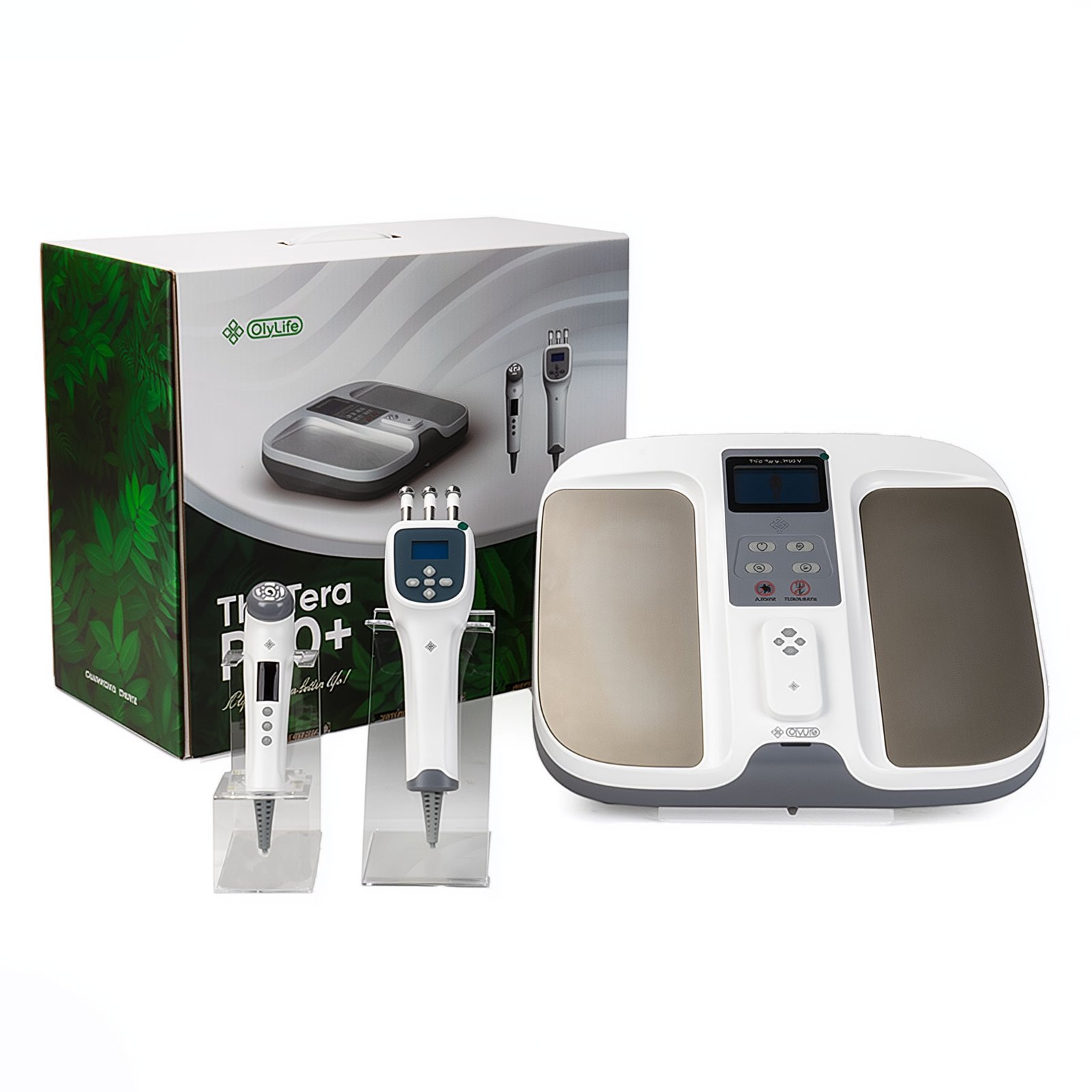
Some people like to rotate in other gentle, non-invasive modalities on different days. If that appeals to you, the OlyLife THz Tera-P90+ combines PEMF and terahertz technology for shoulders, neck, and lower back. Its companion OptiRelax Gel helps it glide over tired muscle areas. It works differently from light therapy, but it fits the same calm, at-home comfort ritual. Our PEMF for pain relief guide explains how that approach compares.
Build a Calm At-Home Comfort Ritual
The OlyLife THz Tera-P90+ brings PEMF and terahertz technology together in one 3-in-1 wellness system, a gentle way to care for tired shoulders, neck, and lower back between busy days. 🌿
🎁 Get a Free Wellness Gift
Enter your name and email below to receive a special wellness gift from OlyLife — absolutely free!
Choosing a Device for Pain: A 7-Point Checklist
Search results for this topic are full of product listings, and the specs can be hard to compare. Here’s what actually matters when pain relief is your main goal.
- Listed wavelengths. Look for specific numbers (for example “660 nm + 850 nm”), not just “infrared” or “red light.” Vague labels can hide a heat lamp or a mostly decorative glow.
- Irradiance at a stated distance. Reputable brands publish power density in mW/cm² measured at a specific distance. Missing data is a yellow flag.
- The right form for your pain:
- Wraps and pads suit knees, elbows, and lower backs because they stay in contact and are easy to use consistently.
- Handheld wands suit small, specific spots like a jaw, wrist, or tendon.
- Panels cover larger areas such as the whole back or both legs, and can treat several areas at once.
- Coverage area. A small wand on a broad lower back means many short passes. Match the treatment area to the size of your discomfort.
- FDA clearance status. Some over-the-counter devices are FDA-cleared for “temporary relief of minor muscle and joint pain.” Clearance means the FDA judged the device comparable to an existing one. It isn’t a guarantee of results, but it does signal basic safety review.
- Heat and comfort. LED light therapy should feel neutral or mildly warm. A device that runs genuinely hot is probably using far-infrared heat, which can be soothing too but works differently.
- Timer, warranty, and support. A built-in timer helps you stay in that “Goldilocks” range. A solid warranty and responsive customer support matter for any device you’ll use for months.
If you’re still deciding between formats, our infrared therapy light buying guide and red light therapy at home walkthrough go deeper on panels, masks, and wands. For deeper-penetrating wavelengths specifically, see our near infrared light therapy guide.
Safety: Who Should Be Careful

Red and near-infrared light therapy is generally considered low-risk for healthy adults when used as directed, and it doesn’t use UV light. Still, a few precautions keep your routine comfortable and safe.
Everyday precautions
- Protect your eyes. Near-infrared light is invisible, so you may not realize how bright it is. Use the goggles that come with your device, especially with panels, and never stare into the LEDs.
- Watch your skin. Very high outputs or overly long sessions can cause redness or, rarely, blistering. If skin feels hot or irritated, shorten your sessions or increase the distance.
- Use it on clean, dry skin. Remove reflective lotions, sunscreen, or heavy creams from the area first, unless your device is designed to be used with a gel.
- Check in with your body. Mild, temporary achiness after early sessions can happen. Sharp or increasing pain is a signal to stop.
Talk to a healthcare professional first if you:
- Are pregnant, especially before using light over the abdomen or lower back
- Take photosensitizing medications (some antibiotics, acne treatments, and others)
- Have a history of skin cancer, or any suspicious lesion in the area you want to treat
- Have reduced sensation in the area (for example from neuropathy), since you may not notice overheating
- Have an eye condition or a light-sensitive condition such as lupus
- Want to use it over the thyroid, or on a fresh injury that is hot and swollen
Most importantly, light therapy isn’t a substitute for getting new, severe, or unexplained pain checked. Pain that wakes you at night, follows an injury, or comes with numbness, weakness, fever, or weight loss deserves a professional evaluation first.
Frequently Asked Questions

How long does it take for infrared light therapy to help with pain?
Some people notice a relaxed, looser feeling after the first few sessions. For lasting changes, most studies look at consistent use over 4–12 weeks. Keep a simple pain log so you can judge honestly rather than from memory.
Is red or near-infrared better for pain?
For muscles, joints, and the lower back, near-infrared (around 810–850 nm) is usually preferred because it penetrates deeper. Red light works well for surface-level tissue. Many home devices combine both, which is a sensible choice for most people.
Can I use infrared light therapy every day?
Many people do, but more isn’t always better because of the biphasic dose response. Most routines use 3–5 sessions per week, or daily short sessions. Follow your device’s guidance and adjust based on how you feel.
Is a heating pad the same as infrared light therapy?
No. A heating pad warms tissue through conduction, and far-infrared heat warms through radiant energy. Red and near-infrared light therapy works mainly through light absorption in your cells, with little heat. Both can feel soothing, and some people use them on different days. Our post on infrared sauna for muscle recovery covers the heat side.
Does pain relief infrared light therapy work for arthritis?
Research suggests it may support short-term comfort for knee osteoarthritis when an adequate dose is used, and for morning stiffness in rheumatoid arthritis. It doesn’t reverse joint damage, so it works best alongside the movement and care plan you’ve agreed with your healthcare provider.
Can I use it right after an injury?
Light therapy is generally gentle, but a fresh injury that’s hot, swollen, or very painful should be assessed first. Once a healthcare professional has ruled out anything serious, many people find light therapy a comfortable addition to their recovery routine.
Do I need a prescription?
No. Many home LED devices are sold over the counter, and some are FDA-cleared for temporary relief of minor muscle and joint pain. Higher-powered clinical lasers are used by physical therapists, chiropractors, and other practitioners.
Final Thoughts
Pain relief infrared light therapy is one of the more promising, gentle tools in the at-home wellness space. Research suggests it may support comfort for neck pain, chronic low back pain, knee osteoarthritis, and tendon irritation. The best results seem to come from the right wavelength, an adequate but not excessive dose, and steady use over several weeks.
Keep your expectations grounded. Light therapy won’t repair a tear or replace a diagnosis, and it works best as part of a fuller routine with movement, rest, good sleep, and support from professionals you trust. Choose a device with honest specs, protect your eyes, start gently, and track how you feel. Small, consistent rituals often make the biggest difference over time. ✨
This article is for educational purposes only and is not medical advice. Please consult a qualified healthcare professional before starting any new wellness practice, especially if you are pregnant, have a medical condition, or take medication.