Sound Healing Frequency: Your Complete Guide to Therapeutic Sound Vibrations
Have you ever noticed how certain sounds can instantly shift your mood — a gentle rainstorm calming your nerves, or a specific piece of music bringing tears to your eyes? That response is not random. Sound healing frequency therapy harnesses this powerful connection between vibration and wellbeing, using specific tones and resonances to support your body’s natural healing processes.
Sound healing is one of humanity’s oldest wellness practices, with roots stretching back thousands of years across nearly every culture on Earth. Today, modern research is beginning to confirm what ancient practitioners intuitively understood: that carefully applied sound frequencies may influence everything from brainwave patterns to stress hormones. Whether you are drawn to the warm resonance of Tibetan singing bowls, the precision of tuning forks, or the gentle pulse of binaural beats, understanding how sound healing frequencies work can open up a transformative path to greater wellbeing.
In this comprehensive guide, you will discover the science behind sound healing, explore the nine Solfeggio frequencies and their traditional uses, compare different sound healing modalities, and learn how to start your own practice at home.
What Is Sound Healing Frequency Therapy?
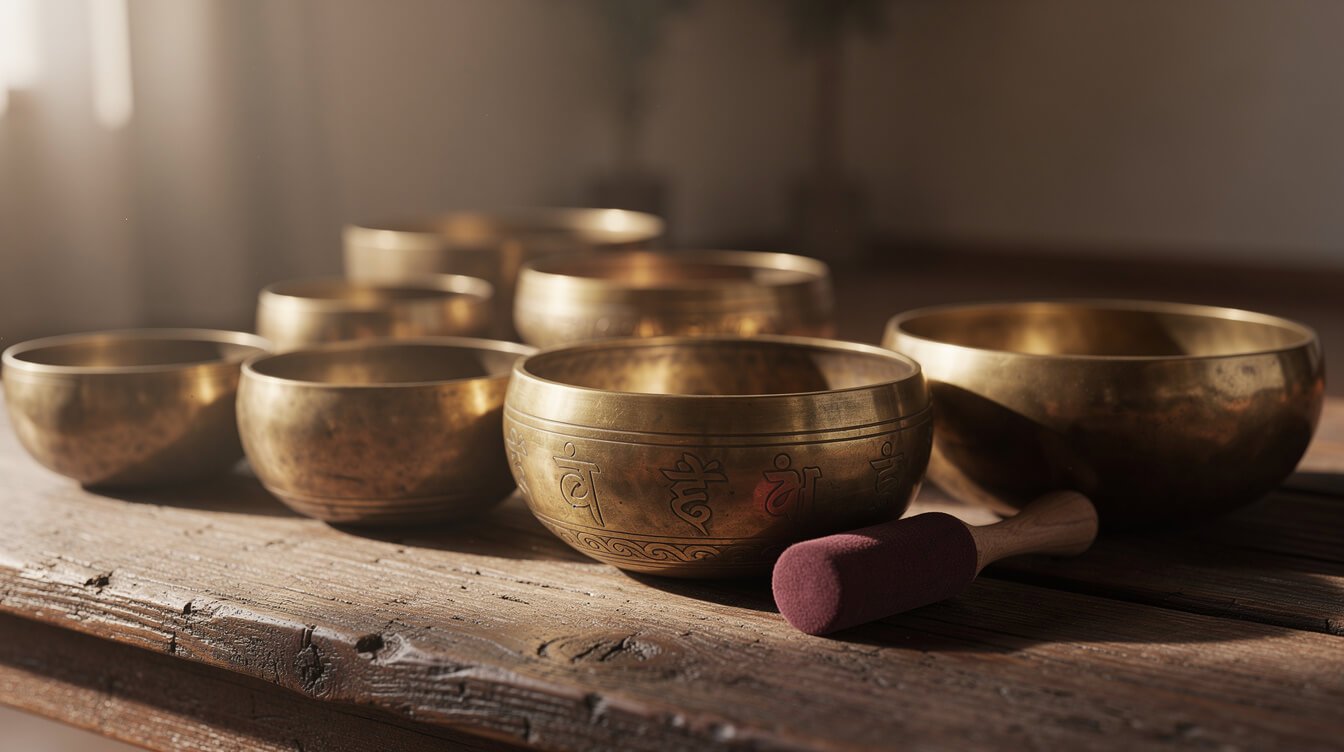
Sound healing frequency therapy — sometimes called vibrational medicine, sound therapy, or sonic healing — is a wellness practice that uses audible tones, musical vibrations, and specific frequencies to promote physical, emotional, and mental balance. At its core, sound healing works on a simple but profound principle: everything in the universe vibrates at a specific frequency, including every cell, organ, and system in your body.
When your body is healthy and balanced, these internal frequencies are thought to resonate in harmony — much like instruments in a well-tuned orchestra. Stress, illness, and emotional turbulence may disrupt this natural resonance, creating what practitioners describe as dissonance in your energetic field. Sound healing aims to restore harmony by introducing external frequencies that encourage your body to recalibrate.
A Brief History of Sound Healing
The therapeutic use of sound is far from a modern trend. Ancient Greek physicians, including Hippocrates, reportedly used musical instruments to treat mental health conditions. In Aboriginal Australian culture, the didgeridoo — one of the world’s oldest instruments — has been used ceremonially for over 40,000 years. Hindu traditions employ mantras (sacred sound syllables) as a pathway to spiritual and physical healing, while Tibetan monks have used singing bowls and chanting for meditation and healing rituals for centuries.
In the modern era, the field gained scientific traction through the work of researchers like Dr. Hans Jenny, whose cymatics experiments in the 1960s visually demonstrated how sound frequencies create distinct geometric patterns in physical matter — providing tangible evidence that vibration shapes the physical world around us.
The Nine Solfeggio Frequencies: A Complete Sound Healing Frequency Chart
The Solfeggio frequencies are perhaps the most widely discussed set of tones in sound healing. These nine specific frequencies — rooted in ancient musical traditions and rediscovered through the work of Dr. Joseph Puleo in the 1970s — are each associated with distinct healing properties. While scientific research on individual Solfeggio frequencies is still emerging, practitioners and enthusiasts around the world report meaningful benefits from incorporating these tones into their wellness routines.
Here is your complete sound healing frequency reference guide:
174 Hz — The Foundation of Comfort
Often described as a natural anesthetic, 174 Hz is traditionally associated with relieving physical tension and providing a sense of security. Practitioners suggest this frequency may help ease lower back pain and promote a feeling of safety in the body. It is considered the foundation tone of the Solfeggio scale.
285 Hz — Tissue Renewal and Restoration
This frequency is traditionally linked to cellular repair and energy field restoration. Sound healers often use 285 Hz when working with clients who are recovering from physical injuries or seeking to support the body’s natural regenerative processes.
396 Hz — Releasing Fear and Guilt
Known as the “liberating frequency,” 396 Hz is associated with helping release deep-seated emotions like guilt, fear, and grief. Many practitioners find this tone particularly useful during sound bath sessions focused on emotional healing and letting go of the past.
417 Hz — Facilitating Change
This frequency is traditionally connected to clearing negative energy and facilitating positive transformation. Sound healers often turn to 417 Hz when clients feel stuck in patterns that no longer serve them, using it as a vibrational catalyst for change.
432 Hz — The Frequency of Nature
Perhaps the most debated frequency in the sound healing world, 432 Hz is often called the “natural tuning” frequency. Advocates argue that tuning music to 432 Hz (rather than the modern standard of 440 Hz) creates a warmer, more harmonious listening experience because it aligns more closely with the mathematical patterns found in nature. A 2019 study published in the Journal of Behavioral and Brain Science found that participants who listened to music tuned to 432 Hz reported slightly lower heart rates and blood pressure compared to 440 Hz, though the researchers noted that more large-scale studies are needed.
528 Hz — The Love Frequency
Known as the “Miracle Tone” or “Love Frequency,” 528 Hz is one of the most popular Solfeggio tones. It has been associated with DNA repair, transformation, and deep healing — though these claims are largely based on traditional practice rather than clinical evidence. What researchers have observed is that 528 Hz may have a calming effect on the autonomic nervous system. A small 2018 study in the Journal of Addiction Research and Therapy found that 528 Hz music reduced anxiety in participants, suggesting this frequency may influence stress response pathways.
639 Hz — Connection and Relationships
This frequency is traditionally associated with harmonizing interpersonal relationships, fostering communication, and building understanding. Sound practitioners often incorporate 639 Hz into group healing sessions and couples’ sound baths, where the focus is on strengthening emotional bonds.
741 Hz — Awakening Intuition
Linked to self-expression and intuitive clarity, 741 Hz is traditionally used to support creative problem-solving and clear communication. Some practitioners associate this frequency with detoxification processes, though scientific evidence for this specific claim remains limited.
852 Hz — Returning to Spiritual Harmony
This higher Solfeggio frequency is associated with reconnecting to inner wisdom and spiritual awareness. Practitioners often use 852 Hz during deep meditation sessions where the goal is heightened perception and inner stillness.
963 Hz — Divine Connection
The highest Solfeggio frequency, 963 Hz is sometimes called the “frequency of the gods.” It is traditionally associated with activating the pineal gland, stimulating higher states of consciousness, and connecting to a sense of oneness. While these claims are rooted in spiritual tradition rather than clinical science, many sound healing practitioners consider 963 Hz a powerful tool for deepening meditation practice.
Types of Sound Healing: Finding Your Ideal Modality
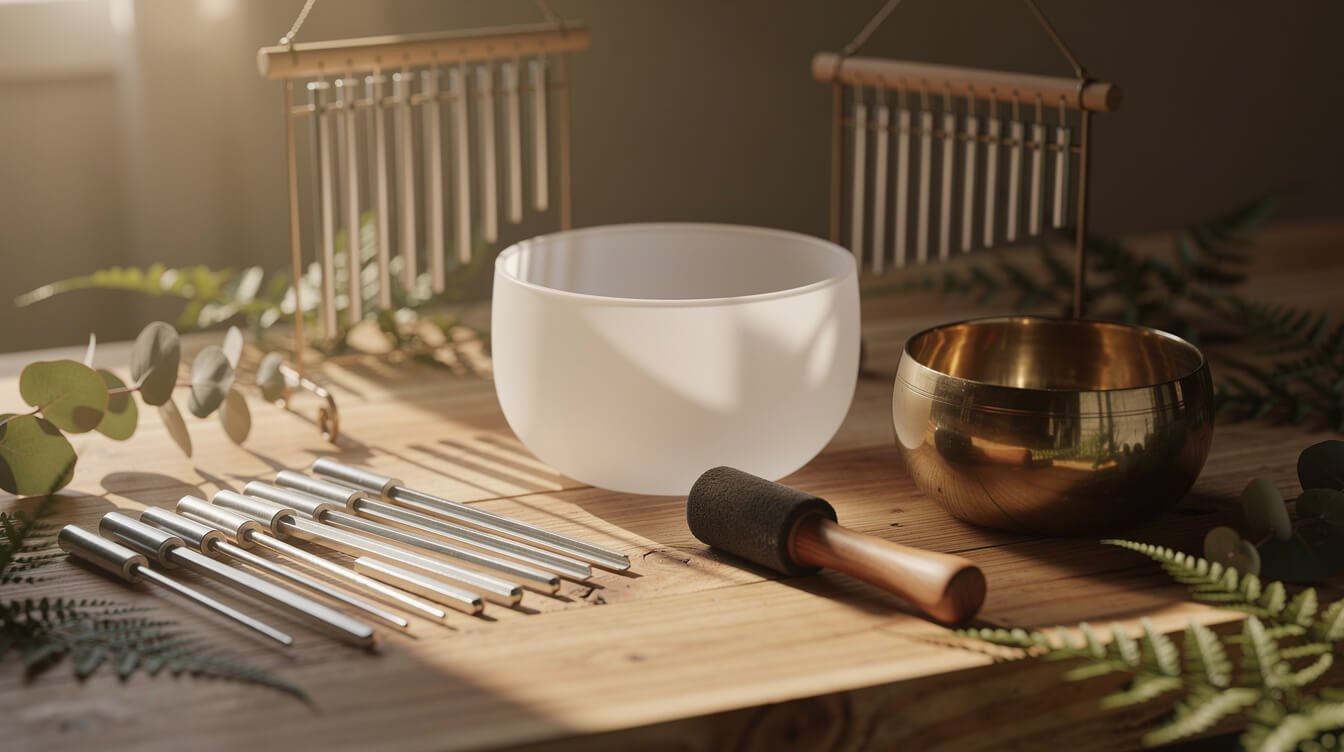
Sound healing is not a one-size-fits-all practice. Different instruments and techniques create unique vibrational experiences, and the best modality for you depends on your wellness goals, sensitivity to sound, and personal preferences. Here is a comparison of the most popular sound healing methods to help you choose.
Tibetan and Crystal Singing Bowls
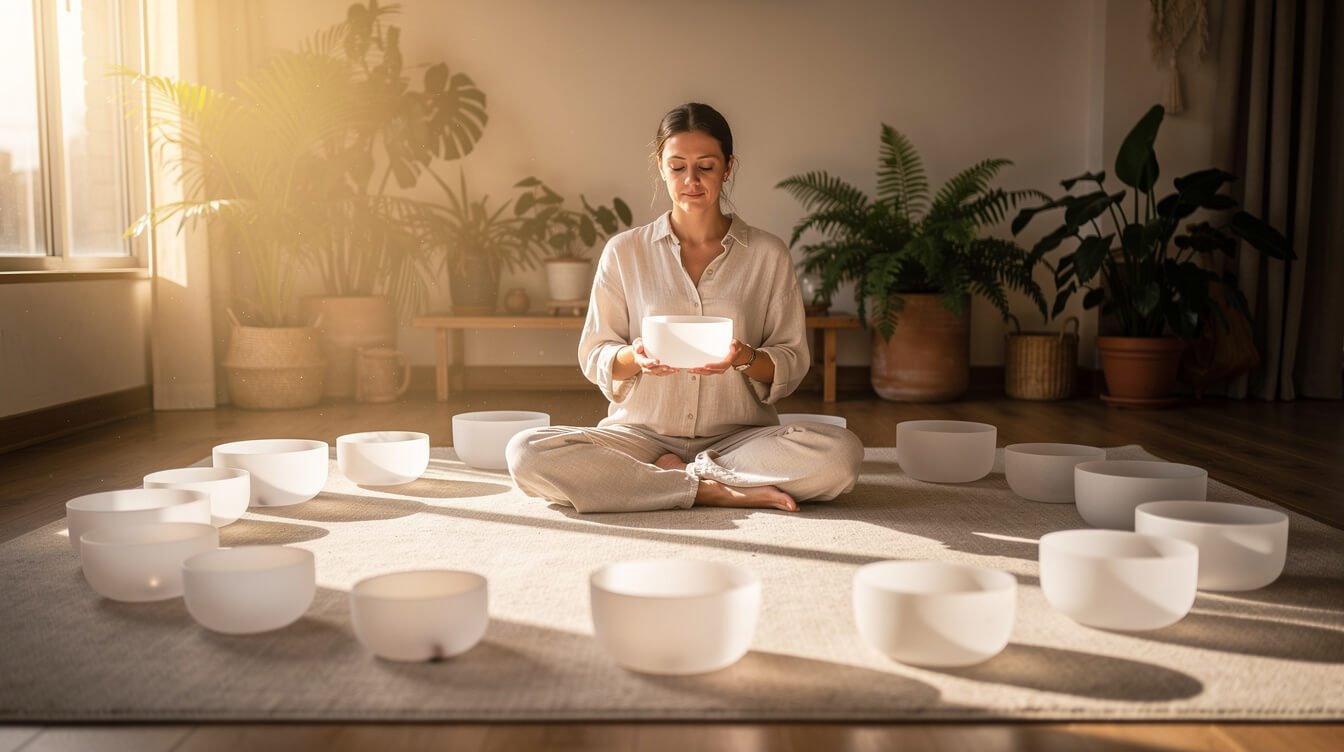
Singing bowls produce rich, layered tones when struck or rubbed with a mallet. Tibetan singing bowls (made from a metal alloy) tend to produce warmer, earthier tones, while crystal singing bowls create clearer, more penetrating frequencies. Both types are widely used in sound baths — group sessions where participants lie down while the practitioner plays multiple bowls around them. A 2016 observational study published in the Journal of Evidence-Based Integrative Medicine found that singing bowl meditation significantly reduced tension, anxiety, fatigue, and depressed mood among 62 participants, with the greatest benefits observed in those who were new to the practice.
Tuning Forks
Tuning forks offer precise, single-frequency tones and are favored by practitioners who work with specific Hz values. Weighted tuning forks can be placed directly on the body (a practice called sonopuncture), applying vibration to specific acupressure points, joints, or muscles. Unweighted forks are used near the ears or around the body’s energy field. Some practitioners use calibrated Solfeggio tuning fork sets to deliver each of the nine frequencies described above.
Binaural Beats
Unlike acoustic instruments, binaural beats are an auditory illusion created by playing two slightly different frequencies in each ear through headphones. Your brain perceives a third “beat” at the mathematical difference between the two tones — and this perceived frequency may influence your brainwave patterns through a process called entrainment. For example, if your left ear receives 400 Hz and your right ear receives 410 Hz, your brain processes a 10 Hz alpha wave beat associated with relaxation. Research has shown promising results: a controlled study published in Anaesthesia found that binaural beats reduced pre-operative anxiety by approximately 50% in surgical patients.
Gong Baths
Gong baths are among the most immersive sound healing experiences available. A trained practitioner plays one or more large gongs, creating powerful waves of vibration that wash over participants. The complexity of gong overtones — a single strike can produce hundreds of simultaneous frequencies — makes gong baths particularly effective for deep relaxation and emotional release. Many people report entering profoundly altered states of consciousness during gong sessions.
Voice and Chanting
Your own voice is perhaps the most accessible sound healing instrument. Vocal toning — sustaining specific vowel sounds — creates vibrations that you can feel resonating through your chest, throat, and skull. Mantra chanting, overtone singing, and guided om meditation are all forms of vocal sound healing. Research published in the International Journal of Yoga has demonstrated that chanting “om” may deactivate the limbic system (the brain’s emotional center), promoting a calm, centered state.
Comparison: Which Modality Is Right for You?
For deep relaxation and stress relief: Singing bowl sound baths or gong baths offer immersive, passive experiences — perfect if you want to simply lie back and receive.
For targeted physical discomfort: Weighted tuning forks applied to specific body points may offer localized vibrational support.
For enhancing your meditation practice: Binaural beats or vocal toning give you a frequency anchor to deepen focus.
For emotional processing: Gong baths and Solfeggio frequency sessions (especially 396 Hz and 528 Hz) are traditionally used for emotional release.
For daily accessibility: Your own voice and binaural beats apps require no equipment and can be practiced anywhere.
The Science Behind Sound Healing Frequencies
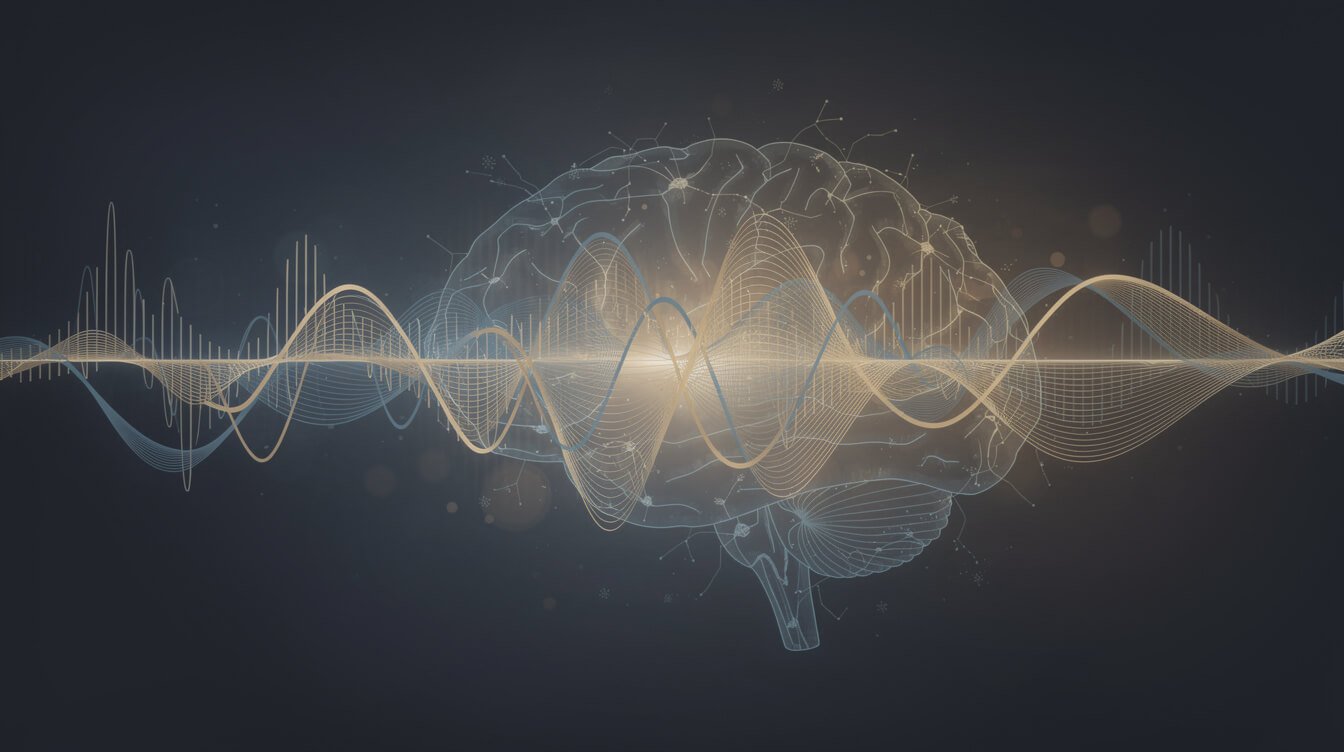
While sound healing has ancient roots, modern neuroscience and physiology are providing increasingly compelling explanations for how therapeutic sound may influence the body and mind. Understanding these mechanisms can help you approach sound healing as an informed, evidence-aware wellness practice.
Brainwave Entrainment
One of the most well-documented mechanisms behind sound healing is brainwave entrainment — the tendency of your brain’s electrical activity to synchronize with external rhythmic stimuli. Your brain naturally produces different types of electrical waves depending on your state of consciousness:
- Delta waves (1–4 Hz): Deep, dreamless sleep and physical restoration
- Theta waves (4–8 Hz): Deep meditation, REM sleep, creativity, and intuition
- Alpha waves (8–13 Hz): Calm alertness, relaxation, and positive mood
- Beta waves (14–30 Hz): Active thinking, concentration, and problem-solving
- Gamma waves (30–100 Hz): Peak focus, learning, and information processing
When you listen to sound healing frequencies — particularly binaural beats, singing bowls, or rhythmic drumming — your brain may gradually shift its dominant wave pattern to match the external stimulus. This is why a slow, rhythmic gong bath can guide you from a stressed beta state into a deeply relaxed theta state, while faster rhythms may enhance focus and alertness.
Autonomic Nervous System Response
Sound healing may also influence your autonomic nervous system — the network that controls involuntary functions like heart rate, breathing, and digestion. Research suggests that certain frequencies and sound patterns can activate the parasympathetic (“rest and digest”) branch of this system, potentially reducing cortisol levels, lowering blood pressure, and promoting a physiological state conducive to healing. If you struggle with falling asleep naturally, incorporating gentle sound frequencies into your evening routine may help signal your nervous system to wind down.
Resonance and Vibration
The principle of sympathetic resonance — where one vibrating object causes a nearby object to vibrate at the same frequency — is central to many sound healing theories. Practitioners propose that when a singing bowl or tuning fork emits a specific frequency near the body, cells and tissues may resonate in response, potentially restoring their optimal vibrational state. While direct clinical evidence for cellular resonance in humans remains limited, the physical phenomenon of sympathetic resonance is well established in physics and acoustics.
The Nitric Oxide Connection
One of the more intriguing physiological findings in sound healing research involves nitric oxide — a molecule that plays crucial roles in immune function, circulation, and cellular communication. Research with osteophonic (weighted) tuning forks has shown that the vibration may stimulate nitric oxide release in local tissues, which could support immune response and natural pain relief. This mechanism offers a plausible biological pathway for some of the benefits reported by tuning fork therapy clients.
🎁 Get a Free Wellness Gift
Enter your name and email below to receive a special wellness gift from OlyLife — absolutely free!
How to Practice Sound Healing at Home
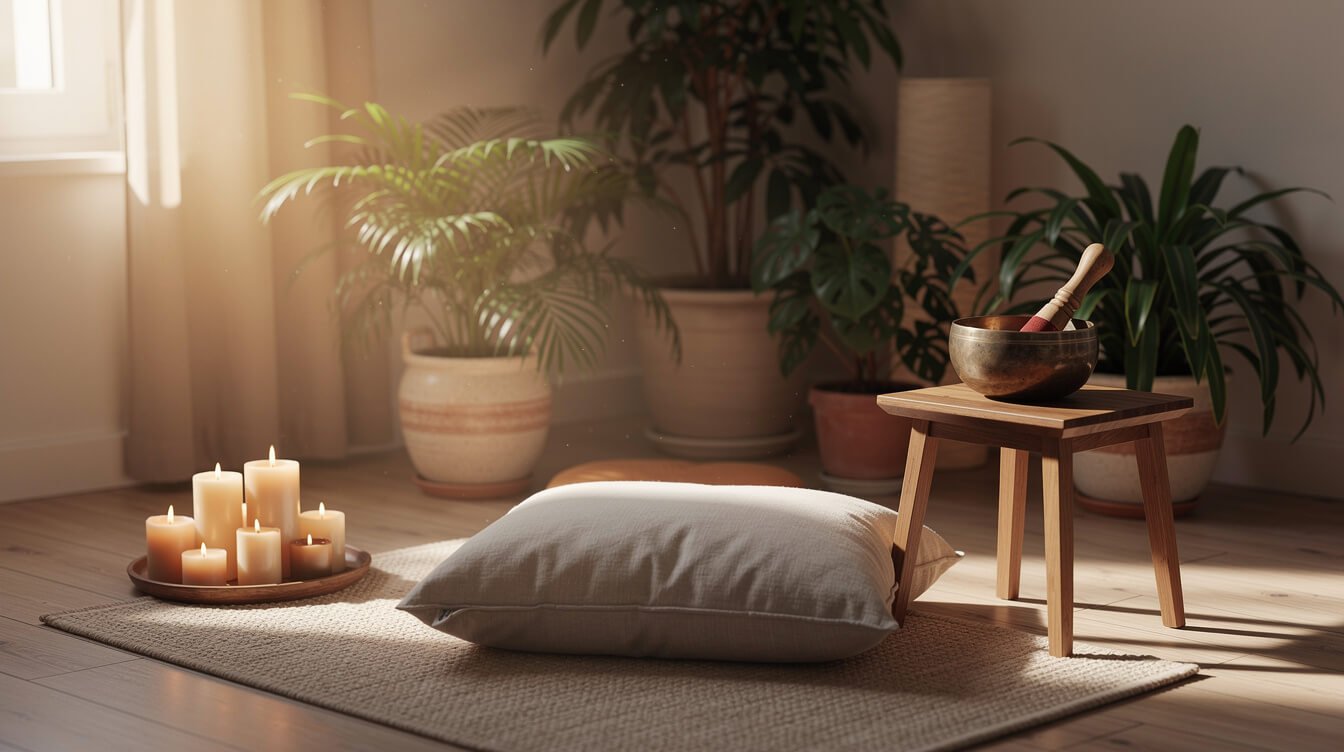
You do not need to visit a practitioner or invest in expensive equipment to experience the benefits of sound healing frequencies. Here is a practical guide to starting your home practice.
Getting Started with Binaural Beats
Binaural beats are the most accessible entry point for home sound healing. All you need is a pair of stereo headphones and a music streaming service or dedicated app.
- Choose your frequency range: For relaxation and sleep, look for delta (1–4 Hz) or theta (4–8 Hz) binaural beats. For focus and study, try alpha (8–13 Hz) or low beta (14–20 Hz) tracks.
- Use stereo headphones: Binaural beats require separate frequencies in each ear — they will not work through speakers.
- Set a timer for 15–30 minutes: Start with shorter sessions and gradually increase duration as you become comfortable.
- Create a calm environment: Dim the lights, find a comfortable position (sitting or lying down), and minimize distractions.
- Be consistent: Like any wellness practice, regular sessions (even 10 minutes daily) tend to produce more noticeable results than occasional longer sessions.
Your First Singing Bowl Practice
If you are drawn to acoustic sound healing, a small Tibetan singing bowl (6–8 inches) is an excellent first instrument. Quality beginner bowls are available for $30–$80.
- Hold the bowl in your open palm (not gripping it — let it vibrate freely).
- Strike the rim gently with the padded end of the mallet and listen to the tone resonate.
- Rub the rim slowly with the leather-wrapped end of the mallet using steady, even pressure to create a sustained “singing” tone.
- Focus on your breath and let the vibration wash over you. Place the bowl near different parts of your body to feel the resonance shift.
- Practice for 5–10 minutes as a standalone meditation or at the beginning of your existing meditation practice.
Vocal Toning for Beginners
The simplest sound healing practice requires nothing but your own voice:
- Sit comfortably with your spine straight and shoulders relaxed.
- Take three deep breaths, exhaling slowly through your mouth.
- Begin with “om” — inhale deeply, then sustain the sound on your exhale. Feel the vibration in your chest (“ah”), then in your throat and head (“mm”).
- Experiment with vowel sounds: “Ah” resonates in the chest, “Oh” in the solar plexus, “Ee” in the head. Notice where you feel each vibration most strongly.
- Practice for 3–5 minutes to start. Many people find vocal toning surprisingly calming — it naturally slows your breathing and brings your attention inward.
Creating a Sound Healing Playlist
For a curated listening experience, build a playlist that progresses through different frequencies:
- Opening (5 minutes): 396 Hz — to release tension and center yourself
- Deepening (10 minutes): 528 Hz — the “Love Frequency” for heart-centered healing
- Integration (5 minutes): 432 Hz — natural tuning for whole-body harmony
- Closing (5 minutes): 852 Hz — for inner stillness and reflection
Search for “Solfeggio frequencies” on your preferred streaming platform — you will find hundreds of purpose-made tracks. Look for recordings that use pure tones or minimal instrumentation for the most focused therapeutic experience.
Integrating Sound Healing Into Your Holistic Wellness Routine

Sound healing reaches its full potential when combined with complementary wellness practices. Rather than treating it as an isolated therapy, consider weaving sound healing frequency work into your broader holistic wellness approach.
Sound + Meditation
Sound frequencies provide a natural anchor for meditation practice — especially helpful if you find it difficult to quiet your mind in silence. Start your meditation with 2–3 minutes of singing bowl tones or a binaural beats track, then allow the sound to fade as you settle into stillness. The auditory stimulus gives your attention something to rest on, making the transition into deeper states feel effortless.
Sound + Breathwork
Combining sound healing with conscious breathing amplifies both practices. Try inhaling for four counts while a 528 Hz tone plays, holding for four counts, and exhaling for eight counts. The extended exhale activates your parasympathetic nervous system while the frequency supports emotional release. This combination is particularly powerful for managing acute stress or anxiety.
Sound + Movement
Gentle movement practices like yoga, tai chi, or qigong pair beautifully with sound healing. Many yoga studios now offer “sound bath yoga” classes where the physical practice flows alongside live singing bowl music. At home, try playing a Solfeggio frequency playlist during your morning stretching routine — the combination of gentle movement and therapeutic sound creates a deeply grounding start to the day.
Sound + Grounding
For those who practice earthing or grounding, adding sound frequencies to your outdoor practice can deepen the experience. Some practitioners suggest that the Schumann Resonance — Earth’s natural electromagnetic frequency of 7.83 Hz — connects sound healing to the planet’s own vibration. Try vocal toning or listening to theta-range frequencies (4–8 Hz, which include 7.83 Hz) while standing barefoot on natural ground for a multi-sensory wellness experience.
Sound + Frequency Wellness Technology
Sound healing frequencies represent just one dimension of the broader world of frequency-based wellness. Electromagnetic frequency therapies — including PEMF (Pulsed Electromagnetic Field) therapy — work on similar principles of resonance and entrainment, but operate in the electromagnetic spectrum rather than the audible spectrum. If you are drawn to the idea that specific frequencies can support healing, exploring complementary frequency modalities may deepen your understanding and expand your wellness toolkit.
Frequently Asked Questions About Sound Healing Frequencies
What is the most powerful sound healing frequency?
There is no single “most powerful” frequency — the ideal frequency depends on your intention. For general relaxation and emotional balance, 528 Hz (the “Love Frequency”) is one of the most popular choices. For releasing tension, 396 Hz is traditionally recommended. For deep meditation, many practitioners prefer 432 Hz or 852 Hz. The most powerful frequency for you is the one that resonates with your current needs.
How long should a sound healing session last?
For beginners, 10–15 minutes is a good starting point. As you become more comfortable, sessions of 20–45 minutes allow deeper relaxation and more pronounced effects. Professional sound baths typically last 60–90 minutes. Consistency matters more than duration — a daily 10-minute practice is generally more beneficial than a single weekly hour-long session.
Can sound healing frequencies be harmful?
Sound healing is generally considered safe for most people. However, individuals with epilepsy, sound-triggered migraines, or certain psychiatric conditions should consult their healthcare provider before trying sound healing — particularly binaural beats, which directly influence brainwave patterns. Pregnant women should also seek medical advice before attending gong baths or other high-volume sound healing sessions. Always start at comfortable volume levels.
Is there scientific evidence that sound healing works?
Research on sound healing is growing but still in relatively early stages. The strongest evidence exists for binaural beats (anxiety reduction), singing bowl meditation (stress and mood improvement), and music therapy broadly (pain management, cognitive function in dementia patients). While the mechanisms behind specific Solfeggio frequencies are less clinically documented, the underlying principles — brainwave entrainment, autonomic nervous system modulation, and resonance — are well-established areas of neuroscience and physics.
Do I need special equipment to try sound healing?
Not at all. You can start with free Solfeggio frequency tracks on YouTube or any streaming platform and a pair of headphones. Your own voice is also a powerful sound healing instrument — vocal toning requires zero equipment. If you want to invest in an instrument later, a beginner Tibetan singing bowl ($30–$80) or a set of tuning forks ($40–$100) are excellent first purchases.
What is the difference between 432 Hz and 440 Hz?
The standard tuning pitch for Western music is 440 Hz (concert A), established internationally in 1953. Proponents of 432 Hz tuning argue that this slightly lower pitch feels more natural, harmonious, and calming because it aligns with mathematical ratios found throughout nature (the Fibonacci sequence, the golden ratio). While some early research suggests subtle physiological differences between the two tunings, the scientific consensus is not yet definitive. Many sound healing practitioners prefer 432 Hz for its perceived warmth and resonance.
Final Thoughts: Tuning Into Your Natural Rhythm
Sound healing frequency therapy offers a beautiful intersection of ancient wisdom and emerging science. Whether you are drawn to the mystical resonance of Solfeggio frequencies, the clinically studied effects of binaural beats, or the simple grounding power of your own voice, the world of therapeutic sound is rich with possibilities for deepening your wellness journey.
The most important step is simply to begin. Put on a pair of headphones and listen to a 528 Hz track during your next quiet moment. Try humming “om” for three minutes before bed tonight. Visit a local sound bath and see how the vibrations feel in your body. Sound healing is deeply personal — the frequency that transforms one person’s stress may be different from the one that speaks to you.
What all sound healing modalities share is the invitation to slow down, listen deeply, and reconnect with the vibrational nature of your own body. In a world saturated with noise, choosing to engage consciously with healing sound may be one of the most nurturing gifts you can give yourself.