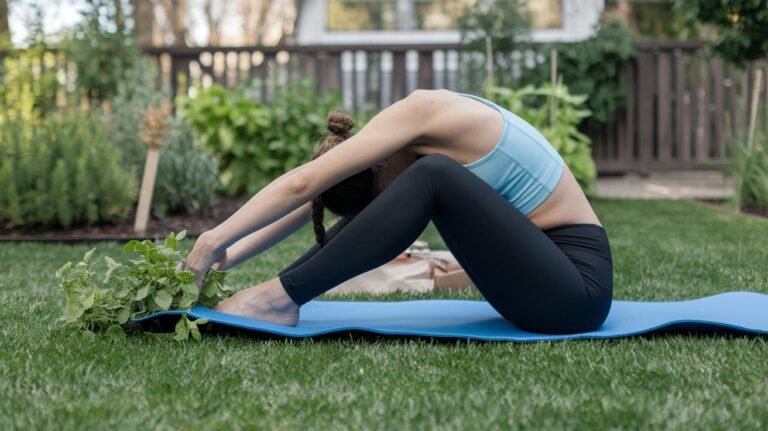
Neck Acupressure Points: 8 Traditional Points, What Research Suggests, and a Gentle 6-Minute Routine
You know the feeling. You look up from your screen after a long stretch of work, and your neck answers with a dull, tight ache that runs from the base of your skull down into your shoulders. Turning to check your blind spot in the car feels like work. If you’ve been searching for neck acupressure points, you’re probably hoping for something gentle and practical you can do with your own two hands, without a gadget or an appointment. Acupressure fits that bill nicely. A small but growing body of research suggests that pressing certain points around the neck, shoulders, and hands may help ease everyday muscle tension, improve how freely the neck moves, and support a calmer nervous system.
Most guides list five spots and leave it there. This one goes a little deeper. You’ll learn why necks get so tight in the first place, what the studies actually found (including where the evidence is thin), how to find eight traditional points using simple finger-width measurements, how firmly and how long to press, and a 6-minute routine for the desk, the evening, and those mornings when you wake up with a stiff neck. You’ll also find the habits that research suggests do the heavy lifting over time, and the warning signs that mean your neck needs a doctor rather than a thumb.
November is a good time to start. Colder mornings have a way of hunching our shoulders up toward our ears, and the run-up to the holidays usually means more screen time, more driving, and more carrying. A few minutes of mindful pressure each day is a lovely small ritual to carry you through the season. 🌿
A gentle note: This article is for general education and isn’t medical advice. Acupressure is a complementary self-care practice, not a replacement for diagnosis or treatment. If your neck pain followed an injury, is severe or getting worse, or comes with any of the warning signs listed later in this guide, please talk with your healthcare provider first.
Why Your Neck Gets So Tight (and Where Acupressure Fits)

Neck pain is remarkably common. The Global Burden of Disease study estimated that about 203 million people worldwide were living with neck pain in 2020, with higher rates in women than men and a peak between the ages of 45 and 74. The same analysis projects around 269 million cases by 2050, mostly because populations are growing and ageing. In other words, if your neck complains, you have plenty of company.
For most people, everyday neck pain is mechanical or non-specific. That means it comes from the muscles, joints, and soft tissues working too hard or holding one position for too long, rather than from a serious underlying problem. A few familiar culprits:
- Forward head posture. Your head weighs roughly 10 to 12 pounds. A widely cited computer-modeling estimate (Hansraj, 2014) suggested that the load on the neck climbs steeply as the head tilts forward, to around 27 pounds at 15 degrees and about 60 pounds at 60 degrees. It’s a model rather than a measurement in real people, but it helps explain why hours of looking down at a phone or laptop can leave the back of the neck tired and sore.
- Stress and shallow breathing. When we’re tense, the upper trapezius and the small muscles at the base of the skull tend to brace. Over a long day, that bracing becomes an ache.
- Sleeping awkwardly. Waking up with a stiff neck that won’t turn one way is so common that East Asian traditional medicine has its own name for it: nakchim in Korean, or “fallen pillow” neck in Chinese.
- Cold weather. Many of us instinctively shrug our shoulders up against the cold, which keeps the same muscles contracted for hours.
- Carrying and repetitive tasks. Heavy bags on one shoulder, long drives, and craning over a kitchen counter all add up.
Acupressure comes from traditional Chinese medicine (TCM). It uses the same points as acupuncture, but you press them with your fingers or thumbs instead of needles. In TCM, neck tension is often described as a blockage of qi along the channels that run up the back and sides of the neck, especially the Gallbladder, Bladder, Small Intestine, and Triple Energizer channels. From a modern point of view, steady pressure on tender spots may help muscles let go, calm pain signals, and nudge the nervous system toward its “rest and digest” mode. Both lenses lead to the same practical advice: gentle, consistent pressure on the right spots, paired with slow breathing.
Do Neck Acupressure Points Really Work? What Research Suggests

Here’s the honest picture. Research on acupressure points for neck pain is encouraging but still small. Most studies are short, many lack a convincing placebo, and acupuncture (with needles, done by a practitioner) has been studied far more than pressing points yourself. That doesn’t mean acupressure doesn’t help. It means we should hold our expectations gently and treat it as one useful tool among several.
| Approach | What the research found | How strong is it? |
|---|---|---|
| Acupuncture (needles) | A 2016 Cochrane review of 27 trials found moderate-quality evidence that acupuncture eased neck pain more than sham acupuncture right after treatment and in the short term. The effect was small, and it didn’t seem to last over the long term. | Moderate, the best-studied option here |
| Practitioner acupressure, chronic neck pain | In a 2021 Korean trial of 50 middle-aged women (Kim & Kim), acupressure twice a week for 4 weeks reduced pain and neck disability and improved range of motion compared with no treatment. A blood marker of pain (substance P) didn’t change. | Small, no sham control |
| Local vs. distant points | In a small Japanese study of 33 women with chronic neck pain (Matsubara, 2011), pressing either shoulder points (GB21, SI14, SI15) or arm and hand points (LI4, LI10, LI11) eased pain, anxiety, and muscle hardness. Only the shoulder points also lowered heart rate and shifted heart-rate variability toward relaxation. | Very small, short-term |
| Acupressure with lavender oil | In a Hong Kong study of sub-acute neck pain (Yip & Tse, 2006), eight acupressure sessions with lavender oil over 3 weeks led to 23% lower pain intensity and stiffness and 39% lower stress than the control group one month later. | Small, early study |
| Acupressure for acute stiff neck | A 2018 review of acupressure for nakchim (Kwon & Lee) gathered 15 case reports and case series with 1,037 people. Reported success rates were high and no side effects were reported, but none of the studies had a control group. GB20 at the base of the skull was the most-used neck point. | Low, encouraging but not conclusive |
| How long to hold a tender spot | In a trial of 60 students (Pecos-Martín, 2019), holding pressure on a tender spot in the levator scapulae (a muscle running from neck to shoulder blade) for 60 or 90 seconds raised the pain threshold more than 30 seconds did. | Small, healthy volunteers |
Two lessons stand out. First, both local and distant points seem to help, which is why this guide includes points on the neck and on the hands. Hand points are also handy when your neck is too tender to touch. Second, dose matters. Brief taps probably do little. Holding a point for about a minute while breathing slowly, and repeating the practice most days, is closer to what the studies actually tested.
It also helps to know what the strongest evidence for chronic neck pain actually points to: exercise. A 2015 Cochrane review of 27 trials found moderate-quality evidence that strengthening the neck, shoulders, and upper back eases chronic neck pain. That’s why the habits section below matters just as much as the points themselves.
How to Find and Press Neck Acupressure Points Safely
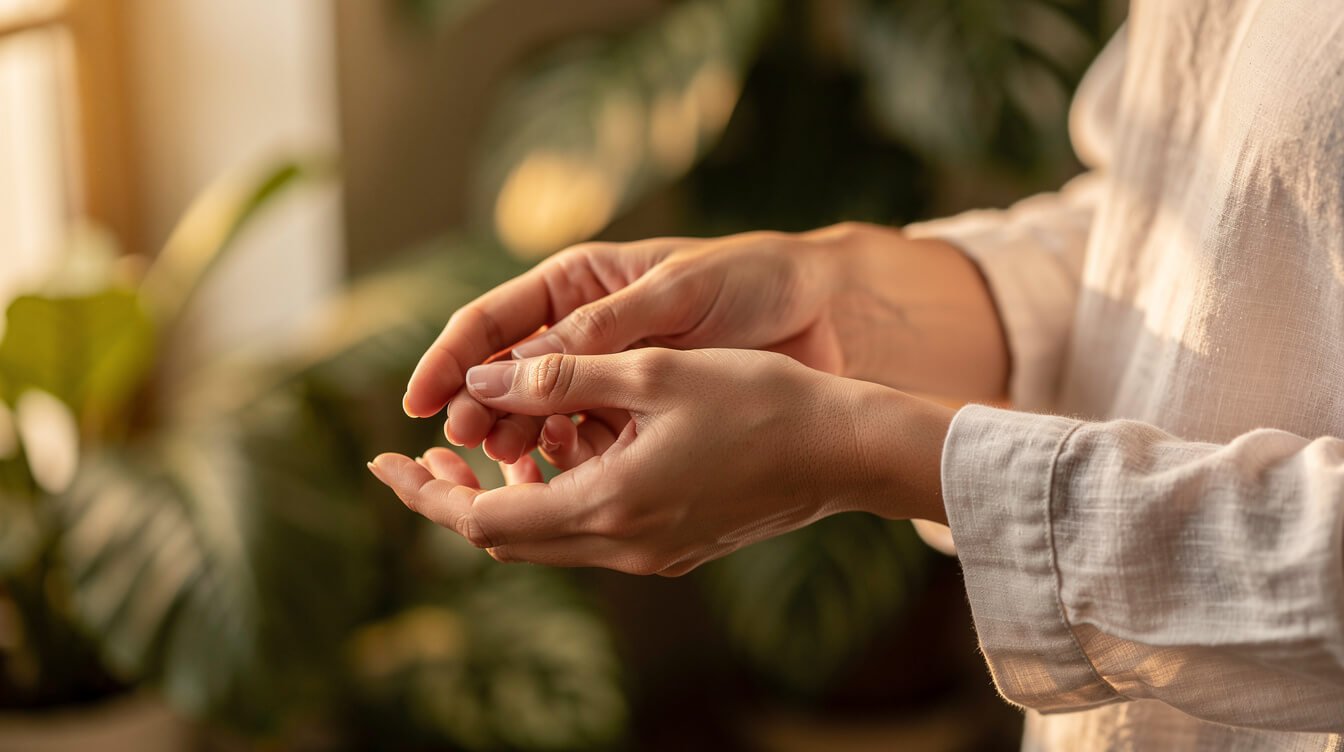
You don’t need to be an expert to find these points. TCM uses a body-relative measurement called a cun (pronounced “tsoon”). One cun is roughly the width of your thumb at the knuckle, and three cun is about the width of your four fingers held together. Because it’s based on your own hand, it scales to your body.
The basic technique
- Settle in. Sit or lie comfortably with your shoulders relaxed. Let your jaw soften and take two or three slow breaths, making the exhale a little longer than the inhale.
- Find the spot. Use the descriptions below, then explore with your fingertip. Acupressure points often sit in a small hollow or groove and feel a little more tender than the area around them.
- Press gradually. Sink in slowly with your fingertip, thumb, or knuckle. Aim for about a 4 to 6 out of 10 on a pressure scale, a “good hurt” that you can breathe through, never sharp pain.
- Hold or circle. Hold steady pressure, or make small slow circles, for 30 to 90 seconds. Keep breathing slowly.
- Release slowly and notice the area for a breath or two before you move on. Work both sides.
Tools that can help
If your hands or thumbs tire easily, a tennis ball or two taped together in a sock is a classic way to reach the base of the skull and the tops of the shoulders. Lean back against a wall or lie down on the balls and let gravity do the work. Our tennis ball self-massage routine walks you through it. Many people also enjoy an acupressure mat under the upper back, or the gentle scraping ritual of gua sha.
One rule for the front of the neck
Only press the back and the sides toward the back of your neck. Never press firmly on the front or the sides of your throat, where you can feel a pulse. That’s where the carotid arteries and the carotid sinus sit, and pressure there can affect heart rate and blood pressure. All the neck points in this guide are on the back of the neck, the base of the skull, or the tops of the shoulders.
8 Neck Acupressure Points to Know

Here are eight of the most commonly used points for neck tension. Four sit on the neck and shoulders, and four are on the hand, which is useful when the neck itself feels too tender to touch. You don’t need to use all eight. Try them, notice which ones feel best, and build your own short list.
1. Fengchi (GB20), “Wind Pool”
Where: At the base of the skull, in the two hollows between the thick muscles that run down the back of the neck. Slide your thumbs up the back of your neck until they meet the bony ridge of the skull, then move outward about two thumb-widths. The hollows are roughly level with your earlobes.
How: Cup your head in your hands and press your thumbs upward and slightly inward, toward the center of your head, for 60 seconds.
Traditionally used for: Neck stiffness, tension headaches, tired eyes, and that “heavy head” feeling. It was the most frequently used neck point in the stiff-neck studies above, and it also features in our guide to acupressure points for headache relief.
2. Tianzhu (BL10), “Heaven’s Pillar”
Where: About one thumb-width below the base of the skull and a little closer to the spine than GB20, on the outer edge of the two thick ropes of muscle on either side of the spine.
How: Press with your index and middle fingers, or make slow circles, for 30 to 60 seconds.
Traditionally used for: Stiffness at the top of the neck, eye strain, and a foggy, overworked feeling.
3. Fengfu (GV16), “Wind Palace”
Where: In the center of the back of the neck, in the hollow just below the bump at the base of the skull.
How: This spot is more delicate, so use light pressure with one fingertip for 30 seconds, with your head slightly bowed. Never press hard here.
Traditionally used for: Neck stiffness and headaches at the back of the head.
4. Jianjing (GB21), “Shoulder Well”
Where: On the top of the shoulder, at the highest point of the muscle, halfway between the bony bump at the base of your neck and the tip of your shoulder.
How: Reach across with the opposite hand and squeeze the muscle gently between your fingers and thumb, or press straight down with your middle finger. Hold for 30 to 60 seconds while you slowly tilt your ear toward the opposite shoulder.
Traditionally used for: Shoulder and neck tension, especially from stress or carrying. Avoid during pregnancy, as this point is traditionally avoided then.
5. Luo Zhen, the “Stiff Neck Point”
Where: On the back of the hand, between the bones of the index and middle fingers, about half a thumb-width behind the knuckles.
How: Press with the opposite thumb for 60 seconds while slowly turning your head from side to side within a comfortable range. This pairing of pressure and gentle movement is the traditional way to use it.
Traditionally used for: The “slept wrong” stiff neck that won’t turn one way. The VA’s acupressure handout for neck pain lists it first.
6. Houxi (SI3), “Back Stream”
Where: On the outer, little-finger edge of the hand. Make a loose fist and look for the end of the crease just behind the knuckle of the little finger.
How: Press into the edge of the hand with your opposite thumb for 30 to 60 seconds, again while slowly moving your neck.
Traditionally used for: Stiffness along the back of the neck and upper back.
7. Zhongzhu (TE3), “Central Islet”
Where: On the back of the hand, in the groove between the bones of the ring finger and little finger, just behind the knuckles.
How: Press firmly with your thumb for 30 to 60 seconds.
Traditionally used for: Tension along the side of the neck and shoulders and headaches at the temples. Kaiser Permanente’s neck pain handout includes it alongside GB20 and LI4.
8. Hegu (LI4), “Joining Valley”
Where: In the fleshy web between your thumb and index finger. Squeeze the thumb against the index finger and find the highest point of the muscle mound, then relax your hand and press there.
How: Pinch between your opposite thumb and index finger for 30 to 60 seconds.
Traditionally used for: General aches, head and neck tension, and stress. It was one of the distant points in the Matsubara study. Avoid during pregnancy. Our guide to acupressure points on the hand covers LI4 and its neighbors in more detail.
A Gentle 6-Minute Neck Acupressure Routine

Routines are easier to keep than lists. This one takes about six minutes and works at your desk, on the sofa, or sitting on the edge of your bed.
- Breathe and drop your shoulders (30 seconds). Take three slow breaths. On each exhale, let your shoulders sink away from your ears.
- Fengchi, GB20 (1 minute). Cup your head, thumbs in the hollows at the base of the skull. Press upward and inward and breathe slowly.
- Tianzhu, BL10 (1 minute). Walk your fingers a thumb-width down and in, then make slow circles.
- Jianjing, GB21 (1 minute). Thirty seconds on each shoulder, tilting your ear gently away from the side you’re pressing. Skip it if you’re pregnant.
- Luo Zhen and Houxi with movement (1.5 minutes). Press the Stiff Neck Point on one hand while slowly turning your head side to side. Switch hands, then repeat with SI3 on the little-finger edge.
- Hegu, LI4 (1 minute). Thirty seconds on each hand. Skip it if you’re pregnant.
- Close with a slow stretch (a few breaths). Draw your chin gently back, as if making a small double chin, then let your head roll slowly to each side. Notice what feels softer.
Three ways to use it
- Desk reset: Set a reminder every 60 to 90 minutes. Even steps 1, 2, and 6 take under three minutes.
- Stiff-neck morning: Start with the hand points (steps 5 and 6) while gently moving your neck, before you press anything tender on the neck itself. A warm shower first can help.
- Evening wind-down: Do the full routine slowly, then pair it with a cup of something calming from our guide to herbal tea for relaxing and a few rounds of slow breathwork.
Some people like to follow an evening session with gentle warmth across the neck and shoulders as part of their wind-down ritual. The OlyLife Vitality Wand is a handheld terahertz and PEMF wellness device that many of our customers enjoy for exactly that kind of slow, mindful self-care moment. It’s designed to support relaxation and general wellbeing, not to diagnose or treat neck pain or any other condition.
🎁 Get a Free Wellness Gift
Enter your name and email below to receive a special wellness gift from OlyLife — absolutely free!
Beyond Pressure Points: Habits That Keep Your Neck Happy
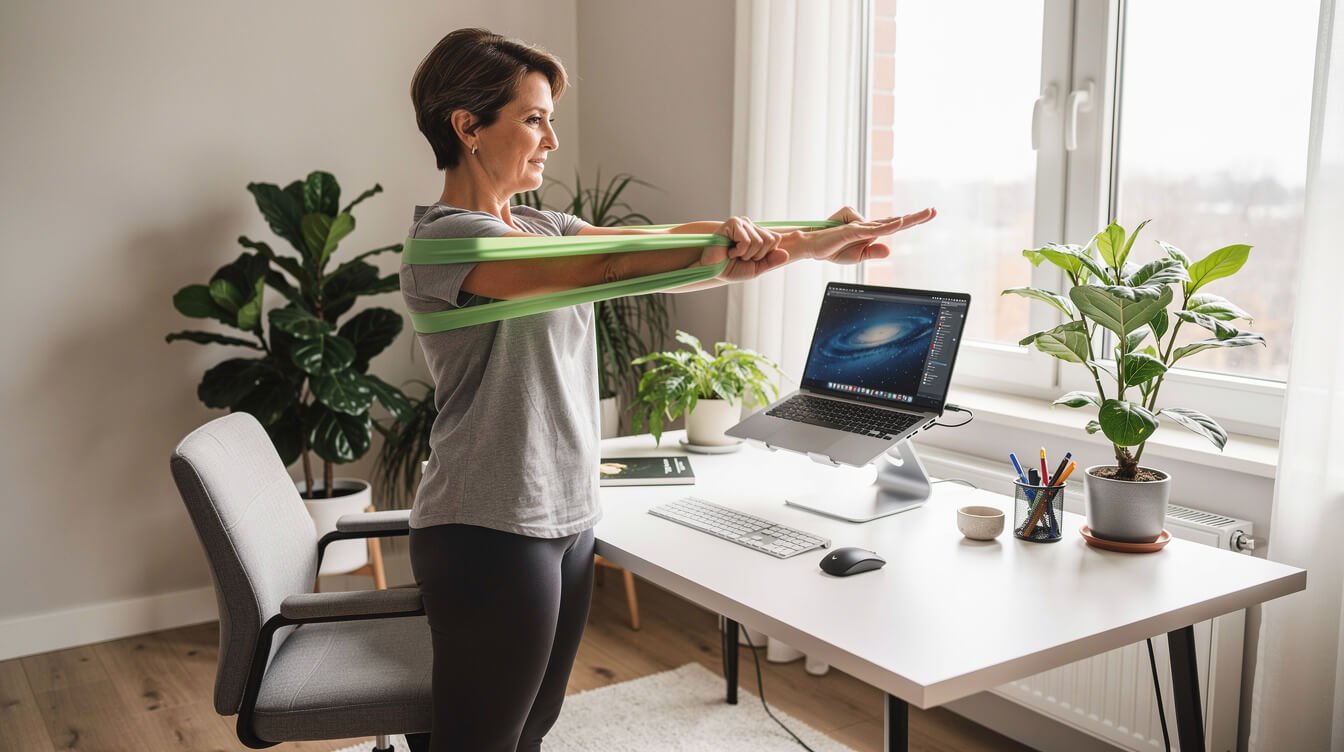
Acupressure is a lovely way to respond to tension in the moment. These everyday habits help keep the tension from building in the first place, and several have stronger research behind them than pressure points do.
Two minutes of strengthening a day
This is the one to remember. In a Danish trial of 198 office workers with frequent neck and shoulder pain (Andersen, 2011), just 2 minutes a day of resistance-band exercises, five days a week for 10 weeks, reduced pain by about 1.4 points on a 10-point scale compared with a health-information control. Twelve minutes a day helped only slightly more. Simple options include band pull-aparts at chest height, shoulder shrugs with light weights, and lateral raises. Start light and build slowly.
Raise your screen, not your shoulders
Lift your laptop or monitor so the top of the screen sits at or just below eye level, and bring your phone up toward your face instead of dropping your head toward it. Your posture doesn’t have to be perfect. As our posture myths post explains, the best posture is your next posture, so changing position often matters more than holding one “correct” position.
Rethink your pillow
If you often wake up stiff, your pillow is worth a look. A 2021 systematic review (Chun-Yiu) found that latex (rubber) pillows were linked with modest reductions in neck pain and waking pain compared with other pillows. In general, aim for a pillow that keeps your head level with your spine: a little thicker if you sleep on your side, a little thinner if you sleep on your back. Stomach sleeping keeps the neck twisted for hours, so it’s worth easing away from if you can.
Add warmth
A warm shower, a microwavable heat pack, or a scarf on chilly mornings can help tight muscles relax and makes acupressure feel more comfortable. Our post on the infrared heating mat covers another gentle warmth option. Keep heat comfortable rather than hot, and never sleep on a heating pad.
Give massage a real chance
If you try professional massage, dose seems to matter. In a trial of 228 people with chronic neck pain (Sherman, 2014), 60-minute sessions two or three times a week for four weeks were much more likely to bring meaningful improvement than 30-minute sessions, which were no better than a wait list. A single short appointment may not show you what massage can do.
Soften stress
Stress shows up in the neck for a lot of us. Short breathing breaks, a walk outside, and the ideas in our guide to stress relief relaxation techniques can all help the upper shoulders unclench.
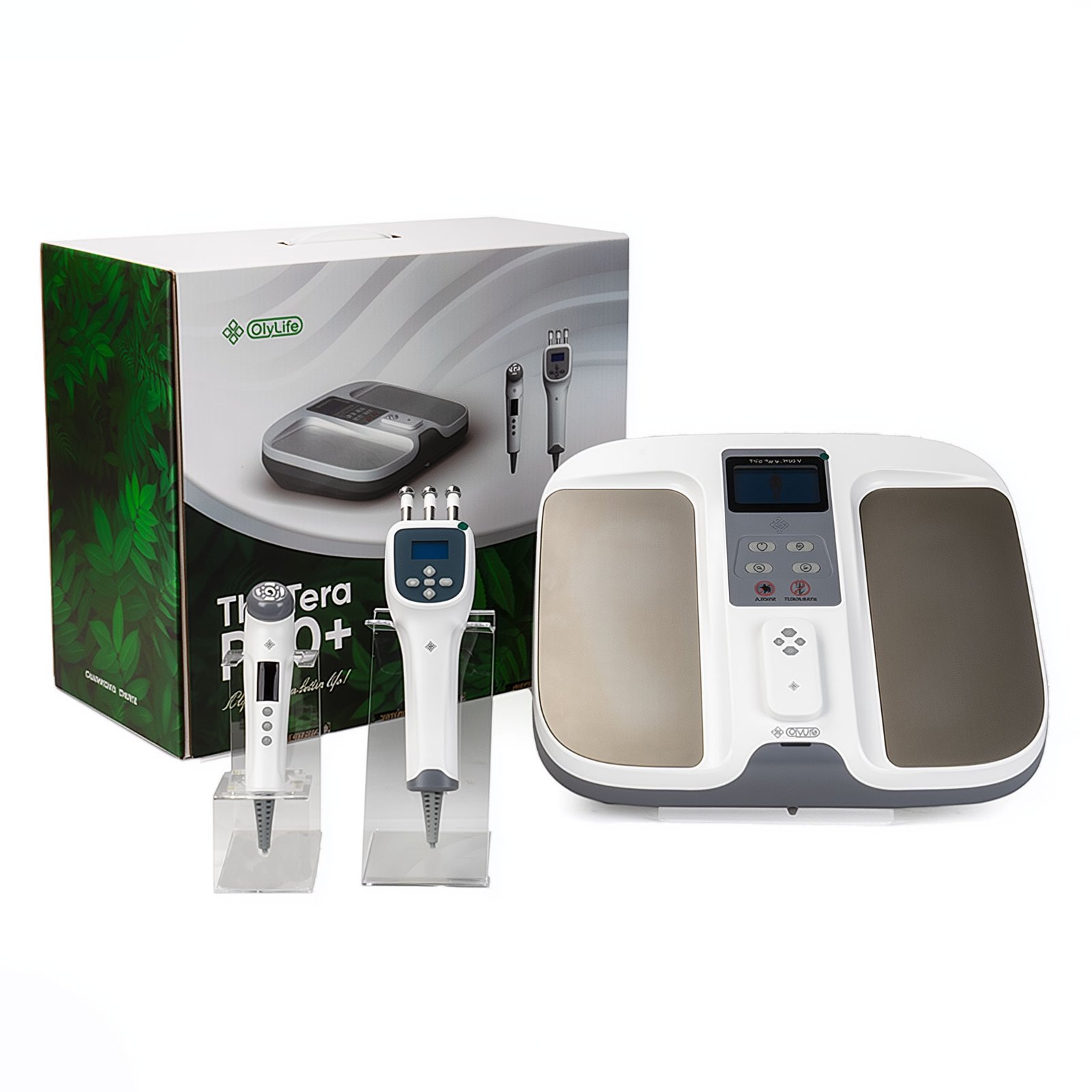
Make Unwinding Your Neck and Shoulders a Daily Ritual ✨
The OlyLife THz Tera-P90+ is designed to deliver focused PEMF and terahertz frequencies, and many customers use it as part of their evening wellness routine, alongside stretching, slow breathing, and acupressure. It’s designed to support relaxation and general wellbeing, not to diagnose, treat, or relieve neck pain or any other condition.
Safety First: Who Should Be Careful, and When to See a Doctor

Gentle self-acupressure is low-risk for most adults, and the studies above reported few, if any, side effects. A few situations call for extra care.
| Situation | What to do |
|---|---|
| Pregnancy | Avoid LI4 and GB21, which are traditionally avoided in pregnancy. Check with your midwife or doctor before trying acupressure. |
| Recent neck injury, whiplash, or neck surgery | Don’t press the neck points until your provider says it’s okay. The hand points may be a gentler place to start. |
| Blood thinners or easy bruising | Use light pressure and skip any point that bruises. |
| Osteoporosis, rheumatoid arthritis, or known cervical spine problems | Ask your provider first, and avoid forceful pressure or twisting. |
| Broken skin, rashes, swelling, or varicose veins | Skip that area completely. |
| Front and sides of the throat | Never press where you can feel a pulse. |
Please also skip forceful self-cracking or sharp twisting of your own neck. The American Heart Association notes that cervical artery dissection, a tear in an artery in the neck, is among the more common causes of stroke in young and middle-aged adults, and it can first show up as neck pain or a one-sided headache. Slow, gentle movement is always the kinder choice.
Warning signs that need medical attention
Call emergency services right away if neck pain comes with any of these:
- A sudden, severe headache, especially “the worst of your life”
- Dizziness, double vision, slurred speech, trouble swallowing, facial drooping, or sudden weakness
- Fever with a stiff neck and headache, or sensitivity to light
- Pain after a fall, car accident, or other injury
See your doctor soon if you notice:
- Numbness, tingling, or weakness in your arms or hands, or pain shooting down an arm
- Clumsiness, trouble walking, or problems with bladder or bowel control
- Pain that’s constant, wakes you at night, or comes with unexplained weight loss or a history of cancer
- Neck pain that hasn’t improved after a few weeks, or keeps getting worse
Neck Acupressure Points: Frequently Asked Questions

How quickly does acupressure work for neck pain?
Many people feel a little looser right after a session, especially for everyday tension. In the studies above, the clearer changes in pain and range of motion showed up after several sessions over 3 to 4 weeks. Think of it as a practice rather than an instant fix.
How often can I press neck acupressure points?
For most adults, gentle daily practice is fine, and you can repeat the short desk version a few times a day. If a point feels bruised or more sore the next day, use lighter pressure or give it a rest.
What’s the best acupressure point for a stiff neck after sleeping wrong?
Traditionally, the Luo Zhen “Stiff Neck Point” on the back of the hand and SI3 on the little-finger edge are pressed while slowly turning the head, with GB20 at the base of the skull added once the neck is less guarded. Warmth and gentle movement help too. If the stiffness hasn’t eased after a few days, check in with your provider.
Can acupressure help a tension headache that starts in the neck?
Often, yes. Many tension headaches start with tight muscles at the base of the skull and across the shoulders, and GB20 and GB21 are used for both. Our guide to natural pain relief for headache covers more options.
Is acupressure better than acupuncture?
Acupuncture has more research behind it for neck pain, while acupressure has the big advantage of being free and something you can do any time. If your neck pain is frequent, a licensed acupuncturist can be a great partner and can show you which points to press at home between visits.
Should it hurt?
A mild, achy “good hurt” is normal. Sharp, burning, or electric pain is not. If you feel that, or any tingling down your arm, stop and ease off.
Final Thoughts: Gentle Hands, a Softer Neck
A tight neck is one of the most common ways our bodies tell us we’ve been holding on too hard, whether to a screen, a steering wheel, or a busy season. Neck acupressure points, especially Fengchi at the base of the skull, Jianjing on the tops of the shoulders, and the Stiff Neck Point and Hegu on the hands, give you a calm, hands-on way to respond when tension starts to build. Research on self-acupressure is still young, but it points in an encouraging direction, and it pairs beautifully with the habits that have the strongest evidence: a couple of minutes of daily strengthening, a screen at eye level, a supportive pillow, and regular movement breaks.
Start small this week. Choose three points, try the 6-minute routine once a day, and notice how your neck feels by the weekend. Be patient with yourself on stiffer days, and if anything on the warning-sign list shows up, let your doctor be part of the plan. ✨
Want to keep building your self-care toolkit? Explore our sinus acupressure point guide for the cold and flu season, too.
References
- GBD 2021 Neck Pain Collaborators. Global, regional, and national burden of neck pain, 1990-2020, and projections to 2050: a systematic analysis of the Global Burden of Disease Study 2021. Lancet Rheumatol. 2024. PMID 38383088
- Trinh K, et al. Acupuncture for neck disorders. Cochrane Database Syst Rev. 2016. PMID 27145001
- Kim M, Kim J. Effects of acupressure on pain, flexibility, and substance P in middle-age women with chronic neck pain. J Altern Complement Med. 2021. PMID 33296258
- Matsubara T, et al. Comparative effects of acupressure at local and distal acupuncture points on pain conditions and autonomic function in females with chronic neck pain. Evid Based Complement Alternat Med. 2011. PMID 20953433
- Yip YB, Tse SH. An experimental study on the effectiveness of acupressure with aromatic lavender essential oil for sub-acute, non-specific neck pain in Hong Kong. Complement Ther Clin Pract. 2006. PMID 16401526
- Kwon CY, Lee B. Clinical effects of acupressure on neck pain syndrome (nakchim): a systematic review. Integr Med Res. 2018. PMID 30271710
- Pecos-Martín D, et al. Immediate effects of variable durations of pressure release technique on latent myofascial trigger points of the levator scapulae: a double-blinded randomised clinical trial. Acupunct Med. 2019. PMID 31060367
- Gross A, et al. Exercises for mechanical neck disorders. Cochrane Database Syst Rev. 2015. PMID 25629215
- Andersen LL, et al. Effectiveness of small daily amounts of progressive resistance training for frequent neck/shoulder pain: randomised controlled trial. Pain. 2011. PMID 21177034
- Sherman KJ, et al. Five-week outcomes from a dosing trial of therapeutic massage for chronic neck pain. Ann Fam Med. 2014. PMID 24615306
- Chun-Yiu JP, et al. The effects of pillow designs on neck pain, waking symptoms, neck disability, sleep quality and spinal alignment in adults: a systematic review and meta-analysis. Clin Biomech. 2021. PMID 33895703
- Hansraj KK. Assessment of stresses in the cervical spine caused by posture and position of the head. Surg Technol Int. 2014. PMID 25393825
- Biller J, et al. Cervical arterial dissections and association with cervical manipulative therapy: a statement for healthcare professionals from the American Heart Association/American Stroke Association. Stroke. 2014. PMID 25104849