
Sinus Acupressure Point Guide: 7 Traditional Spots and a Gentle 5-Minute Routine
That heavy, full feeling behind your cheeks and forehead has a way of taking over a whole day. Your head feels thick, bending over makes it throb, and you might find yourself pressing your fingers into your face without thinking. That instinct has a long history. A sinus acupressure point is one of a handful of spots on the face, hands, and neck that traditional Chinese medicine has used for centuries to ease feelings of congestion and facial pressure, and you can try every one of them at home for free.
This guide is honest about what acupressure can and can’t do. You’ll learn where your sinuses actually sit, how to find seven traditionally used points, and a gentle five-minute routine you can do on the sofa. We’ll also cover what research suggests (spoiler: the evidence is small but interesting), the comfort habits that pair well with it, and the clear signs that it’s time to put your fingers down and call a doctor.
A quick note before we start: acupressure is a comfort practice, not a treatment for sinus infections, allergies, or any medical condition. It may help you feel a little clearer and calmer, but it won’t clear an infection. If your symptoms are severe or lingering, please see a healthcare professional.
What Is a Sinus Acupressure Point? (And Where Your Sinuses Actually Are)

Acupressure grew out of the same tradition as acupuncture. In traditional Chinese medicine (TCM), specific points along the body’s meridians are pressed to encourage the smooth flow of qi, or vital energy. Acupuncture stimulates those points with fine needles. Acupressure uses something you always have with you: your fingertips.
A sinus acupressure point is simply one of the points that TCM practitioners have traditionally used for nasal and sinus complaints, such as a stuffy nose, a “full” face, or a dull frontal headache. Most sit right on top of, or close to, the sinus cavities themselves. A few, such as the point on the back of your hand, are farther away and work on TCM’s idea that the body’s channels are connected.
Your four pairs of sinuses
Your sinuses are air-filled spaces inside the bones of your face and skull. They’re lined with a thin mucous membrane that makes mucus, which normally drains quietly into your nose. When that lining swells, often after a cold or during allergy season, the small drainage openings can narrow and you feel pressure. Knowing where each pair sits helps you understand why the points are where they are:
- Maxillary sinuses: inside your cheekbones, on either side of your nose. These are the largest, and pressure here can even feel like an upper toothache.
- Frontal sinuses: in your forehead, just above your eyebrows. They’re behind that classic “band across the brow” feeling.
- Ethmoid sinuses: a honeycomb of small cells between your eyes, behind the bridge of your nose.
- Sphenoid sinuses: deep in the skull behind the eyes. Pressure here can feel like an ache at the back or top of the head.
Why pressing on your face might feel good
Western science hasn’t confirmed the meridian model, but there are plausible reasons why gentle pressure could feel soothing. Steady touch and slow breathing may nudge your nervous system toward its “rest and digest” mode. Light massage may encourage local circulation in the skin and muscles of the face. Your face is also densely wired by the trigeminal nerve, which shapes how open or blocked your nose feels. That’s partly why menthol makes you feel clearer even though it doesn’t measurably widen your airway. Keep that difference between feeling and measurement in mind. It comes up again when we look at the research.
7 Sinus Acupressure Point Locations and How to Find Each One

You don’t need to memorize meridian charts. A mirror, clean hands, and a minute of exploring are enough. Each point usually sits in a small hollow or groove, and many people notice a slightly tender, “that’s the spot” feeling when they find it. Use the pad of your finger, not your nail.
| Point | Traditional name | Where it is | Traditionally used for |
|---|---|---|---|
| LI20 | Yingxiang (“Welcome Fragrance”) | Beside each nostril, in the groove where nose meets cheek | Stuffy nose, loss of smell, facial fullness |
| Bitong | “Nose Through” (extra point) | Higher up the side of the nose, where bone meets cartilage | Blocked nose, maxillary pressure |
| Yintang | “Hall of Impression” | Between the eyebrows, above the bridge of the nose | Frontal pressure, restlessness |
| BL2 | Zanzhu (“Gathered Bamboo”) | Inner end of each eyebrow, in a small notch on the brow bone | Forehead and eye-area pressure |
| ST3 | Juliao (“Great Crevice”) | Below the cheekbone, in line with your pupil, level with the bottom of your nose | Cheek and upper-teeth pressure |
| LI4 | Hegu (“Joining Valley”) | Web between thumb and index finger, on the back of the hand | Head and face discomfort in general |
| GB20 | Fengchi (“Wind Pool”) | Base of the skull, in the hollows either side of the neck muscles | Head and neck tension, “wind” conditions like colds |
1. LI20 (Yingxiang): beside the nostrils
Place your index fingers on either side of your nose, right where the flare of each nostril meets your cheek. Slide them a tiny bit outward into the soft groove. Press both sides at once, gently and firmly, then make small slow circles. For many people this is the most satisfying sinus acupressure point because it sits so close to the maxillary sinuses.
2. Bitong: higher up the side of the nose
From LI20, slide your fingertips upward along the sides of your nose until you feel where the firm cartilage changes to bone, just below the inner corners of your eyes. Press inward lightly. This area is delicate, so think “firm hug” rather than “push.”
3. Yintang: the point between your brows
Rest the pad of one middle finger between your eyebrows, just above the bridge of your nose. Close your eyes, press gently, and breathe slowly. Yintang is often paired with a long exhale, and many people find it as calming as it is clearing.
4. BL2 (Zanzhu): inner corners of the eyebrows
Move your index fingers to where each eyebrow begins near your nose. Feel along the underside of the brow bone for a tiny notch. Press up and slightly inward toward the bone, never toward your eyeball. This point is a favorite for that forehead-band feeling.
5. ST3 (Juliao): under the cheekbones
Look straight ahead. Drop an imaginary line down from the center of each pupil until it meets the level of the bottom of your nose. Just under the cheekbone you’ll find a soft spot. Press upward against the bone. This one can feel especially good if sinus pressure is making your upper teeth ache.
6. LI4 (Hegu): the web of the hand
Squeeze your thumb against the side of your index finger. The highest point of the muscle bulge on the back of your hand marks LI4. Relax your hand, then pinch that spot between the thumb and index finger of your other hand. Expect a dull ache, not sharp pain. Skip LI4 if you’re pregnant. TCM has traditionally avoided it during pregnancy.
7. GB20 (Fengchi): base of the skull
Clasp your hands behind your head and let your thumbs slide up the back of your neck until they drop into two hollows just under the skull, on either side of the thick neck muscles. Press up and in while letting your head rest back into your hands. If a cold has left your neck and shoulders tight as well, this point does double duty.
If you get headaches with your congestion, our guide to natural pain relief for headache covers a few more points and non-drug strategies worth knowing.
A Gentle 5-Minute Sinus Acupressure Routine

Knowing the points is one thing. Putting them into a simple, repeatable routine is what makes acupressure easy to use. This sequence moves from the hands and neck (the “big muscles”) to the delicate face points, then finishes with breathing. It takes about five minutes.
Before you begin
- Wash your hands and trim any sharp nails.
- Sit upright and comfortably, with your feet flat and shoulders soft.
- Have a tissue nearby. Some people find their nose starts to run as they relax.
- If you like, rinse your nose with saline or breathe some warm steam first (more on that below).
| Step | Point | Time | How |
|---|---|---|---|
| 1 | LI4, right hand | 45 seconds | Pinch the web with your left thumb and finger, firm and steady |
| 2 | LI4, left hand | 45 seconds | Switch hands and repeat |
| 3 | GB20, both sides | 45 seconds | Thumbs press up into the skull hollows, head resting back |
| 4 | Yintang | 30 seconds | One fingertip, eyes closed, slow breaths |
| 5 | BL2, both sides | 30 seconds | Press up into the brow notches, never toward the eyes |
| 6 | Bitong, then LI20 | 45 seconds | Small circles, moving from the bridge down to the nostril grooves |
| 7 | ST3, both sides | 30 seconds | Press up under the cheekbones, then sweep outward toward the ears |
| 8 | Breathing finish | 30 seconds | In through the nose for 4, out for 6, hands resting in your lap |
How much pressure is right?
Aim for a “good hurt” of about 3 to 5 out of 10, the kind of pressure you’d want in a shoulder rub. Facial points need less force than the hand or neck. If anything feels sharp, burning, or makes you wince, ease off. Pressure should never leave a bruise.
How often?
Most at-home guides suggest repeating the routine two or three times a day while you’re feeling stuffy. Some people notice a brief sense of openness straight away. Others find it simply helps them relax and sleep better while the cold runs its course. Both are worthwhile.
Add a gentle drainage sweep
Many hospital and massage guides add light strokes that follow the bone lines of the face. After the points, place your fingertips beside your nose and glide them slowly outward along the underside of your cheekbones toward your ears. Then glide from the center of your forehead out toward your temples. Keep it feather-light. The same gentle, directional idea sits behind lymphatic drainage massage, which you may enjoy exploring too.
What Research Suggests About Sinus Acupressure (and Where It Falls Short)

Here’s the honest picture. There’s a fair amount of research on acupuncture for nose and sinus symptoms, a little on acupressure, and very little on acupressure specifically for sinus pressure. That doesn’t mean it doesn’t help. It means the studies are small, and nobody should promise you results.
| Study | What they did | What they found | What it means for you |
|---|---|---|---|
| Takeuchi, Jawad & Eccles, American Journal of Rhinology, 1999 | 20 people with cold-related congestion. Half massaged LI20 (Yingxiang) for 30 seconds, half didn’t. | No statistically significant difference in measured airway resistance or in how open the nose felt, though the massage group trended toward relief. | One short session is unlikely to unblock your nose. A longer routine and repetition may matter, but that hasn’t been tested well. |
| Sertel et al., American Journal of Rhinology & Allergy, 2009 | 24 people with chronic nasal congestion. True acupuncture points vs. non-specific “control” points. | Both groups felt less congested. Only the true-point group also showed improved measured airflow. | Point location may matter, but this was needles, not fingers, and a small pilot study. |
| Liang et al., Acupuncture in Medicine, 2018 (systematic review) | Searched 13 databases for acupressure trials in respiratory allergies. | Only 4 trials qualified (2 allergic rhinitis, 2 asthma), all with high or unclear risk of bias. No reliable conclusions. | Acupressure appears safe, but better research is needed before calling it effective. |
| American Academy of Otolaryngology clinical guideline on allergic rhinitis, 2015 | Expert review of treatment options. | Clinicians may offer acupuncture to people with allergic rhinitis who want a non-drug option. | Mainstream ENT doctors see needle acupuncture as a reasonable add-on for allergies, which lends some plausibility to point-based approaches. |
Feeling better vs. measurably clearer
Notice a theme? In several studies, people felt clearer whether or not their airflow changed. That’s not nothing. When you’re miserable with a cold, feeling calmer and a little less blocked is a real comfort, and a free, low-risk practice that offers that is worth having in your toolkit. Just keep your expectations kind and realistic. Acupressure works best as one gentle layer of self-care, not as a fix.
Why the evidence is thin
Acupressure is hard to study. It’s tough to create a convincing “fake” version, people press with different force and for different times, and there’s little commercial money behind trials of a technique that costs nothing. If you’d like to read more about how hands-on traditions stack up against the science, our reflexology benefits guide and our look at acupressure mats for back pain take the same honest approach.
🎁 Get a Free Wellness Gift
Enter your name and email below to receive a special wellness gift from OlyLife — absolutely free!
Comfort Habits That Pair Well With Acupressure
Acupressure tends to feel most effective when it’s part of a simple, cozy routine. These everyday habits are widely recommended for sinus comfort during colds and allergy flare-ups.
Saline rinses and sprays
Salt-water nasal rinses are one of the better-researched home measures for sinus symptoms, especially for long-term (chronic) sinus problems. Rinsing just before your acupressure routine, when mucus is thinnest, is a nice pairing. Always use distilled, sterile, or previously boiled and cooled water in a rinse bottle or neti pot, never straight from the tap. The FDA warns that tap water can carry rare but dangerous organisms.
Warm steam and warm compresses
Breathing warm, moist air from a shower or a bowl of hot water feels wonderful to many people, though studies on steam for colds are mixed. A warm, damp washcloth laid over your cheeks and forehead for a few minutes before pressing the points can feel especially soothing. Be careful with very hot water, particularly around children, as scalds are a real risk. Some people like a drop of eucalyptus or peppermint oil in the steam. If that’s you, our aromatherapy guide covers safe use.
Keep fluids flowing
Staying well hydrated helps keep mucus thinner and easier to clear. Warm drinks count, so herbal teas and broths are cozy options. A kitchen herb like thyme, traditionally used for chest and throat comfort, makes a lovely tea. A bottle you genuinely enjoy carrying helps too. Our H+ Molecular Hydrogen Infusing Water Bottle is one way to make that refill habit stick.
Rest, warmth, and sleeping position
Propping your head up with an extra pillow can make nighttime pressure feel a little easier. Give your body the rest it’s asking for. If tight shoulders and neck are piling onto your discomfort, a slow, warm evening ritual can help you unwind before bed. Some of our readers enjoy a few minutes with the OlyLife Vitality Wand across the neck and shoulders as part of that wind-down. It’s a relaxation tool, not a sinus remedy, so think of it as a comfort ritual.
Mind your triggers
If your sinus pressure comes with sneezing and itchy eyes, allergies may be playing a part. Keeping windows closed on high-pollen days, washing pillowcases often, and showering after time outdoors may support fewer flare-ups. Curious about the old idea that cold weather causes colds? We tackled it in Does Being Cold Actually Give You a Cold?
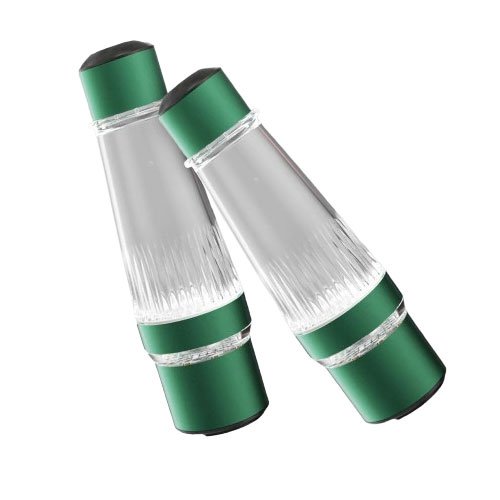
Make Cold-Season Hydration Effortless
Keeping fluids up is one of the simplest comfort habits when you feel stuffy. The H+ Molecular Hydrogen Infusing Water Bottle is a portable, refillable companion that makes it easier to keep sipping through the day.
Safety, Cautions, and When to See a Doctor

Acupressure is about as low-risk as wellness practices get. Still, a few sensible precautions keep it that way.
Who should be careful
- Pregnancy: skip LI4 completely, and check with your midwife or doctor before trying acupressure in general.
- Recent facial surgery, injury, or dental work: wait until you’re healed and cleared.
- Skin problems on the face: avoid pressing on broken skin, active acne, rashes, cold sores, or sunburn.
- Blood-thinning medication or easy bruising: use very light pressure.
- Eyes: never press on or toward the eyeball. The brow points press up into bone.
- Children: use only feather-light touch, and talk to your pediatrician about any child with sinus symptoms.
Signs it’s time to see a doctor
Most sinus infections are caused by viruses and clear up on their own within about a week to 10 days. Acupressure and home comfort measures are fine while that happens. But please contact a healthcare professional if you notice:
- Symptoms lasting more than 10 days without improving
- A fever lasting more than 3 to 4 days
- Symptoms that get better and then suddenly worse again (sometimes called “double sickening”)
- Severe headache or facial pain
- Several sinus infections within the past year, or symptoms lasting 12 weeks or more
Seek urgent care right away if you have swelling or redness around the eye, changes in your vision, a stiff neck, confusion, a sudden severe headache, or trouble breathing. These are rare, but they need prompt medical attention.
Acupressure can sit comfortably alongside whatever your doctor recommends. It’s a complement, never a replacement. For a wider look at gentle, drug-free approaches, see our guide to natural therapy for pain.
Sinus Acupressure FAQs and Final Thoughts
Which sinus acupressure point works best?
There’s no proven “best” point. LI20 beside the nostrils is the one most often studied and most people’s favorite because it sits right over the maxillary sinuses. For forehead pressure, many prefer Yintang and BL2. Try the full routine and notice which points feel most helpful for you.
How long should I hold each point?
Thirty seconds to one minute per point is a good starting place. Some guides suggest up to three minutes. Longer isn’t always better, especially on the delicate face points.
Can acupressure drain my sinuses?
Some people say they feel drainage or a runny nose during or after pressing. Research hasn’t confirmed that acupressure physically drains the sinuses, so think of it as something that may help you feel clearer and more relaxed.
Can acupressure cure a sinus infection?
No. Acupressure doesn’t treat infection. Most sinus infections are viral and pass on their own, and a doctor can advise you if yours doesn’t. See the warning signs above.
Is it safe to do acupressure every day?
For most healthy adults, yes. Gentle daily acupressure is considered low-risk. Stop if you feel pain, notice bruising, or your symptoms get worse.
Is acupressure the same as acupuncture?
They share the same points and traditional theory, but acupuncture uses fine needles inserted by a licensed practitioner, while acupressure uses finger pressure you can do yourself. Most of the stronger research is on acupuncture.
Final thoughts
There’s something quietly empowering about knowing a few points you can press when your head feels heavy and the tissues are piling up. A sinus acupressure point routine won’t replace rest, fluids, or good medical care. But five calm minutes of slow breathing and steady, kind pressure may help you feel a little clearer, a little more relaxed, and a little more in charge of your own comfort. Start gently, listen to your body, and save this page for the next time cold season comes knocking. 🌿