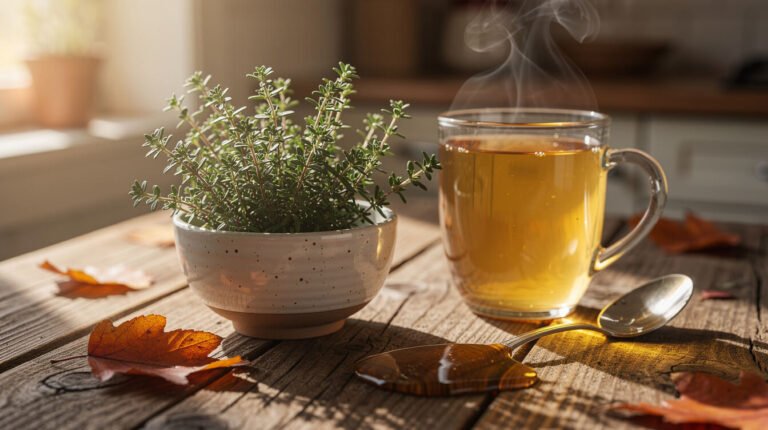
Herbal Tea for Heartburn: 6 Soothing Teas, What Research Suggests, and Which to Skip
It starts as a slow warmth behind your breastbone, usually right after a rich dinner or just as you settle into bed. Before long, that familiar burn is creeping up toward your throat. If you’re looking for a gentler way to wind down on those nights, a cup of herbal tea for heartburn is one of the most comforting places to start.
Here’s the catch. Most lists of “best teas for acid reflux” recommend nearly every herb in the cupboard, peppermint included, and rarely say what the research actually shows. Some popular choices may make heartburn worse, and a few deserve a safety note that almost nobody mentions.
This guide is the honest version. You’ll learn which six herbal teas are traditionally used for heartburn, what research suggests about each one, which teas to skip during a flare, and how to brew and time your cup so it supports you instead of setting off the burn. We’ll also cover the simple bedtime habits that have some of the strongest evidence behind them, and the signs that mean it’s time to talk with a doctor. 🌿
Herbal Tea for Heartburn: What a Warm Cup Can (and Can’t) Do

Heartburn is the burning feeling that happens when stomach contents, including acid, flow back up into the esophagus, the tube that carries food from your mouth to your stomach. A ring of muscle at the bottom of the esophagus, called the lower esophageal sphincter (LES), normally acts like a one-way valve. When it relaxes at the wrong moment, or when the stomach is very full, acid can splash upward. That backflow is called reflux.
You’re far from alone if this sounds familiar. A large systematic review estimated that roughly 18% to 28% of adults in North America experience reflux symptoms such as heartburn at least weekly (El-Serag 2014). When symptoms are frequent or cause complications, doctors call it gastroesophageal reflux disease, or GERD.
Where herbal tea fits in
Let’s be clear about what a cup of tea can realistically offer. Herbal tea is not a substitute for medical care, and no tea has been shown to heal reflux. What a well-chosen herbal tea for heartburn can do is:
- Replace common triggers. Swapping an evening coffee, black tea, or glass of wine for a caffeine-free herbal cup removes drinks that many people find aggravate their symptoms.
- Offer traditional soothing herbs. Herbs like chamomile, licorice, marshmallow root, and slippery elm have long histories of use for an uncomfortable stomach and throat.
- Create a calmer evening ritual. Sipping something warm slowly, sitting upright, gives your body a pause after eating. Stress doesn’t cause reflux directly, but many people notice their symptoms feel worse during tense, rushed weeks.
Think of tea as one gentle tool in a bigger toolkit. The other tools, like meal timing and how you sleep, matter just as much, and we’ll cover them below. If you’re curious about the broader picture of how your gut and mood talk to each other, our guide to the gut-brain connection is a good companion read.
6 Herbal Teas Traditionally Used for Heartburn
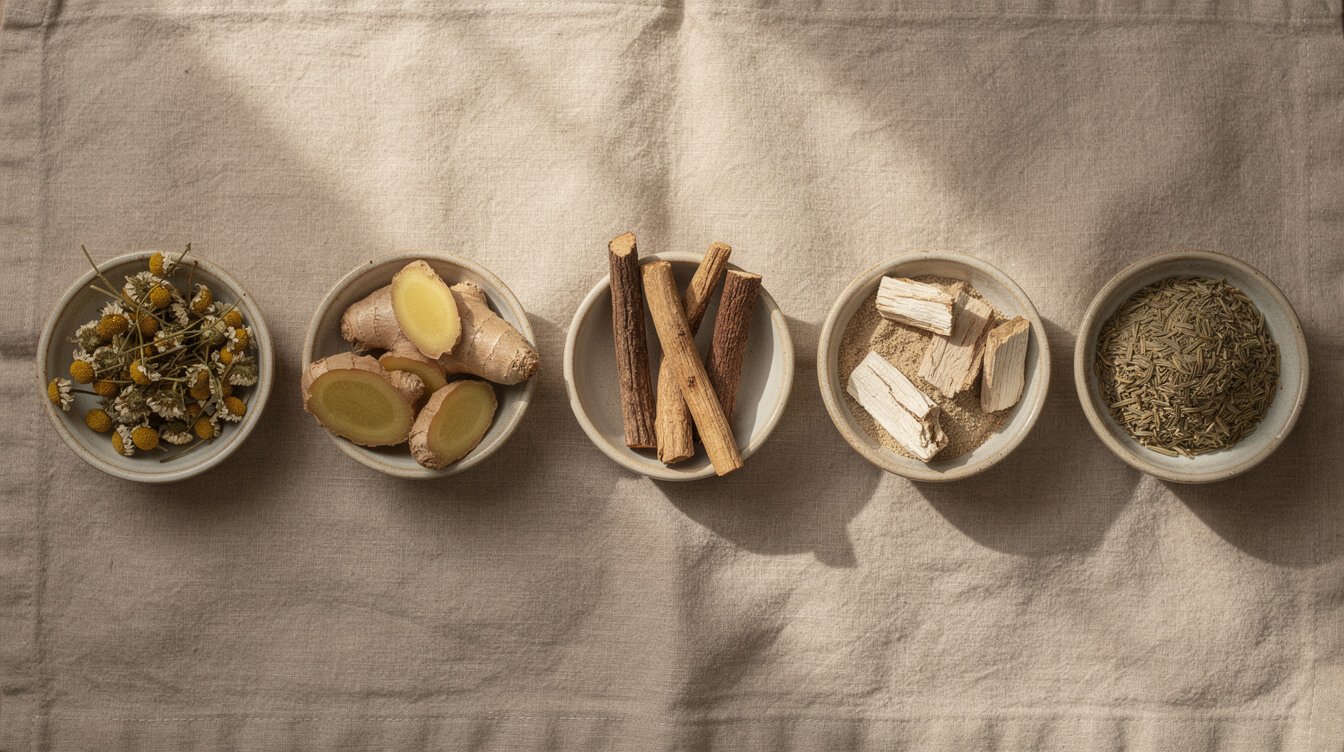
These six herbs show up again and again in traditional remedies and in modern reflux-friendly tea blends. Each one is caffeine-free and generally gentle, but each also comes with its own notes, so read the details before you stock up.
1. Chamomile
Chamomile is the classic bedtime tea, and it’s traditionally used to calm both the stomach and the mind. Laboratory and animal research suggests chamomile has mild anti-inflammatory and muscle-relaxing properties (Srivastava 2010), but high-quality human studies on chamomile for heartburn specifically are lacking. Its biggest strength may simply be that it’s a soothing, caffeine-free way to end the day. If you’re new to it, our chamomile wellness routine has easy ideas. People with ragweed or daisy-family allergies should be cautious.
2. Ginger
Ginger has been used for centuries as a digestive aid. In a small randomized trial of people with indigestion, ginger capsules helped the stomach empty faster than a placebo, although participants’ symptoms didn’t change (Hu 2011). Faster emptying is interesting for reflux, because a full stomach is more likely to push contents upward. The important nuance: keep it light. A few thin slices steeped in hot water is very different from a strong, spicy brew, and large amounts of ginger can cause heartburn in some people. For more on this root, see our ginger spotlight.
3. Licorice root (and DGL)
Licorice is traditionally used to coat and soothe the lining of the stomach and esophagus. It also has the most intriguing modern research of the group. In a 2025 double-blind trial of 200 adults with reflux symptoms, a standardized deglycyrrhizinated licorice (DGL) extract led to faster easing of heartburn and regurgitation than a placebo over four weeks (Raj 2025). That study used a concentrated extract, though, not tea.
Ordinary licorice root tea is a different story. It contains glycyrrhizin, a compound that can raise blood pressure and lower potassium when consumed regularly. A meta-analysis found that regular licorice intake raised systolic blood pressure by about 5 mmHg on average (Penninkilampi 2017). Treat licorice tea as an occasional cup, not a daily habit, and skip it entirely if you have high blood pressure, heart or kidney concerns, or are pregnant.
4. Slippery elm
The inner bark of the slippery elm tree contains mucilage, a gel-like fiber that becomes slick and soothing when mixed with water. It’s traditionally used to coat an irritated throat and digestive tract. There are no solid clinical trials on slippery elm for heartburn, so its reputation rests on tradition and that pleasant coating texture. Because mucilage can slow the absorption of other things you swallow, take medications at least an hour or two apart from it.
5. Marshmallow root
Yes, the original marshmallow was a plant. Marshmallow root is another mucilage-rich herb with a long tradition of use for soothing irritated tissues. Like slippery elm, it lacks modern reflux trials, and the same medication-spacing tip applies. Marshmallow root releases its mucilage best in a cool, slow infusion, which we’ll show you how to make below.
6. Fennel
Fennel seed tea has a gentle, slightly sweet licorice-like flavor and is traditionally used after meals to ease bloating and gas. Harvard Health notes that fennel is among the herbs said to aid digestion, but with little scientific evidence for heartburn specifically. It’s a lovely choice if you tend to feel full and gassy after big meals. Our herbal tea for digestion guide covers fennel and other after-meal teas in more depth.
What Research Suggests About Herbal Tea for Heartburn
Here’s an honest summary: almost no clinical trials have tested an herbal tea for heartburn. Most of the research involves concentrated extracts, capsules, or herbal preparations that are stronger than what ends up in your mug. That doesn’t make tea pointless. It means we should keep our expectations realistic and lean on tradition and comfort rather than big promises.
| Herb | Traditionally used for | What research suggests | Key caution |
|---|---|---|---|
| Chamomile | Calming the stomach and mind | Lab and animal data only for reflux | Ragweed allergy; blood thinners |
| Ginger | Digestion, nausea | Faster stomach emptying in a small trial, no change in symptoms | Large amounts may trigger heartburn |
| Licorice (DGL) | Coating the stomach lining | DGL extract eased reflux symptoms vs placebo in a 2025 trial | Regular licorice tea can raise blood pressure |
| Slippery elm | Coating the throat and gut | No reflux trials | Space it from medications |
| Marshmallow root | Soothing irritated tissue | No reflux trials | Space it from medications |
| Fennel | Bloating, after-meal fullness | Little evidence for heartburn | Avoid in pregnancy in large amounts |
Why most tea studies are about indigestion, not reflux
You may see the herbal preparation STW 5 (sold as Iberogast) mentioned in reflux articles. In a meta-analysis of placebo-controlled trials, it did ease the most bothersome symptom of functional dyspepsia, a type of ongoing indigestion (Melzer 2004). But dyspepsia isn’t the same as reflux, and that formula actually contains peppermint, which brings us to the tea most people don’t realize might work against them.
There’s also some interesting early research on aloe vera syrup for reflux symptoms, including a small pilot trial (Panahi 2015), but it’s too early and too small to draw firm conclusions. If you’d like to explore more traditional plant remedies with the same careful lens, our complete herbal remedies guide is a good next step.
Teas to Skip or Limit When Heartburn Flares

Choosing the right herbal tea for heartburn is partly about what you leave out. These are the most common culprits.
Peppermint and spearmint
Peppermint is wonderful for many tummy troubles, which is why it appears on so many “teas for acid reflux” lists. But peppermint has a long-recognized downside for reflux: it can relax the lower esophageal sphincter, the very valve you want to stay closed. This effect was described in a classic study back in 1969 (Sigmund 1969) and is the reason many reflux guides now advise caution. Spearmint may act similarly. If peppermint tea feels fine for you, there’s no need to panic, but if your heartburn flares after a minty cup, it’s a likely suspect.
Caffeinated teas
Black, green, oolong, and matcha teas contain caffeine. Some people with reflux tolerate them well, while others notice symptoms afterward. If you’re unsure, try a week without them and see how you feel.
Tart and citrus-heavy blends
Lemon, orange peel, rose hip, and hibiscus give tea a bright, tangy flavor, but acidic drinks can sting an already irritated esophagus. Check blend labels for citrus or citric acid. If you love hibiscus, a weaker or cold-steeped cup may be gentler.
Anything piping hot
This one surprises people. The International Agency for Research on Cancer classifies drinking very hot beverages, above about 65°C (149°F), as probably carcinogenic to the esophagus (Loomis 2016). A large cohort study also linked drinking tea at 60°C (140°F) or hotter to a higher risk of esophageal cancer (Islami 2020). An already irritated esophagus deserves extra kindness, so let your cup cool for a few minutes until it’s comfortably warm.
Keep a simple trigger diary. A review of lifestyle measures for reflux found that evidence for cutting specific foods and drinks is thin and highly individual (Kaltenbach 2006). Rather than banning everything, jot down what you drank, when, and how you felt for two weeks. Patterns usually appear quickly.
How to Brew Herbal Tea for Heartburn (Plus 3 Gentle Blends)

A few small brewing choices can make your cup gentler and more pleasant.
- Steep flowers and seeds hot, then cool. Chamomile and lightly crushed fennel seeds steep well in just-boiled water for 5 to 10 minutes, covered to hold in the aromatic oils. Then let the cup rest until it’s warm, not scalding.
- Go easy on ginger. Start with 2 to 3 thin slices of fresh ginger per cup, steeped for 5 minutes. You can always make it stronger later.
- Cold-infuse the mucilage herbs. Marshmallow root releases its silky mucilage best in cool water. Add 1 to 2 teaspoons of dried root to a cup of room-temperature water, cover, and let it sit for 2 to 4 hours (or overnight in the fridge). Strain and sip at room temperature or gently warmed.
- Whisk slippery elm. Slippery elm is usually sold as a powder. Whisk about 1 teaspoon into a cup of warm water until it thickens slightly. The texture is soft and a little velvety.
- Keep the cup small. Around 6 to 8 ounces is plenty. A large volume of liquid sloshing into an already full stomach isn’t ideal.
- Skip the lemon. If you’d like a little sweetness, a small drizzle of honey is a gentler choice than citrus.
Three gentle blends to try
- After-Dinner Calm: 1 teaspoon dried chamomile plus ½ teaspoon lightly crushed fennel seeds. Steep 7 minutes, covered.
- Ginger Whisper: 1 teaspoon dried chamomile plus 2 thin slices of fresh ginger. Steep 5 minutes. Soft, warming, and not too spicy.
- Velvet Cup: a cold infusion of marshmallow root, gently warmed, with a small pinch of licorice root for sweetness. Save this one for occasional use because of the licorice note above.
Buying a pre-made blend? Read the label. Many “tummy” or “digestion” blends include peppermint, spearmint, or citrus, which may not suit heartburn-prone evenings.
Timing Matters: A Gentle Evening Plan for Heartburn-Prone Nights

When you drink your tea, and what you do around it, may matter as much as which herb you choose. This is especially true during the holiday season, when big, late, rich meals are the norm.
Give dinner a head start
Leaving a gap between your last meal and bedtime is one of the most practical reflux habits. In a Japanese case-control study, people who went to bed less than 3 hours after dinner had about seven times higher odds of reflux disease than those who waited 4 hours or more (Fujiwara 2005). The American College of Gastroenterology’s guideline also suggests avoiding meals 2 to 3 hours before lying down (Katz 2022). A light, earlier dinner on most nights is a gift to your future self.
Sip after, not during
Instead of drinking a big mug alongside your meal, try enjoying your herbal tea about 30 to 60 minutes afterward, sitting upright. Small, slow sips are gentler on a full stomach than a large volume at once.
Chew, stroll, and stay upright

Two small studies found that chewing sugar-free gum after a meal reduced the time acid spent in the esophagus, likely because it increases saliva and swallowing, which help wash acid back down (Avidan 2001; Moazzez 2005). In one of those studies, a gentle walk after eating also helped, though only mildly and briefly. Avoid slumping on the couch or lying down right after a big meal. A slow stroll around the block, then a cup of tea on a firm chair, is a lovely post-dinner routine.
Make room to unwind
Many people notice their heartburn feels worse during stressful stretches, so it’s worth building a little calm into the evening. A few minutes of slow breathing with a long exhale (try our breathwork for stress relief guide), a warm shower, or quiet time with your tea can all help signal “rest” to your body. Some people also enjoy the OlyLife Vitality Wand as part of their evening wind-down, using it on the shoulders, upper back, or feet while they unwind. It’s designed to deliver terahertz and PEMF frequencies for general relaxation and is not intended to treat heartburn, reflux, or any digestive condition. It’s also not suitable for anyone with a pacemaker or other implanted electronic device.
A holiday-meal game plan
- Choose a smaller plate and go back for seconds only if you’re truly hungry.
- Go lighter on the fattiest dishes, which tend to linger in the stomach.
- If you drink alcohol, keep it modest and alternate with water.
- Take a short walk with family after the meal.
- Brew a pot of chamomile and fennel tea to share an hour later.
🎁 Get a Free Wellness Gift
Enter your name and email below to receive a special wellness gift from OlyLife — absolutely free!
Beyond the Teacup: Bedtime Habits Research Supports

Nighttime heartburn can be especially disruptive because lying flat makes it easier for acid to travel upward. Interestingly, some of the strongest evidence for easing reflux comes from simple, low-cost bedtime changes.
Raise the head of your bed
A systematic review of head-of-bed elevation trials found that participants generally had fewer reflux symptoms with the bed raised, and one high-quality trial showed a meaningful drop in symptoms after six weeks (Albarqouni 2021). The key is to raise the whole upper body, not just your head. Sturdy bed risers under the headboard legs or a wedge pillow work better than stacking regular pillows, which can bend you at the waist and increase pressure on your stomach.
Try sleeping on your left side
Because of the way the stomach sits in the body, lying on your right side may make it easier for acid to reach the esophagus. In a randomized, sham-controlled trial, a small wearable device that nudged people to avoid sleeping on their right side increased time on the left side and improved nighttime reflux symptoms in 44% of participants, compared with 24% in the sham group (Schuitenmaker 2022). You don’t need a device to try it. A body pillow behind your back can help you stay on your left side.
Support a healthy weight, gently
In a large Norwegian population study of nearly 30,000 adults, weight loss was linked to fewer reflux symptoms in a dose-dependent way: the more weight people lost, the more likely their symptoms eased (Ness-Jensen 2013). This isn’t about crash diets. Small, sustainable changes, such as earlier dinners, more vegetables, and regular movement, add up. Our 21-day anti-inflammatory diet plan is a gentle, food-first place to start.
For a broader set of sleep-friendly habits, from light exposure to bedroom temperature, see our sleep hygiene tips.
Make Your Evening Wind-Down a Ritual ✨
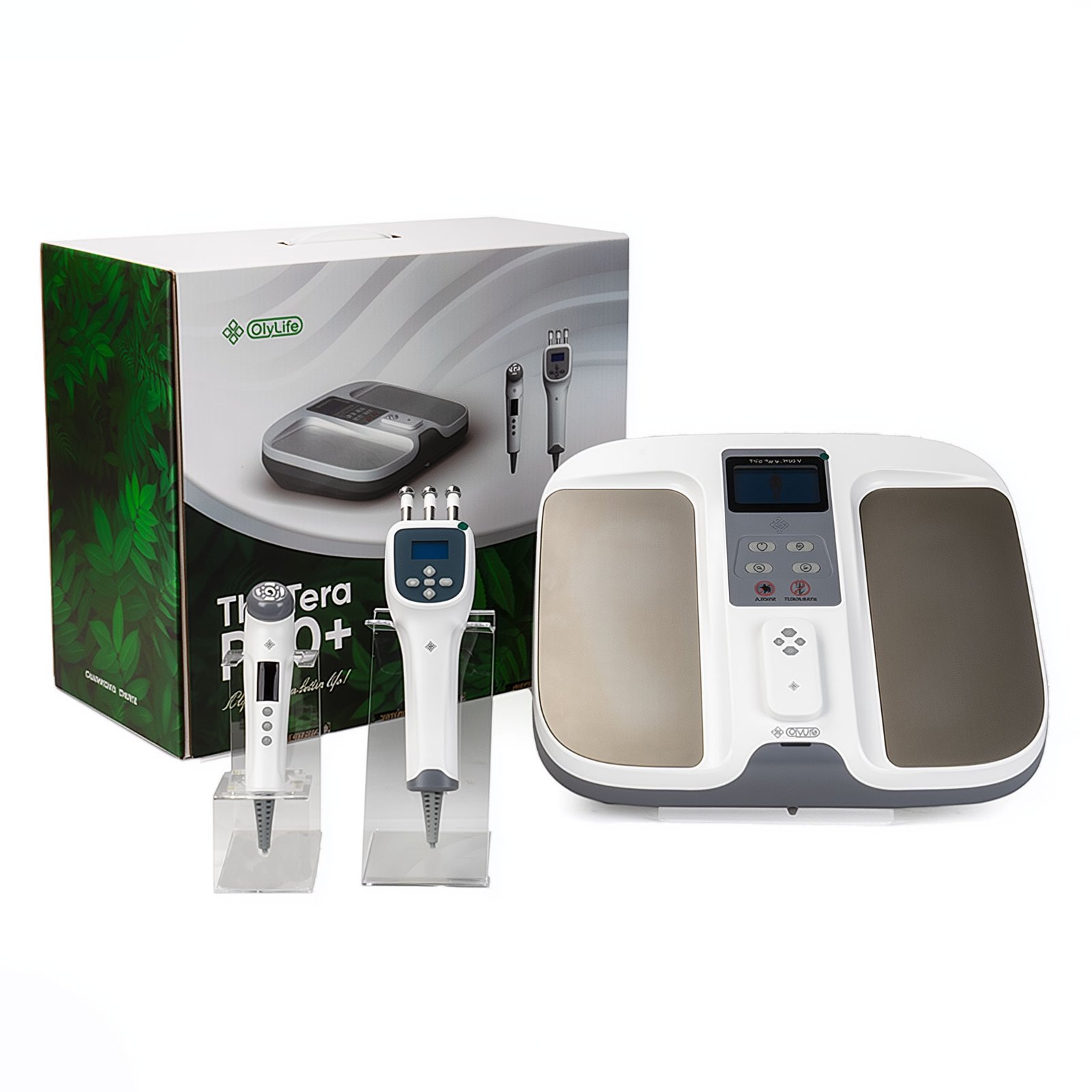
If a calm, unhurried evening is part of your plan, the OlyLife THz Tera-P90+ is designed to deliver focused PEMF and terahertz frequencies, and many customers use it as a relaxing part of their nighttime routine. It’s intended to support relaxation and general wellbeing, not to diagnose or treat heartburn or any other condition. Not suitable for anyone with a pacemaker or implanted electronic device, so please check with your doctor if in doubt.
When Heartburn Needs More Than Tea (and Who Should Be Careful)
Occasional heartburn after a big meal is common. But frequent or unusual symptoms deserve a conversation with a healthcare provider, both to rule out other conditions and because untreated reflux can, over time, irritate and damage the esophagus.
Talk to a doctor if you notice:
- Heartburn twice a week or more, or symptoms that keep returning despite lifestyle changes
- Needing antacids or over-the-counter reflux medicine most days for more than two weeks
- Trouble or pain when swallowing, or a feeling that food is getting stuck
- Unexplained weight loss, ongoing nausea, or vomiting
- Vomiting blood or material that looks like coffee grounds, or black, tarry stools
- Persistent hoarseness, a chronic cough, or wheezing that seems linked to meals or lying down
- New heartburn that begins after age 60, or heartburn during pregnancy
Important: chest pain can be a sign of a heart problem rather than heartburn, especially if it spreads to your arm, jaw, neck, or back, or comes with shortness of breath, sweating, or lightheadedness. If you’re ever unsure, call emergency services right away.
Herbal tea safety notes
- Licorice: avoid regular use if you have high blood pressure, heart or kidney disease, low potassium, or are pregnant. It can also interact with diuretics, blood pressure medications, steroids, and digoxin.
- Chamomile: may cause reactions in people allergic to ragweed, daisies, or marigolds, and may interact with blood thinners such as warfarin.
- Ginger: check with your doctor if you take blood thinners, and keep amounts modest.
- Slippery elm and marshmallow root: take medications and supplements at least 1 to 2 hours apart, since the mucilage may slow their absorption.
- Pregnancy and breastfeeding: heartburn is very common in pregnancy, but several herbs aren’t well studied for safety. Ask your midwife or doctor before trying medicinal-strength teas.
- Medications: if you take any prescription medication, a quick check with your pharmacist about herbal tea is always a good idea.
Herbal tea works best alongside your care, never instead of it. If your provider has recommended a medication for reflux, keep taking it as directed and talk with them before making changes. For a wider look at what your digestive system may be telling you, our guide to the signs of poor gut health and our article on natural relief for stomach pain are helpful companions.
Frequently Asked Questions About Herbal Tea for Heartburn

What is the best herbal tea for heartburn?
There isn’t a single “best” tea backed by strong research. Chamomile is a gentle, widely tolerated starting point, and a light ginger tea or a cool marshmallow root infusion are other popular options. The best herbal tea for heartburn is one that’s caffeine-free, mint-free, not too hot, and that your body tolerates well.
Is peppermint tea good for heartburn?
Often not. While peppermint can ease other digestive discomforts, it may relax the lower esophageal sphincter and make it easier for acid to rise. If you have frequent heartburn, it’s wise to choose chamomile, ginger, or fennel instead.
Can chamomile tea help acid reflux?
Chamomile is traditionally used to calm the stomach, and lab research suggests it has mild anti-inflammatory properties. Human studies on chamomile for reflux specifically are limited, but as a caffeine-free evening drink, it may be a soothing swap for coffee or black tea.
Is ginger tea good for heartburn?
In small amounts, ginger may support digestion, and one small study found it helped the stomach empty faster. However, strong or large servings of ginger can trigger heartburn in some people. Start with a few thin slices and see how you feel.
Does licorice tea help with heartburn?
A 2025 trial found that a deglycyrrhizinated licorice (DGL) extract eased reflux symptoms better than a placebo. Regular licorice tea, however, contains glycyrrhizin, which can raise blood pressure with frequent use. Keep licorice tea occasional, and talk to your doctor before trying DGL supplements.
When should I drink tea for heartburn?
Try sipping a small cup 30 to 60 minutes after a meal while sitting upright, rather than with your meal or right before lying down. Allow your tea to cool to a comfortably warm temperature first.
Can I drink herbal tea for heartburn every day?
Gentle options like chamomile and fennel are generally fine for daily use for most healthy adults. Licorice should be limited, and anyone who is pregnant, takes medication, or has a health condition should check with a healthcare provider first.
Is green tea okay for acid reflux?
Green tea contains caffeine, which bothers some people with reflux. If you love green tea, try a weaker brew earlier in the day and notice how you feel, or switch to a caffeine-free herbal option in the evening.
Final Thoughts: A Kinder Cup for Heartburn-Prone Evenings
Heartburn has a way of turning the coziest moments, a holiday meal, a lazy evening, a good night’s sleep, into something to dread. A thoughtfully chosen herbal tea for heartburn won’t fix everything, but it can be a warm, steady part of a gentler routine.
Start simple. Swap your evening coffee or mint tea for chamomile or a light ginger brew. Let it cool before sipping. Give dinner a few hours to settle before bed, take a short stroll, and consider raising the head of your bed or sleeping on your left side. Keep a little diary so you can learn what your own body likes. And if heartburn is frequent or comes with any warning signs, reach out to your healthcare provider. You deserve real answers and real relief.
Small, kind habits add up. Tonight, put the kettle on, choose a soothing herb, and give yourself a few unhurried minutes to sit, sip, and breathe. ✨
This article is for general educational purposes and is not medical advice. Herbal teas are not a substitute for diagnosis or treatment of heartburn, GERD, or any other condition. If you are pregnant or breastfeeding, take medication, have a health condition, or use a pacemaker or other implanted medical device, please check with your healthcare provider before trying new herbs, supplements, or wellness devices.
References
- Albarqouni L, Moynihan R, Clark J, et al. Head of bed elevation to relieve gastroesophageal reflux symptoms: a systematic review. BMC Fam Pract. 2021. PMID 33468060
- Avidan B, Sonnenberg A, Schnell TG, Sontag SJ. Walking and chewing reduce postprandial acid reflux. Aliment Pharmacol Ther. 2001. PMID 11148431
- El-Serag HB, Sweet S, Winchester CC, Dent J. Update on the epidemiology of gastro-oesophageal reflux disease: a systematic review. Gut. 2014. PMID 23853213
- Fujiwara Y, Machida A, Watanabe Y, et al. Association between dinner-to-bed time and gastro-esophageal reflux disease. Am J Gastroenterol. 2005. PMID 16393212
- Hu ML, Rayner CK, Wu KL, et al. Effect of ginger on gastric motility and symptoms of functional dyspepsia. World J Gastroenterol. 2011. PMID 21218090
- Islami F, Poustchi H, Pourshams A, et al. A prospective study of tea drinking temperature and risk of esophageal squamous cell carcinoma. Int J Cancer. 2020. PMID 30891750
- Kaltenbach T, Crockett S, Gerson LB. Are lifestyle measures effective in patients with gastroesophageal reflux disease? An evidence-based approach. Arch Intern Med. 2006. PMID 16682569
- Katz PO, Dunbar KB, Schnoll-Sussman FH, et al. ACG clinical guideline for the diagnosis and management of gastroesophageal reflux disease. Am J Gastroenterol. 2022. PMID 34807007
- Loomis D, Guyton KZ, Grosse Y, et al. Carcinogenicity of drinking coffee, mate, and very hot beverages. Lancet Oncol. 2016. PMID 27318851
- Melzer J, Rösch W, Reichling J, et al. Meta-analysis: phytotherapy of functional dyspepsia with the herbal drug preparation STW 5 (Iberogast). Aliment Pharmacol Ther. 2004. PMID 15606389
- Moazzez R, Bartlett D, Anggiansah A. The effect of chewing sugar-free gum on gastro-esophageal reflux. J Dent Res. 2005. PMID 16246942
- Ness-Jensen E, Lindam A, Lagergren J, Hveem K. Weight loss and reduction in gastroesophageal reflux: a prospective population-based cohort study (the HUNT study). Am J Gastroenterol. 2013. PMID 23358462
- Panahi Y, Khedmat H, Valizadegan G, et al. Efficacy and safety of Aloe vera syrup for the treatment of gastroesophageal reflux disease: a pilot randomized positive-controlled trial. J Tradit Chin Med. 2015. PMID 26742306
- Penninkilampi R, Eslick EM, Eslick GD. The association between consistent licorice ingestion, hypertension and hypokalaemia: a systematic review and meta-analysis. J Hum Hypertens. 2017. PMID 28660884
- Raj JP, Saxena U, Belhekar MN, et al. Efficacy and safety of GutGard in managing gastroesophageal reflux-related symptoms: a phase III, double-blind, randomized placebo-controlled trial. Complement Med Res. 2025. PMID 39929150
- Schuitenmaker JM, Kuipers T, Oude Nijhuis RAB, et al. Sleep positional therapy for nocturnal gastroesophageal reflux: a double-blind, randomized, sham-controlled trial. Clin Gastroenterol Hepatol. 2022. PMID 35301135
- Sigmund CJ, McNally EF. The action of a carminative on the lower esophageal sphincter. Gastroenterology. 1969. PMID 5765428
- Srivastava JK, Shankar E, Gupta S. Chamomile: a herbal medicine of the past with bright future. Mol Med Rep. 2010. PMID 21132119