Infrared Heating Mat: Benefits, How It Works and How to Choose One
There’s a reason so many of us reach for warmth when our bodies feel tight, tired, or tense. A warm bath, a sunny patch on the floor, a heavy blanket on a cold night: heat feels like being looked after. An infrared heating mat takes that instinct and turns it into a daily ritual you can lie down on, and it has quickly become one of the most talked-about wellness tools for the home.
It’s also one of the most confusing to shop for. Prices range from about $100 to well over $1,500. Product pages promise everything from deeper sleep to “cellular recharging,” and most of the articles ranking for this topic are written by the brands selling the mats. So in this guide, we’ll do something different. We’ll explain what an infrared heating mat actually is, how it differs from an ordinary heating pad, what research suggests (and doesn’t), how to choose one with an honest checklist, and how to use it safely. 🌿
What Is an Infrared Heating Mat?
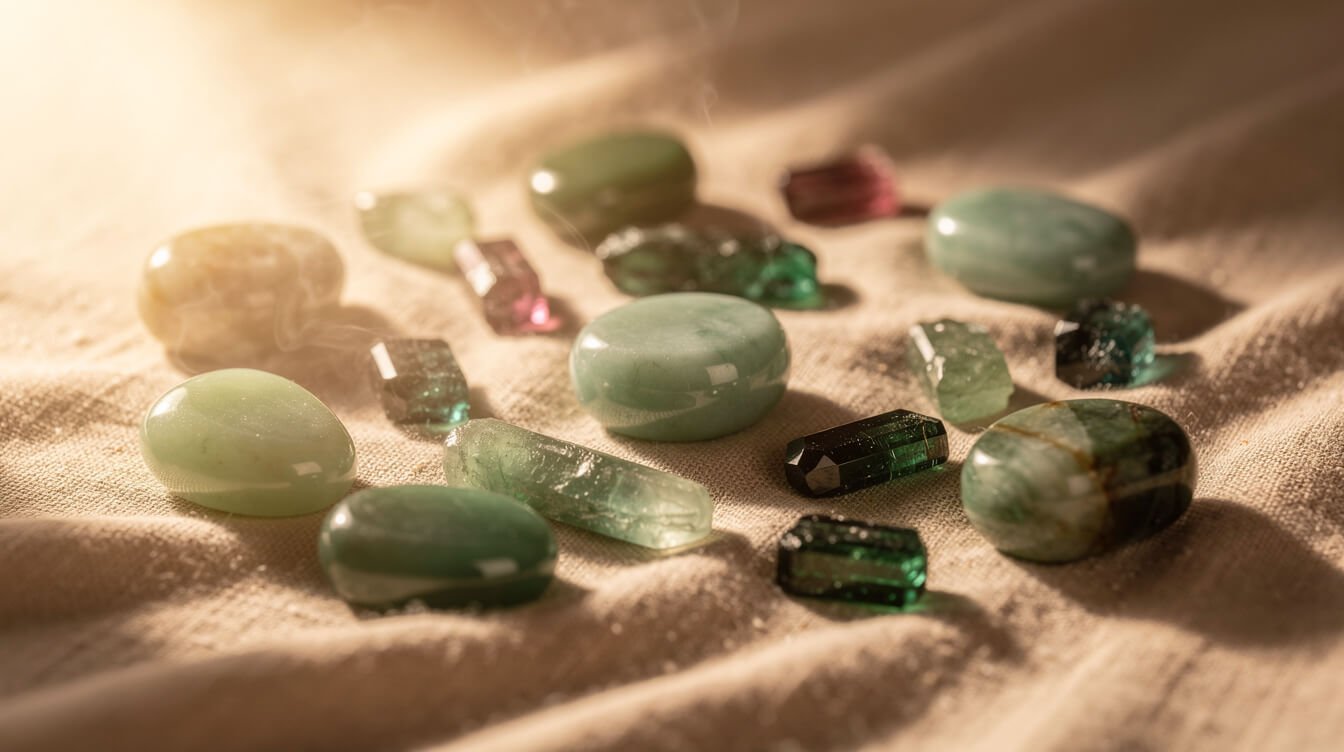
It’s a pad or full-length mat with built-in heating elements, usually carbon fiber or similar resistive wiring, layered beneath materials that hold and radiate warmth. Many premium mats add a top layer of natural stones such as jade, tourmaline, amethyst, or obsidian. You lie on it (usually over a thin towel or cover), set a temperature, and let the warmth soak in for a session of 20 to 40 minutes.
Where the “infrared” comes from
Here’s the part most product pages skip: every warm object gives off infrared energy. Your own skin radiates it, and so does a mug of tea, a hot-water bottle, and an ordinary electric heating pad. The term far infrared (FIR) describes the long-wavelength band of that energy, roughly 3 to 1,000 microns, and it’s what we feel as radiant warmth. (Our guide to far infrared and how it supports wellness goes deeper into the physics.)
So what makes a mat an “infrared” mat? In practice, it comes down to design. These mats use materials chosen to emit warmth efficiently as radiant energy (high emissivity) and to spread it evenly across a large surface. Stone layers add thermal mass, which means the heat feels steadier and gentler, more like lying on sun-warmed rocks than on a hot wire.
What an infrared heating mat is not
- It’s not a red light therapy mat. Red and near-infrared LED mats deliver specific wavelengths of light (usually 630–850 nm) and barely feel warm. That’s photobiomodulation, a different mechanism. Our comparison of infrared vs red light therapy untangles the two.
- It’s not a sauna. Most mats warm the part of you touching the mat. They can make you sweat at higher settings, but they don’t heat your whole body from every direction the way an infrared sauna does.
- It’s not automatically a PEMF mat. Some mats combine far-infrared heat with pulsed electromagnetic fields. That’s a separate technology with separate evidence, which we cover below.
Infrared Heating Mat vs Heating Pad, Sauna Blanket and Red Light Mat
Before you spend several hundred dollars, it helps to see where an infrared mat sits among the other ways to bring warmth or light into your routine. Each one does something slightly different.
| Option | How it works | Feels like | Typical price | Best for |
|---|---|---|---|---|
| Standard electric heating pad | Resistive wire warms fabric; conducted surface heat | Quick, concentrated warmth | $25–$70 | One sore spot, short sessions |
| Infrared heating mat | Carbon fiber heaters plus stone or high-emissivity layers radiate far-infrared warmth | Even, deep, “sun-warmed stone” warmth | $150–$1,500+ | Whole-back or full-body relaxation rituals |
| Infrared sauna blanket | Enclosing sleeping-bag design traps far-infrared heat around the body | Intense heat and sweat | $200–$700 | Sauna-style sessions without a cabin |
| Infrared sauna | Panels heat the body from several sides in an enclosed cabin | Full-body heat, heavy sweat | $1,500–$8,000+ | Regular sauna practice if you have space |
| Red light therapy mat | LEDs emit red and near-infrared light | Mild or barely warm | $300–$2,000 | Photobiomodulation, not heat |
The honest takeaway: for many people, the real difference between a good infrared heating mat and a quality heating pad is coverage and comfort. A mat warms your entire back, hips, and legs evenly. It invites you to lie still, breathe, and actually rest, and that ritual may be a big part of why people love them. If you only want to warm one stiff shoulder for ten minutes, a basic pad may serve you just as well.
If you’re weighing a mat against a full sauna, our breakdown of infrared sauna vs traditional sauna can help you decide how much heat you really want.
Infrared Heating Mat Benefits: What Research Suggests

Let’s be clear-eyed here, because this is where marketing tends to run ahead of the evidence. Very few rigorous studies test branded mats directly. What we do have is research on superficial heat therapy in general, plus a smaller body of work on far-infrared materials. Here’s what that research suggests.
1. Warmth may ease everyday muscle tension and back discomfort
The best-studied benefit is the simplest one. A 2006 Cochrane review of superficial heat and cold for low back pain (French and colleagues, nine trials, 1,117 participants) found moderate evidence from a small number of trials that heat wrap therapy provides a small, short-term reduction in pain and disability for acute and subacute low back pain. One included trial found that a heated blanket reduced pain immediately after use. The reviewers also noted that the overall evidence base is limited and called for better trials.
That’s a modest but meaningful finding. It suggests that a warm surface under your back may help you feel looser and more comfortable, which is exactly how most people describe their mat sessions. For a wider view of gentle, evidence-informed approaches, see our guide to natural therapy for pain.
2. Far-infrared materials show early, intriguing results
Researchers have been curious about whether far-infrared-emitting materials do anything beyond ordinary warmth. A 2012 review by Vatansever and Hamblin in Photonics & Lasers in Medicine summarized studies on FIR saunas, lamps, and FIR-emitting textiles and concluded the area was promising but needed more rigorous research.
One example is often cited for menstrual comfort. In a 2011 multicenter, randomized, double-blind, placebo-controlled trial in Korea, 104 women with primary dysmenorrhea wore either a far-infrared-emitting belt or a placebo belt (both used with a hot pack) during sleep for three cycles. Both groups improved during treatment, but during follow-up the improvement held in the far-infrared group while the placebo group drifted back toward baseline. It’s a single trial using a belt, not a mat, so treat it as an encouraging signal rather than proof. If cycle comfort is your interest, our piece on foods that may ease period cramps pairs well with a warm rest.
3. Relaxation and wind-down may be the quiet superpower
Warmth naturally invites the body to slow down. Lying still on a warm surface, with your phone away and your breath slowing, is a gentle cue for the “rest and digest” side of your nervous system. Many people use their mat as part of an evening routine, and while direct sleep research on mats is thin, a calming pre-bed ritual is one of the most reliable sleep habits there is. (Our sleep sanctuary setup has more ideas.)
What the evidence does not support
Be cautious with claims that an infrared mat “detoxes” your organs, “burns fat,” “cures” inflammation, or that crystals and negative ions provide proven healing effects. Stones genuinely improve how heat feels and spreads; claims beyond that are mostly untested. Enjoy the mat for what it reliably offers: comfortable, even warmth and a reason to rest.
How to Choose an Infrared Heating Mat: An 8-Point Checklist

Because so many listings sound alike, it helps to shop with a short list of questions. Here’s the checklist we’d use ourselves.
- Size and coverage. Small pads (about 20 x 30 inches) suit the back or lap. Full-length mats (around 72 x 24 inches) let your whole body rest. Measure your bed, sofa, or floor space first.
- Temperature range and accuracy. Look for a clear range (many go from about 95°F to 158°F) and a controller that shows actual temperature. You’ll likely spend most sessions in the low-to-middle settings.
- Auto shut-off timer. Non-negotiable. A timer protects you if you doze off and reduces the risk of skin damage from long exposure.
- Heating element and evenness. Carbon fiber heaters spread warmth evenly. Read reviews for complaints about hot spots or cold corners.
- Stone layer (optional). Jade, tourmaline, or amethyst add weight and steadier, more even warmth. They also add cost. Value them for comfort, not for unproven healing claims.
- EMF shielding claims. Any electric heater produces some electromagnetic field. If low EMF matters to you, look for a stated measurement method and distance, not just the words “EMF-free.”
- Safety certifications. Look for electrical safety marks such as ETL or UL. Be aware that “FDA registered” simply means the company registered its facility. It is not the same as FDA clearance or approval.
- Warranty and return policy. Electronics with heating elements should carry at least a one-year warranty. Check whether used mats can be returned, and who pays return shipping.
A practical tip: price often tracks size and stones more than technology. A mid-size mat with an accurate controller, timer, and solid warranty is often a smarter buy than a giant crystal mat with vague specs.
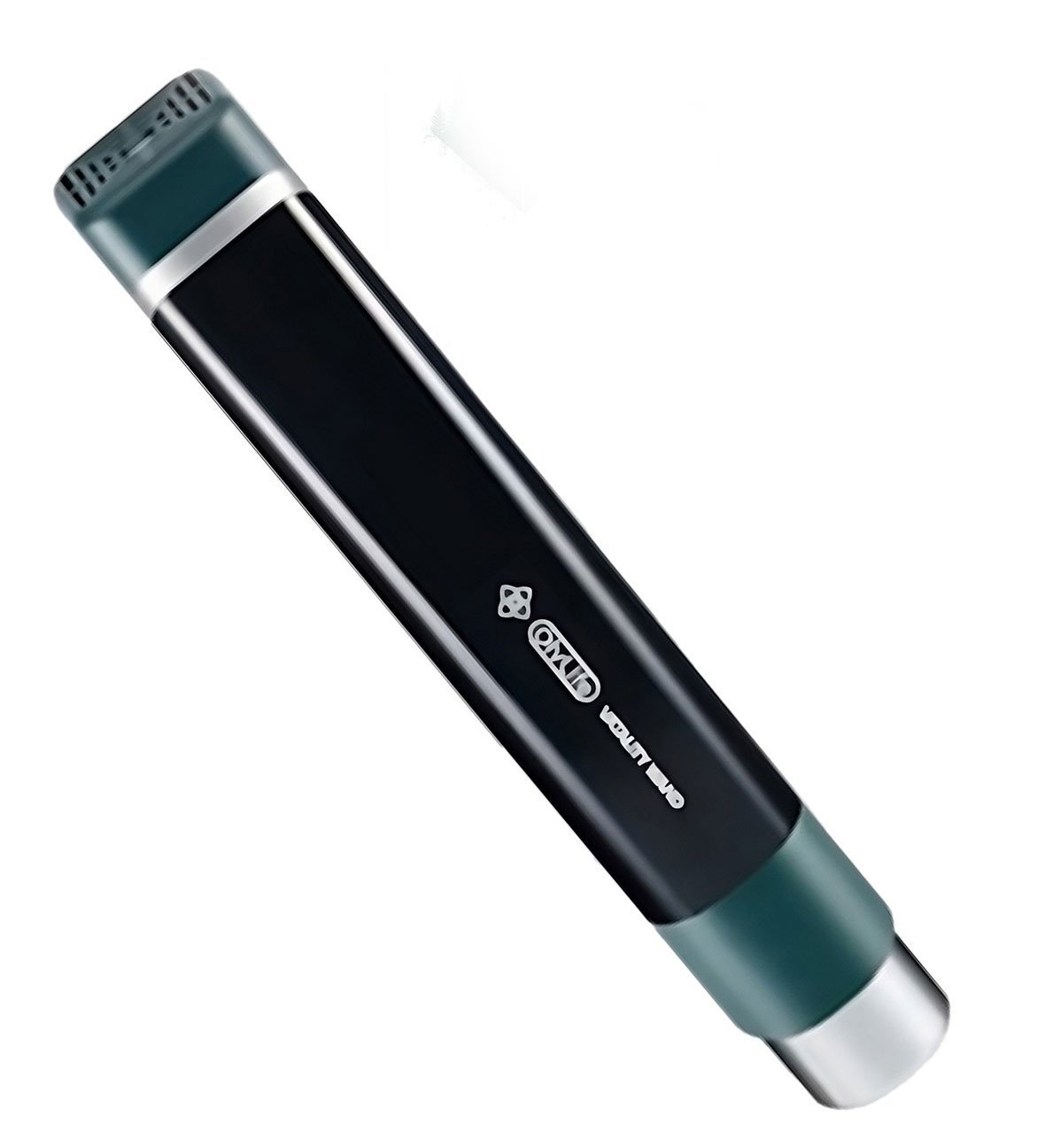
Not every body needs a full mat, either. If your tension tends to live in one or two places, like your shoulders or lower back, a handheld option that offers targeted warmth can be a flexible companion. Our OlyLife Vitality Wand pairs terahertz and PEMF technology with a gentle warm mode (and a cool mode for sensitive areas), so you can bring soothing warmth exactly where you want it.
🎁 Get a Free Wellness Gift
Enter your name and email below to receive a special wellness gift from OlyLife — absolutely free!
Infrared + PEMF Mats: What the Extra Layer Adds

Some of the best-known mats on the market combine far-infrared heat with PEMF (pulsed electromagnetic field) therapy, usually with a handful of preset frequencies. These combination mats tend to sit at the top of the price range, often $700 to $1,400.
It helps to think of them as two tools in one:
- The infrared layer provides warmth, comfort, and a relaxing ritual, as described above.
- The PEMF layer delivers low-level pulsed magnetic fields. Research on PEMF is a separate field, with the strongest evidence for specific uses such as bone-healing support in clinical settings and some promising research for joint comfort. You won’t feel it the way you feel heat.
If you’re curious about the PEMF side, start with our explainer, What Is PEMF?, and then our PEMF therapy mat buyer’s guide, which covers intensity, frequency, and safety questions in detail.
Questions to ask before paying for a combination mat
- Can you use the heat and PEMF separately? Flexibility matters on warm days or if you only want one.
- Does the brand publish the PEMF intensity (in gauss or microtesla) and frequencies, or just name them after brainwaves?
- Is the higher price justified by real specs and warranty, or mostly by crystals and branding?
- Do you have a pacemaker, implanted electronic device, or are you pregnant? If so, PEMF devices are generally not recommended. Speak with your healthcare provider first.
Targeted Warmth, Right Where You Need It
Not ready for a full mat? The OlyLife Vitality Wand pairs terahertz and PEMF technology with a soothing warm mode and a gentle cool mode, so you can bring comfort to your shoulders, back, or legs in a few relaxing minutes. 🌿
How to Use an Infrared Heating Mat Safely

Heat is gentle, but it isn’t nothing. A few simple habits help you enjoy your mat while protecting your skin and comfort.
A simple session routine
- Hydrate first. Drink a glass of water before you lie down, especially at higher settings where you may sweat.
- Use a barrier. Lay a thin cotton towel or the manufacturer’s cover over the mat. It keeps the surface clean and softens the heat.
- Start low and short. Begin at a low-to-medium temperature for 15 to 20 minutes. Many people settle into 20 to 40 minutes once they know how their body responds.
- Breathe and settle. Use the time for slow breathing, a body scan, or quiet music. This is where much of the relaxation happens.
- Rise slowly. Sit up gradually and drink more water, since warmth can leave you a little lightheaded.
Safety notes worth knowing
- Avoid long, repeated exposure in the same spot. Regular, prolonged heat from heating pads and laptops can cause erythema ab igne (“toasted skin syndrome”), a mottled, net-like skin discoloration. Short sessions and moderate temperatures help prevent it.
- Don’t sleep on high heat. If you like to drift off on your mat, use a low setting and an auto shut-off timer.
- Take extra care with reduced sensation. People with diabetes, neuropathy, or circulation concerns may not feel when heat becomes too much. Ask your healthcare provider before use.
- Check with your provider first if you are pregnant, have a heart condition, have an implanted device, or are managing a fever, a fresh injury, or swelling. Fresh injuries usually call for cold, not heat.
- Inspect the cord and controller. Stop using a mat with frayed wires, scorch marks, or a controller that runs hotter than its display.
A heated mat is a comfort tool, not a substitute for medical care. If discomfort is persistent, severe, or unexplained, please see a qualified professional.
Frequently Asked Questions
Do infrared heating mats really work?
They reliably deliver what heat delivers: comfortable warmth that may ease muscle tension and help you relax. Research on heat therapy suggests small, short-term relief for some types of back discomfort. Claims about detox, fat loss, or healing from crystals are not well supported.
Is an infrared heating mat better than a regular heating pad?
Not necessarily “better,” but different. A good infrared heating mat warms a larger area more evenly and feels gentler, which many people find more relaxing. A heating pad is cheaper and great for one spot. Both emit infrared energy, because all warm objects do.
How long should I lie on an infrared mat?
Most people use one for 20 to 40 minutes at a time. Start with 15 to 20 minutes at a lower temperature and adjust based on comfort. Always follow your mat’s manual.
Can I sleep on an infrared heating mat all night?
It’s best not to sleep on one at a high setting. If you use it at bedtime, choose a low temperature and set an auto shut-off timer to reduce the risk of overheating or skin irritation.
Are infrared mats safe during pregnancy?
Raising core body temperature is generally discouraged during pregnancy, and combination mats with PEMF add another unknown. Please talk with your healthcare provider before using any heat or PEMF device while pregnant.
Do I need jade or amethyst stones?
No. Stones help the mat hold and spread heat evenly, which feels lovely, but they add cost. A stone-free mat with even heating, an accurate controller, and a timer can be an excellent choice.
What’s the difference between an infrared mat and a red light therapy mat?
An infrared heating mat works through warmth. A red light therapy mat uses LEDs at specific red and near-infrared wavelengths and feels only mildly warm. They’re different tools. Read more in our guide to infrared light therapy for pain relief.
Final Thoughts: Choosing Warmth That Fits Your Life
An infrared heating mat won’t transform your health overnight, and any brand that promises that deserves a raised eyebrow. What it can offer is something many of us are short on: a warm, quiet, dependable invitation to stop, lie down, and let our bodies soften. Research suggests heat may ease everyday tension, and the ritual itself may be just as valuable.
If you decide to bring one home, choose with your head as well as your heart. Prioritize even heating, an accurate controller, an auto shut-off timer, recognized safety certifications, and a fair warranty. Treat crystals and PEMF as optional upgrades, and start low and slow. And if you’d rather explore gentle, research-informed warmth in other forms, from far infrared to a full sauna practice, we’re here to help you find what feels right for you. ✨