How to Improve Circulation in Feet: Gentle Habits, a 5-Minute Routine, and When to See a Doctor
If your feet are often cold, achy, heavy, or tingly, you’ve probably searched for how to improve circulation in feet and found the same short list: walk more, put your feet up, wear compression socks, get a massage. That’s not bad advice, but it leaves out something important. “Poor circulation” can mean several different things, and a tip that helps one kind can be the wrong choice for another.
Putting your feet up, for example, can feel wonderful when your ankles are puffy at the end of the day. For someone whose leg arteries are narrowed, though, it can make aching feet feel worse. Firm compression socks may help tired, swollen legs, but experts say they should be avoided when arterial blood flow is badly reduced.
This guide covers the gentle, everyday habits that research suggests may support healthy blood flow to your feet, and explains which habit suits which situation. You’ll find a 5-minute seated routine you can do almost anywhere, an honest look at warmth, massage, elevation, and compression, a simple daily plan, and a clear list of signs that mean it’s time to see a doctor rather than try another home remedy. 🌿
How to Improve Circulation in Feet Starts With Knowing Which “Circulation” You Mean
Your feet sit at the far end of a long, two-way system. Getting blood down to your toes is the easy part: your heart pumps it and gravity helps. Getting blood back up to your heart is harder. Your veins rely on one-way valves and on the squeezing action of your calf muscles, which is why the calf is sometimes called your “second heart.” In between sit millions of tiny skin vessels that open and close to manage your body heat.
When people talk about poor circulation in their feet, they usually mean a problem with one (or more) of these three parts:
| Type | What it can feel like | What usually helps | Be careful with |
|---|---|---|---|
| Arterial (blood getting in), such as peripheral artery disease (PAD) | Cramping, aching, or tiredness in the calves, thighs, or buttocks when walking that eases with rest; cool or pale feet; sores that heal slowly; shiny skin or less hair on the toes | A walking program guided by your clinician, not smoking, and managing blood pressure, cholesterol, and blood sugar | Long periods with legs raised, firm compression before an arterial check, and heat on feet with reduced feeling |
| Venous (blood getting back) | Heavy, achy legs and swollen ankles that are worse at the end of the day and better after rest with feet up; visible varicose veins; skin changes around the ankles | Calf movement, elevation, and properly fitted compression | Long hours of sitting or standing still |
| Small-vessel and temperature (heat-saving) | Cold, pale, or bluish toes in cold weather or under stress that warm up slowly | Core warmth, movement, dry warm socks, and stress relief | Very hot water, nicotine, and tight footwear |
Plenty of people have a mix, and only a clinician can tell you for sure which one is behind your symptoms. Still, knowing the three types helps the rest of this guide make sense. If cold toes are your main complaint, our guide to why your hands and feet are always cold looks at the heat-saving side in more depth.
The good news is that the foundation habits (moving your calves, not smoking, and looking after your heart health) support all three types. The parts that need a little more care are elevation, compression, and heat, which we’ll cover in their own section.
When Foot Circulation Needs a Doctor, Not Just Home Habits

Before the home habits, it’s worth knowing when foot symptoms deserve a proper check, because the most important circulation problem in the legs is common and often silent.
Peripheral artery disease is common, and often missed
Peripheral artery disease (PAD) happens when fatty plaque narrows the arteries that carry blood to the legs. A 2019 analysis in The Lancet Global Health pulled together 118 studies and estimated that about 237 million adults aged 25 and over were living with PAD worldwide in 2015. Prevalence climbs steeply with age, reaching roughly 1 in 5 people in their early 80s in high-income countries.
Many people with PAD don’t have the “textbook” symptoms. In the U.S. PARTNERS study, published in JAMA, screening with a simple ankle test and a records review found PAD in 29% of nearly 7,000 primary care patients who were either 70 or older, or 50 to 69 with a history of smoking or diabetes. Only 11% of those with PAD had the classic pattern of calf pain when walking that eases with rest. Over half of the PAD cases in people without other heart disease were brand new diagnoses. In other words, “my legs don’t hurt” doesn’t rule it out.
The usual test is the ankle-brachial index (ABI). It’s quick and painless: blood pressure cuffs on your arms and ankles, and a comparison of the two readings. If you’re over 50 and have diabetes, smoke or used to smoke, or have high blood pressure or cholesterol, it’s a reasonable thing to ask your doctor about.
The risk factors you can actually influence
A 25-year Harvard study of almost 45,000 men, published in JAMA, found that four familiar risk factors (smoking, high blood pressure, high cholesterol, and type 2 diabetes) were present in 96% of the men who developed significant PAD. Together they accounted for about three-quarters of the risk. Each additional risk factor roughly doubled the chance of developing it. Because the study included only men, the exact numbers may differ for women, but the same four factors are central for everyone.
If you live with diabetes, foot circulation deserves extra attention. The International Working Group on the Diabetic Foot (IWGDF) recommends checking feet at least once a year for loss of protective feeling and for PAD, and more often for people at higher risk. Reduced blood flow and reduced feeling together make small injuries easier to miss and slower to heal.
Red flags: when to get help promptly
- Call emergency services if a foot or leg suddenly becomes cold, pale or blue, very painful, numb, or weak.
- Seek urgent care the same day if one calf becomes swollen, warm, red, and painful, especially after a long trip, surgery, or time in bed. Get emergency help if you also have chest pain or shortness of breath.
- See your doctor soon if you have foot or toe pain at rest, especially at night, that eases when you hang your foot over the side of the bed.
- See your doctor soon about any sore, blister, or cut on your foot that isn’t clearly healing within a week or two. If you have diabetes, get any foot wound checked right away.
- Book a check-up for skin on the feet or toes that turns dark, black, or purple, new numbness or burning, or leg pain on walking that keeps coming back.
None of these signs tells you what’s going on. They simply mean it’s time for a professional to take a look. The habits below are a complement to that care, never a replacement for it.
Move More: The Most Reliable Way to Improve Circulation in Feet
If you only take one thing from this guide on how to improve circulation in feet, make it this: use your calves. Every time your calf muscles tighten, they squeeze the deep veins in your lower legs and push blood back toward your heart. Every time you walk, your working leg muscles ask for more blood, and over weeks your body adapts to deliver it.
Long sitting matters, and short breaks may help
In a small study in Medicine & Science in Sports & Exercise, researchers had 12 young men sit still for three hours and measured how well the main artery in the thigh could widen (a marker of blood vessel health called flow-mediated dilation). After three hours of uninterrupted sitting, it dropped noticeably. When the same men got up for a gentle five-minute walk once an hour, the decline didn’t happen.
That’s one small study in healthy young men, so it can’t tell us everything. But it fits what many vascular specialists already advise: get up and move for a few minutes every hour. Our 2-minute hourly circulation reset is an easy way to build the habit.
What research suggests about walking programs
The strongest evidence comes from people who already have PAD. A 2017 Cochrane review of 32 trials with 1,835 participants found that structured exercise programs improved pain-free walking distance by about 82 meters and maximum walking distance by about 120 meters compared with usual care. The authors rated that evidence as high quality, and benefits were seen for up to two years. Interestingly, exercise didn’t meaningfully change the ankle-brachial index. The gains seem to come from how well the legs use the blood they get, as well as from overall fitness, rather than from “unblocking” an artery.
You don’t need a gym. In a JAMA trial of 194 people with PAD, a home-based walking program with group support improved six-minute walking distance by about 54 meters more than the comparison group after six months.
There’s one nuance worth knowing. In the LITE trial, also published in JAMA, 305 people with PAD walked at home for a year. Those who walked at a pace that brought on moderate-to-severe leg discomfort improved their six-minute walk by about 35 meters, while those who walked only at a comfortable, symptom-free pace did no better than the group that didn’t exercise. That’s why clinicians often coach people with PAD to walk until discomfort reaches a moderate level, rest until it passes, and then go again. If you have PAD or suspect you do, please work out your walking plan with your doctor or a supervised exercise program.
Making it a habit
- Start where you are. Ten minutes is a perfectly good start. Add a few minutes each week, building toward the general guideline of about 150 minutes of moderate activity a week.
- Walk after meals. A 10-minute stroll after lunch or dinner is an easy anchor.
- Wear supportive shoes and soft, seamless socks so blisters don’t cut your walks short.
- Prefer gentler options? Swimming, cycling, and water walking all work your legs. Our guide to low-impact cardio for beginners has more ideas.
A 5-Minute Seated Routine to Get Blood Moving in Your Feet
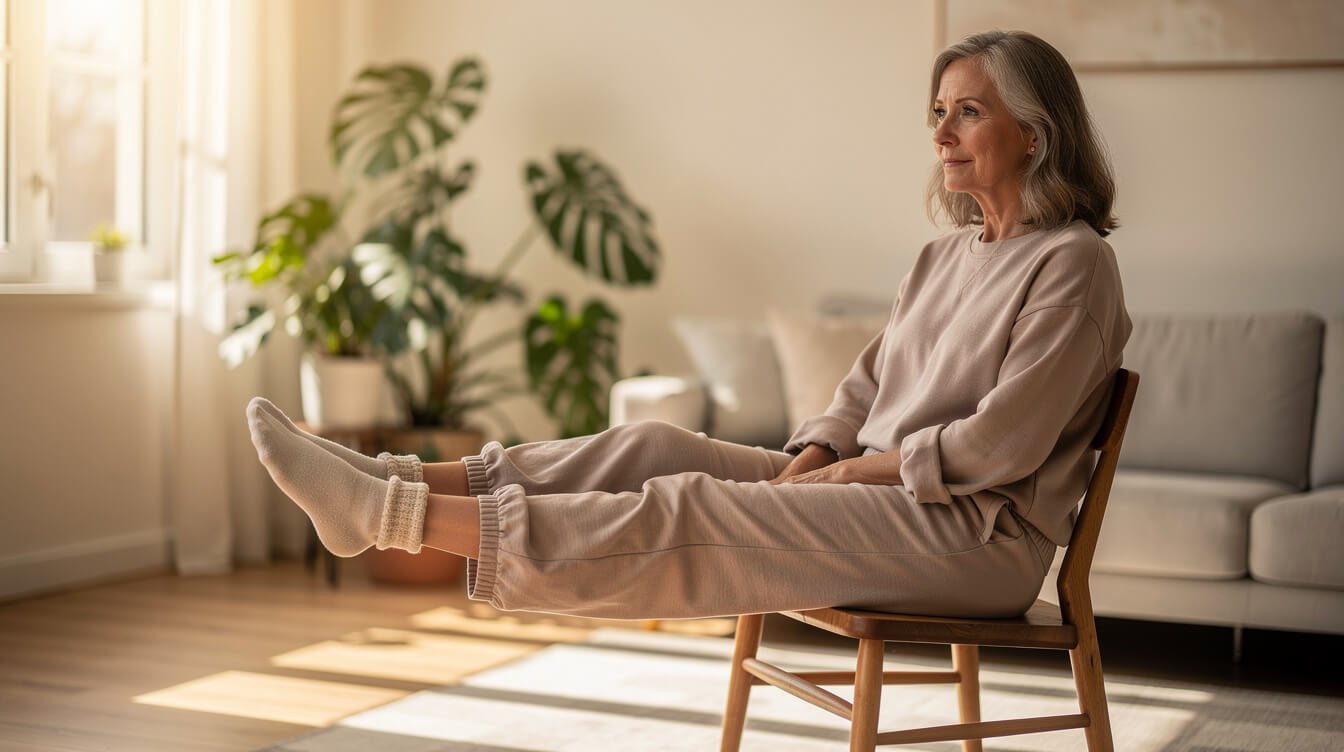
Not every moment allows a walk. On a long flight, at your desk, or during an evening on the sofa, this short routine keeps your calf pump working. It’s the kind of movement many podiatrists and vascular clinics suggest, and it’s gentle enough for most people.
- Ankle pumps (1 minute). Sit tall with your feet flat. Lift your toes toward your shins, then press them down as if you’re pushing a gas pedal. Aim for about 20 slow pumps per foot, or both feet together.
- Ankle circles (1 minute). Lift one foot slightly off the floor and draw slow circles with your toes, 10 in each direction, then switch feet.
- The alphabet (1 minute). Trace the letters A to Z in the air with your big toe. It moves your ankle in every direction and is surprisingly absorbing.
- Toe curls and spreads (30 seconds). Curl your toes as if gripping a towel, hold for a second, then spread them wide. Repeat 10 times.
- Heel-toe rocks (30 seconds). With feet flat, rise onto the balls of your feet, lower, then lift your toes and rock back onto your heels. Keep the rhythm slow.
- Seated marching (1 minute). Lift one knee a few inches, lower it, then the other, as if marching in place.
Bonus, if you can stand: hold the back of a sturdy chair or a kitchen counter and do 10 to 15 slow calf raises, lifting your heels and lowering them with control.
When to do it: once every hour you’re sitting, during TV ad breaks, every 30 to 60 minutes on long flights or car journeys, and in bed before you get up in the morning. Stop if you feel sharp pain, dizziness, or numbness, and mention it to your doctor.
Warmth, Massage, Elevation, and Compression: What Helps, and for Whom
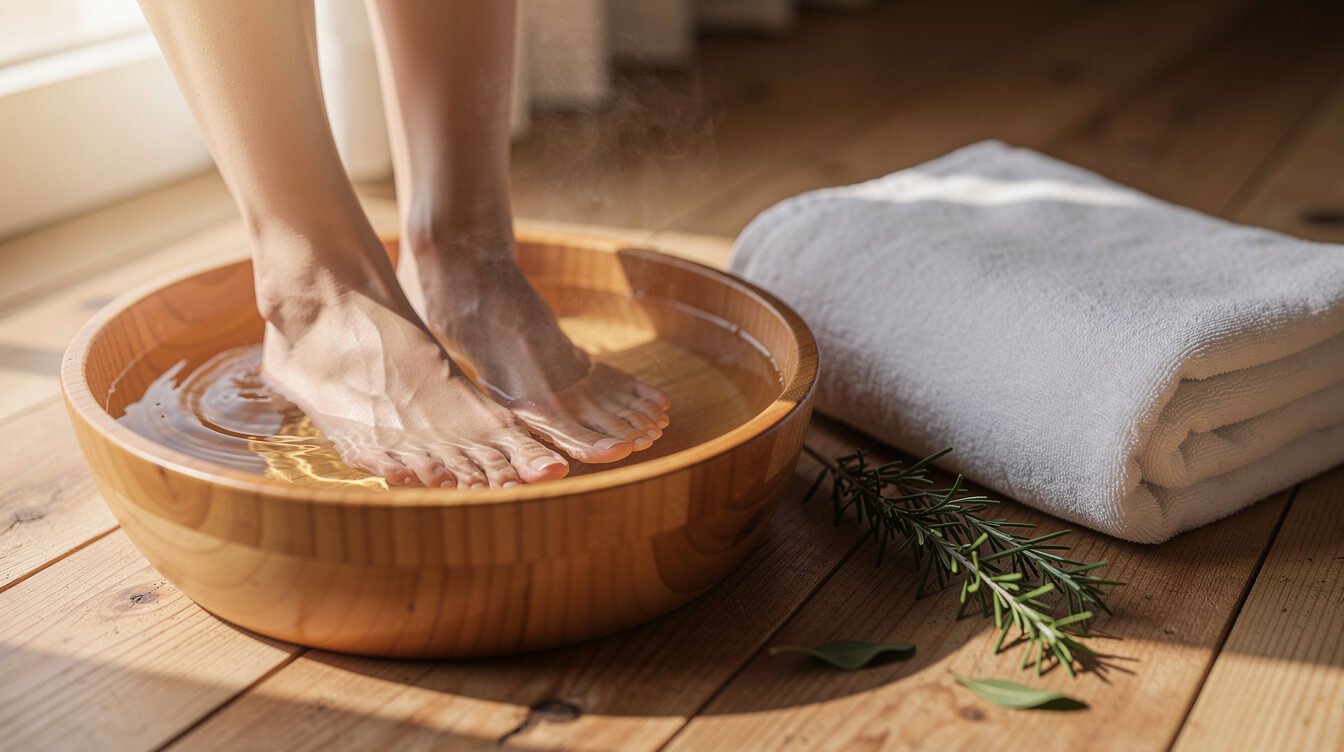
These four comforts appear on almost every circulation list, yet they’re rarely explained. Here’s what research suggests about each one, and who should be careful.
Warm foot soaks
A warm foot soak at the end of the day is one of life’s small pleasures, and warmth gently encourages the small blood vessels in your skin to open. Keep it warm, not hot. Test the water with your elbow or a bath thermometer, not your feet, because feet with reduced feeling can’t judge heat well. Soak for about 10 minutes, then dry thoroughly, especially between the toes.
If you have diabetes, neuropathy, or any numbness in your feet, skip hot water bottles, heating pads, and very warm soaks unless your clinician says they’re safe for you. Burns on numb feet are easy to miss. For a whole-body version that may also help you wind down, see our note on timing a warm evening bath for better sleep.
Foot massage
Massage feels lovely, and it does warm the skin. In a study of 13 men in Medicine & Science in Sports & Exercise, a 12-minute leg massage raised skin blood flow and skin temperature, but it didn’t increase blood flow through the main artery to the leg compared with simply resting. So the honest summary is that massage may help your feet feel warmer and more relaxed, but it isn’t a way to push more blood through a narrowed artery.
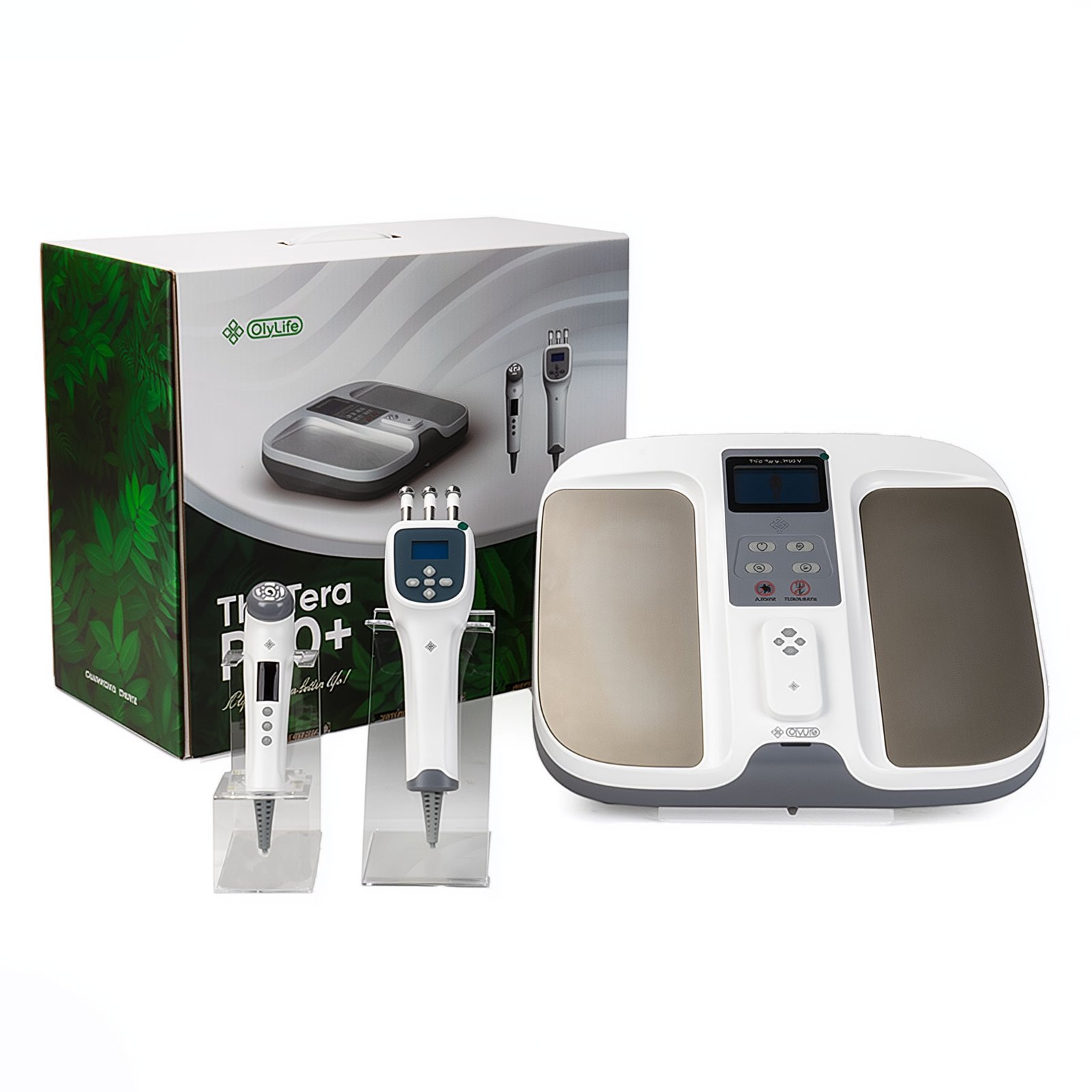
That still makes it a worthwhile ritual. A few minutes of kneading the arches, rolling a ball under your sole, or gently stroking from your toes toward your ankles can be a calming way to end the day. If you enjoy foot work, our guide to reflexology benefits explores the traditional practice. Some of our customers like to follow a warm soak with a few relaxing minutes with the OlyLife Vitality Wand, which is designed to deliver terahertz and PEMF frequencies as part of a wind-down routine. It isn’t intended to diagnose or treat poor circulation or any other condition. If you have reduced feeling in your feet, a pacemaker, or another implanted device, check with your healthcare provider first.
Putting your feet up
Elevation is most helpful for the venous side: swelling, heaviness, and tired legs at the end of the day. In a study in the Journal of Vascular Surgery, raising the feet about 30 cm (12 inches) above heart level increased blood flow in the skin of the lower leg by a median of 45% in 15 people with chronic venous insufficiency. Lying back with your legs on a few pillows for 15 to 20 minutes is a simple way to try it. If puffiness is your main concern, our guide to lymphatic drainage has more gentle ideas.
Elevation is not a good fit for everyone. When arteries are narrowed, raising the legs works against the flow of blood to the feet, and some people with more advanced PAD find their feet hurt more when raised and feel better hanging down. If putting your feet up makes them ache, go pale, or feel colder, stop and talk to your doctor.
Compression socks
Compression socks apply graduated pressure, firmest at the ankle, to help veins move blood upward. An international consensus statement in Phlebology found moderately robust evidence that medical compression stockings help with venous leg symptoms and swelling, and strong evidence for preventing and treating venous leg ulcers.
The same expert group also published a list of situations where firm compression shouldn’t be used. Top of that list is severe PAD (for example, an ankle-brachial index below 0.6 or low ankle pressures), along with severe diabetic neuropathy with loss of feeling. In those cases, pressure on the leg can damage skin that’s already short of blood. So the safe sequence is this: if you have diabetes, PAD risk factors, or weak foot pulses, ask for an arterial check before you buy anything firmer than a light travel sock. Get measured for the right size, put them on in the morning, and take them off at night unless your clinician advises otherwise.
Make Your Evening Foot-Care Ritual Something to Look Forward To ✨
After your walk, your soak, and your seated stretches, a few quiet minutes just for you can round off the day. The OlyLife THz Tera-P90+ is designed to deliver focused PEMF and terahertz frequencies, and many customers use it as a relaxing part of their daily self-care routine, alongside the care they get from their healthcare providers. It’s intended to support relaxation and general wellbeing, not to diagnose or treat poor circulation or any other condition. Not suitable for anyone with a pacemaker or implanted electronic device.
🎁 Get a Free Wellness Gift
Enter your name and email below to receive a special wellness gift from OlyLife — absolutely free!
Everyday Habits That Protect the Blood Vessels in Your Feet
Movement helps blood flow today. These habits help protect the blood vessels themselves over the years.
1. Step away from nicotine
Smoking is one of the strongest risk factors for PAD, and stopping is one of the most meaningful things you can do for the arteries in your legs. You don’t have to do it alone. Your doctor, pharmacist, or a local quitline can help you find an approach that suits you.
2. Know your numbers
Blood pressure, cholesterol, and blood sugar all affect the lining of your arteries, and as the Harvard study showed, risk adds up as these factors stack together. Regular check-ups and following the plan you agree with your healthcare team are quiet but powerful ways to protect circulation in your feet.
3. Eat with your blood vessels in mind
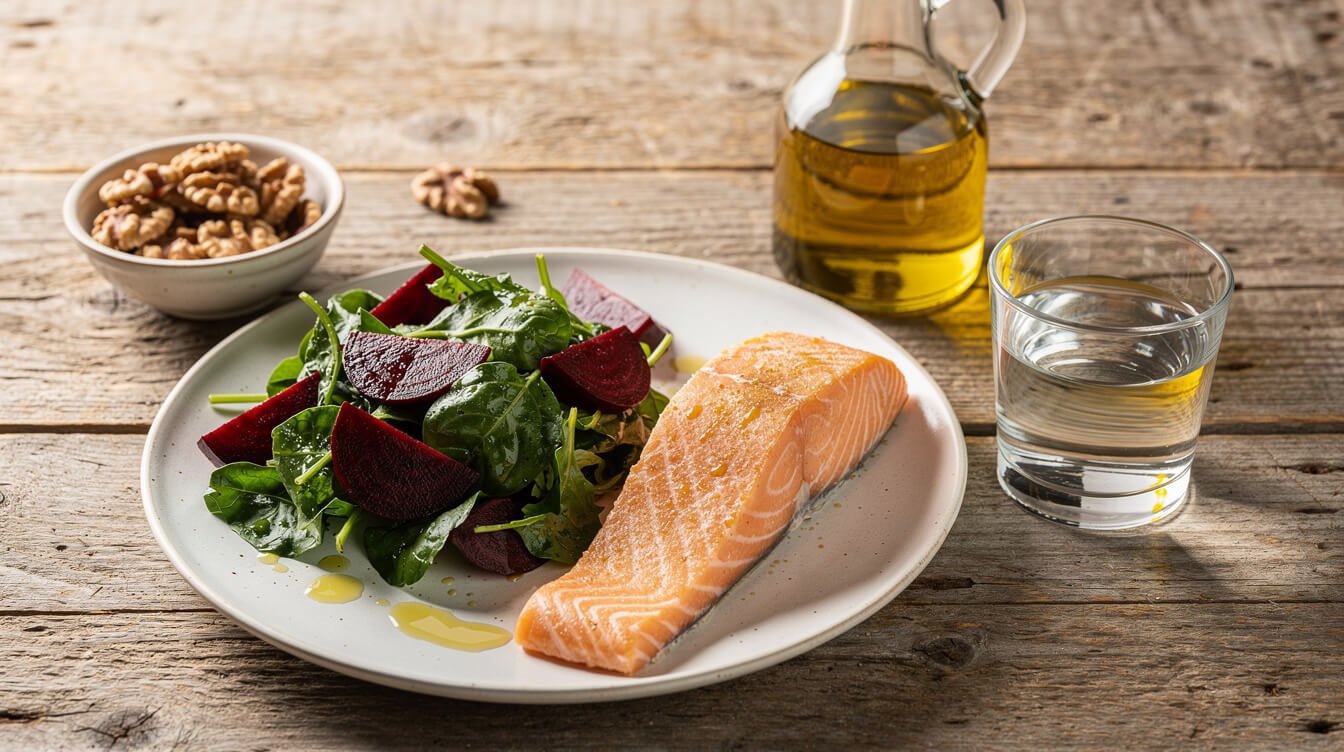
Heart health organizations consistently point to a Mediterranean-style pattern: plenty of vegetables, fruit, beans, whole grains, nuts, olive oil, and oily fish, with less salt and fewer heavily processed foods. Leafy greens and beets are naturally rich in nitrates, which the body can convert to nitric oxide, a molecule that helps blood vessels relax. Think of this as a way to support your vessels day after day, not a quick fix. Drinking water regularly through the day is a sensible habit too, especially in dry winter air.
4. Give your feet room
Socks with tight elastic tops, shoes that pinch, and garters can all press on the skin and vessels. Choose socks that leave no deep groove at the ankle, shoes with a roomy toe box, and natural fibers like wool that keep feet warm and dry. Swap out damp socks quickly in cold weather.
5. Check your feet every day
This matters most if you have diabetes or reduced feeling, but it’s a kind habit for anyone. Once a day, look at the tops and soles of your feet and between your toes. A hand mirror or a family member can help. You’re looking for cuts, blisters, color changes, swelling, or areas that feel unusually warm or cold. The IWGDF also advises people at risk not to walk without suitable foot protection (such as barefoot or in thin socks), even at home, and to have any pre-ulcer changes, such as calluses with bleeding underneath, treated by a professional.
6. Manage stress kindly
Stress tightens the small vessels in your hands and feet as part of the body’s natural fight-or-flight response, which is one reason cold toes can show up on tense days. A slow breathing practice, a warm cup of relaxing herbal tea, or a short walk outdoors may help you unwind, and your feet may feel the difference too.
A Simple Daily Plan to Improve Circulation in Your Feet
Habits stick best when they’re attached to things you already do. Here’s one way to fit everything together. Adjust it to your energy, your schedule, and your clinician’s advice.
| When | What to do | Time |
|---|---|---|
| Waking up | 20 ankle pumps and 10 ankle circles each way before you get out of bed | 1–2 min |
| Morning | A brisk walk outdoors, building up gradually (PAD walkers: walk, rest, repeat as your clinician advises) | 10–30 min |
| Every hour of sitting | Stand up, walk to refill your water, or do the 5-minute seated routine | 2–5 min |
| After meals | An easy stroll around the block or the house | 10 min |
| Evening | Warm (not hot) foot soak or gentle foot massage, then a quick foot check | 10–15 min |
| If ankles are puffy | Feet up on pillows above heart level, unless you have PAD or raised feet ache | 15–20 min |
| Weekly | Add up your walking (aim for about 150 minutes), check your shoes for wear, and note any changes to share with your doctor | 5 min |
Give it time. The home walking trials above ran for six to twelve months. Many people notice their feet feel warmer and less achy within a few weeks of moving more, but building walking ability is a gradual process. Keeping a simple log of your daily steps or minutes can be surprisingly motivating.
Frequently Asked Questions About How to Improve Circulation in Feet

What is the fastest way to improve circulation in your feet?
Get moving. Standing up and walking for a few minutes, or doing ankle pumps and calf raises, activates your calf muscle pump right away. For cold feet, warming your whole body (a warm drink, an extra layer, dry wool socks) usually helps faster than heating the feet alone. Lasting change comes from regular walking over weeks and months.
How long does it take to improve circulation in feet?
It depends on the cause. Comfort habits like movement breaks and warm socks can help within minutes to days. In studies of people with PAD, improvements in walking distance were measured over several months of regular exercise. Medical causes need medical care, so if symptoms aren’t improving, see your doctor.
Do compression socks help circulation in feet?
They can help with venous symptoms such as swelling and heavy legs, and the evidence for that is reasonably strong. They’re not the right choice for everyone, though. Firm compression should be avoided in severe arterial disease and in severe neuropathy with loss of feeling, so get checked first if you have diabetes, PAD risk factors, or weak pulses in your feet.
Is foot massage good for circulation?
Massage warms the skin and increases blood flow near the surface, and it can feel wonderfully relaxing. Research suggests it doesn’t meaningfully increase the flow through the main leg arteries, so enjoy it as a comfort ritual alongside walking rather than instead of it.
Can poor circulation in the feet get better?
For many people, symptoms and walking ability can improve with regular exercise, not smoking, and good management of blood pressure, cholesterol, and blood sugar, along with any treatment their doctor recommends. How much improvement is possible depends on the cause, which is why a proper assessment matters.
Does PEMF or terahertz therapy improve circulation in feet?
Research on PEMF and blood flow is still early, with mostly small studies, and it isn’t strong enough to recommend PEMF or terahertz devices as a way to treat circulation problems. Many people enjoy these devices as a relaxing part of their self-care routine, and that’s how we describe ours. You can read more in our evidence-informed guide to PEMF therapy. If you have circulation concerns, walking, stopping smoking, and your doctor’s care come first.
What foods help circulation in your feet?
No single food is a fix, but an overall Mediterranean-style pattern rich in leafy greens, beets, fruit, beans, nuts, olive oil, and oily fish, with less salt, supports healthy blood vessels. Staying well hydrated helps too.
When is a circulation problem in the feet an emergency?
Call emergency services if a foot or leg suddenly turns cold, pale or blue, very painful, numb, or weak. Get urgent care the same day for a swollen, warm, painful calf, and go straight to emergency care if it comes with chest pain or breathlessness.
Final Thoughts: Small, Steady Steps for Happier Feet
Learning how to improve circulation in feet isn’t about one perfect trick. It’s about a handful of simple habits repeated often: moving your calves every hour, walking most days, keeping nicotine out of your life, looking after your blood pressure, cholesterol, and blood sugar, and treating your feet to warmth and attention. Knowing which kind of circulation you’re supporting helps you choose wisely, so you can put your feet up when it helps and skip it when it doesn’t, and get checked before using firm compression.
Most of all, be gentle with yourself. If your feet have been bothering you, the most caring step might be booking that check-up and asking about an ankle-brachial index. Then lace up your shoes, take a short walk, and let your calves do what they were made to do. Your feet carry you through every day of your life, so they deserve a little care back. ✨
If cold toes are part of your story, our guide to cold hands and feet has 12 more gentle ways to warm up this winter.
This article is for general information only and is not medical advice. It isn’t a substitute for diagnosis or treatment by a qualified healthcare provider. If you have diabetes, known or suspected peripheral artery disease, a heart condition, reduced feeling in your feet, a pacemaker or other implanted device, or any symptom listed in the red-flags section, please talk to your healthcare provider before starting a new exercise, heat, compression, or wellness routine.
References
- Song P, Rudan D, Zhu Y, et al. Global, regional, and national prevalence and risk factors for peripheral artery disease in 2015: an updated systematic review and analysis. Lancet Glob Health. 2019;7(8):e1020-e1030. PMID 31303293
- Hirsch AT, Criqui MH, Treat-Jacobson D, et al. Peripheral arterial disease detection, awareness, and treatment in primary care. JAMA. 2001;286(11):1317-1324. PMID 11560536
- Joosten MM, Pai JK, Bertoia ML, et al. Associations between conventional cardiovascular risk factors and risk of peripheral artery disease in men. JAMA. 2012;308(16):1660-1667. PMID 23093164
- Bus SA, Sacco ICN, Monteiro-Soares M, et al. Guidelines on the prevention of foot ulcers in persons with diabetes (IWGDF 2023 update). Diabetes Metab Res Rev. 2024;40(3):e3651. PMID 37302121
- Thosar SS, Bielko SL, Mather KJ, Johnston JD, Wallace JP. Effect of prolonged sitting and breaks in sitting time on endothelial function. Med Sci Sports Exerc. 2015;47(4):843-849. PMID 25137367
- Lane R, Harwood A, Watson L, Leng GC. Exercise for intermittent claudication. Cochrane Database Syst Rev. 2017;12:CD000990. PMID 29278423
- McDermott MM, Liu K, Guralnik JM, et al. Home-based walking exercise intervention in peripheral artery disease: a randomized clinical trial. JAMA. 2013;310(1):57-65. PMID 23821089
- McDermott MM, Spring B, Tian L, et al. Effect of low-intensity vs high-intensity home-based walking exercise on walk distance in patients with peripheral artery disease: the LITE randomized clinical trial. JAMA. 2021;325(13):1266-1276. PMID 33821898
- Hinds T, McEwan I, Perkes J, et al. Effects of massage on limb and skin blood flow after quadriceps exercise. Med Sci Sports Exerc. 2004;36(8):1308-1313. PMID 15292737
- Abu-Own A, Scurr JH, Coleridge Smith PD. Effect of leg elevation on the skin microcirculation in chronic venous insufficiency. J Vasc Surg. 1994;20(5):705-710. PMID 7966805
- Rabe E, Partsch H, Hafner J, et al. Indications for medical compression stockings in venous and lymphatic disorders: an evidence-based consensus statement. Phlebology. 2018;33(3):163-184. PMID 28549402
- Rabe E, Partsch H, Morrison N, et al. Risks and contraindications of medical compression treatment: a critical reappraisal. An international consensus statement. Phlebology. 2020;35(7):447-460. PMID 32122269