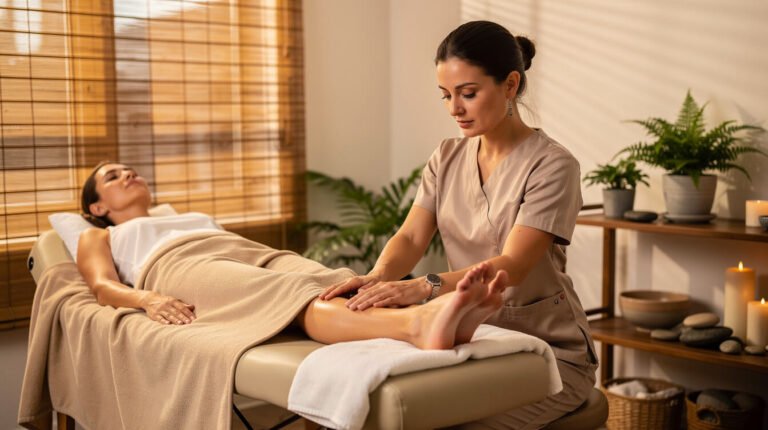
Foot Massage Benefits: What Research Suggests, a 10-Minute Routine, and Who Should Be Careful
There’s a reason the end of a long day so often ends with someone pulling off their socks and rubbing the arches of their feet. Your feet carry you through every hour, and they’re among the most touch-sensitive parts of your body. So it makes sense to ask what foot massage benefits actually hold up to research, and which ones are spa-menu wishful thinking.
This guide gives you the honest version. You’ll find an evidence-graded table of what studies suggest, why your feet respond so strongly to touch, how foot massage differs from reflexology, a simple 10-minute routine you can do on your own, a partner version, and the tools that make it easier. There’s also a safety section. If you live with diabetes, neuropathy, circulation concerns or a history of blood clots, please read it before you start.
The short version: research suggests foot massage may support relaxation, a calmer nervous system and better sleep quality, and it may ease short-term discomfort in some settings. The evidence for bigger claims, like “detox,” organ healing or lasting blood pressure changes, is thin or missing. A gentle, regular foot ritual is low-cost and low-risk for most people, and it’s a genuinely kind thing to do for yourself.
Foot Massage Benefits at a Glance: An Honest Evidence Table
Most articles on the benefits of foot massage list a dozen perks with equal confidence. The research isn’t that tidy. Some benefits have dozens of small trials behind them. Others rest on a single study of 30 people, and a few have no real support at all. Here’s how the evidence stacks up, based on the studies listed in the references at the end of this post.
| Possible benefit | Evidence strength | What the research actually shows |
|---|---|---|
| Feeling calmer, less anxious | Moderate | Many small trials and several meta-analyses point the same way. Effects are often measured right after sessions, and most studies can’t blind participants. |
| Better sleep quality | Moderate, mostly in clinical groups | A 42-trial meta-analysis found better sleep scores with foot reflexology. Most participants were patients (hemodialysis, postpartum, hospital stays), not healthy adults. |
| Short-term relaxation signals (heart rate, breathing, blood pressure) | Moderate, but short-lived | Measurable dips during and soon after a session. There’s little evidence that these last long-term. |
| Less discomfort after some surgeries | Moderate in hospital settings | Lower pain scores and less extra pain medicine after gallbladder surgery in a 5-trial meta-analysis. |
| Less fatigue in people on dialysis | Promising, specific group | An 8-study meta-analysis found lower fatigue scores. It’s a narrow population. |
| Foot flexibility and local skin blood flow | Early | Small studies show short-term gains in ankle range of motion and skin blood flow right after massage. |
| Balance in diabetic neuropathy | Early | One randomized trial of 60 people found better balance test results after two weeks of Thai foot massage. |
| Lasting blood pressure changes | Thin | Small, mostly non-randomized studies. Not a substitute for your blood pressure plan. |
| Lower cortisol (“stress hormone”) | Weak | A major review found massage’s effect on cortisol is very small and often indistinguishable from zero. |
| “Detox,” organ healing, immune boosting | No good evidence | These claims usually come from reflexology maps. The best reviews don’t support them. |
Notice the pattern. The best-supported foot massage benefits are about how you feel: calmer, more relaxed, sleeping a little better, a little more comfortable. That’s not a small thing, especially if you live with a chronic condition and your evenings are hard. It does mean we’ll keep our language honest. Foot massage may support relaxation and rest. It doesn’t replace your care.
Why Your Feet Respond So Strongly to Touch
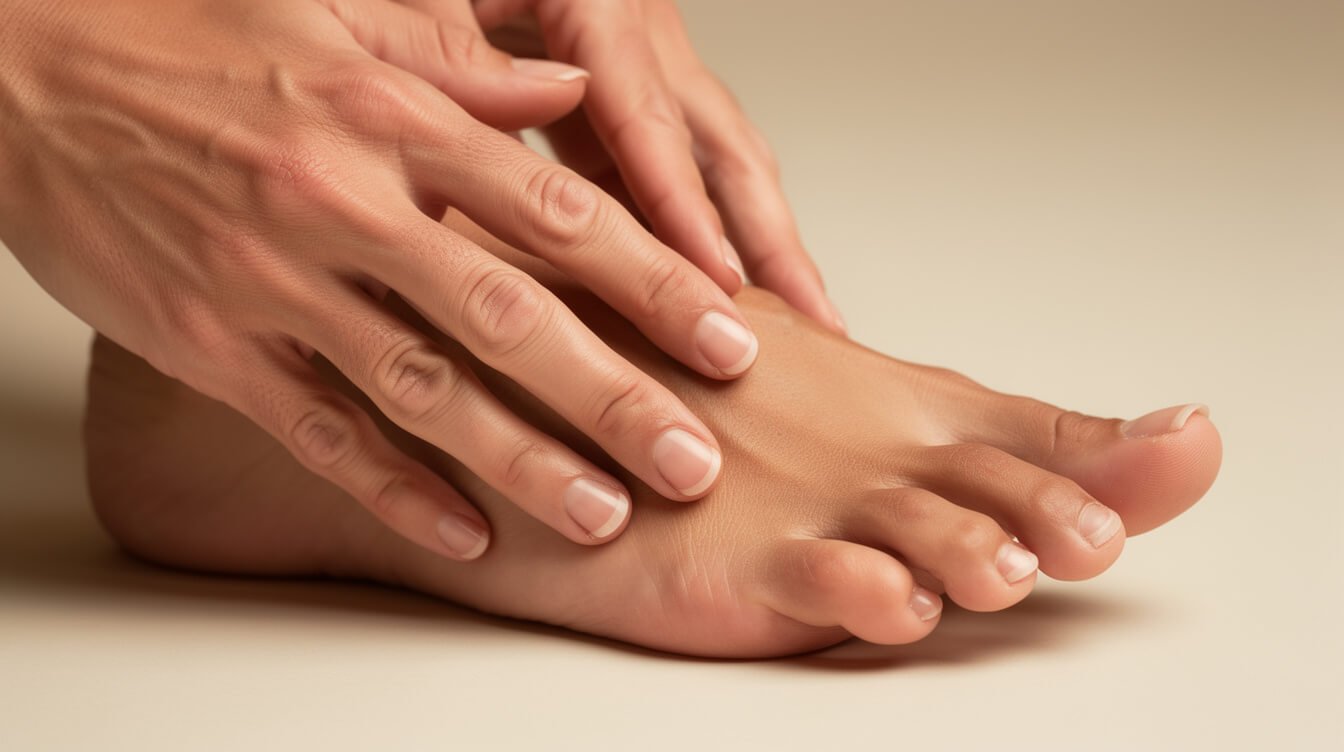
Each foot has 26 bones, 33 joints and more than 100 muscles, tendons and ligaments, all packed into a small space that absorbs your full body weight thousands of times a day. That’s a lot of moving parts that can feel tight, tired or stiff by evening.
The soles are also dense with sensory receptors that track pressure, stretch and vibration so you can balance. You’ll often see a specific figure, like “7,000” or “15,000 nerve endings,” quoted on spa sites. The exact number isn’t well established. What is clear is that the soles are some of the most touch-sensitive skin you have, which is part of why a foot rub can feel so disproportionately good.
The “slow touch” fibers on the top of your foot
Here’s a detail most foot massage articles miss. Hairy skin, including the top of your foot and your shins, contains special nerve fibers called C-tactile afferents. They respond best to slow, gentle stroking at roughly 1 to 10 centimeters per second, about the speed of a caress. Researchers found that when people stroke a partner or a baby, they naturally slow down to exactly that range. Slow, light strokes along the top of the foot and up the shin aren’t just “filler” moves. They may be one of the most soothing parts of the whole massage.
The calming switch
Massage seems to nudge the nervous system toward its “rest and digest” (parasympathetic) mode. In one Taiwanese study, 60 minutes of foot reflexology raised markers of vagal activity and lowered blood pressure for at least an hour in both healthy adults and people with coronary artery disease. A small UK study of critical care patients found that heart rate, blood pressure and breathing rate dropped during just a five-minute foot massage.
For a deeper look at how breath, touch and routine support that calming response, see our guide to stress relief relaxation techniques.
7 Foot Massage Benefits, Graded by the Evidence
Here’s a closer look at each benefit, in roughly the order of how much research supports it.
1. A calmer, less anxious mind
This is the strongest of the foot massage benefits. A 2020 meta-analysis of 26 randomized trials (2,366 adults) found that foot reflexology was linked to meaningful drops in anxiety and depression scores. A 2024 systematic review of manual therapies found that all five foot reflexology studies it included reported lower anxiety. A classic meta-analysis of massage in general found that single sessions reduced in-the-moment anxiety, and a course of sessions reduced longer-term anxiety and depression.
The honest caveat: many of these trials are small, and it’s hard to blind someone to whether their feet are being rubbed. The direction is consistent, though, and the risk is low.
2. Better sleep quality
A 2021 meta-analysis pooled 42 randomized trials and 3,928 participants and found that foot reflexology was associated with clearly better sleep quality scores. The 2020 review above also found that more total time and a longer program were linked to bigger sleep improvements. Most participants were people with health challenges, such as dialysis patients, new mothers and people in hospital, so we can’t promise the same effect for everyone. As a gentle part of a bedtime routine, it’s well worth trying. Our guide to natural sleep remedies has more ideas to pair it with.
3. Short-term comfort
In hospital studies, foot massage after surgery has been linked to lower pain scores and less need for extra pain medicine. A 2023 meta-analysis of five trials after gallbladder surgery found lower pain scores from about an hour after massage, though not in the first half hour. At home, the same idea applies on a smaller scale: a few minutes of massage may simply help tired, achy feet feel better after a long day on them.
4. Less fatigue for some people with chronic illness
A 2023 meta-analysis of eight studies found that foot reflexology was linked to lower fatigue in people on hemodialysis, with around 10 sessions looking most effective. It’s a specific group, but it matters for our readers. Fatigue is one of the hardest parts of living with a chronic condition, and gentle touch is something a family member can learn to offer.
5. Looser, more mobile feet
Kneading the arch and working the ankle through its range can make stiff feet feel looser. In a small crossover study of 25 people with type 2 diabetes and neuropathy, a single 25-minute Thai foot massage, whether done by a therapist or by the person themselves, improved ankle range of motion and foot skin blood flow right afterward.
6. A warm, “circulating” feeling
Many people say their feet feel warmer and more awake after a massage, and that same small study did measure a short-term rise in skin blood flow. That’s a local, temporary effect. It doesn’t mean foot massage fixes circulation problems. Interestingly, a Korean study of people with chemotherapy-related neuropathy found that warm foot baths raised foot skin temperature more than massage did. If cold feet are your main concern, our guides to how to improve circulation in feet and cold hands and feet cover the habits with stronger support.
7. Steadier balance, possibly
One randomized trial of 60 adults with diabetic neuropathy found that 30-minute Thai foot massages, three times a week for two weeks, led to better results on a standard balance and walking test than in the control group, plus better foot sensation scores. It’s one study, so treat it as encouraging rather than settled. If you have neuropathy, talk to your care team before adding regular foot massage.
Foot Massage vs. Reflexology: What’s the Difference?
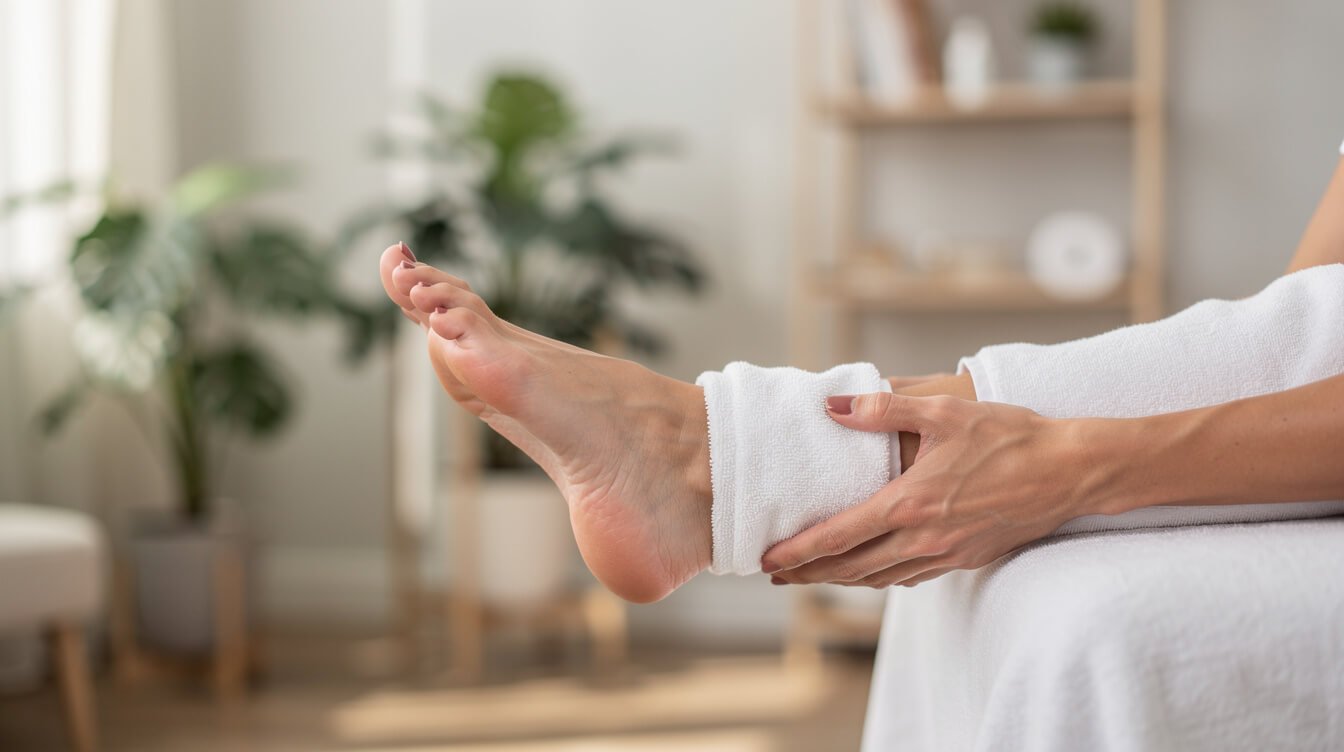
The two get blended together constantly, including in many of the studies above, so it helps to separate them.
- Foot massage works the muscles, tendons and skin of the foot with kneading, stroking and pressure. The goal is comfort and relaxation.
- Reflexology applies pressure to specific points on the feet that, according to its traditional maps, correspond to organs and body systems. It’s traditionally used to support whole-body balance.
In practice, both feel similar and both seem to calm the nervous system. Where they differ is in their claims. A widely cited systematic review of 23 randomized trials concluded that the best evidence doesn’t convincingly show reflexology to be an effective treatment for any medical condition. That’s why we’re careful with promises like “press here for a healthier liver.” Many reflexology studies do show the same relaxation and sleep effects you’d expect from any caring, attentive foot massage.
If you’d like to explore the tradition itself, our reflexology benefits guide covers its history and what research suggests. For pressure-point work you can do anywhere, see acupressure points on the hand.
How to Give Yourself a Foot Massage: A 10-Minute Routine
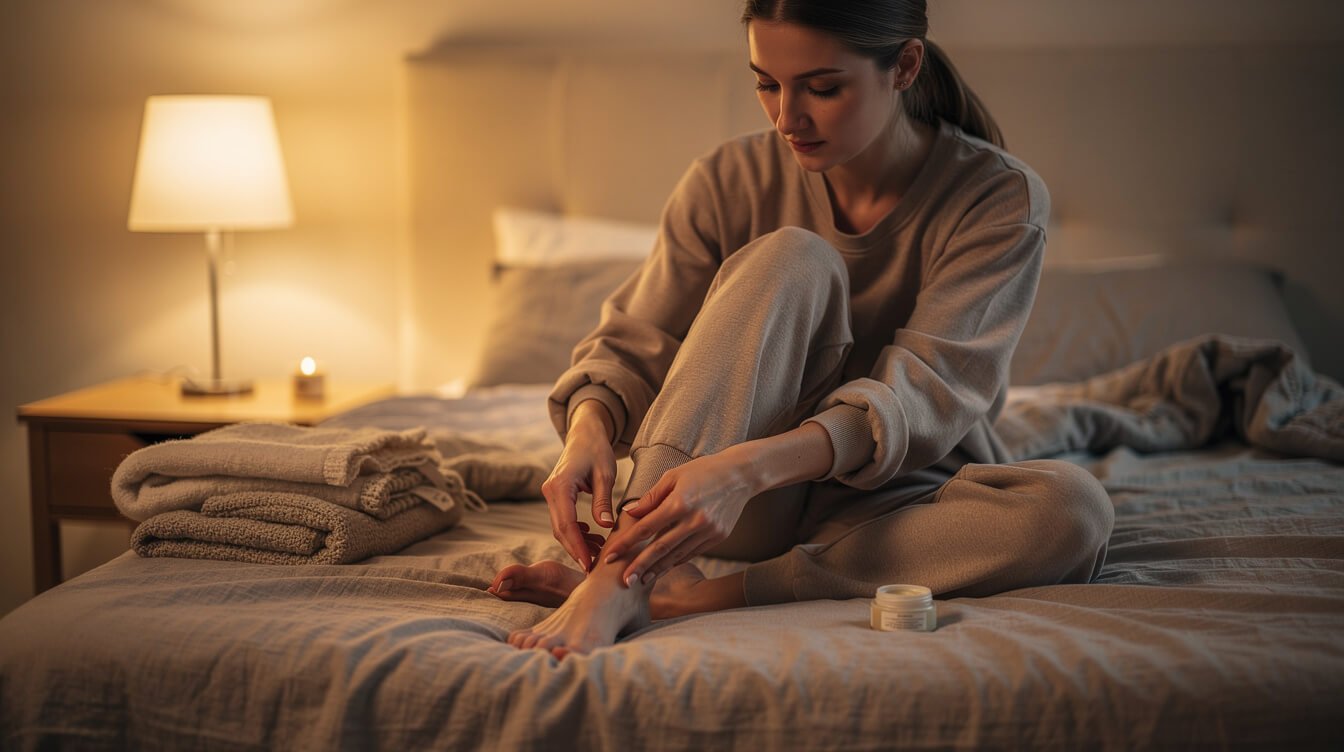
You don’t need a spa to enjoy foot massage benefits. This routine takes about five minutes per foot. Evening works well, since it can become a cue that the day is winding down.
Before you start
- Sit somewhere comfortable with back support, like a bed, sofa or sturdy chair.
- Warm your hands, and use a little lotion, balm or plain oil (coconut, almond or olive) so your fingers glide. Patch-test anything new if your skin is sensitive.
- Take a quick look at your feet first: any cuts, blisters, red or warm patches? If so, skip those areas, and see the safety section below.
The routine (per foot)
- Settle in (30 seconds). Rest one foot across the opposite knee or on a pillow. Hold it between both palms and breathe slowly for three breaths.
- Warm-up strokes (1 minute). With flat palms, stroke slowly from your toes up over the top of your foot to the ankle, then down the shin a little. Keep it slow, about the speed of a gentle caress. This is the C-tactile “slow touch” zone.
- Arch circles (1 minute). Use both thumbs to press small, slow circles along the arch, from heel to the ball of the foot. Use moderate pressure: firm enough to feel good, never sharp.
- Heel and Achilles (45 seconds). Knead the fleshy heel pad. Then gently pinch along the back of the ankle with your thumb and forefinger, sliding down toward the heel.
- Ball of the foot and toes (1 minute). Knead across the ball of the foot. Then hold each toe and slowly circle it a few times in each direction, finishing with a light pull.
- Knuckle glide (30 seconds). Make a loose fist and glide your knuckles from heel to toes a few times.
- Close (30 seconds). Wrap the foot in both hands, hold for a few breaths, then finish with three long strokes from toes to ankle. Switch feet.
Pressure guide: on a scale of 1 to 10, stay around 4 to 6. If anything hurts, ease off. If you feel sharp, shooting or burning pain, stop.
Afterward, slip on warm socks. In a well-known 1999 sleep lab study, how warm people’s hands and feet were (compared with their core) was the best predictor of how quickly they fell asleep. Our guide to herbal tea for relaxing includes a 15-minute evening ritual that pairs well with this one.
A Partner Foot Massage (and How to Ask for One)
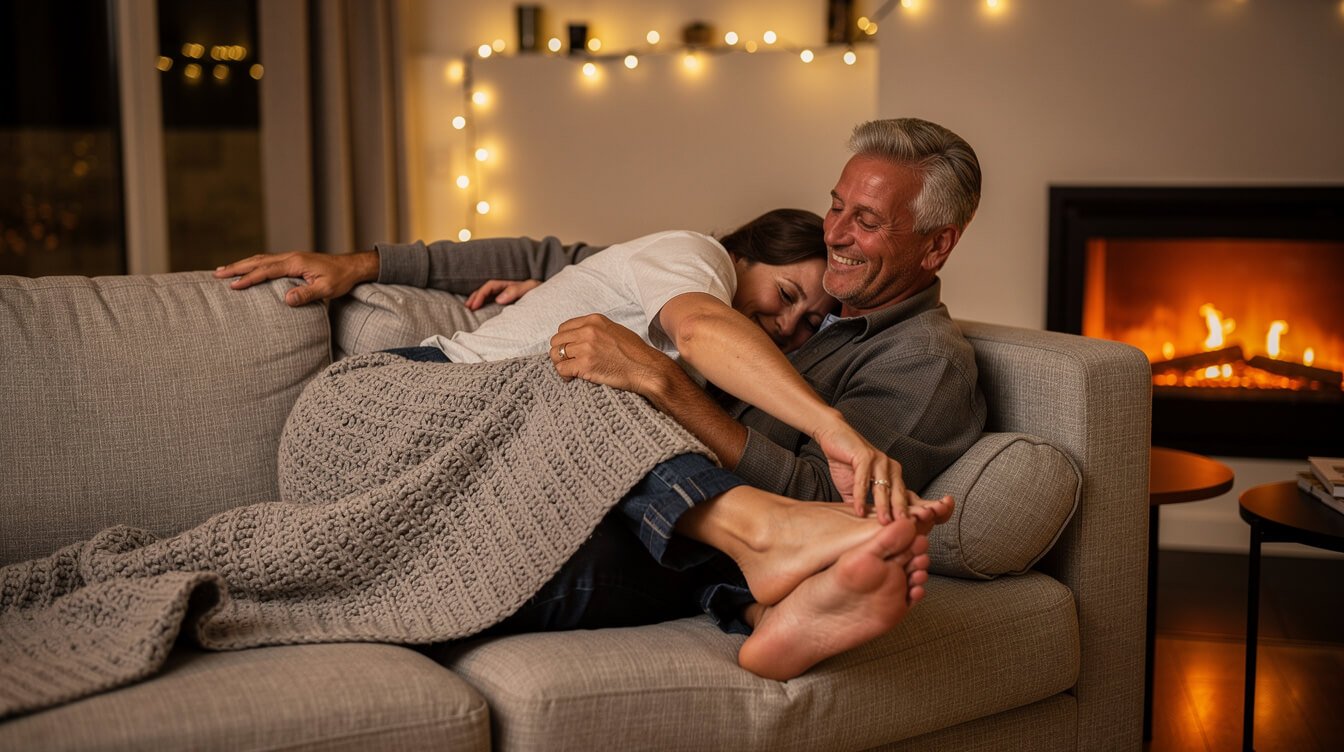
Some of the best foot massage benefits may come from the connection, not just the technique. Receiving caring touch from someone you trust adds something a self-massage can’t. And for a partner who feels helpless watching you cope with pain or fatigue, learning a simple foot massage gives them something real to offer.
Tips for the giver
- Go slower than you think. The calming fibers love slow strokes. Rushing feels ticklish or busy.
- Ask about pressure early. “More, less or just right?” One question at the start and one halfway through is enough.
- Support the whole foot. Hold the foot with one hand while the other works, so the receiver can let go completely.
- Stay below the knee and keep it gentle on the calves. More on why in the safety section.
- Skip the chatter. Ten quiet minutes is a gift in itself.
How to ask for one
It can feel awkward to ask, so make it easy: “Would you rub my feet for ten minutes while we watch this?” Turning it into a regular trade, such as feet on Tuesday and shoulders on Thursday, takes the pressure off both people. If you’re shopping for someone who’d love this kind of care, our self-care gifts guide and Christmas gifts for wife both include cozy, rest-focused ideas. A handmade “ten foot massages” coupon book counts.
🎁 Get a Free Wellness Gift
Enter your name and email below to receive a special wellness gift from OlyLife — absolutely free!
Tools That Make It Easier: Balls, Rollers, Warm Water and More
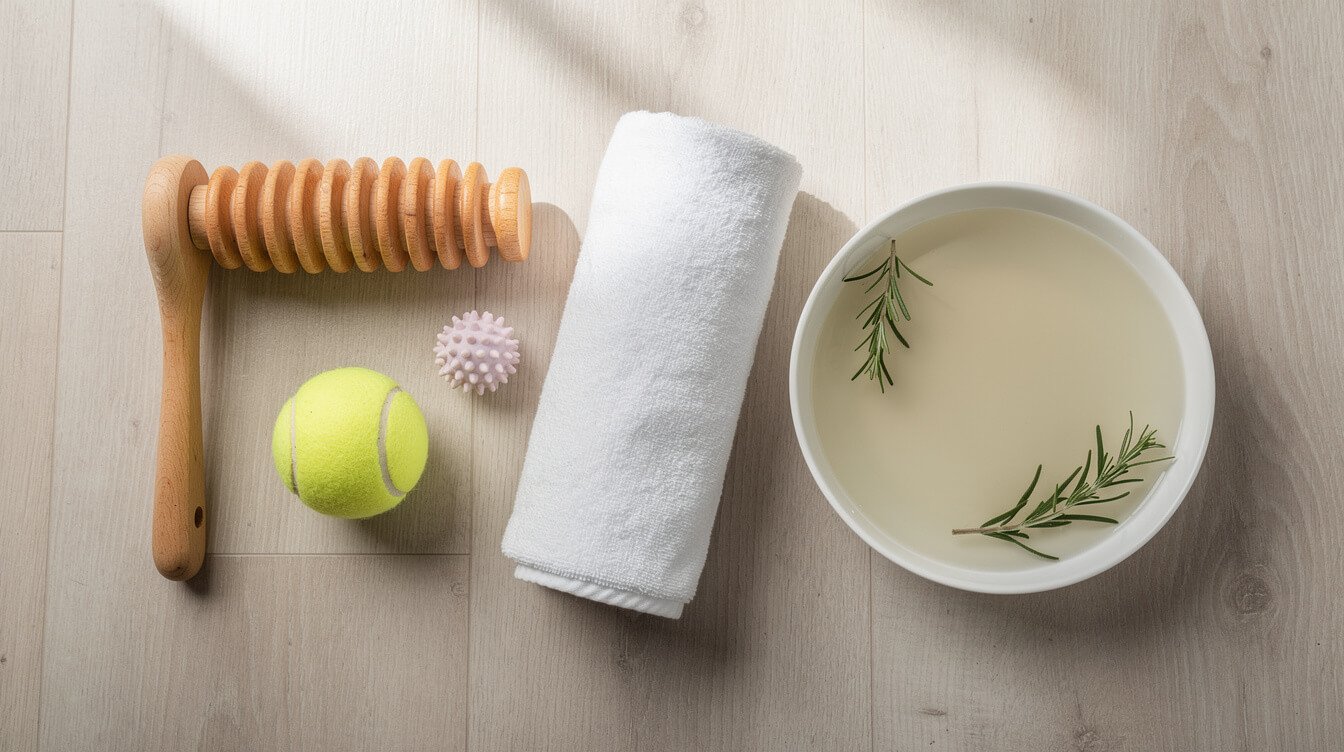
Hands tire quickly, and not everyone can comfortably reach their own feet. Simple tools let you keep the habit going.
- Tennis ball or massage ball. Roll it under your foot while seated, from heel to toes, for one or two minutes per side. Our tennis ball self-massage routine walks you through it. Spiky balls feel more intense, so start seated with light pressure.
- Wooden foot roller. Ridged rollers are handy under a desk. Use them seated if your balance isn’t steady.
- A frozen water bottle. On hot, achy days, a gentle roll can feel soothing. Keep sessions short, and skip cold rolling if you have reduced sensation or circulation concerns.
- A warm foot soak. Lukewarm water for 10 to 15 minutes before massage softens skin and adds warmth. Test the temperature with your elbow or a thermometer, not your feet, especially if you have neuropathy.
- Acupressure mats. Some people like standing or resting their feet on one. Our guide to acupressure mats covers how to use them safely.
- Electric foot massagers. Shiatsu-style machines can be lovely, but they’re often stronger than hands. Choose one with adjustable intensity and heat that can be switched off. If you have diabetes or reduced feeling in your feet, check with your care team first.
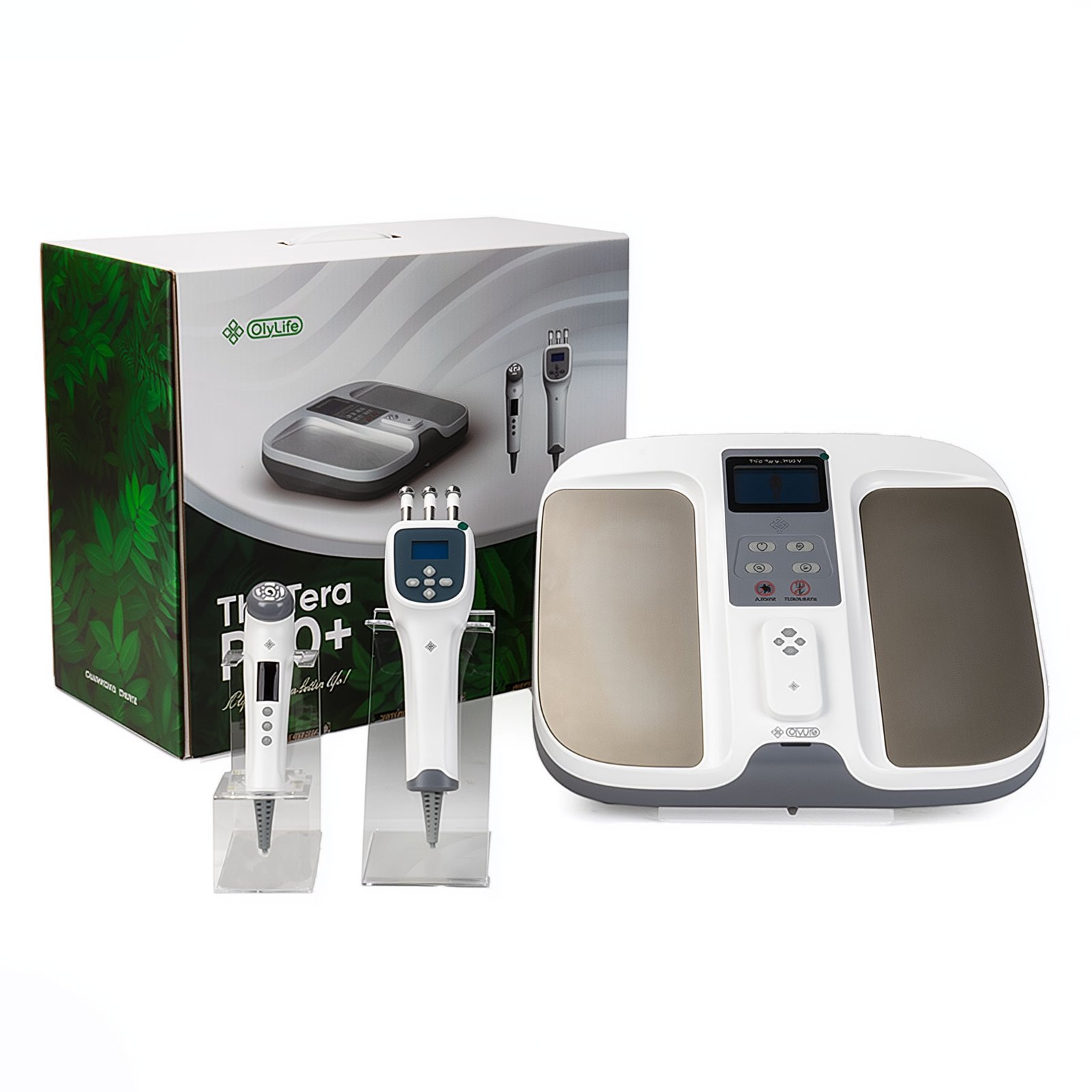
Many of our readers like to build a fuller evening wind-down around their foot ritual: dim lights, a warm drink, slow breathing. Some add the OlyLife Vitality Wand, a handheld device designed to deliver terahertz and PEMF frequencies, as one calm part of that routine. To be clear, it’s a relaxation tool, not a treatment for foot pain, neuropathy or circulation problems, and it doesn’t replace anything your care team recommends.
Make Your Wind-Down Ritual Your Own 🌿
If you’re curious about wellness technology, the OlyLife THz Tera-P90+ is designed to deliver focused PEMF and terahertz frequencies. Many customers enjoy it as a calming part of their evening self-care, alongside habits like foot massage. It’s intended to support relaxation and general wellbeing, not to diagnose or treat any condition.
Who Should Be Careful: Foot Massage Safety Before You Start
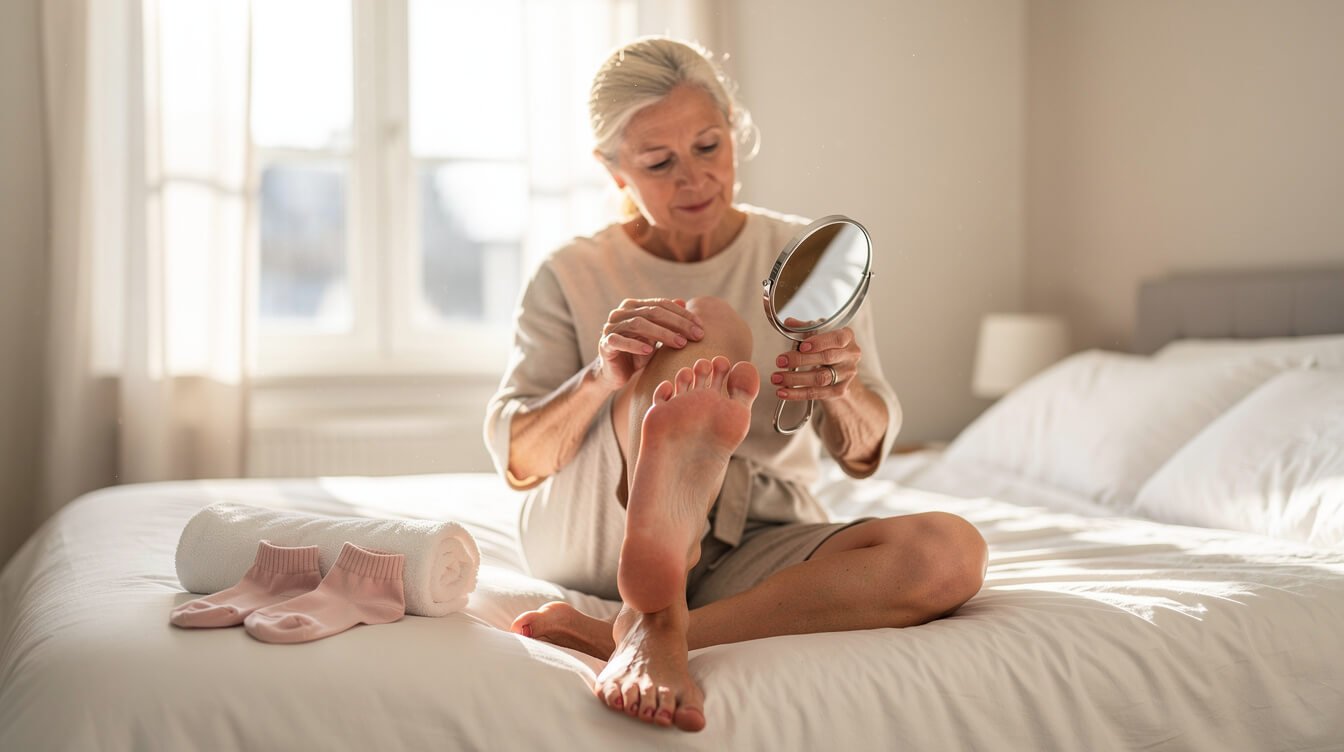
For most people, gentle foot massage is very safe. A few situations need extra care, and some need a conversation with your healthcare provider first.
Possible blood clot? Don’t massage — get checked
This is the most important rule here. If one leg or calf is swollen, painful or tender, warm, or red, especially after surgery, an injury, a cast, a long flight or bed rest, don’t massage it. Those can be signs of deep vein thrombosis (DVT). Massage over a clot carries a rare but serious risk. Published case reports describe people who developed a dangerous clot in the lungs after leg massage, including a young man with an ankle fracture and a pregnant woman with an unrecognized DVT. Call your doctor promptly. If you have chest pain or sudden shortness of breath, seek emergency care. The NHLBI’s guide to blood clot symptoms lists what to watch for.
Diabetes or neuropathy
- Use gentle to moderate pressure. Reduced sensation means you may not notice if you’re pressing too hard.
- Check your feet daily for cuts, blisters, redness or swelling, as the NIDDK recommends. Massage time is a natural moment to do it.
- Avoid heat you can’t feel accurately: no hot water bottles, heating pads or hot soaks without testing the temperature with your hand or elbow first.
- Don’t massage over open wounds, ulcers or calluses that are cracked or bleeding, and dry well between the toes afterward.
- Ask your podiatrist or diabetes team if foot massage, and which tools, suit you.
Other times to pause or adjust
- Recent fracture, sprain or foot surgery: wait for your clinician’s okay.
- Gout flare or a hot, swollen joint: let it settle first.
- Infections, athlete’s foot, warts or broken skin: avoid the area, and wash hands afterward.
- Blood thinners or easy bruising: keep pressure light.
- Varicose veins: glide gently around them, never press directly on them.
- Pregnancy: you’ll see warnings that certain foot points “trigger labor.” There’s no good evidence for this, but pregnancy does raise clot risk, so keep calf work gentle and check with your midwife or doctor, especially if you notice one-sided swelling.
- Peripheral artery disease or severe circulation problems: ask your care team before using deep pressure, heat or cold.
If you’ve noticed ongoing numbness, color changes or sores that are slow to close, our guide to poor circulation in feet explains when to get checked.
Foot Massage Benefits: Frequently Asked Questions
How often should I massage my feet?
Daily is fine for most people if it’s gentle. In the research, programs typically ran two to three times a week for several weeks, and longer programs were linked to bigger sleep benefits. Consistency matters more than intensity.
How long should a foot massage last?
Five minutes per foot is a good home routine. Some hospital studies saw calming effects with just five minutes, while many reflexology trials used 20 to 30 minutes.
Is it good to massage your feet before bed?
For many people, yes. Bedtime is when the relaxation and sleep-quality benefits are most useful, and warm, relaxed feet may help you settle. Keep the pressure moderate and the pace slow so the massage calms rather than energizes you.
Does foot massage improve circulation?
It can increase skin blood flow in the feet for a short time, and many people feel warmer afterward. It isn’t a way to fix circulation problems. If you have symptoms like persistent cold, numbness, color changes or slow-healing sores, please see your healthcare provider.
Can foot massage help plantar fasciitis?
Rolling and gentle massage of the arch are often part of comfort routines for heel and arch soreness, alongside stretching and supportive footwear. The evidence for massage alone is limited, so ask a podiatrist or physical therapist for a plan that fits you.
Does foot massage “detox” the body?
No. There’s no good evidence that massaging the feet removes toxins. Your liver and kidneys do that job. The real foot massage benefits are relaxation, comfort and connection, and that’s plenty.
Are electric foot massagers as good as hands?
They can be relaxing and convenient, especially if your hands tire. Studies mostly tested human touch, though, and machines can be stronger than expected. Start on the lowest setting, and check with your care team first if you have diabetes, neuropathy or circulation concerns.
Why does a foot massage sometimes make me sleepy or emotional?
That’s common. As your nervous system shifts toward rest, you may feel drowsy, heavy or a little tearful. It’s usually a sign you needed the pause.
Final Thoughts
The most reliable foot massage benefits aren’t dramatic. They’re quiet: a calmer mind, an easier path to sleep, tired feet that feel cared for, and ten minutes where nobody needs anything from you. Research suggests those effects are real, even if the bigger promises on spa menus aren’t.
Start small. Try the 10-minute routine tonight, or ask someone you love to trade foot rubs this week. Check your feet while you’re there, keep the pressure kind, and skip any leg that looks swollen or red. If you live with a chronic condition, think of foot massage as one gentle adjunct to the care you already have, not a replacement for it.
Your feet carry you everywhere. Giving them a few minutes back is a lovely way to end the day. 🌿
This article is for general education and isn’t medical advice. Please talk to your healthcare provider before starting a new wellness practice, especially if you have diabetes, neuropathy, circulation concerns, a history of blood clots, or are pregnant.
References
- Wang WL, et al. Effect of foot reflexology intervention on depression, anxiety, and sleep quality in adults: a meta-analysis and metaregression of randomized controlled trials. Evid Based Complement Alternat Med. 2020;2020:2654353. PMID 33014101.
- Huang HC, et al. Can foot reflexology be a complementary therapy for sleep disturbances? Evidence appraisal through a meta-analysis of randomized controlled trials. J Adv Nurs. 2021;77(4):1683-1697. PMID 33615535.
- Moyer CA, Rounds J, Hannum JW. A meta-analysis of massage therapy research. Psychol Bull. 2004;130(1):3-18. PMID 14717648.
- Moyer CA, et al. Does massage therapy reduce cortisol? A comprehensive quantitative review. J Bodyw Mov Ther. 2011;15(1):3-14. PMID 21147413.
- West KL, Huzij T. A systematic review of manual therapy modalities and anxiety. J Osteopath Med. 2024;124(11):487-497. PMID 38905700.
- Cheng Y, Zhou X, Wang G. The efficacy of foot massage for pain relief of laparoscopic cholecystectomy: a meta-analysis study. Surg Laparosc Endosc Percutan Tech. 2023;33(3):286-290. PMID 37010361.
- Koraş K, Karabulut N. The effect of foot massage on postoperative pain and anxiety levels in laparoscopic cholecystectomy surgery: a randomized controlled experimental study. J Perianesth Nurs. 2019;34(3):551-558. PMID 30470466.
- Şahan S, Güler S. The effect of foot reflexology on fatigue in hemodialysis patients: a meta-analysis study. Rev Lat Am Enfermagem. 2023;31:e4022. PMID 37820220.
- Lu WA, Chen GY, Kuo CD. Foot reflexology can increase vagal modulation, decrease sympathetic modulation, and lower blood pressure in healthy subjects and patients with coronary artery disease. Altern Ther Health Med. 2011;17(4):8-14. PMID 22314629.
- Hayes J, Cox C. Immediate effects of a five-minute foot massage on patients in critical care. Intensive Crit Care Nurs. 1999;15(2):77-82. PMID 10595045.
- Croy I, et al. Interpersonal stroking touch is targeted to C tactile afferent activation. Behav Brain Res. 2016;297:37-40. PMID 26433145.
- Chatchawan U, et al. Effects of Thai foot massage on balance performance in diabetic patients with peripheral neuropathy: a randomized parallel-controlled trial. Med Sci Monit Basic Res. 2015;21:68-75. PMID 25892354.
- Chatchawan U, Jarasrungsichol K, Yamauchi J. Immediate effects of self-Thai foot massage on skin blood flow, skin temperature, and range of motion of the foot and ankle in type 2 diabetic patients. J Altern Complement Med. 2020;26(6):491-500. PMID 32349513.
- Park R, Park C. Comparison of foot bathing and foot massage in chemotherapy-induced peripheral neuropathy. Cancer Nurs. 2015;38(3):239-247. PMID 25275582.
- Park HS, Cho GY. Effects of foot reflexology on essential hypertension patients. Taehan Kanho Hakhoe Chi. 2004;34(5):739-750. PMID 15502439.
- Ernst E, Posadzki P, Lee MS. Reflexology: an update of a systematic review of randomised clinical trials. Maturitas. 2011;68(2):116-120. PMID 21111551.
- Behera C, et al. Leg massage by mother resulting in fatal pulmonary thromboembolism. Med Leg J. 2018;86(3):146-150. PMID 28441907.
- Sutham K, et al. Leg massage during pregnancy with unrecognized deep vein thrombosis could be life threatening: a case report. BMC Pregnancy Childbirth. 2020;20(1):237. PMID 32321459.
- Kräuchi K, et al. Warm feet promote the rapid onset of sleep. Nature. 1999;401(6748):36-37. PMID 10485703.