Eye Massager: Benefits, Safety and How to Choose One (2026 Guide)
By late afternoon, your eyes can feel like they’ve run a marathon. You’ve been reading email, scrolling, squinting at spreadsheets, and maybe driving into low autumn sun on the way home. If you’ve ever pressed the heels of your hands over closed eyes and sighed with relief, you already understand why the eye massager has become one of the most popular self-care gadgets of the decade.
But do these heated, buzzing, air-squeezing goggles actually do anything, or are they just a pleasant gimmick? Are they safe for the delicate area around your eyes? And how do you choose one without wading through a dozen near-identical listings?
This guide answers those questions honestly. We’ll walk through what an eye massager is, how each feature works, what research suggests (and where the evidence runs out), who should skip one entirely, a gentle 10-minute routine, and an 8-point checklist for choosing well. Throughout, one theme keeps coming back: an eye massager is a relaxation tool, not a treatment, and the gentlest settings are usually the best ones.
Quick note: This article is for general wellness education and is not medical advice. If you have eye pain, sudden vision changes, an eye condition, or recent eye surgery, please talk with an optometrist or ophthalmologist before using any eye device.
What Is an Eye Massager?
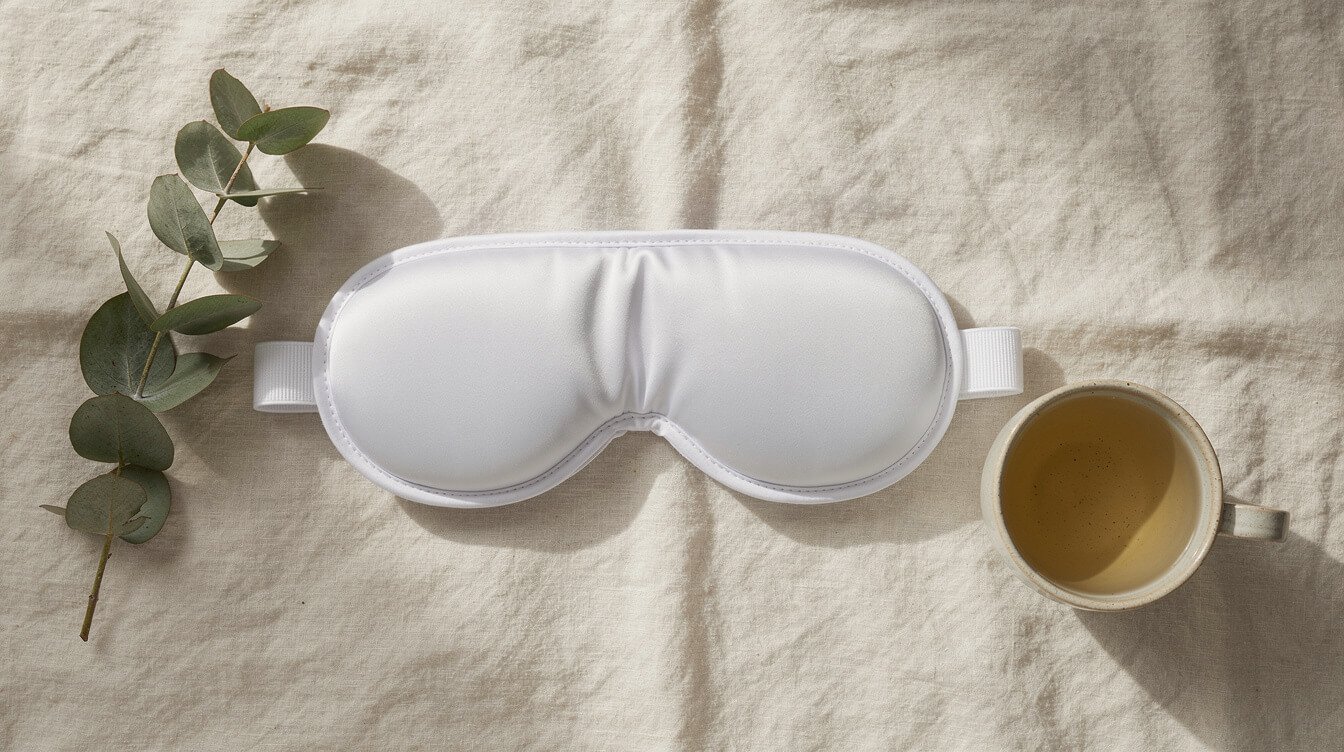
An eye massager is a wearable, goggle-shaped device that rests over your closed eyes and the surrounding area, usually held in place by an adjustable strap. Inside the padded shell, small motors, air chambers, and heating elements work together to warm, gently squeeze, and vibrate the soft tissue around your eye sockets, brows, and temples.
Most models share a similar design:
- A soft, contoured mask made of faux leather, silicone, or fabric that sits on the brow bone and cheekbones rather than pressing on the eyeballs themselves.
- Built-in modes that combine heat, air compression, and vibration in different patterns, often with names like “relax,” “sleep,” or “dry eye.”
- A timer, typically 10 to 15 minutes, after which the device switches off automatically.
- Optional extras such as Bluetooth music, white noise, guided meditations, cooling pads, or app control.
Think of it as an upgraded version of two very old habits: the warm washcloth over tired eyes, and the slow circles you instinctively rub into your temples after a long day. The device simply automates both, so you can lie back and let go.
Why eye massagers have become so popular
The timing isn’t an accident. A 2018 review in BMJ Open Ophthalmology by Sheppard and Wolffsohn estimated that digital eye strain may affect 50% or more of computer users. Symptoms include tired or aching eyes, dryness, blurred vision after screen work, and headaches. Most of us now spend more waking hours looking at screens than not. It makes sense that people are looking for a comfortable way to switch off at the end of the day, and an eye massager promises exactly that.
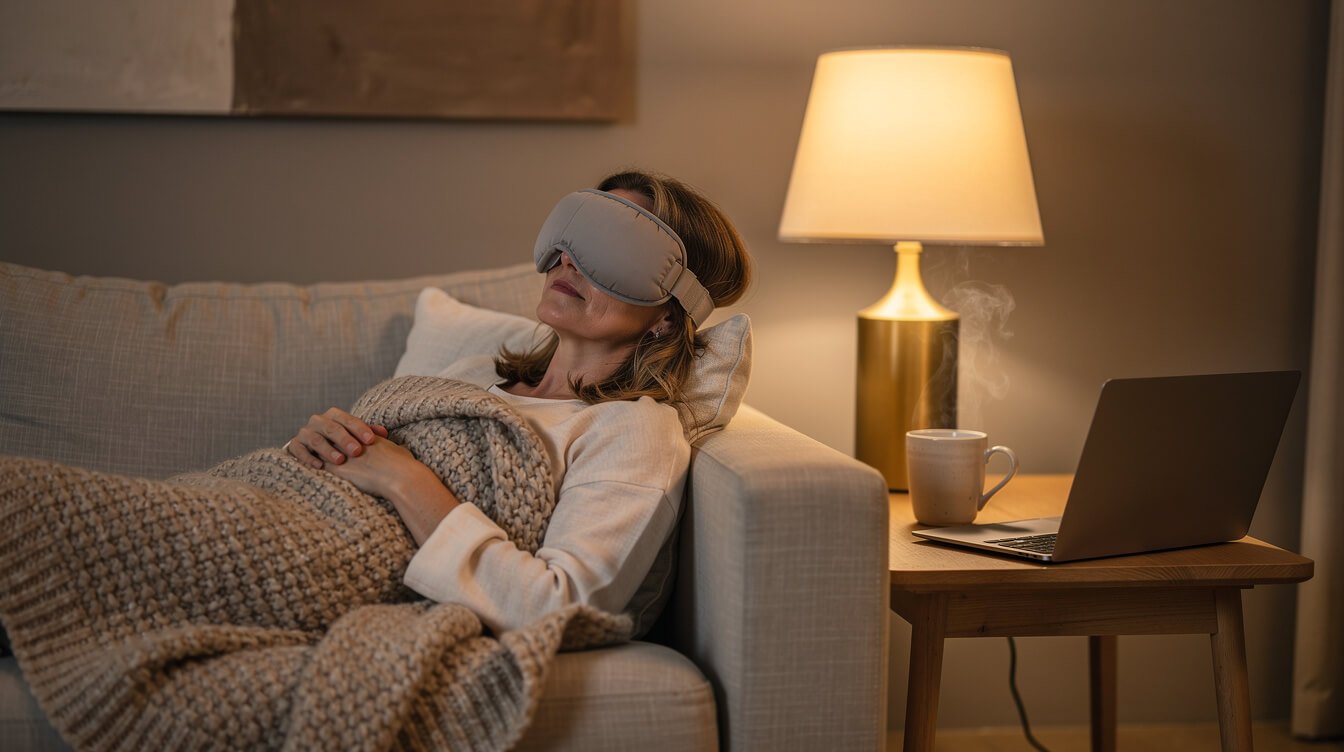
There’s also a mood factor. Pulling on a padded mask blocks out light, signals “off duty” to your brain, and gives you permission to do nothing for ten minutes. For many people, that ritual is as valuable as any feature on the box.
How an Eye Massager Works: Heat, Pressure, Vibration and Cooling

Not every eye massager uses the same technology, and understanding each feature helps you decide which ones you actually need. Here’s what’s happening inside the mask.
1. Gentle heat
Most heated eye massagers warm to roughly 40 to 45 °C (104 to 113 °F). That’s comparable to a warm compress. Warmth around the eyelids is familiar territory for eye-care professionals: warm compresses are a long-standing first step for meibomian gland dysfunction (MGD), a common cause of evaporative dry eye in which the tiny oil glands along the eyelid margins get sluggish. The idea is that gentle warmth softens those oils so they flow more easily onto the tear film.
2. Air compression
Small air chambers inflate and deflate in rhythmic pulses, creating a kneading or “hugging” sensation around the brows, temples, and under-eye area. This is the feature most people associate with eye massagers, and it’s also the one to be most careful with, because the eye area is delicate. Good models let you choose a low pressure setting.
3. Vibration
Low-frequency vibration motors add a gentle buzzing or tapping sensation, usually targeting the temples and brow. Many people find vibration relaxing, though some find it overstimulating. If you’re prone to headaches, start without it.
4. Cooling
Some newer models include a chilled gel pad or a cooling mode. Cool sensations may feel soothing for morning puffiness or warm, irritated-feeling eyes, while heat tends to feel better for evening wind-downs. A few devices offer both.
5. Sound and app features
Built-in speakers play white noise, music, or guided breathing. These don’t touch your eyes at all, but they matter more than you might think: combining darkness, warmth, and slow breathing turns a gadget into a genuine relaxation practice.
A small number of specialty devices also add features such as gentle pulsed electromagnetic fields or graphene heating layers. These are worth reading about carefully, because research on such combinations in eye masks is very limited. If you already own the Galaxy G-One eye massager, our step-by-step guide to using it walks through its modes, fit, and a simple routine.
Eye Massager Benefits: What Research Suggests

Here’s where honesty matters. Many product listings promise that an eye massager will “cure” dry eye, erase dark circles, sharpen vision, or end migraines. The research doesn’t support big promises like these. What it does support is more modest, and still worthwhile: warmth and gentle massage around the eyes may support comfort, relaxation, and, for some people, tear-film quality.
Let’s look at what has actually been studied.
Warmth and dry-eye comfort
A 2024 review in Ophthalmology and Therapy (Lee) examined 20 studies of warm compress therapy for meibomian gland dysfunction, comparing hot towels, microwavable masks, and self-heating masks. All three methods could bring eyelid temperature to the therapeutic target of about 40 °C, and repeated use was associated with improvements in tear film and symptoms. The author was clear, though, that warm compresses are palliative rather than curative: they may help you feel better while you use them, but they don’t fix the underlying condition.
Eye massagers specifically have far less research. One small 2021 pilot study in the Journal of Ophthalmology (Vigo and colleagues) tested a medical eye mask that combined heat (42 °C) and vibration for 15 minutes in 20 people with MGD. Thirty minutes later, tear-film stability (non-invasive break-up time) and the thickness of the tear film’s oily layer had both improved, and no device-related problems were reported. That’s encouraging, but it was one short session, a single small group, no control group, and a clinical device rather than a consumer gadget.
Relaxation and sleep
Warmth around the eyes seems to have a calming quality. In a small 2018 preliminary study in Sleep and Biological Rhythms (Igaki and colleagues), eight men with mild sleep difficulties used a self-warming eye pad (about 40 °C) for 10 minutes before bed for five nights. Compared with no treatment, they reported better subjective sleep, and their brain-wave recordings showed more deep, slow-wave activity in the first 90 minutes of sleep. Eight participants is tiny, but it fits what many people notice: a few minutes of gentle warmth over closed eyes feels like a natural “lights out” cue. For more ways to wind down, see our guide on how to improve sleep quality naturally.
Eye pressure: an interesting finding, not a treatment
A 2024 study in Scientific Reports (Wu and colleagues) found that 10 minutes of finger massage over the closed eye temporarily lowered intraocular pressure in 66 healthy adults, from an average of about 15.7 mmHg to 9.6 mmHg immediately afterward, with pressure starting to rise again within minutes. This was massage performed in a lab setting, not a consumer eye massager, and the effect was short-lived. It’s an interesting physiological finding, but it’s not a reason to use an eye massager for glaucoma, and anyone with glaucoma should follow their eye doctor’s guidance.
Evidence at a glance
| Claimed benefit | What the evidence suggests | Strength |
|---|---|---|
| Relaxation and stress relief | Warmth, darkness, and rhythmic pressure are widely reported as calming; consistent with sleep and warming research | Moderate (mostly experience-based) |
| Tired eyes after screen time | May ease the feeling of eye fatigue; doesn’t change the cause (focus strain, reduced blinking) | Limited |
| Dry-eye comfort (MGD) | Warm compresses are a standard first step; one small pilot study on a heat-and-vibration medical mask | Moderate for warmth, limited for massagers |
| Better sleep | Small preliminary study on pre-bed eye warming showed better subjective sleep | Limited |
| Tension-type headaches | Some people find temple massage and warmth soothing; little direct research on eye massagers | Limited |
| Puffiness and dark circles | Cooling may temporarily reduce puffiness; no good evidence for lasting change in dark circles | Weak |
| Improved eyesight | No credible evidence | None |
The takeaway? An eye massager may support comfort and relaxation, especially as part of an evening wind-down. If you’re buying one to fix a vision problem, an eye exam is a much better investment.
Is an Eye Massager Safe? Who Should Skip It

Eye massagers are generally considered safe for healthy adults when used gently and as directed. Still, the eye area is delicate, and the most common problems come from too much heat, too much pressure, or too much time. Optometrists quoted in recent buying guides list excess heat, excessive pressure, skin irritation, tenderness, and aggravating an underlying condition as the main risks.
Talk with an eye doctor first if you have:
- Glaucoma or a history of high eye pressure
- Retinal conditions, including a history of retinal detachment, retinal tears, or diabetic retinopathy
- High myopia (strong nearsightedness), which is associated with a thinner, more vulnerable retina
- Recent eye surgery, such as LASIK, cataract surgery, or retinal procedures
- Cataracts or lens implants
- An active eye infection, stye, or inflammation (heat and pressure can make some of these worse)
- Thyroid eye disease or any condition that affects the eye socket
- Facial fillers or recent cosmetic procedures around the eyes
It’s also wise to check with your doctor if you’re pregnant, have a pacemaker or other implanted electronic device (for models with electronic stimulation), have reduced sensation in your face, or have a heart-rhythm condition. Pressure on the eyes can, in rare cases, slow the heart rate through a reflex called the oculocardiac reflex. That’s another good reason to choose gentle, around-the-eye pressure rather than anything that pushes on the eyeball.
A cautionary tale: never use percussion tools near your eyes
A 2024 case report in the American Journal of Ophthalmology Case Reports (Garza Reyes and colleagues) described a 38-year-old woman with high myopia who developed a traumatic cataract after using a percussion massage gun over her temple and directly over her eye for several weeks to relieve headaches. Her vision in that eye dropped to 20/600. A massage gun isn’t an eye massager, but the lesson carries over: the eye is not a muscle to be pummeled. Never use massage guns, vibrating wands, or any device not designed for the eye area over your eyes.
Stop and seek care if you notice:
- Eye pain (rather than pleasant pressure)
- Blurred or changed vision that doesn’t clear quickly after a session
- Flashes of light, a sudden shower of floaters, or a curtain-like shadow, which can signal a retinal problem and needs urgent attention
- Redness, swelling, or irritation that lingers
- Dizziness, nausea, or feeling faint during use
One more practical point: always remove contact lenses before using an eye massager, and take off eye makeup so it doesn’t get pressed into the lash line.
How to Use an Eye Massager: A Gentle 10-Minute Routine
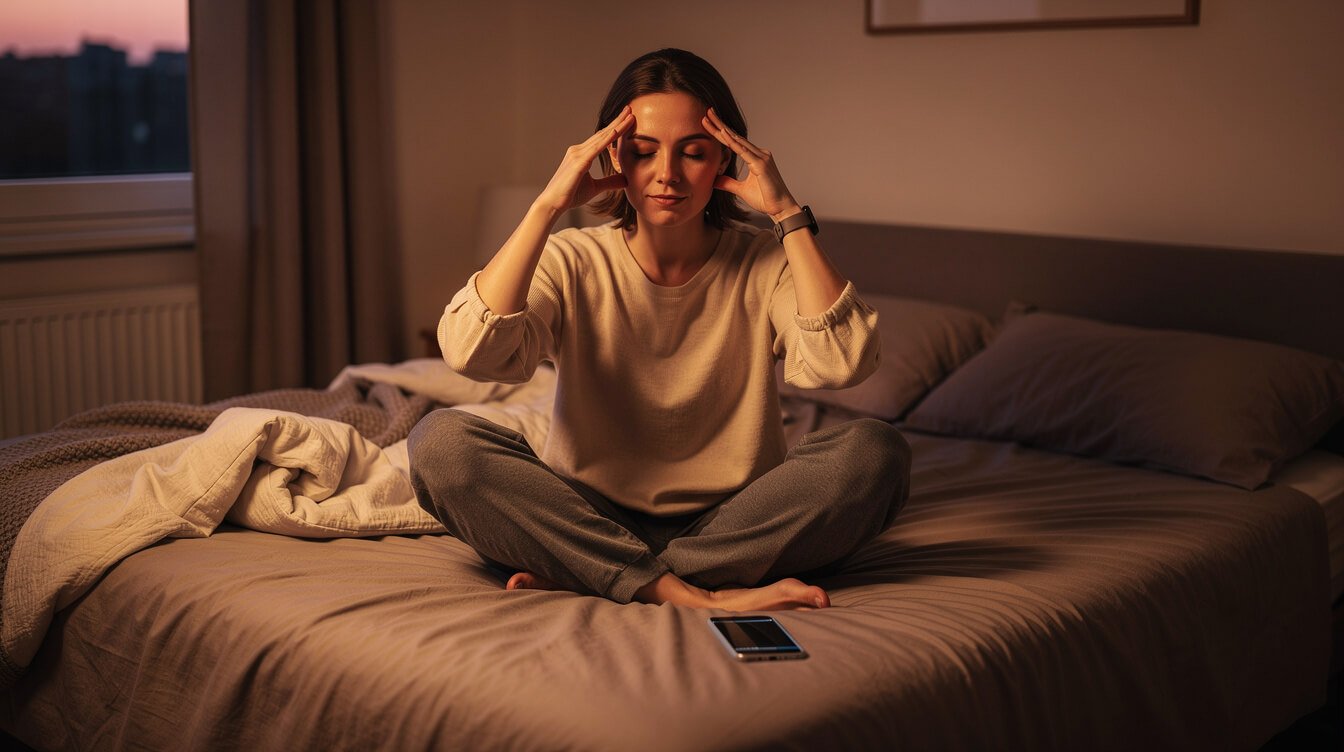
The best way to use an eye massager is slowly, gently, and as part of a calm ritual rather than a quick fix between meetings. Here’s a simple routine that works for most models.
- Prep your eyes (1 minute). Remove contact lenses and eye makeup. Wash your face or at least your hands. If your eyes feel gritty, a few lubricating drops beforehand may help.
- Charge and clean the device. Wipe the contact surface with a soft, damp cloth or the cleaner the manufacturer recommends. Shared devices should never be used without cleaning.
- Choose the lowest settings. For your first few sessions, pick low heat, low pressure, and vibration off. You can always turn things up later.
- Get comfortable. Sit back in a supportive chair or lie down with your head on a pillow. Dim the lights and silence notifications.
- Adjust the fit. The mask should rest on your brow bone and cheekbones, snug but not tight. If you feel pressure directly on your eyeballs, loosen the strap.
- Breathe slowly (8 to 10 minutes). Let the device run through its cycle. Try breathing in for a count of four and out for a count of six. A longer exhale is one of the simplest ways to support your body’s relaxation response, as we explain in our guide to vagus nerve exercises.
- Remove it and rest (1 minute). When the timer ends, take the mask off and keep your eyes closed for a moment. Then open them slowly and blink a few times.
- Notice how you feel. A pleasantly relaxed, slightly warm feeling is normal. Lingering blurriness, pain, or redness isn’t, so scale back or stop.
How often should you use one?
Most manufacturers recommend one or two sessions a day of about 10 to 15 minutes. Optometrists commonly suggest staying in the 5-to-15-minute range. More isn’t better: longer or more intense sessions increase the chance of irritation without adding benefit.
Pair it with habits that tackle the cause
An eye massager feels lovely after a long screen day, but it works best alongside habits that reduce strain in the first place:
- The 20-20-20 rule: every 20 minutes, look at something about 20 feet away for 20 seconds. Our 20-20-20 eye-break tip explains how to make it automatic.
- Blink on purpose. We blink less when concentrating on screens, which leaves the tear film to evaporate.
- Check your setup. Keep screens about an arm’s length away and slightly below eye level, and reduce glare.
- Stay hydrated and step outside. Daylight breaks rest your focusing muscles and lift your mood.
- Book a regular eye exam. An outdated prescription is a very common, very fixable cause of eye strain.
Screen days rarely stop at the eyes. If tension tends to settle into your neck and shoulders too, a short warm-up there can round out your evening ritual. Some people pair their eye massager with a few minutes of handheld warmth on the shoulders using the OlyLife Vitality Wand, a wellness device made for targeted self-care moments on the neck, shoulders, and back. It’s a relaxation companion, not a medical treatment, and like any non-eye device, it should never be used over the eyes. For a no-cost option, our tennis ball self-massage routine works beautifully too.
🎁 Get a Free Wellness Gift
Enter your name and email below to receive a special wellness gift from OlyLife — absolutely free!
How to Choose an Eye Massager: 8-Point Checklist

Eye massagers range from simple heated masks to app-controlled smart goggles. Rather than chasing the longest feature list, use this checklist to find a model that’s gentle, comfortable, and genuinely useful for you.
- Adjustable, moderate heat. Look for at least two heat levels with a top temperature around 40 to 45 °C (104 to 113 °F). Gentle, controlled warmth is what eye-care professionals recommend.
- Low pressure settings. Make sure you can lower the air compression, or switch it off entirely. The eye area needs a light touch.
- Automatic shut-off. A built-in timer (usually 10 to 15 minutes) prevents accidental overuse if you doze off.
- A good fit. The mask should cup your eye sockets without pressing on your eyeballs or nose bridge. An adjustable strap and soft, contoured padding make a big difference. Some models offer a “no direct eye pressure” design.
- Features can run separately. Being able to use heat alone, or vibration off, helps if you’re sensitive or prone to headaches.
- Easy-to-clean surfaces. Wipeable materials, or a removable and washable cover, are more hygienic, especially if anyone else in your home uses it.
- Safety marks and honest claims. Choose a reputable brand with recognized electrical safety certification and clear instructions. Be wary of any listing that promises to “cure” dry eye, “restore” vision, or treat a medical condition.
- Battery life and portability. If you travel often or want to use it on flights, look for a foldable design and a battery that lasts several sessions on one charge.
Nice-to-have extras
Music, white noise, guided meditations, cooling inserts, and app control are pleasant but optional. If audio helps you relax, a built-in speaker is convenient. If you just want warmth and quiet, a simpler model often feels more restful and costs less.
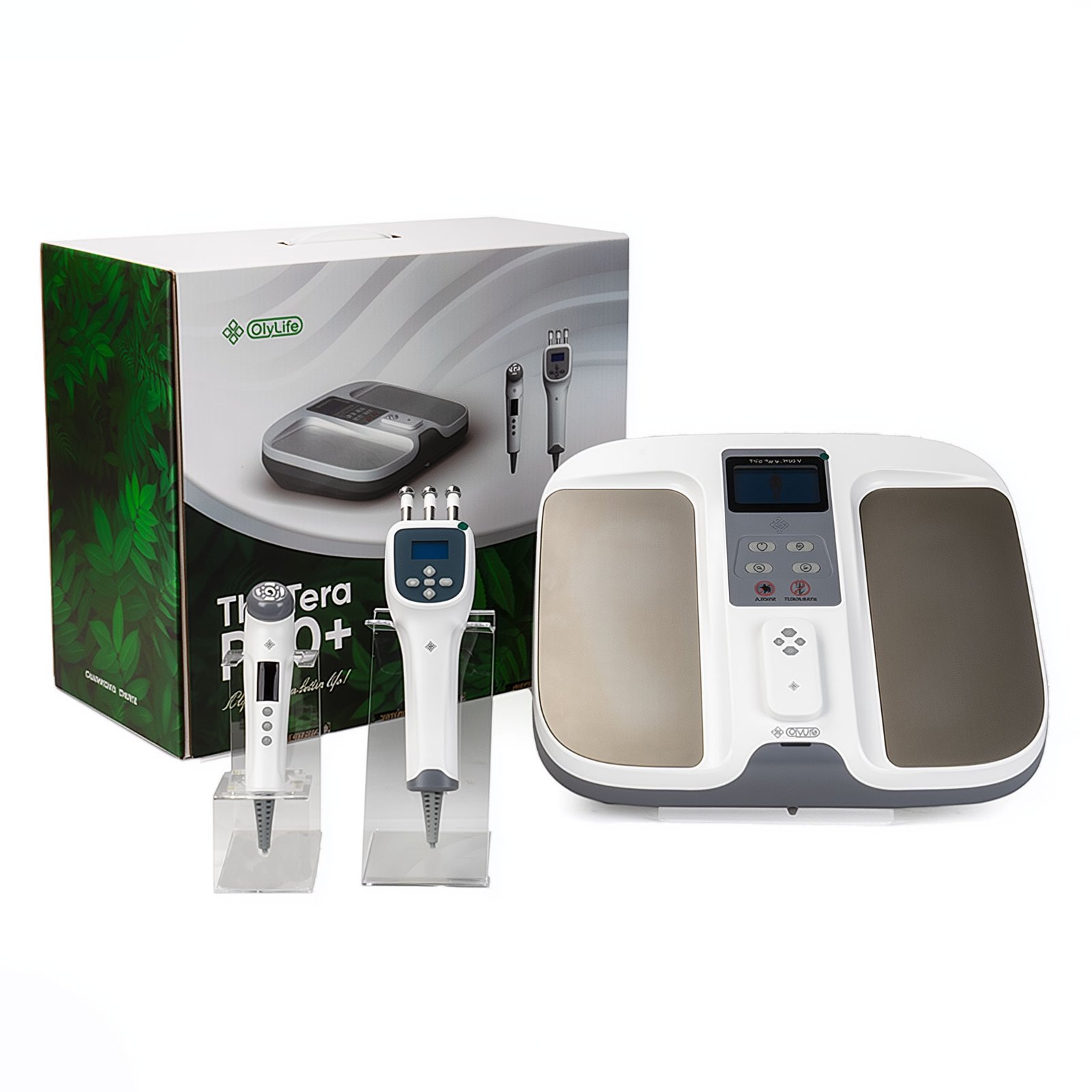
Build a Fuller Evening Wind-Down 🌿
Screen-day tension rarely stops at your eyes. The OlyLife THz Tera-P90+ is a home PEMF and terahertz wellness system that many people use as part of a calm evening routine for the neck, shoulders, and back. It’s a relaxation companion, not a medical treatment, and it isn’t designed for use over the eyes.
Eye Massager vs. Warm Compress vs. DIY Eye Massage
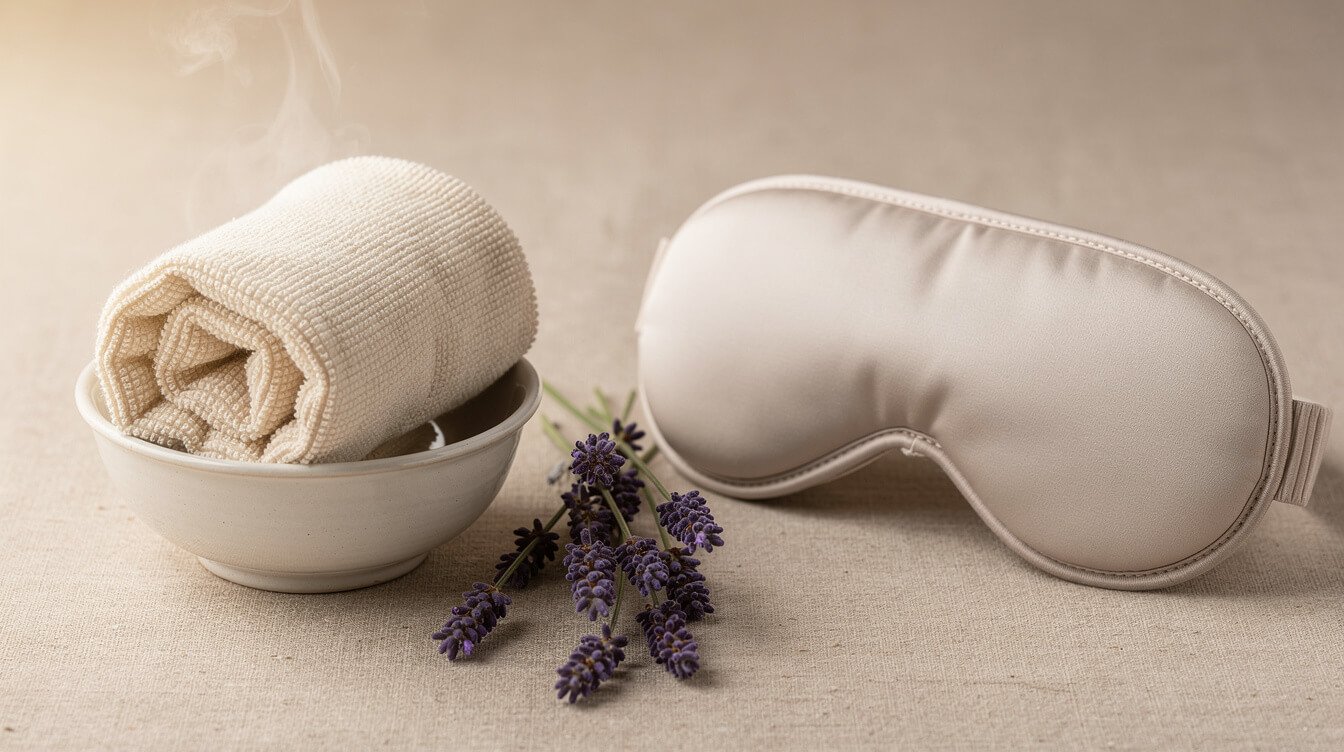
Before you buy, it helps to know how an eye massager compares with the free or low-cost options you already have at home. All three can be part of a calming routine.
| Eye massager | Warm compress | DIY fingertip massage | |
|---|---|---|---|
| Cost | Usually $30 to $200+ | Free (washcloth) to about $25 (heated mask) | Free |
| Heat control | Consistent, preset levels | Cools quickly (towel); steadier with heated masks | None |
| Pressure | Automated air compression | None | You control it directly |
| Convenience | Hands-free, timed | Needs re-warming | Requires your attention |
| Research base | Very limited, small pilot studies | Best studied for dry-eye comfort | Limited |
| Best for | Relaxing, hands-free wind-down ritual | Dry-eye comfort on an eye doctor’s advice | Quick tension relief at your desk |
A simple warm compress method
Soak a clean washcloth in warm (not hot) water, wring it out, and test it on your inner wrist. Lay it over your closed eyes for 5 to 10 minutes, re-warming as needed. A microwavable or self-heating eye mask holds heat longer and more evenly.
A 2-minute fingertip routine
With clean hands and closed eyes, use your ring fingers (they naturally press the lightest) to make slow circles along your brow bone from the inner corner outward, then along the upper cheekbone. Finish with gentle circles at your temples. Never press on the eyeball itself. If you enjoy traditional acupressure, our sinus acupressure point guide covers several spots around the brows and nose that feel especially soothing during cold season.
So which is right for you? If you love the ritual and want something hands-free, an eye massager is a lovely upgrade. If your main concern is dry eye, a warm compress routine, guided by your eye doctor, is the better-studied starting point. And if budget is tight, your own fingertips plus a warm cloth cover most of the benefit.
Frequently Asked Questions About Eye Massagers
Do eye massagers really work?
For relaxation and comfort, many people find them genuinely helpful, and the warmth they provide is similar to a warm compress, which eye-care professionals often recommend. For fixing medical eye problems, the evidence is limited. Think of an eye massager as a self-care tool rather than a treatment.
Can an eye massager help with dry eyes?
Gentle warmth may support tear-film comfort in people whose dry eye is linked to sluggish oil glands, and a small pilot study of a heat-and-vibration medical mask found short-term improvements. Dry eye has many causes, though, so it’s best to get a diagnosis from an eye doctor and ask whether warmth is appropriate for you.
Can an eye massager help with headaches?
Some people find temple massage and warmth soothing for tension-type headaches. Research on eye massagers specifically is limited, and vibration or pressure can bother some people during a migraine. Start on the gentlest setting, and see a doctor about frequent or severe headaches. Our guide to natural pain relief for headache covers other evidence-informed options.
Is it okay to use an eye massager every day?
For most healthy adults, one or two sessions of about 10 to 15 minutes a day is the typical manufacturer guidance. Stop if you notice pain, lingering redness, or vision changes.
Can I fall asleep wearing an eye massager?
It’s better not to. Use it as part of your wind-down routine, then take it off before sleep. An automatic shut-off timer is an important safety feature in case you doze off.
Do eye massagers reduce dark circles and puffiness?
Cooling may temporarily reduce morning puffiness. There’s no good evidence that eye massagers make lasting changes to dark circles, which are often linked to genetics, skin thinning, and sleep.
Can I use an eye massager with contact lenses?
No. Always remove contact lenses before a session to avoid pressing them against your eyes or drying them out.
Will an eye massager improve my eyesight?
No. There’s no credible evidence that eye massagers improve vision. If your eyesight has changed, book an eye exam.
Final Thoughts: A Small Ritual for Tired Eyes
An eye massager won’t fix your prescription, cure dry eye, or undo eight hours of screen time. What it can offer is something many of us are short on: ten quiet minutes of warmth, darkness, and slow breathing that tell your whole body it’s time to rest.
If you decide to try one, keep it simple. Choose gentle heat and low pressure, use it for 10 to 15 minutes, never press on the eyeball, and skip it, or check with your eye doctor first, if you have glaucoma, retinal concerns, or recent eye surgery. Pair it with the habits that tackle eye strain at the source: regular screen breaks, deliberate blinking, a comfortable workspace, and routine eye exams.
Most of all, treat it as a ritual rather than a fix. Your eyes do a remarkable amount of work every day. Giving them a few minutes of genuine rest is one of the kindest small habits you can build. 🌿
This article is for educational purposes only and isn’t a substitute for professional medical advice. Please consult a qualified eye-care professional about any eye symptoms or conditions.